
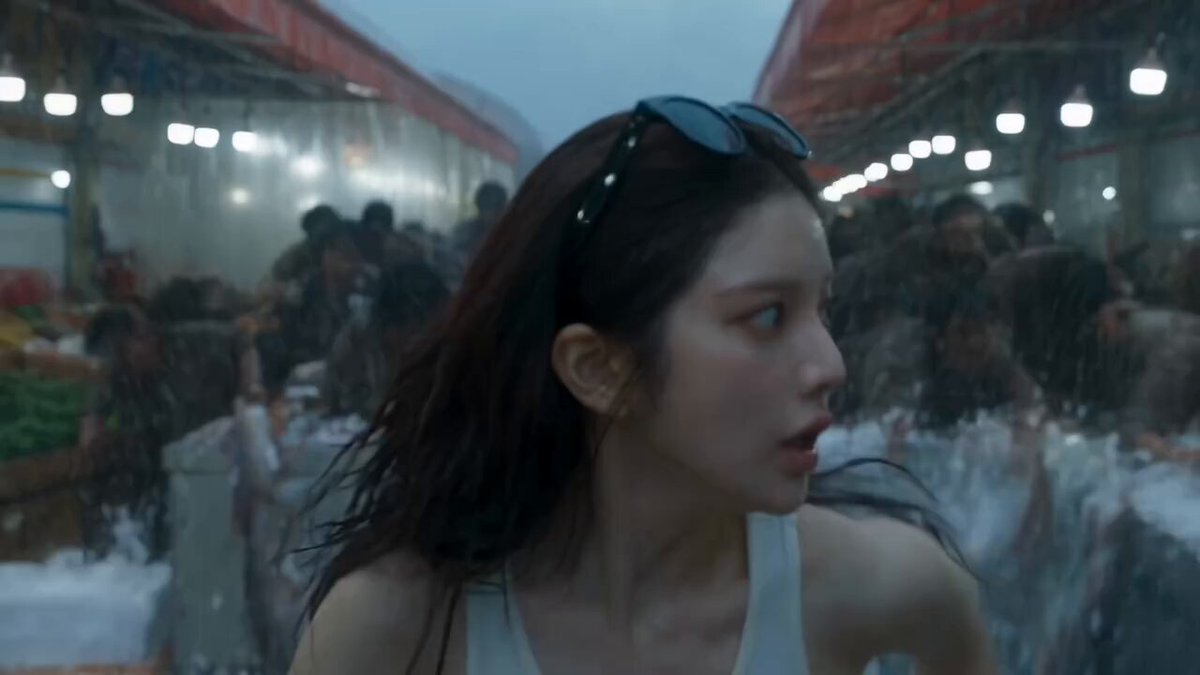
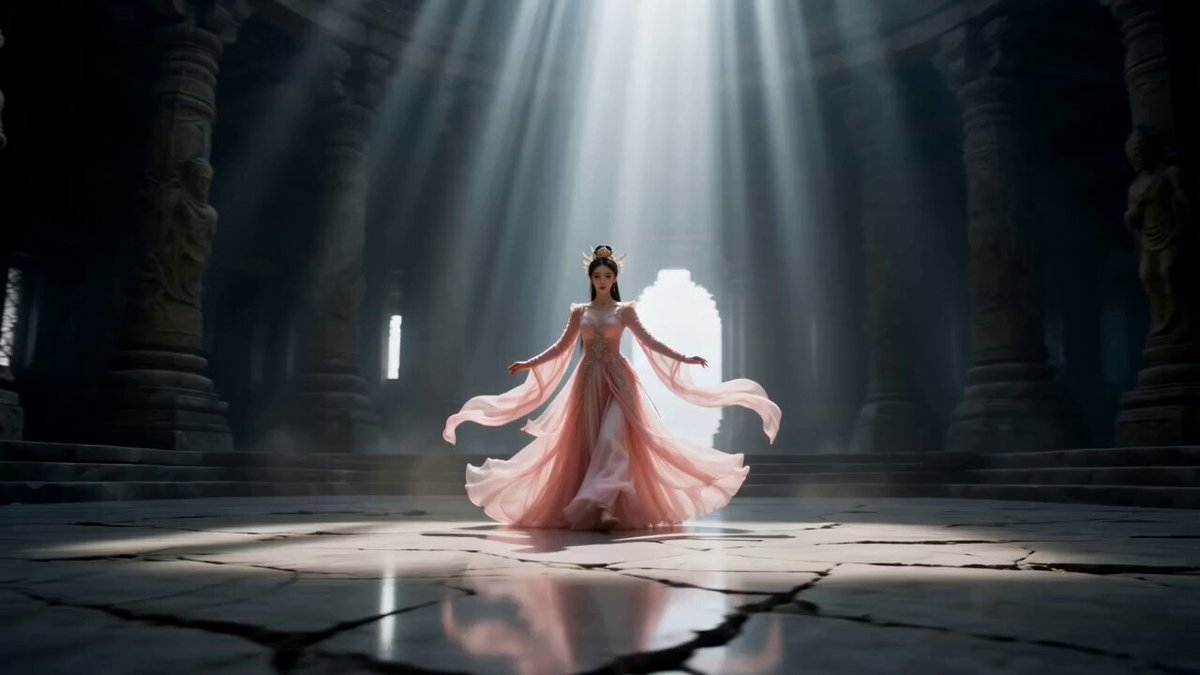
Why AI Motion Design Is Now a Core Branding Skill
A brand used to live in two states: a static logo in the corner of a deck, and a slightly different static logo in the corner of a website. Motion was a luxury reserved for broadcast packages and product launches with a real budget. That split has collapsed. Social platforms reward motion in the first frame, streaming services expect animated intros, and product pages now ship with looping video where a hero image used to sit.
AI video models removed most of the friction from the middle of that pipeline. You still need taste, timing and a finishing pass, but the expensive part — rendering a believable camera move, a light sweep, a particle bloom, a slow product rotation — is now something you can generate in a browser tab and refine in an afternoon rather than a week.
Two workflows benefit most:
- Logo animation. Turning a flat mark into a three-to-six second moving identity that can be dropped into intros, lower thirds, ad end cards and app splash screens.
- B-roll and footage generation. Producing cinematic background plates, product shots, atmospheric scenes and abstract textures that fill the gaps in long-form edits without a shoot.
The important shift is not that these are possible. It is that they are now repeatable. A solo creator can build a small library of motion assets, keep them stylistically consistent, and reuse them across dozens of videos. That consistency is what separates a channel that looks amateur from one that looks produced, and it is exactly where most AI workflows break down.
This guide covers the practical side: how to animate a logo with AI and keep it on-brand, how to generate footage that survives the cutting room, how to hold characters and palettes steady across shots, and how to finish everything with sound so it does not read as a demo.
How AI Logo Animation Works Under the Hood
Static asset in, motion hypothesis out
Most image-to-video models take a single frame and predict what the next frames plausibly look like. When you feed a logo, the model does not know it is a logo. It sees shapes, edges, gradients and negative space, and it applies whatever motion priors dominate its training data. That is why the first generation often drifts: letters warp, spacing collapses, thin strokes dissolve.
The practical consequence is that you should treat generation as prospecting, not production. You are looking for one motion idea worth rebuilding.
What the model can and cannot infer
Models are strong at:
- Light and shadow movement across a surface
- Particle, smoke, liquid and energy effects
- Depth-based camera pushes and parallax
- Material changes — glass, chrome, foil, matte plastic
Models are weak at:
- Typographic accuracy on small or thin letterforms
- Brand-exact colour matching
- Clean, mathematically even easing
- Anything that requires the mark to stay perfectly locked for more than a few seconds
A useful rule: let the model handle the atmosphere and the move, and handle the mark itself yourself, either by compositing the original vector artwork back over the generated plate, or by using the generation as a reference for a clean rebuild.
Four animation archetypes that survive review
- Reveal through light. The mark sits on a dark plate; a soft gradient sweeps across it and the logo appears in its wake. Easy to generate, easy to keep clean, works for almost any industry.
- Material morph. The logo starts as liquid, sand, dust or ink and resolves into the final form. High impact, but you must accept some shape drift in the first two seconds.
- Depth and parallax. Layers of the logo separate in 3D space, with the camera pushing through. Best built by splitting the artwork into parts and animating them rather than asking a model for the whole thing at once.
- Atmospheric loop. The logo stays static and the world around it moves — rain, embers, drifting particles, slow lens flare. This is the safest and most reusable archetype, because the mark never deforms.
If a project needs a legally exact logo animation for a broadcast package, archetype four plus a hand-built light sweep is almost always the right answer.
A Step-by-Step Logo Animation Workflow
1. Prepare the asset
Export the logo on a transparent background at two to four times the final resolution. If the model requires an opaque input, place the mark on a solid colour that matches your edit — pure black for dark scenes, mid-grey for neutral, or chroma green if you plan to key it out. Keep the composition centred with generous margin; motion models push toward the edges and a tight crop will clip the move.
2. Write a motion brief, not a prompt
A prompt like "animate this logo excitingly" produces noise. A motion brief describes five things: subject, action, camera, lighting, and duration. For example:
"A matte black geometric monogram on a dark charcoal background. A slow horizontal light sweep passes left to right, revealing a brushed metal surface. Static camera, shallow depth of field, subtle dust particles in the air, four seconds, loopable."
That is specific enough to iterate from. Change one variable at a time — the sweep direction, the material, the particle density — so you learn what each word actually controls.
3. Generate in batches
Run six to twelve variations of the same brief rather than one perfect prompt. Generation is cheap relative to your time; judging is the expensive part. Save anything with a good camera move even if the colour is wrong. You will reuse it.
4. Composite and finish
Bring the best take into a compositor or editor. Rebuild the logo on top, align it, and mask the generated version out. Add easing where the model is too linear. Match grain and colour to the rest of the edit. Export a high-bitrate master plus a web version, and keep a version with a clean matte if you can.
Generating Cinematic B-Roll with AI
Build the shot list before the prompt
The biggest quality gap between amateur and professional AI footage is not the model — it is whether there was a plan. Write the shot list first, in editing terms: an establishing wide, a slow push on a detail, a texture insert, a transition plate. Only then write prompts. This prevents the classic failure of generating twenty beautiful clips that do not cut together because they all occupy the same visual register.
Prompt anatomy that produces usable footage
A reliable structure:
Shot size + subject + environment + action + camera + lens + light + mood + duration
Example: "Wide shot of an empty coastal road at dawn, wet asphalt reflecting low sun, mist drifting across the surface. Slow drone push forward, 35mm equivalent, soft warm rim light, muted teal and amber grade, five seconds."
Three details matter more than people expect:
- Motion verbs. "Drifting", "pushing", "orbiting", "settling" produce more controllable results than "cinematic" or "epic".
- Named light direction. "Backlit", "side-lit from the left", "overcast diffusion" anchors the look far better than "nice lighting".
- Duration. Ask for what you actually need. A ten-second generation that drifts at second six is worse than a clean four-second clip you loop twice.
Camera language that reads as professional
Audiences read camera behaviour as production value. A slow, single, motivated move looks expensive. Random handheld shake, whip pans and unmotivated zooms look cheap. Ask for one move per shot, and prefer slow over fast: a gentle push across four seconds reads as intentional, while a fast dolly reads as a mistake.
Also think in coverage. For a thirty-second product piece, you want a wide, a medium, a macro detail, a texture, and a transition plate. Generate each one to fit its slot rather than hoping a single clip can be used five ways.
Consistency: The Hardest Problem in AI Footage
Reference-first pipelines
Characters, products and logos drift between generations. The most reliable fix is to make one approved frame the anchor: generate a still you love, then use it as the input for every video generation, changing only the camera and action lines in the prompt. Image-to-video keeps identity far better than text-to-video.
Where a tool supports references, character locks or style presets, use them. Where it does not, build the lock yourself with a fixed seed, a fixed prompt skeleton, and a reference image in every job.
Palette locking and grain matching
Two shots can have perfect subjects and still refuse to cut together because one is warm and the other is cool. Fix this in post, not in the prompt:
- Apply the same lookup table or colour transform to every clip in the sequence.
- Add a single grain layer across the whole timeline instead of per clip, so the texture is uniform.
- Match black levels. AI footage often crushes or lifts shadows inconsistently.
- Check highlight roll-off on bright skies and reflective surfaces; it is where AI renders look obviously synthetic.
If two clips still will not match, put something between them — a texture wipe, a light flare, a hard cut on a beat. Editors have solved this problem for decades; a transition is not a failure.
Sound Design and Post-Production
Silent AI footage feels like a screensaver. Sound is what converts a generated clip into a shot.
Foley and ambience
Add three layers to every shot:
- Ambience — room tone, wind, traffic, crowd. This creates space.
- Specifics — the sound of the actual action: a cloth rustle, a liquid pour, footsteps.
- Sweeteners — a soft whoosh, a low thump, a riser on transitions.
Even a rough version of these three layers lifts perceived quality dramatically. AI audio tools can generate ambience and effects from a text description, which is fast enough to do during the edit rather than after.
Music and mix
Pick music before you finish the visuals. It determines cut points and pacing, and it hides small continuity problems. Keep dialogue and voiceover at the front of the mix, duck music under speech, and leave headroom. A simple loudness target for web delivery — around minus fourteen LUFS integrated — keeps you from being the quietest video in a feed.
For logo animations specifically, sound design is the difference between a sting that feels branded and an animation that feels like a test render. A two-part sting works well: a soft transient at the start of the move and a resolved tone as the mark lands.
Choosing a Tool Stack Without Overpaying
Decision criteria
Before subscribing to anything, decide what you actually need:
- Output resolution and duration. If you only need short 1080p clips, you do not need the most expensive tier.
- Image-to-video quality. This is the single most important capability for brand work, because it is what keeps logos and products consistent.
- Control features. Camera controls, motion brushes, first and last frame conditioning, and matte support matter more than raw fidelity.
- Commercial licensing. Confirm the terms for client work before you build a deliverable.
- Local vs hosted. Local models on a decent GPU cost nothing per render but cost time and setup. Hosted models cost money but ship immediately.
- Finishing integration. Export formats, alpha support, and whether the tool talks to your editor.
A starter stack and a scaled stack
A lean setup for a solo creator or small brand: one hosted image-to-video model for shots, one image model for keyframes and style frames, an editor with solid colour tools, a grain and upscale utility, an AI audio tool for ambience, and a music library. That covers the large majority of branded motion work.
A scaled setup adds: a node-based pipeline for repeatable, batchable generation; a dedicated compositor; a render farm or cloud GPU for local models; and a digital asset manager so that the motion library is searchable. The moment you are producing more than a few videos a week, the asset manager matters more than the model.
Common Mistakes and How to Avoid Them
- Prompting in adjectives. "Stunning, cinematic, masterpiece" adds noise. Describe shots, light and motion instead.
- Using one long clip everywhere. Generate coverage. A single five-second clip stretched across a minute looks like filler.
- Ignoring typography. Never trust a model to render your logo text. Composite the real artwork.
- Skipping the matte. Opaque generation is the norm. Plan for it — solid background, chroma key, or a compositing rebuild.
- No sound pass. Even a five-minute foley session changes how the footage reads.
- No versioning. Name files with the brief, iteration number and date. You will regenerate the same shot weeks later and need to know which take was approved.
- Chasing resolution. 1080p with good motion beats 4K with warping artefacts. Upscale at the end if you need it.
FAQ
Can AI animate a logo accurately enough for client work?
Yes, if you treat the model as an effects layer rather than a renderer of your brandmark. Generate the motion and atmosphere, then composite the original vector artwork on top. That gives you an exact logo inside an AI-generated world.
How long should a logo animation be?
Three to six seconds for a standalone sting. Two to three seconds for an end card or lower-third animation. Anything longer needs a reason.
What is the fastest way to get consistent AI b-roll?
Lock a reference frame, keep a fixed prompt skeleton, change one variable per batch, and finish everything with the same colour transform and grain layer.
Do I need a powerful GPU?
Only if you run local models. Hosted generation needs nothing but a browser, and for most branded work the trade-off is worth it.
How do I handle text inside generated scenes?
Do not. Generate the plate without text, then add typography in your editor where you control kerning, weight and timing.
What resolution should I generate at?
Generate at the model's native resolution, then upscale once at the end. Repeated upscaling between generations softens detail.
Is AI footage acceptable for commercial projects?
It depends on the tool's licence terms and the deliverable. Check the terms for the specific plan you use, and keep a record of which model produced each shot in case a client asks.
Where should beginners start?
Pick one archetype — the atmospheric loop — and one shot type — the slow push — and produce ten versions. Learning what a single model does well will teach you more than subscribing to five.
