
Why AI Product Promo Videos Became a Core Marketing Skill
Product promo video used to sit at the end of a long chain: brief, agency, storyboard, studio booking, shoot day, edit, revisions, delivery. By the time the final cut shipped, the offer had often changed and the trend that inspired it had cooled. AI video generation collapsed that chain. A single marketer can now go from a product photo and a rough idea to three platform-ready cuts in an afternoon — not because the tools are magic, but because the expensive, slow part (physical production) has been replaced by decisions you can make in a browser tab.
The shift changes what "good" means. When everyone can generate footage, the differentiator is no longer access to a camera. It is the quality of the offer framing, the specificity of the visual direction, and the discipline of the testing loop. A generic clip of a bottle rotating on a turntable is cheap. A clip that makes a specific person feel that a specific problem just got solved is still hard. AI removes the production tax and leaves the thinking tax untouched.
That is why the fastest teams treat AI video as a manufacturing line rather than a creative lottery. They keep a library of reusable prompts, a consistent visual look for their product, and a fixed set of output formats. When a new angle appears, they swap one variable — the hook, the setting, the persona — and ship a new cut the same day. Everything else stays constant so the test result actually means something.
This guide walks through a practical, repeatable workflow for producing product promo videos with AI: how to brief, script, plan shots, choose models, handle audio, edit for each platform, and test like a performance marketer rather than a filmmaker. It assumes you have one product, one offer, and limited time.
The Fast Production Pipeline at a Glance
The most common failure in AI video is not bad generation quality. It is starting to generate before you know what the video is supposed to prove. A disciplined pipeline front-loads thinking and back-loads rendering, which is the opposite of how most people approach it.
A realistic half-day schedule for a single product looks like this:
- Offer and hook lock (20 minutes). Write the one sentence a viewer must remember. Everything else serves it.
- Script drafts (40 minutes). Produce 15-second, 30-second, and 60-second versions of the same idea.
- Shot list (30 minutes). Six to ten describable shots, each with a purpose.
- Generation (60–90 minutes). Generate multiple takes per shot, discard aggressively.
- Audio (30 minutes). Voiceover, music bed, and one or two sound effects that reinforce the product moment.
- Edit and variants (60 minutes). Cut vertical, square, and landscape versions plus two hook alternates.
- Quality control (20 minutes). Check text rendering, aspect ratios, captions, and loudness.
Why timeboxing works
Generation is addictive. The tenth take of a shot rarely beats the third, but it feels like progress. Timeboxes force "good enough to test" over "perfect in my head," which is the correct trade when the goal is learning what resonates.
What to prepare before you generate a single frame
Collect assets first: high-resolution product stills from several angles, a clean shot of the packaging or label, the exact wording of the offer, the target platform and aspect ratio, and any brand color or typography rules. Product stills are the single most valuable input in the entire process. They anchor visual consistency and save you from generating a product that slowly morphs across shots.
Step 1: Lock the Offer, Hook, and Script
A promo video is an argument, not a montage. Before writing dialogue, write the argument in one sentence: who this is for, what problem it removes, and what makes the removal believable.
The hook is the first 1.5 seconds
On short-form feeds, the first frame and the first spoken half-sentence decide whether the rest exists. Strong hooks fall into a few reliable families:
- Problem callout: name the friction the viewer feels right now.
- Contrarian claim: politely contradict the standard advice in the category.
- Demonstration teaser: show the product doing the impressive thing immediately, explain later.
- Specific result: a concrete number, timeframe, or before/after rather than a vague promise.
- Question that stings: a question the viewer cannot answer without feeling the gap.
Choose one. Hooks that try to do two things usually do neither.
Write the script in three lengths at once
Word budgets keep pacing honest. Spoken narration runs roughly 2.5 words per second:
| Length | Narration budget | Structure |
|---|---|---|
| 15s | ~35–40 words | Hook, one proof, call to action |
| 30s | ~70–80 words | Hook, problem, product reveal, proof, call to action |
| 60s | ~140–160 words | Hook, problem, reveal, two proofs, objection handling, call to action |
Write the 60-second version first because it forces you to name the objection. Then cut down. The 15-second version is almost never a trimmed 60 — it is a single idea performed with confidence.
Script rules that survive AI narration
Short sentences. Concrete nouns. One idea per sentence. Avoid stacked clauses, because text-to-speech engines smooth them into mush. Read every line aloud; if you stumble, the voice model will too. And write the call to action as a verb the viewer can perform in one tap.
Step 2: Build a Shot List That Survives Generation
A shot list converts a script into visual instructions. For promo work, six shot archetypes cover almost everything:
- Hero shot. The product alone, slow push-in or orbit, clean background.
- Macro detail. Texture, stitching, ingredient, mechanism, screen, or label.
- In-use shot. Hands, skin, or environment interacting with the product.
- Context shot. The lifestyle moment the product belongs to.
- Comparison or proof shot. Before/after, side by side, or the messy alternative.
- End card. Product, brand mark, offer, and one instruction.
How to write prompts that generate usable footage
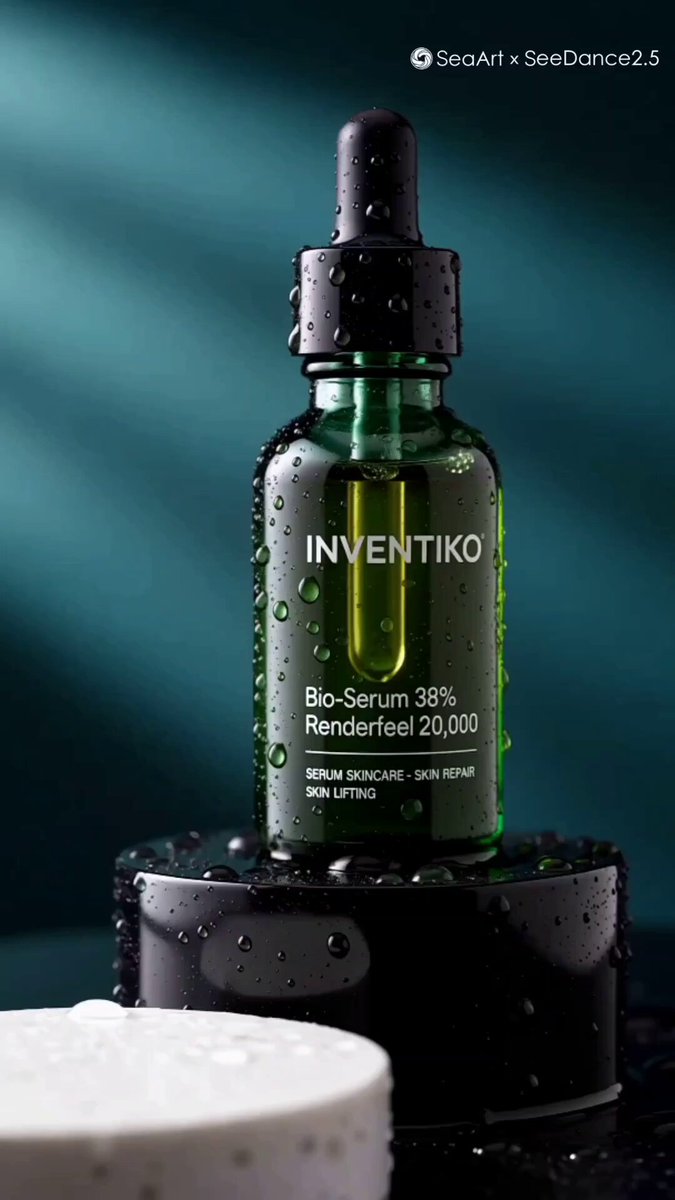
A prompt that produces controlled results names six things: subject, action, camera behavior, lighting, environment, and style constraint. For example: "Ceramic coffee mug on a slate counter, steam rising, slow dolly right, soft window light from the left, minimal kitchen background, shallow depth of field, muted natural color, no text."
Compare that to "beautiful coffee commercial," which hands every decision to the model and produces something different every time. The more decisions you make, the more consistent your footage becomes — and consistency is what makes separate clips feel like one film.
Keeping the product visually identical across shots
This is the hardest technical problem in AI promo video. Four techniques help:
- Start from a real photo. Use image-to-video or keyframe conditioning from an actual product still instead of describing the product in text.
- Reuse the description verbatim. If you must describe the product in text, copy the exact same phrase into every prompt rather than paraphrasing.
- Lock the seed or reference. When the tool supports a fixed seed or a reference image, keep it constant and vary only the action or camera.
- Match the lighting recipe. Same light direction, same color temperature, same background family across all shots.
Distortions are the tell that a video was generated. A logo that warps between cuts, a label that changes spelling, or a bottle that gains a handle breaks trust instantly. If a shot distorts, regenerate rather than hoping viewers miss it.
Resolution, duration, and motion discipline
Generate at the highest resolution your workflow can afford, then downscale. Slow, deliberate camera moves read as premium; whipping motion reads as artificial. Keep individual generations short and cut them together — three-second fragments edit better than one twelve-second clip that drifts.
Step 3: Choose the Right Video Model for the Job
Model choice is a trade between realism, control, speed, and cost. Rather than chasing a single "best" model, match the model family to the shot's job.
Photoreal and cinematic models
These produce the most convincing textures, skin, glass, metal, and natural light. Use them for hero shots, macro details, and any frame where the product must look premium. They are slower and less predictable, so budget extra takes and give them the most detailed prompts.
Fast, high-volume models
These favor throughput over nuance. Use them for b-roll, abstract transitions, background plates, and the many hook variants you want to test. A slightly less polished background plate is invisible when it sits behind text and narration.
Stylized and experimental models
Use these deliberately: an animated explainer for a technical product, a surreal transition for a scroll-stopping hook, a stop-motion feel for a playful brand. Stylization resets viewer expectations, which is why it works as an attention device. It is a poor default for the entire video because it distances the viewer from the actual product.
A simple decision rule
If the viewer needs to believe the product is real and high quality, choose photoreal. If the viewer needs to understand a mechanism or comparison, choose diagrammatic, animation-friendly output. If the viewer needs to stop scrolling, choose stylized for the first two seconds only, then return to photoreal for the product.
Step 4: Audio, Voice, and Sound Design
Audio is where most AI promo videos fall apart. Viewers forgive imperfect visuals far more readily than bad sound or robotic delivery.
Voiceover
Text-to-speech has become genuinely usable, but direction still matters. Keep sentences short, add commas for breath, and re-generate individual lines rather than whole scripts. If a voice sounds flat, the fix is usually faster pacing, not a different voice. For brands with a distinctive tone, a human read of the final 30-second script is often worth the extra hour.
Music
Pick a bed that sits under the narration without competing. A practical starting point is roughly 18–20 dB below the voiceover peak, with the music ducking slightly further under any line that carries the offer. Avoid tracks with strong melodic hooks in the first three seconds; they fight the hook you wrote.
Sound effects
One or two well-placed sounds — a soft click, a pour, a zip, a page turn — do more for perceived production value than a full library. Place them on the product reveal and the call to action, not everywhere.
Captions and loudness
Most short-form viewing happens muted, so burned-in captions are effectively mandatory. Keep them to two lines, high contrast, and away from platform UI zones. Target roughly -14 LUFS integrated loudness for social delivery so your video does not sound quieter than the one before it.
Step 5: Edit for the Platform, Not the Timeline
Editing is where a folder of clips becomes an ad. Work in variants from the start rather than exporting one master and cropping later.
- Vertical 9:16. The default for short-form feeds. Keep the product in the upper-middle third so it is not covered by captions or interface elements.
- Square 1:1. Useful for feed placements and email embeds.
- Landscape 16:9. Still relevant for site hero videos, YouTube pre-roll, and presentations.
Cut for rhythm, not for completeness
Every shot should earn its place. If a shot does not introduce, prove, or clarify something, cut it. The most common editing mistake in AI promo work is lingering on beautiful footage because it was expensive to generate. Beauty without a job is filler, and filler loses viewers.
Build hook variants cheaply
Once the body of a 15-second cut is stable, generate three alternative opening two seconds. Since the hook is the highest-leverage variable, this single practice usually produces more performance lift than any visual upgrade.
End cards that actually convert
The final two seconds should show the product and exactly one instruction. Two calls to action split attention; one repeated call to action compounds it.
Testing, Measurement, and Iteration
Treat every video as an ad unit with a hypothesis. A useful creative matrix varies one dimension at a time: hook style, proof type, presenter presence, caption position, or call-to-action wording. Changing everything at once produces results you cannot learn from.
Metrics that tell you what to fix
- Three-second view rate measures the hook.
- Average watch time or hold rate measures pacing and the body of the script.
- Click-through rate measures the offer framing and end card.
- Conversion rate and cost per acquisition measure whether the audience matched the promise.
If the hook rate is weak, rewrite the first line. If hold rate drops in the middle, the problem is usually a proof that arrives too late or too vaguely. If clicks are low but watch time is high, the call to action or the offer itself is the bottleneck, not the video.
Iterate in weekly cycles
Ship a small batch of variants weekly rather than one polished film monthly. Volume plus measurement beats perfection, provided each variant has a clear hypothesis behind it.
Common Mistakes and a Pre-Publish Checklist
The same handful of errors appears in almost every weak AI promo video.
- Describing instead of showing. Claiming durability is weaker than showing the drop test.
- Generic hooks. "Introducing our new product" tells the viewer nothing and wastes the only free attention you get.
- Inconsistent product rendering. Regenerate distorted shots instead of shipping them.
- Too many ideas. One video, one argument, one action.
- Overlong intros. Brand animations at the start cost you the scroll.
- Ignoring the muted viewer. No captions, no message.
- Skipping the offer. Aesthetic clips without a concrete reason to act do not sell.
- Generating without a shot list. This is the single largest source of wasted time.
Pre-publish checklist
- Product shape, label, and colors match the real item in every shot.
- No warped text, extra fingers, or melting objects visible at full size and on a phone screen.
- Hook lands within 1.5 seconds.
- Captions are accurate, legible, and inside safe areas.
- Loudness is consistent across the batch.
- Exactly one call to action.
- The correct aspect ratio and file format per platform.
- The first frame is a strong thumbnail even without sound.
FAQ
How long does an AI product promo video take to produce?
A single cut with a clear script usually takes two to four hours from brief to export, including generation time. The first video for a new product takes longer because you are establishing a reusable visual recipe; subsequent cuts in the same look often take half as long.
Do I still need a real product photo?
Yes, and it is the most important asset you have. Real stills anchor color, label placement, and proportions. Text-only prompts almost always drift, which is exactly the kind of inconsistency that makes audiences distrust the ad.
Which aspect ratio should I start with?
Start with vertical 9:16, since it covers the highest-volume placements. Design the composition so the product sits in the upper-middle third, then adapt to square and landscape rather than cropping the vertical version.
How many variants should I generate per idea?
Three to five hook variants on a stable body is usually enough to see a directional signal. Generating twenty variations of everything drowns the test in noise and slows the cycle.
Can AI narration match a brand voice?
Reasonably well, if the script is written for speech: short sentences, natural pauses, no stacked clauses. For flagship campaigns, a human read remains the safer choice, and it is easier to swap in later than to rebuild the edit.
What is the fastest way to improve a video that is not performing?
Change the hook first. It is the cheapest element to regenerate and the one that governs whether anyone sees the rest of your work. Only after the hook is fixed should you revisit visuals, pacing, or the offer.
Building a System Instead of Chasing One Video
The teams that get the most from AI promo production are not the ones with the best single video. They are the ones with the best system: a prompt library organized by shot type, a locked visual recipe for each product, a standard set of export presets, and a weekly cadence for shipping variants. Every new product then starts from a template rather than a blank page.
Start small. Pick one product, write the one-sentence argument, build a six-shot list, generate carefully with a consistent recipe, and ship three variants. Measure which hook wins, keep the winner, and add the next variable. Repeat that loop and you will end up with something more valuable than a polished one-off: a repeatable engine for turning product truths into video that people actually watch.
