
Why AI Promo Video Production Changed Shape
A promotional video used to be a project: a script, a crew, a location, a day of shooting, a week of editing, and a budget that made small teams wince. Generative video has broken that chain into smaller links. Today a single marketer can produce a convincing 20-second product spot before lunch, iterate on three alternate endings by the afternoon, and localize the whole thing for four markets before the day ends.
That shift is not just about speed. It is about iteration count. The most persuasive promotional videos are rarely the first idea — they are the twelfth revision of it. When each revision costs almost nothing, you can afford to explore angles that a traditional production budget would have ruled out immediately.
What has not changed is the craft. Models do not know your positioning, your offer, or your audience. They generate plausible motion from a prompt. The strategic work — what the video must accomplish, what it must show first, what the viewer should feel in the final two seconds — still belongs to you.
This guide walks through the practical workflow: how the underlying generation algorithms behave, how to pick the right model for each shot, how to write shot lists that survive contact with an unpredictable generator, and how to finish the result so it looks like it was shot on purpose.
How Modern Video Generation Actually Works
Understanding a little about the machinery makes you a much better operator. You do not need the mathematics, but you do need to know what these systems are good at and where they break.
Temporal coherence and identity locking
The hard problem in video generation is not making a beautiful frame. It is making frame 200 look like frame 2. Early systems drifted: a jacket changed color, a face melted, a logo reshuffled itself. Current architectures carry state across frames, which is why continuity has improved dramatically.
For promotional work, this is the difference between usable and unusable. A product shot where the label is legible in the first second and gibberish in the fourth is worse than no shot at all. When you evaluate a model, test it with a single object rotating slowly for eight seconds and watch the details.
Motion realism and camera control
The second axis is motion. Some models produce smooth, cinematic camera moves; others produce a strange rubbery glide. Promotional videos lean heavily on camera language — the push-in on a hero product, the slow parallax across a workspace, the rack focus from foreground to subject.
Modern tools increasingly accept explicit camera instructions: dolly, crane, orbit, handheld. Treat these as vocabulary, not magic. If a model ignores 'slow dolly in', try describing the same move as a physical action in the scene, or generate a static shot and add the movement in the edit with a subtle scale and position animation.
Audio, native sound, and lip sync
Audio has become a first-class citizen. Some generators produce ambience and effects alongside the picture, and lip-sync accuracy for talking-head style content has improved to the point where a short spokesperson segment is viable.
For promotion, your priorities are usually a clean narration, a music bed that fits the brand's energy, and one or two impact sounds on the key cuts. Native generation is a starting point, not the finish line.
Choosing a Model for the Job
There is no single best model. There is a best model for a specific shot, a specific deadline, and a specific tolerance for inconsistency.
Hero shots versus volume content
Reserve your highest-quality, slowest, most demanding generation path for the two or three shots the viewer will remember: the product reveal, the transformation, the human moment. Everything else — background plates, transitional textures, filler B-roll — can come from a faster, cheaper tool. Mixing tiers is a professional habit, not a compromise.
Latency, iteration speed, and cost
Iteration speed matters more than per-second price in most production schedules. A model that renders in 40 seconds lets you test six variations of a prompt in the time a slower model takes for one. On a tight deadline, that throughput is worth a lot.
Build a simple scoring sheet: time to first usable frame, percentage of outputs you would actually use, maximum clip length, resolution ceiling, and whether it accepts image or video references.
Licensing, rights, and commercial safety
Before you put a generated clip in a paid campaign, confirm how the provider handles commercial use, training on your inputs, and the use of any reference images you upload. If your promo features a real person's likeness or a trademarked product, get written permission — the generator will happily produce something you are not allowed to publish.
Pre-Production: The Part Most People Skip
The single biggest predictor of a good AI promo video is a clear shot list. Teams that skip this step end up with forty beautiful clips that do not cut together.
Writing a shot list models can follow
Write each row as: duration, subject, action, setting, camera, lighting, and mood. Keep it boring and specific. 'Six seconds, ceramic coffee cup on a windowsill, steam rising, no people, slow push in from the left, soft morning light through linen curtains, calm and warm.'
That level of detail maps almost directly onto a good prompt, and it forces you to think about whether the sequence actually tells a story.
Anatomy of an effective prompt
A reliable structure: subject and wardrobe, then action and beat, then environment and time of day, then camera and lens language, then lighting, then film or render style, then constraints. Constraints do real work. Instructions like 'single continuous shot, no cuts, no text overlays, no extra people' save you from outputs you have to discard.
Building a style bible
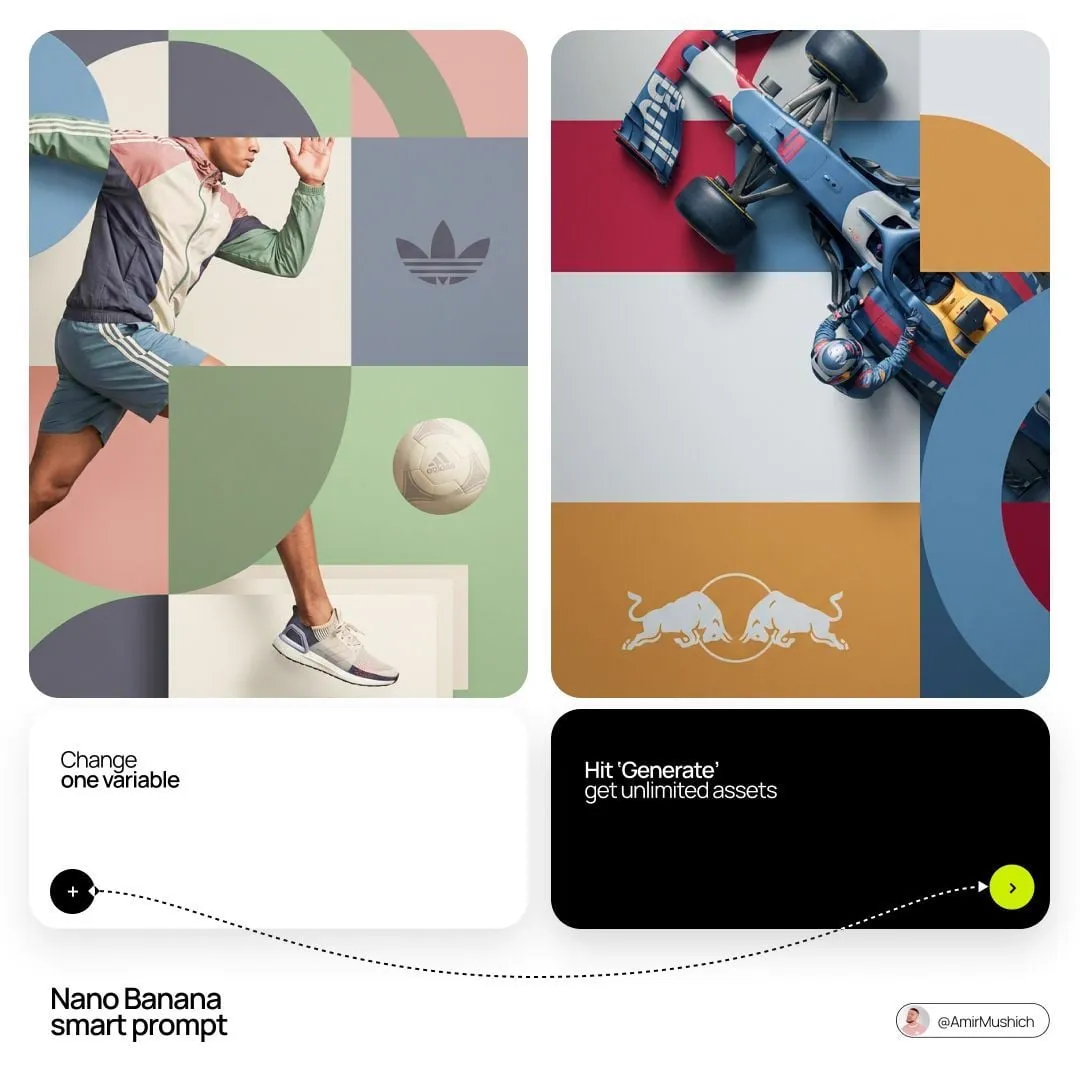
Generate five still images that define the look: color palette, contrast, texture, lens character. Lock them as references. Every subsequent shot should be compared against these. Consistency across a 30-second spot comes from constraining inputs, not from hoping.
Scripts and voiceover timing
Write the voiceover first and record a scratch track. Read it aloud with a stopwatch. Thirty seconds of narration is roughly 75 to 85 words. Once you know the exact timing, you can decide how many visual beats you need and how long each one should run.
The Production Workflow, Step by Step
Step 1: Define the one message
Write a single sentence: 'After watching this, the viewer should believe that ___.' If you cannot fill the blank, the video is not ready to generate. Every shot either supports that sentence or gets cut.
Step 2: Generate in priority order
Generate the hardest shots first. If the transformation shot does not work, the whole concept may need to change, and you would rather learn that on day one. Easy shots — textures, skies, abstract motion — can be produced in bulk at the end when you know the exact length you need.
Step 3: Generate coverage, not perfection
For each shot, request several variations with small prompt changes: a different camera angle, a different time of day, a different pacing. Save everything in a numbered folder with the prompt in the filename. You will forget which prompt produced which clip within an hour.
Step 4: Cut for rhythm before you cut for beauty
Assemble a rough edit with placeholder text and a scratch voiceover. Watch it without sound, then with sound, then muted again. If the rhythm works mute, the visuals are carrying their weight.
Step 5: Fix continuity in the edit, not the generator
Small inconsistencies — a slightly different color temperature, a shifted horizon — are easier to solve with a grade, a crop, or a two-frame dissolve than by regenerating. Reserve regeneration for genuine failures: melted faces, unreadable text, impossible physics.
Editing and Post-Production
AI footage responds unusually well to a strong grade. A consistent color treatment makes clips from different models feel like they belong to the same production.
Practical moves that pay off:
- Stabilize and re-time slightly. A five percent speed change can fix a shot that feels a beat too slow.
- Add a subtle grain or texture layer across the whole timeline to unify render styles.
- Use a short transition — a whip, a light leak, a hard cut on a beat — to hide small continuity gaps.
- Keep text overlays in the editor, never in the generation. Generated text is unreliable and locks you out of localization.
- Design your sound before you finalize picture. Sound design changes perceived pacing far more than most editors expect.
Captions deserve special attention. A large share of promotional viewing happens muted, so burned-in or platform-native captions are not optional. Keep them to two lines, high contrast, and clear of the lower third where platform interface elements live.
One Concept, Many Deliverables
A well-built AI promo is a system, not a single file. Once the master 30-second cut exists, derive:
- A 15-second version that opens on the strongest visual and drops the setup.
- A 6-second bumper that shows the product and the offer only.
- A vertical 9:16 cut with tighter framing and larger captions.
- A square 1:1 version for feeds that crop awkwardly.
- A silent loop for lobby screens, trade show displays, or a website hero.
Generate with the vertical deliverable in mind from the start. Reframing in post is possible, but composing for a tall frame at generation time produces noticeably better results — more headroom, more deliberate subject placement, fewer awkward crops.
Common Mistakes and How to Avoid Them
Generating everything at maximum length
Longer clips drift more. Generate four to six second segments and cut them together. Short generations also give you more opportunities to select the best moment from each.
Ignoring the first two seconds
Promotional video lives or dies in the opening beat. Do not waste it on a logo animation or an establishing skyline. Open on motion, on a face, on a problem, or on the product doing something.
Over-specifying style words
Stacking fifteen adjectives like 'cinematic, hyper-realistic, ultra-detailed, award-winning' tends to produce generic mush. Three to five precise descriptors with a visual reference outperform any pile of superlatives.
Skipping the human pass
Before publishing, watch the final cut once with someone who has never seen it and ask them what the product is and who it is for. If they hesitate, the edit is not finished.
Forgetting the call to action
State the next step plainly in the last three seconds, visually and verbally. AI can generate a beautiful sequence that sells nothing.
Measuring What Actually Works
Track three things: hook retention at three seconds, completion rate, and click-through or conversion rate depending on the placement. If retention drops hard in the first three seconds, the opening frame is the problem, not the message.
Run the same concept with two different openings. Test a version with the product visible in frame one against a version that builds to the reveal. Small structural changes almost always outperform cosmetic tweaks.
Keep a library of winning shots with their prompts, settings, and model names, and a second library of failures. Over a few campaigns that archive becomes the most valuable asset your team owns.
FAQ
Do I need to know how to edit video?
You need basic editing instincts — rhythm, pacing, when a cut should land. Tools have lowered the technical bar, but the judgment is still human. A simple editor and a willingness to cut hard is enough to start.
Can AI-generated promo videos look professional enough for paid campaigns?
Yes, with two conditions: consistent art direction and a genuine editing pass. Raw generations rarely hold up. Graded, sound-designed, well-paced cuts do.
How long should a promotional video be?
As short as the message allows. For social placement, 15 seconds is a strong default, with 6-second cutdowns for retargeting and 30 seconds reserved for landing pages where the viewer has already opted in.
What if the model cannot produce the shot I need?
Break it into simpler components. Replace the impossible camera move with a static composition plus an edit-based move. Replace a complex interaction with a close-up of a hand or a detail shot that implies the action.
Should I use one model or several?
Several, chosen per shot. Use your highest-fidelity option for hero moments and faster tools for coverage. Standardize the look in post-production so the viewer never notices.
How do I keep characters consistent across shots?
Use reference images, keep wardrobe and lighting descriptions identical, and generate in the same aspect ratio. Where drift persists, favor shots that show faces briefly or from behind.
Bringing It Together
The teams producing the strongest AI promotional videos are not chasing novelty. They have a clear message, a disciplined shot list, a small stack of models they understand well, and a real editing process that turns fragments into a spot.
Start smaller than you think you should. Build a 15-second video that does one thing clearly. Then build a system around it — prompts, style references, cutdown templates, a reusable sound palette — so the next one takes a fraction of the time. That compounding workflow, not any single generation, is what gives you an edge.
