
Why AI Fits Short Film Better Than Features
Short films sit in a strange economic space. They are long enough to demand real craft, real planning, and real post-production discipline, yet short enough that nobody can justify a full studio infrastructure around them. That mismatch is exactly why artificial intelligence has landed harder in short-form narrative filmmaking than in almost any other part of the moving-image world.
A short film can be ten pages, five locations, three actors, and a single weekend of shooting. Or it can be an ambitious twelve-minute science fiction piece with a spaceship interior, a rain-soaked neon street, and a creature that has to read as believable for ninety seconds of screen time. The second version used to require either a generous budget or a willingness to compromise. Generative tools have collapsed that gap considerably.
But the interesting shift is not that AI can produce a striking shot. It is that AI can now sit inside a repeatable creative pipeline: a place where a director develops a visual language, tests it cheaply, locks decisions, and then executes with fewer surprises. This article walks through that pipeline end to end, with practical decision points, tool categories, and the mistakes that quietly wreck AI-assisted short films.
The Pre-Production Layer: Concept, Script, and Storyboards
Pre-production is where AI delivers the highest return per hour invested, because every mistake caught here costs almost nothing to fix.
From premise to visual treatment
A director typically starts with a premise, a mood, and a handful of reference images. Feeding a short written description plus a reference board into an image generator produces a visual treatment in minutes rather than days. The goal is not to generate final art. The goal is to generate enough variation that you can feel which direction the film wants to go.
A useful habit is to generate three distinct treatments rather than thirty variations of one: one grounded and naturalistic, one stylized and graphic, one heightened and surreal. Print them, put them side by side, and pick. This forces an aesthetic decision early, which saves enormous time later when you are prompting individual shots and trying to keep them coherent.
Scene breakdown and shot lists
Language models are genuinely good at structural labor. Hand them a screenplay and ask for a scene breakdown by location, time of day, cast required, and emotional beat. Ask for a shot list organized by coverage priority. Ask for a shooting order that respects actor availability and lighting continuity. None of this is creative work, and all of it consumes hours you would rather spend on the film.
The output is never final. Treat it as a first draft from a competent but slightly literal assistant director. Your job is to cut, merge, and reorder based on what you actually want the audience to feel.
Building a continuity bible
Consistency across shots is the single hardest technical problem in AI-assisted filmmaking. Solve it with documentation before you solve it with technology. A continuity bible should contain:
- Character sheets with the exact descriptors used in every prompt: age range, hair, wardrobe, distinguishing features, and the specific phrasing that produced the best likeness.
- Color and lighting rules per location: time of day, key light direction, practical sources visible in frame, contrast level.
- Lens and camera language: focal length equivalents, depth of field behavior, movement vocabulary.
- Named prompt templates that you reuse verbatim, changing only the action and framing.
This document becomes the shared contract between you, your collaborators, and every generative tool you touch. It also becomes the first thing you hand to anyone joining the project midstream.
Virtual Production: Generating Scenes Before You Build Sets
Virtual production used to mean LED volumes and game engines. Today it also means generating footage directly, and the quality ceiling has risen enough that intercutting generated shots with photographed shots is a real editorial option rather than a compromise.
Matching the model to the shot type
Different tools excel at different things, and treating them as interchangeable wastes time. A rough working taxonomy:
- Text-to-video models for establishing shots, atmosphere, and abstract transitions where continuity pressure is low.
- Image-to-video models for any shot where character likeness or production design must match a locked reference.
- Motion-transfer and performance tools for dialogue close-ups and physical beats where an actor's specific timing matters.
- Video-to-video stylization for applying a consistent grade, texture, or animation treatment across otherwise unrelated material.
- Local, node-based pipelines for shots requiring reproducible, parameter-controlled results.
A practical rule: generate the hardest shot first. If the creature shot works, everything else is downhill. If it does not, you have learned that before you have committed the rest of the film to that approach.
Motion control and temporal consistency
Flicker, morphing faces, and drifting backgrounds are the three failure modes that make generated footage unusable in a cut. Mitigations that work in practice:
- Keep shots short. Two to four seconds of generated material intercut with real footage reads as intentional. Eight seconds of drifting geometry reads as a mistake.
- Lock a reference frame. Generate or photograph a still, approve it, then animate from that still rather than from text alone.
- Reduce the number of variables per generation. Change camera move or change subject action, not both.
- Generate three takes of every hero shot and keep all of them. You will need an alternate when a blink lands wrong.
Camera language in a prompt-driven pipeline
Generated footage tends to default to a smooth, weightless, slightly floaty camera. Counteract it deliberately. Specify the camera support (handheld, shoulder-mounted, tripod, dolly), the movement, and the motivation in your prompt. Then reinforce the decision in post by adding subtle camera shake, gate weave, or lens breathing to unify generated and photographed shots.
The goal is a single visual grammar, not the best individual shot. A slightly imperfect shot that matches the film's language beats a flawless shot that looks like it came from a different movie.
Sound and Music as a First-Class Layer
Sound is where AI-assisted shorts most often fall apart, because directors treat it as a finishing step rather than a design layer. Do the opposite.
Score and atmosphere
Music generation tools can produce a usable temp score in minutes, which changes how you edit. Cutting to a real temp score rather than silence reveals pacing problems immediately. Use generated music to lock rhythm, then decide whether to keep it, refine it, or replace it with a composer.
Atmosphere beds are equally valuable. Room tone, distant traffic, wind, rain, and low-frequency rumble do more for perceived production value than an extra visual effect. Generate or source them early and lay them under the entire timeline so you are always cutting in a world that sounds real.
Voice, dialogue, and repair
Voice synthesis has legitimate uses in short film: scratch dialogue for animatics, temp ADR for a performance you want to test, narration, and translation. It also has a clear boundary. If a performance is the emotional center of the film, an actor should deliver it. Audiences detect synthetic delivery in intimate close-ups even when they cannot articulate why.
Where AI is unambiguously helpful is repair: noise reduction, dialogue isolation, de-essing, and matching ADR recorded in a different room to the original production audio. These are invisible wins that raise the whole film.
Mixing discipline
The most common error is over-loudness. Generated scores often arrive heavily compressed and hot. Pull them down, carve space in the mid-range for dialogue, and resist the temptation to let music carry emotional beats that the performance should carry. A reference mix at a consistent monitoring level will expose this faster than anything else.
Post-Production: Assembly, Color, and Delivery
Selects and rough assembly
Transcription and shot-tagging tools turn hours of footage into a searchable transcript. Search for a line, jump to the take, drop it on the timeline. This alone can cut a day out of a short film edit. If your edit software supports text-based editing natively, use it.
Color grading with AI assistance
Automatic shot matching is genuinely useful when you are cutting generated shots against photographed shots with different color science. Use it to bring the two worlds into the same neighborhood, then grade by hand for mood. Automated looks applied globally tend to flatten the film into a single temperature, which reads as cheap.
A reliable order of operations:
- Normalize exposure and white balance shot by shot.
- Match generated and photographed material for contrast and saturation.
- Apply a creative look across the film.
- Add texture, grain, and halation to unify the sources.
- Grade in context, watching sequences rather than individual shots.
Cleanup, upscaling, and finishing
Upscaling tools can lift generated footage to delivery resolution, but they amplify artifacts as readily as detail. Test upscales on the shots with the most motion and the least detail, because those fail first. Object removal and paint-out tools handle boom shadows, logos, and unwanted background elements that used to require rotoscoping.
Then export properly. Deliver a master at a sensible bitrate, a web version at an appropriate resolution, and a subtitle file. Generated dialogue and synthetic voices make captions more important, not less.
A Workflow You Can Actually Run
Here is a sequence that works for a ten to fifteen minute short with a small team.
Step 1: Lock the logline and tone
One page, one paragraph, three reference images. No generation yet.
Step 2: Generate a treatment
Three visual directions, printed and compared. Choose one. Write down why you chose it, because you will need that reasoning when you are tired and tempted to drift.
Step 3: Break down the script
Scene list, shot list, continuity bible. Approve the shot list before generating anything.
Step 4: Storyboard and animatic the whole film
Even rough boards cut to temp music will reveal whether the film works. Fix structure here where it is free.
Step 5: Shoot what you can, generate what you cannot
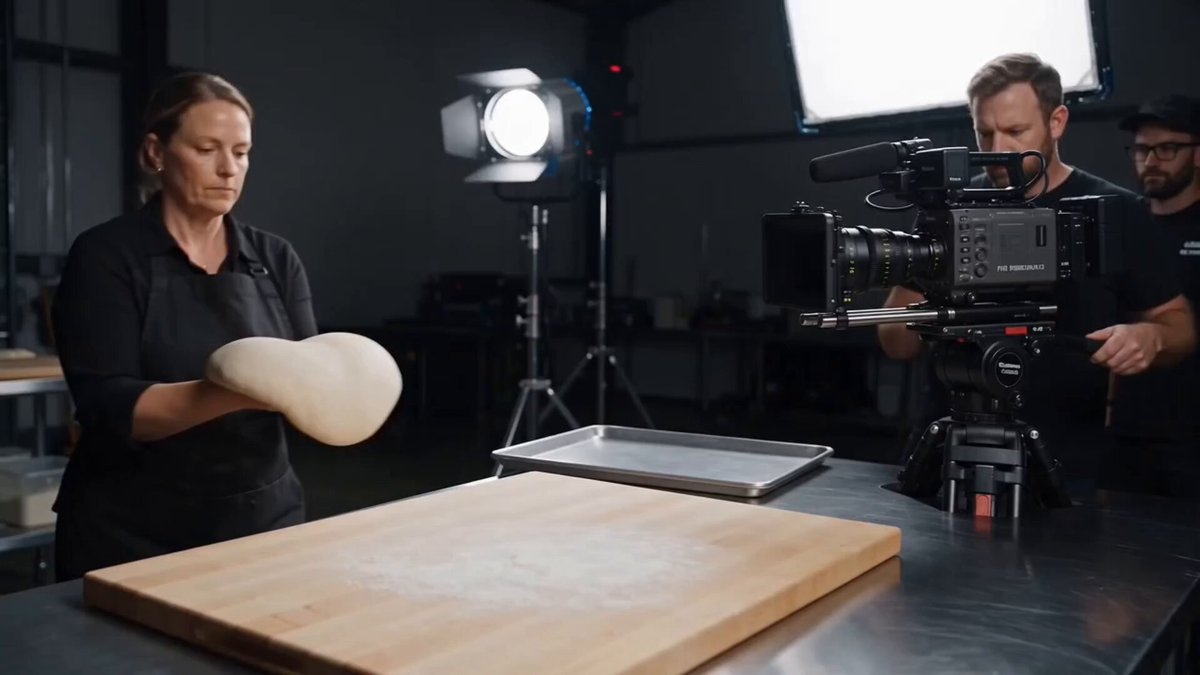
Photograph the scenes that depend on performance. Generate the scenes that depend on scale, spectacle, or impossibility. Note clearly in your edit which is which so you can match them deliberately.
Step 6: Build sound alongside picture
Temp score, atmosphere beds, scratch dialogue. Cut with sound from day one.
Step 7: Finish, test, and deliver
Grade, mix, caption, and screen it for three people who will tell you the truth. Then release.
Where AI Wins and Where Humans Still Win
AI wins on volume, variation, and iteration speed. It can produce forty versions of a shot before lunch. It never gets tired of a rewrite. It is excellent at translating a description into an image and a structure into a document.
Humans win on intention, restraint, and taste. Deciding which of those forty shots serves the story is a human judgment. Knowing that the film does not need a shot at all is a human judgment. Performance, timing, rhythm, and the decision of what to leave out remain stubbornly human.
The most common creative failure in AI-assisted filmmaking is not ugly imagery. It is a film with no point of view, because every shot was generated from a slightly different aesthetic instinct. The antidote is a locked visual bible and a director willing to say no.
Mistakes That Quietly Ruin AI-Assisted Shorts
- Generating before writing. Spectacular footage in service of a vague story still reads as a demo reel.
- Inconsistent character treatment. Fix likeness with a locked reference image and a fixed prompt template, not with hope.
- Overlong generated shots. Keep them short and let editing create continuity.
- Neglecting sound. Weak audio is the fastest way to make a good-looking film feel amateur.
- Uniform color grading. Global automated looks flatten everything into the same temperature.
- Chasing resolution over motion quality. A clean 1080p shot beats a smeared 4K one.
- Skipping the animatic. Every structural problem you skip here costs ten times more later.
- No legal hygiene. Keep records of source material, model terms, and licenses for anything you distribute publicly.
Team, Schedule, and Budget Realities
An AI-assisted short film does not eliminate crew. It redistributes effort. You will likely need a director, an editor, a sound designer, and someone who owns the generative pipeline technically. That last role is real work: prompt engineering, model selection, reference management, and version control on assets.
Schedules get shorter but not trivial. Pre-production gets denser because iteration is cheap and therefore infinite if unchecked. Post-production gets longer because you have more source material to wrangle. The budget line that shrinks most is location and set construction. The line that grows is iteration time and finishing.
Set hard limits. Decide in advance how many generations per shot you will allow before moving on, and how many revision passes the edit gets. Without limits, cheap iteration becomes an endless loop.
FAQ
Can an AI-assisted short film play at festivals?
Many festivals now accept it, though submission rules vary widely and some require disclosure of generative elements. Read each festival's policy before submitting and prepare a short statement about your process.
Do I still need actors?
For any film where performance carries emotion, yes. Actors give you timing, subtext, and unpredictability. Generated performance is best used for distance shots, crowd work, and impossible scenes.
What is the minimum viable toolkit?
A writing and structuring tool, an image generator, one image-to-video model, a video editor, a sound tool, and a color tool. Resist adding more until each existing tool is fully understood.
How do I stop generated footage from looking generic?
Lock a narrow palette, a specific lens language, and a small set of locations. Constraints create style. Infinite options create mush.
How long should a short film be?
As short as the story allows. Under ten minutes is easier to program and easier to hold attention. If your story fits in six, do not stretch it to fifteen.
Can I mix generated and photographed footage convincingly?
Yes, if you match grain, contrast, motion blur, and camera behavior. Unify them in the grade and in sound, and keep generated shots short in the cut.
The Road Ahead
Short filmmaking is converging on a hybrid model: photograph what needs a human presence, generate what needs scale, and use AI for the structural and technical labor that nobody enjoys. Directors who thrive in this environment are not the ones with the most tools. They are the ones with the clearest vision of what the film should feel like, and the discipline to protect that vision through every tool decision.
Start small. Make a three-minute film with one generated sequence and one photographed scene, and take it all the way through sound, grade, and delivery. The pipeline lessons you learn will scale to your next film far faster than any new model release will.
