
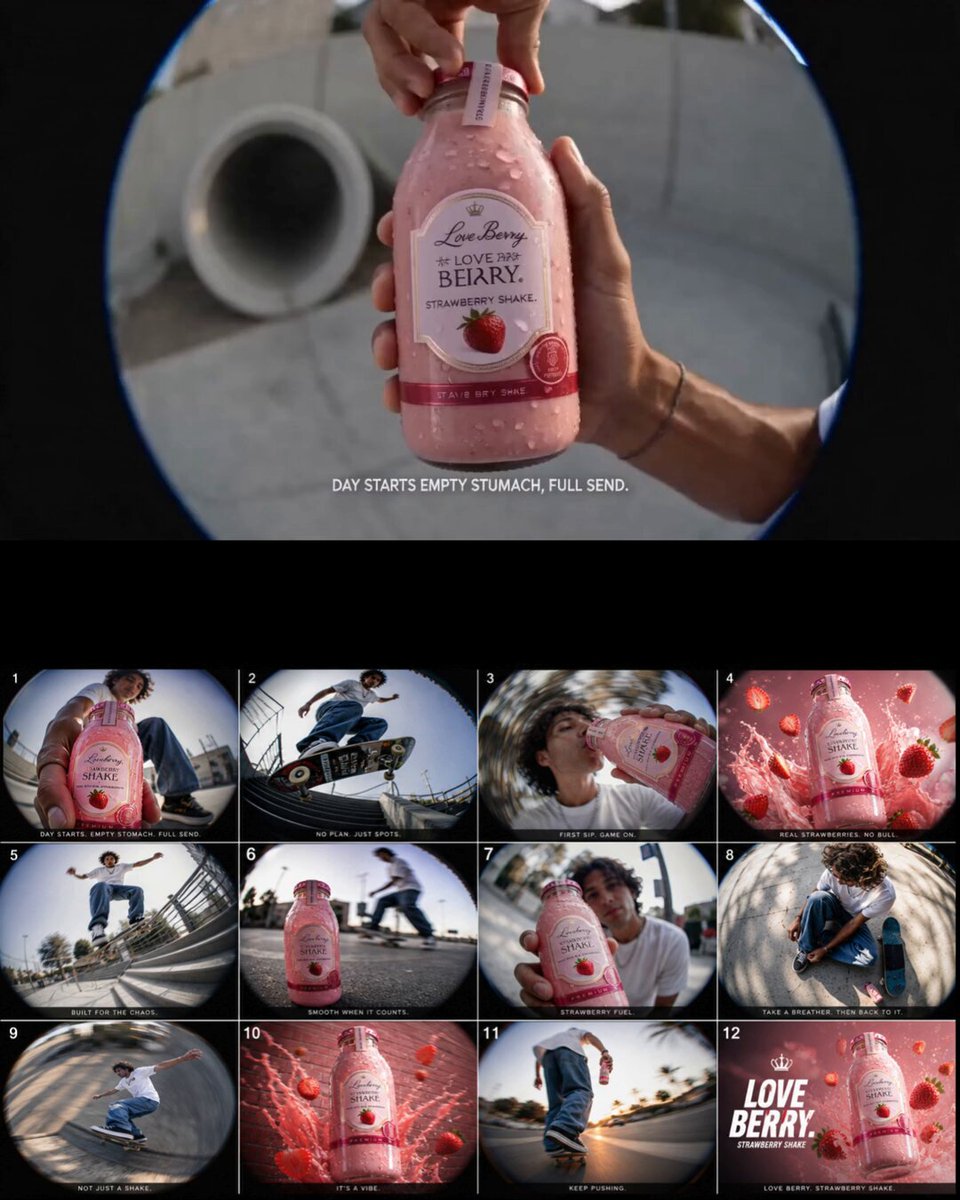
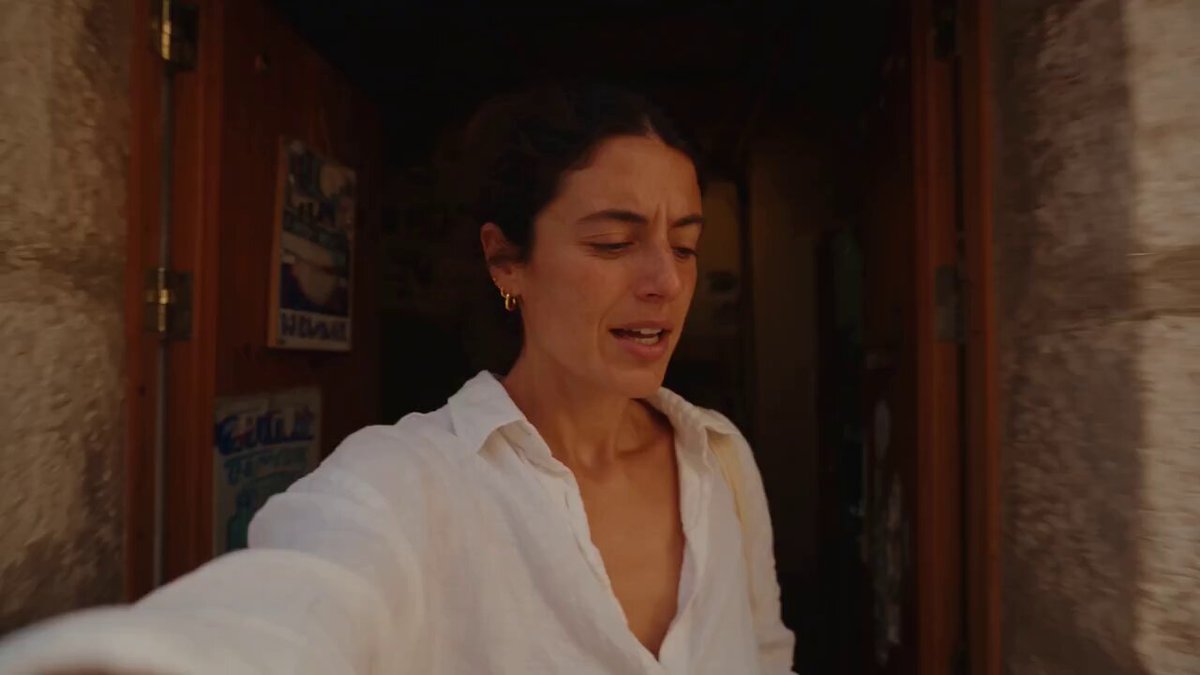
Why short-form ad creative became a production bottleneck
Short-form video is no longer one channel among many. It is the default unit of paid social, the highest-velocity format on most feeds, and the format most likely to be repurposed across platforms. That shift created a simple but painful math problem for marketing teams: the number of creative variants a campaign needs grows faster than the capacity to produce them.
A modern acquisition test rarely runs with one video. It runs with a hook variant, a proof-point variant, a price-forward variant, a testimonial cut, and a silent-first cut for autoplay environments. Each of those may need two aspect ratios and two lengths. What used to be a single shoot day now implies dozens of finished files, each of which must be on brand, legible without sound, and legally clean.
Traditional production handles this poorly. A studio shoot with talent, location, and a crew produces gorgeous footage with an unfavorable cost curve: the first asset is expensive, and the tenth asset is only marginally cheaper because editing, versioning, and re-approval still cost real hours. Animation and motion graphics have the same problem in a different shape. Every new message means rebuilding the scene.
Generative video changes the economics at the margins that matter most. Instead of reshooting, you regenerate. Instead of rebuilding a scene, you re-prompt it. The work shifts from physical production to direction, selection, and finishing — which is a skill most marketing teams already have in some form, just not yet organized into a pipeline.
The end-to-end AI-assisted ad workflow
The teams that get consistent results do not treat generative video as a magic button. They treat it as one station on an assembly line with clear inputs and outputs. The pipeline below is the version that survives contact with real deadlines.
Stage 1: Brief and message hierarchy
Everything begins with a single dominant promise plus the supporting proof. If your brief contains three equal messages, the video will contain none. Write the promise in one sentence a stranger could repeat after watching once.
Stage 2: Script and hook variants
Write the first two seconds before you write anything else. Generate eight to twelve hook options in plain text, then select three. Hooks are cheap to write and expensive to get wrong, so this is the highest-leverage writing you will do all week.
Stage 3: Shot list and keyframes
Translate the script into six to ten shots. For each shot, define subject, action, framing, and mood. Produce a still keyframe for the most important shots before generating motion, because stills are fast to review and easy to circulate for approval.
Stage 4: Motion generation
Generate short clips from each keyframe or prompt. Keep clips at the shortest duration that covers the edit — usually two to five seconds. Shorter generations fail less often and give the editor more control.
Stage 5: Assembly and finishing
Cut in a real editor. Add captions, music, sound effects, color treatment, and the end card. This is where the asset stops being a clip and starts being an ad.
Stage 6: Distribution and iteration
Launch with a defined test structure, capture performance by variant, and feed the winners back into the next brief. The loop is the product.
Writing a brief the model can actually follow
A creative brief written for humans is often too loose for generation. Humans infer. Models interpolate. The fix is not to write robotically, but to make the implicit explicit in a short, structured block.
A useful working brief includes the following fields:
- Audience and context: who is watching, on what platform, and in what frame of mind.
- Single promise: the one idea the viewer should retain.
- Proof: the reason to believe — a number, a demo, a comparison, a testimonial theme.
- Tone words: three adjectives that describe the feel, plus one adjective that would ruin it.
- Visual language: palette, lighting, camera energy, wardrobe, environment.
- Format constraints: aspect ratios, durations, safe-area margins, caption rules.
- Call to action: exact phrasing and whether it is spoken, shown, or both.
- Do-not-say list: claims, competitor names, regulated terms, and any phrasing legal has rejected before.
Two habits make this brief dramatically more useful. First, keep a reusable style block that describes your brand's visual grammar — lens feel, lighting direction, color temperature — and paste it into every generation request. Consistency across assets is usually what separates a campaign from a pile of clips. Second, attach a reference set of three to five approved stills. Reference images communicate more about tone in one glance than a paragraph of adjectives.
The brief should also state what success looks like in measurable terms: thumb-stop rate, three-second view rate, hold rate, click-through, or cost per result. Naming the metric changes creative decisions. A video optimized for hold rate is paced differently from one optimized for clicks.
From script to shot list to keyframes
The shot list is where an AI-assisted workflow either becomes efficient or becomes a slot machine. Structure it deliberately.
Start by numbering shots and assigning each one a job. Common jobs in a twenty-second ad include: interrupt, establish, reveal, demonstrate, prove, overcome objection, and close. If a shot has no job, cut it. Short ads punish generosity.
For each shot, write a compact specification:
- Subject: the specific person, product, or environment.
- Action: one continuous motion, not a sequence.
- Framing: wide, medium, close, macro, over-the-shoulder.
- Camera: static, slow push, handheld drift, orbit, tilt.
- Lighting: soft daylight, hard key, practicals at night, studio gradient.
- Duration: target seconds in the final cut.
Then produce keyframes for the shots that carry the most weight — typically the hook frame, the product reveal, and the close. Stills are dramatically faster to iterate than motion and cheaper to regenerate, so resolve composition, wardrobe, and color while the asset is still a single image. Ask three questions of every keyframe: Does it read at thumbnail size? Is the product legible? Would I stop scrolling?
For product shots, prefer generated environments around real product imagery rather than generating the product itself. Fake labels, warped logos, and invented packaging are the most common source of embarrassment in AI ads, and compositing a real product render into a generated scene eliminates the entire category of error.
Directing the generation pass
Generation is direction, not gambling. The following practices separate teams that produce usable clips on the first or second attempt from teams that burn a day cycling through outputs.
Prompt structure that behaves predictably
Write prompts in a consistent order: subject, action, environment, camera, lighting, style, duration, and constraints. Order matters less than consistency — once you find a phrasing pattern that works, reuse it across the campaign so that changes in output are attributable to changes in one variable.
Add explicit negatives for the artifacts you keep seeing. Typical offenders include text overlays, watermarks, distorted hands, extra limbs, jittery backgrounds, and rapid scene changes. Naming them reduces their frequency.
Conditioning with start and end frames
When a tool supports first-frame and last-frame conditioning, use it. Supplying a start frame locks the composition; supplying an end frame locks the destination, which is how you get a controlled camera move or a transformation rather than a random drift. This is the single most effective technique for making generated motion feel intentional.
For continuity between two shots, generate the last frame of shot A and use it as the first frame of shot B. The cut then feels like a camera change rather than a discontinuity.
Keep motion small and motivated
Subtle motion almost always survives review. Slow pushes, gentle parallax, a hand entering frame, steam rising, fabric moving — these read as cinematic. Large motion across complex scenes is where artifacts appear. If a shot needs dramatic action, break it into two shots with a cut between them instead of asking a single generation to do everything.
Generate more than you need, then stop early
Produce three to five candidates per critical shot and review them at speed in a contact-sheet layout. Judge at the size the audience will see. A clip that looks impressive full-screen but unreadable in a phone feed is not a good clip.
Assembly, sound, and caption craft
Generated footage becomes an ad in the edit. Three finishing decisions have outsized impact.
Rhythm. Short-form cuts are fast — often under a second during the hook and between one and two seconds afterward. Cut on motion and on the beat. Let one shot breathe near the end so the call to action lands.
Sound. Most viewers start muted, but sound still drives completion for those who turn it on. Use a music bed with a clear downbeat for the hook, add tactile sound effects on product moments, and keep voiceover tight. If you generate a voice track, verify pronunciation of brand names and numbers, and never let synthetic narration read a regulated claim.
Captions. Burned-in captions are close to mandatory. Keep them to two to four words per line, place them inside the safe area on every target ratio, and check them against platform interface overlays. Captions also make the ad accessible, which is both a legal consideration in many markets and a genuine performance factor.
Finish with an end card that carries the brand mark, the offer, and the call to action in a single glance. Reuse the same end-card composition across the campaign so viewers learn where the click lives.
Choosing tools without overbuying
Tool selection is where teams waste the most money, usually by buying for a capability they will use twice. Evaluate against your actual bottleneck instead.
- Volume of variants: if you need twenty assets a week, prioritize batch-friendly generation and reusable templates over a single high-fidelity model.
- Control needs: if brand consistency is the constraint, prioritize tools with reference-image conditioning and start/end frame control.
- Team skill: if editors are the ones building assets, prioritize tools that export clean, well-named files that drop into an existing editor without conversion steps.
- Review workflow: if approvals are slow, prioritize workflows that produce shareable stills and short previews early.
- Cost model: understand how usage is metered before you commit to a monthly volume, and model the cost of a failed generation that has to be repeated.
- Rights and terms: confirm commercial usage rights, indemnification posture, and whether outputs can be used in paid media.
A practical pattern for most in-house teams is a two-layer stack: one general-purpose model for exploratory shots and one controllable model for hero shots, plus a conventional editor and a captioning step. Resist adding a third generator until a specific shot type is demonstrably failing.
Testing variants that teach you something
Random variation produces noise. Structured variation produces knowledge.
Define a test matrix where each variant changes exactly one thing: the hook, the first frame, the offer, the pacing, the voice, or the call to action. If you change three things at once and one variant wins, you have learned nothing transferable.
Keep the following discipline:
- Minimum viable volume. Run enough impressions per variant that early noise does not drive decisions.
- One primary metric. Choose hold rate, click-through, or cost per result — not all three as equals.
- Fixed creative scaffolding. Keep the end card, captions, and music constant so differences reflect the variable under test.
- Documented hypotheses. Write down what you expect and why before launch, then compare.
- Promotion of winners. When a hook wins, promote it into the permanent style library so future briefs inherit it.
Over a few cycles this creates a compounding advantage: your briefs start from known-good hooks, and generation time goes into execution rather than discovery.
Governance, rights, and common mistakes
Before anything ships, resolve three questions. Do we have the rights to every element — footage, music, voice, likeness, and any real person depicted? Is the ad truthful, including any generated demonstration of product performance? And does platform policy or local regulation require disclosure of synthetic media?
Establish a lightweight review gate: a rights checklist, a claims check against your do-not-say list, and a visible-output check that catches text corruption, warped logos, and impossible physics. Two people, ten minutes, one checklist prevents most incidents.
The most common mistakes, in rough order of frequency:
- Generating the product instead of compositing a real one, producing illegible labels and distorted packaging.
- Overloading the first two seconds with brand introduction instead of an interrupt.
- Building one long generation and hoping to cut it, rather than generating short shots intentionally.
- Letting style drift across variants so the campaign looks like unrelated ads.
- Skipping captions and losing muted viewers.
- Testing too many variables at once and learning nothing.
- Ignoring rights and disclosure until a legal review stops a launch.
- Treating generation as the whole job and underinvesting in editing and sound.
- Scaling volume before the pipeline produces a reliable baseline quality.
FAQ
How many shots should a twenty-second AI-assisted ad have?
Eight to twelve cuts is typical, with a faster rhythm in the first five seconds. Prioritize clarity over count; a clean seven-shot ad outperforms a frantic twelve-shot one.
Can generated footage carry an entire campaign?
It can carry establishing shots, lifestyle context, environments, and abstract transitions very well. Product hero shots, human faces, and hands still benefit from real footage or careful compositing.
What is the fastest way to improve output quality?
Supply a start frame and, where supported, an end frame. Controlled composition removes most randomness and makes retries targeted rather than exploratory.
How do we keep brand consistency across many variants?
Write a reusable style block with lighting, lens, palette, and tone; attach a small reference image set; and lock the end card, caption style, and music bed across the whole campaign.
Do we need a dedicated AI video editor?
Not necessarily. Most teams assemble in a conventional editor and use generation tools upstream for shots. The editor remains the place where pacing, sound, and captions are controlled.
How do we avoid wasting budget on failed generations?
Generate in short durations, keep motion modest, review candidates in a contact sheet, and resolve composition at the still-image stage before spending on motion.
Should we disclose that video was generated?
Follow platform policy and local law, and follow your own brand's transparency standard. When in doubt, disclose — audiences rarely penalize honesty and frequently penalize its absence.
Putting it together: a weekly cadence
A sustainable rhythm looks like this. Monday: brief, hooks, and shot list. Tuesday: keyframes and approval. Wednesday: motion generation and selection. Thursday: edit, sound, captions, and review gate. Friday: launch, monitor, and log results. The following Monday begins with the winners from last week written into the new brief.
The competitive advantage in short-form advertising is not access to a particular model. It is the speed of the loop between a message and its measured response. Teams that shorten that loop — by making briefs precise, shot lists disciplined, generation directed, and testing structured — will out-produce larger, slower competitors without spending more per asset. The tooling matters, but only inside a workflow that knows what it is trying to learn.
