
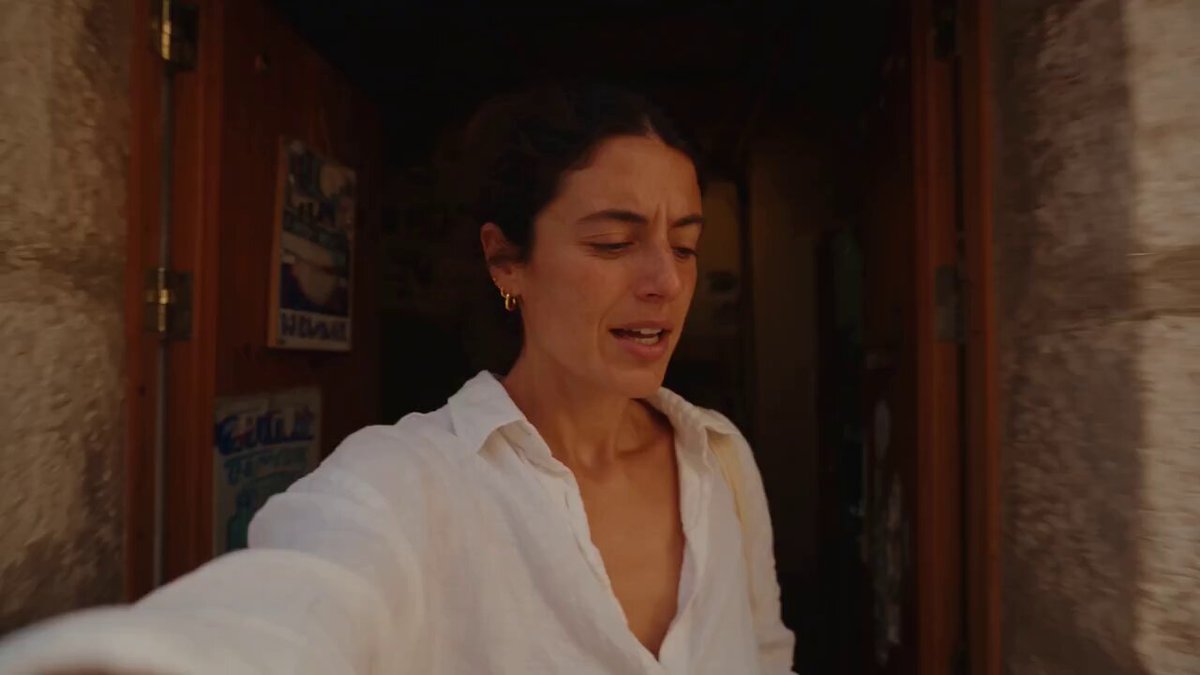
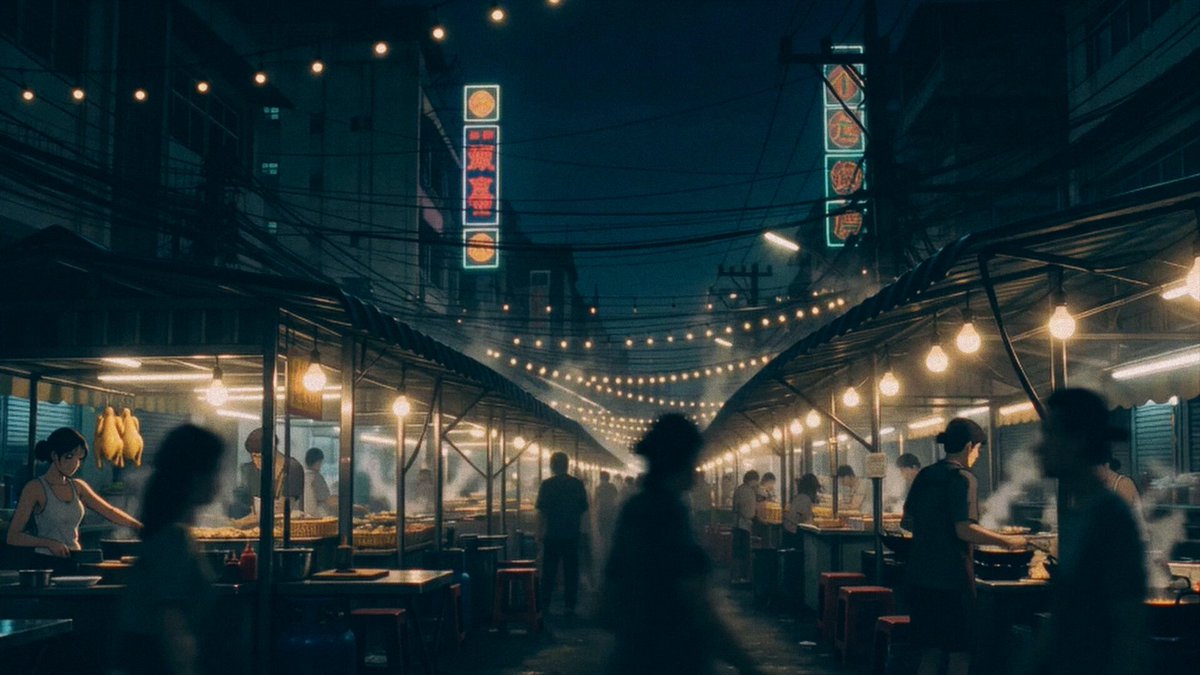
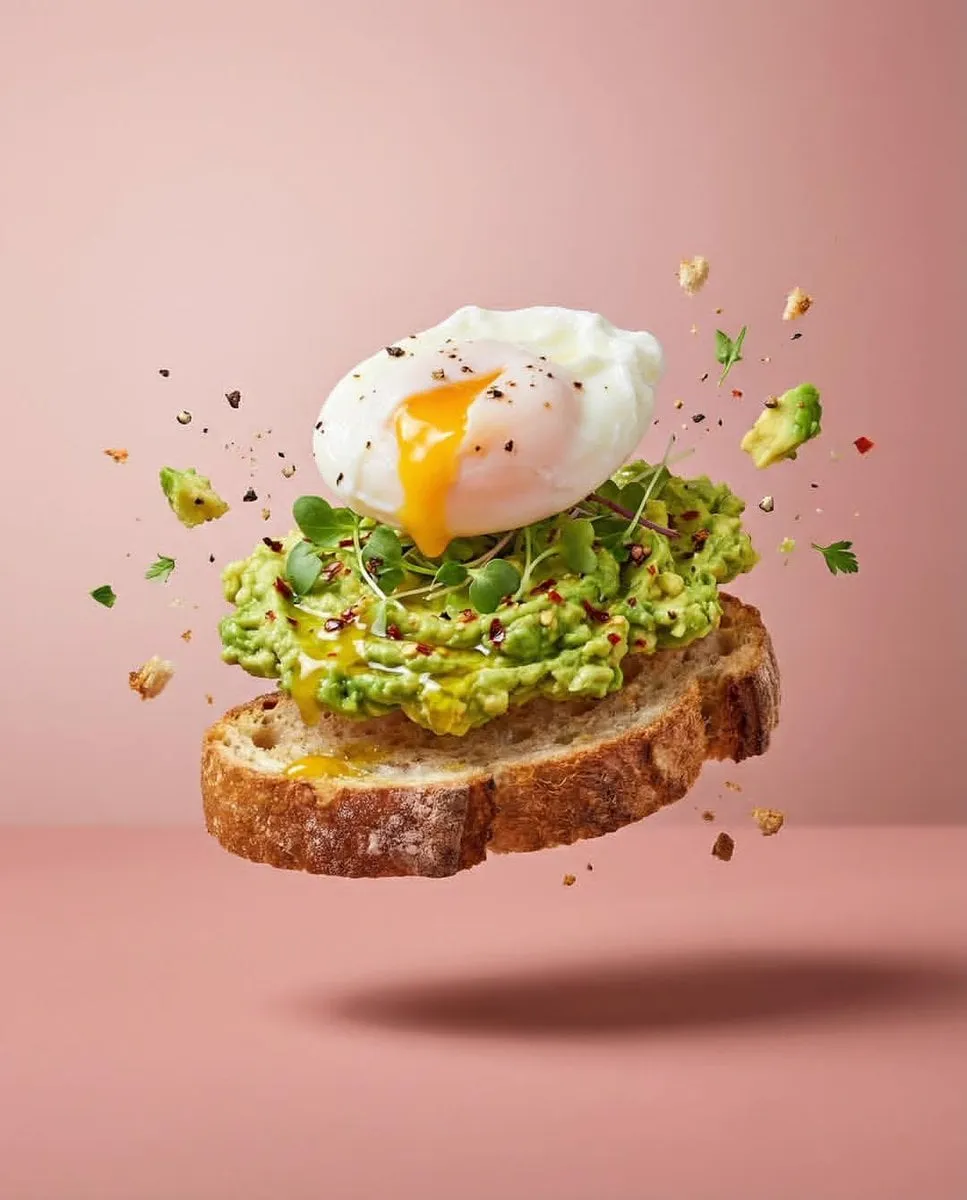
Short-form vertical video has stopped being a side experiment for most creators and brands. It is now the primary discovery surface, the primary ad format, and often the primary channel for an entire business. The bottleneck is no longer access to a camera or an editing suite. The bottleneck is throughput: how many finished, watchable clips a small team can ship per week without the quality collapsing.
Generative video models are how that bottleneck gets broken. A single operator with a clear workflow can plan, generate, assemble, and publish several vertical clips in a day, where a traditional shoot-to-edit pipeline might produce one. This guide lays out that workflow end to end: how the models actually behave, how to write prompts that survive contact with reality, how to keep characters and products consistent across a series, and how to finish clips so the algorithm and the audience both have a reason to keep watching.
It is deliberately tool-neutral. Model names change every few months; the workflow logic does not.
Why AI Short-Form Video Became a Core Production Skill
Three pressures pushed generated video from novelty to default.
Volume. Vertical feeds reward frequency. A creator who posts five times a week gets more shots at a breakout than one who posts once. Traditional production cannot scale frequency without scaling budget, crew, locations, and resets. Generation can, because the marginal cost of attempt number six is nearly identical to attempt number one.
Iteration speed. The most valuable property of a generative pipeline is not the first output, it is the fifth. You can generate six variants of a hook shot, drop the five weak ones, and keep the one where the camera move lands. That kind of rapid comparison is impractical on set.
Concept risk. Ideas that would be too expensive or too strange to shoot are cheap to test. A surreal product metaphor, an animated historical scene, a talking animal explainer—these are five-minute experiments instead of three-week productions.
What has not changed is the value of planning. Teams that treat generation as a slot machine produce a lot of forgettable footage. Teams that treat it as a production stage—with a shot list, a continuity sheet, and an edit plan—produce clips that look intentional.
How AI Video Generation Actually Works
You do not need to understand the mathematics, but you do need to understand the behavior, because prompt writing is essentially negotiating with those behaviors.
Text-to-video, image-to-video, and video-to-video
The three input modes serve different jobs.
- Text-to-video is best for establishing shots, abstract concepts, environments, and anything where you do not need an exact subject. It is the most flexible and the least controllable.
- Image-to-video takes a still frame and animates it. This is the workhorse for character-driven content, because you can approve the face and wardrobe before any motion exists. It gives you a stable anchor and drastically reduces the number of wasted generations.
- Video-to-video restyles or transforms existing footage. It is useful for turning a rough phone capture into a stylized clip, or for applying a consistent visual treatment across a series.
In practice, most polished short-form work is a hybrid: generate or source a key still, animate it, then cut the results together.
Keyframes, seeds, and motion control
Keyframes are the single most underused feature. Instead of describing a shot in a sentence and hoping, you supply a starting frame and sometimes an ending frame, and the model interpolates the motion between them. This is how you get a specific camera move or a specific transformation.
Seeds matter for consistency. Reusing the same seed with small prompt variations keeps lighting, grain, and composition in the same family, which makes separate clips feel like one series.
Motion control is where most disappointment originates. Models handle slow, single-subject motion far better than fast, multi-subject action. If a prompt demands three people running through a crowd while the camera orbits, expect artifacts. If it asks a single subject to turn their head under window light, expect something usable.
Where generation still breaks
- Hands and fine detail at small scale, especially during fast motion.
- Text rendering inside the frame—logos, signage, packaging copy.
- Physics continuity, such as objects that change weight or drink levels between shots.
- Multi-character interaction, where two subjects need to touch, hand off, or converse.
Knowing these limits is a production advantage: write shots that avoid the failure zones rather than trying to fix them in the edit.
Pre-Production: Hooks, Scripts, and Shot Lists
Generation is fast; deciding what to generate is where the value is created.
The three-second rule, applied properly
The first frame and first spoken line decide whether the rest of the clip is watched. Useful hook patterns for vertical video:
- Contradiction — state something that conflicts with the viewer's expectation.
- Visible stakes — show the before state, damaged or messy, so the payoff has contrast.
- Direct address with a promise — "here is the version that actually works."
- Motion-first — open mid-action so the viewer's brain has to catch up.
Write three hooks per video concept and generate all three as separate opening shots. Choose in the edit, not in the abstract.
Writing a shot list an AI can follow
A usable shot list has one row per generation attempt, with columns for: shot number, duration, subject, action, camera, lighting, style reference, and continuity notes. Keep each shot to a single action. If a shot needs two actions, it is two shots.
A three-action shot list for a thirty-second clip might look like:
| # | Duration | Shot |
|---|---|---|
| 1 | 0:00–0:03 | Close-up, product in hand, slow push in |
| 2 | 0:03–0:10 | Medium shot, subject explains the problem |
| 3 | 0:10–0:18 | Insert shots, three quick results, no dialogue |
| 4 | 0:18–0:28 | Wide shot, payoff moment |
| 5 | 0:28–0:32 | End card with text overlay added in the edit |
Script formats that work
Three script shapes cover most short-form needs: the problem–proof–payoff structure for product content, the question–answer structure for educational clips, and the scene–twist structure for entertainment. Pick one shape per video and do not mix.
Prompt Design for Short-Form Video
Prompting for video is different from prompting for images, because you are describing motion and time, not just a frame.
The five-slot prompt formula
A reliable prompt covers five slots, in this order:
- Subject — who or what, with two or three specific descriptors.
- Action — one verb, present tense, slow and continuous where possible.
- Camera — shot size plus movement: "medium close-up, slow dolly in."
- Light and environment — time of day, source, color temperature, weather.
- Style — film stock, lens, rendering reference, aspect ratio.
Example skeleton: "A ceramic mug on a wooden desk, steam rising slowly, medium close-up with a gentle push in, morning window light from the left, soft shadows, cinematic 35mm look, vertical 9:16."
That prompt is boring on purpose. Boring prompts generate predictably.
Negative prompts and failure modes
Explicitly excluding problems works better than describing perfection. Typical exclusions: text, watermarks, extra limbs, distorted faces, jump cuts, camera shake, oversaturated colors, duplicate subjects.
Build a prompt library
Keep a document of prompts that produced usable output, tagged by use case: talking head, product insert, environment establishing shot, transition. Over a month this becomes the most valuable asset in your pipeline, because it converts generation from exploration into assembly.
Consistency: Characters, Products, and Worlds
Consistency is what separates a channel from a pile of clips. Viewers recognize faces, wardrobes, color palettes, and framing patterns faster than they can articulate them.
Reference sheets
Create one reference image per recurring character or product, from two or three angles, in neutral lighting. Use it as the anchor for every image-to-video generation. When the model drifts, the reference pulls it back.
Continuity notes
Keep a short text block you paste into every related prompt: wardrobe, hair, accessories, key props, environment, and color grade. Something like: "Same subject as reference: navy overshirt, short dark hair, silver watch, matte grey studio wall, cool white key light." Copy-paste beats memory.
Product accuracy
Generated footage of a real product will almost never be label-accurate. Two options work: keep products out of the generated frames and insert real photography in the edit, or show the product only in silhouette, motion blur, or partial frame where small inaccuracies are invisible. Do not ask a model to render packaging text.
Worlds, not just people
Series identity also comes from repeated environments and transitions. If every video opens with the same desk, the same window light, and the same cut rhythm, the audience starts to feel a format rather than a random upload.
Post-Production: Pacing, Sound, and Captions
Generation gives you raw material. Finishing is what makes it watchable.
Cut for retention
A practical first-pass rule for vertical: cut every 1.5 to 3 seconds, and never hold a shot longer than four seconds unless it is a deliberate hold on a payoff. If a generated shot has a good moment and a weak tail, trim the tail. Generated clips often have half a second of drift at the ends—cut it.
Sound carries more than image
Audio is the retention mechanism. A simple bed of one music track, one ambience layer, and clean voiceover or dialogue will outperform a visually stronger clip with mismatched sound. Keep music under the voice at roughly -18 to -14 dB, and place a small sound accent on every cut in the first five seconds.
Captions and overlays
Most viewers watch with sound off at least part of the time. Burned-in captions, two to five words per line, positioned above the lower interface area, are effectively mandatory. Add overlays in the editor, never generated in-frame—generated text is unreliable.
Export discipline
Standardize on 1080×1920, 30 or 60 fps, high bitrate, and loudness normalized to roughly -14 LUFS for social platforms. Having a fixed export preset removes a decision from every publish day.
A Repeatable Weekly Workflow
A schedule beats inspiration. One workable pattern for a solo creator producing five clips a week:
Day 1 — Research and hooks
Spend sixty to ninety minutes collecting hooks that performed in your niche, writing ten concepts, and choosing five. Write the shot lists for all five now, not later.
Day 2 — Batch generation
Generate all images first, approve the anchors, then animate. Batching by stage rather than by video keeps your head in one mode and cuts wasted generations dramatically. Aim for three attempts per shot, maximum.
Day 3 — Assembly
Edit all five clips in one sitting with the same template: same caption style, same music family, same intro cadence, same export preset.
Day 4 to 7 — Publish and measure
Publish on a schedule. Track three numbers per clip: three-second retention, average watch time, and saves or shares. Saves and shares are the strongest signals for short-form distribution. Feed the winning hook style back into next week's concept list.
Keep a kill list
Every month, delete or archive the prompt styles and hook formats that consistently underperform. Pipelines rot when they only accumulate.
Common Mistakes and How to Avoid Them
- Generating before planning. Fifteen minutes of shot listing saves hours of unusable output.
- Overloaded prompts. Three ideas in one prompt produce mush. One shot, one action.
- Ignoring the first frame. If the opening frame is not visually arresting, retention dies before the hook lands.
- No continuity document. Without it, the series looks like unrelated uploads within two weeks.
- Chasing model features. New capabilities are useful only when they solve a specific shot problem you already have.
- Skipping audio. Weak sound design is the most common reason a technically impressive clip fails.
- Publishing without a template. Inconsistent captions, pacing, and thumbnails cost more attention than any single weak clip.
- Never reviewing data. Ten minutes of metrics review per week outperforms an extra hour of generation.
Choosing Tools: Decision Criteria
Rather than chasing a single best model, evaluate the stack against your actual constraints.
| Criterion | What to check |
|---|---|
| Input modes | Does it support image-to-video and keyframes, not just text? |
| Clip length | Can it produce shots long enough to trim, not just two-second fragments? |
| Vertical nativity | Are 9:16 outputs clean, or cropped from landscape? |
| Consistency controls | Reference images, seeds, or subject locking |
| Iteration cost | How fast and how affordable is attempt number ten? |
| Export and licensing | Rights for commercial use, resolution, watermarks |
| Editing handoff | File formats and codecs your editor accepts without conversion |
Run a two-week pilot before committing: generate twenty shots, edit three clips, publish them, and look at the retention curve. If retention holds past three seconds and past ten seconds, the pipeline works. If it collapses at three seconds, the problem is usually the hook, not the model.
For most creators, a stack of one image generator, one video generator, one editor with strong caption tooling, and one audio library covers everything. Adding more tools mid-pipeline adds friction without adding quality.
FAQ
How long should an AI-generated short video be?
Fifteen to forty-five seconds covers the majority of formats. Aim for the shortest duration that fully delivers the hook and the payoff. If the clip can lose three seconds without losing meaning, it should.
Do I need to disclose that a video was AI-generated?
Rules differ by platform and jurisdiction, and some require labels for realistic synthetic media. Check the current policy for each platform you publish on, and when in doubt, label it. Disclosure rarely hurts performance; a removal does.
Can AI video replace filming entirely?
For environments, concept shots, stylized content, and B-roll, yes. For authentic talking-head content, trust building, and interviews, filmed footage still outperforms. The strongest channels mix both: real faces plus generated support shots.
Why do my generated faces change between clips?
Because text-only prompts have no memory. Fix it by generating a reference image first, approving it, and using image-to-video for every subsequent shot with the same anchor and a consistent continuity block in the prompt.
What is the fastest way to improve output quality?
Slow down the motion. Reduce the number of simultaneous actions in a prompt, shorten the clip, and increase contrast in the lighting description. Most low-quality output comes from asking for too much movement in too little time.
How many takes should I generate per shot?
Set a hard limit of three, and pick the best even if it is imperfect. You can usually rescue a decent shot with trimming and sound. Unlimited attempts are how a one-hour task becomes a six-hour one.
Should I use the same visual style for every video?
Yes, within a series or channel. Consistency is the mechanism that turns casual viewers into subscribers. Vary the ideas, not the visual grammar.
Key Takeaways
AI short-form video is a production discipline, not a shortcut. The teams getting results are the ones treating it like a pipeline: plan the hook, write the shot list, lock the references, batch the generation, finish with real sound design and burned-in captions, then review the retention data and iterate.
Start with one series, one format, and one visual style. Build a prompt library you trust, a continuity sheet you reuse, and an export preset you never touch. Once five clips a week feel routine, the constraint shifts from production capacity to idea quality—which is a much better problem to have.
