
Why AI reshapes the short-video script workflow
A short video script has always been an odd document. Half of it is prose meant to be spoken aloud; the other half is a set of production instructions that only make sense to whoever is holding the camera. When some of your camera work comes from an AI generator, that second half becomes the most valuable part of the file. She looks worried in the rain gives a generator almost nothing. Medium shot, rain-slick alley, character lit from the left by a neon sign, slow push-in, three seconds gives it a scene.
That shift rewrites your order of operations. Instead of writing dialogue first and figuring out visuals later, you develop story beats and visual grammar side by side. AI earns its place in three jobs: expanding a thin idea into competing directions, converting a written beat into a described frame, and holding a character or location steady across shots. It should not decide what the video is about. That stays with you.
The workflow below is built for vertical short-form video in the 15 to 90 second range — social posts, paid ads, or an episodic series — and it assumes you want something repeatable rather than a one-time lucky result.
Step 1: Lock a concept worth filming
Write a five-line premise before you open a browser tab. Each line answers one question:
- Who is on screen, described in a way a stranger could picture?
- What do they want in the first three seconds?
- What blocks them?
- What twists the situation?
- What does the ending cost, reveal, or promise?
If any line is vague, the shot list will be vague too. Run the premise through two fast tests. First, the mute test: would the idea still land with sound off? Second, the swap test: could a competitor publish the same script with their logo on it? If yes, the concept is not specific enough.
This is the cheapest place to use AI. Ask for eight variations of the premise with different stakes — one absurd, one intimate, one instructional, one confrontational. You are not looking for the best-written version; you are looking for the version that makes you say I have not seen that framing before. Keep the two strongest, kill the rest, and move on. Most weak short videos were doomed at this stage, not in the edit.
Step 2: Build a beat sheet that survives the scroll
A short video is a budget of seconds. Spend them deliberately.
For a 30-second piece, a dependable shape looks like this:
| Beat | Time | Job |
|---|---|---|
| Hook | 0–3s | Interrupt, promise, or provoke |
| Setup | 3–8s | Give just enough context |
| Escalation | 8–16s | Raise pressure, add a new element |
| Turn | 16–22s | Change direction or reveal |
| Payoff | 22–27s | Deliver the thing you promised |
| Button | 27–30s | Land the line, loop, or call to action |
Every beat needs a visual event, not just a spoken one. He explains the problem is not a beat. He drops a cracked phone on the counter and the screen lights up anyway is a beat.
Write each one as a single plain-language sentence first, then add the emotional target — curious, tense, amused, relieved — and the duration. Keep this document separate from the shot list. When a video underperforms, the beat sheet tells you whether the problem was structure and the shot list tells you whether it was execution. You will waste hours if you cannot tell the difference between the two.
Step 3: Turn beats into a shot-by-shot breakdown
Write shot descriptions a generator can actually use
A render-ready shot description follows a stable order: subject, action, environment, lighting, camera, duration, mood. Keep the order identical across the whole script so you can scan the list and spot instantly which shots are missing a lighting note.
Compare these two lines:
- Weak: A woman walks through a market, cinematic.
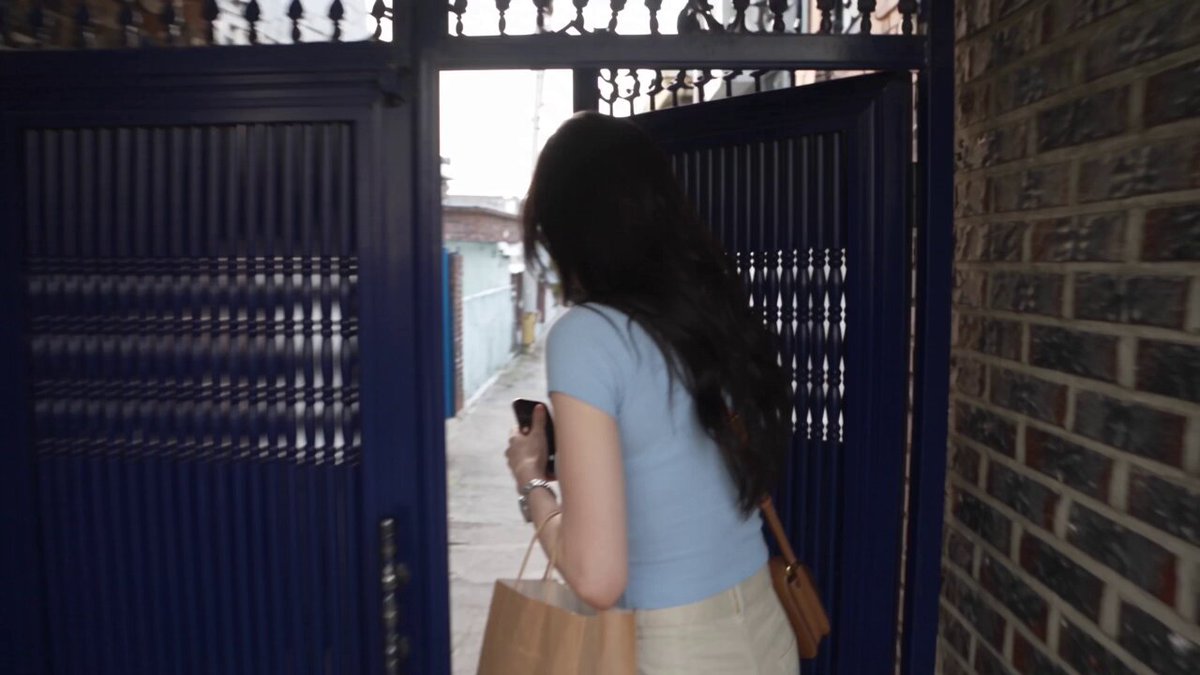
- Usable: Woman in a red jacket, mid-30s, walking away from camera with a paper bag; narrow night market alley, warm tungsten string lights overhead, wet ground reflecting colour; handheld, slight sway, medium-wide; four seconds; busy, slightly lonely.
The second version is longer, but it removes guesswork, and guesswork is what creates reshoots.
Choose camera angles and movement on purpose
Short-form video has a vocabulary you can plan in advance:
- Slow push-in for realization or rising tension
- Pull-back for isolation or a reveal of scale
- Static locked-off frame for comedy, deadpan delivery, or product beauty shots
- Handheld with slight drift for documentary authenticity
- Overhead or top-down for instructional steps and flat-lay product moments
- Low angle for dominance, high angle for vulnerability
Write the movement into the shot line, then read the whole sequence aloud as a list of movements. If six shots in a row are push-ins, the video will feel monotonous even if each frame looks good on its own. Alternate the rhythm: hold, move, cut, hold, move.
Plan coverage and transitions early
Mark every shot as required or optional. Required shots carry the story; optional shots are inserts you can drop when pacing runs long. Then note how each pair of shots connects — hard cut, match cut, whip pan, sound bridge. Transitions written at script stage save arguments at editing stage, and they often reveal that a shot you had planned is unnecessary. A sound bridge, for example, lets you cut from an interior to a street without generating an establishing shot at all.
Step 4: Keep characters and locations consistent across shots
Inconsistency is the fastest way to make an AI-assisted video look amateur. Three habits prevent most of it.
Use reference frames as anchors
Generate one clean, well-lit portrait and one full-body frame per character before you generate anything else. Reuse those frames as visual references in later prompts. When a character appears in a new environment, describe what changes — wardrobe, lighting, camera distance — and what stays fixed: face structure, hair, posture, distinguishing details.
Lock wardrobe, props, and lighting logic
Keep a small continuity sheet: clothing, key prop, hair, and the direction the main light comes from. A character lit from the left in one interior and from the right in the next interior reads as a different scene even if nothing else changed. Naming a single light source per location — window light from camera left, or a single overhead practical — keeps interiors looking like the same room across a whole sequence.
Keep a style anchor for the series
Decide on a look: grain, palette, lens character, contrast. Repeating three or four style words in every prompt does more for perceived quality than any single high-end shot. Consistency is what makes a series feel like a series instead of a folder of unrelated clips, and it is one of the few things viewers notice without being able to name.
Choosing the right tool for each stage
Different stages reward different strengths. Use this as a selection checklist rather than a brand list.
| Stage | What to look for | What to avoid |
|---|---|---|
| Idea expansion | Fast text generation, willingness to produce odd angles | Tools that only flatter your first draft |
| Beat sheet | Plain text editing, version history | Template lock-in that forces an unfitting structure |
| Shot description | Prompt structure support, saved presets | Freeform boxes that lose your formatting |
| Image generation | Character reference support, style consistency | Defaults that shift between sessions |
| Video generation | Camera movement control, clip length, motion stability | Heavy motion that melts faces and hands |
| Voice and sound | Pronunciation control, timing, easy re-records | Robotic pacing that fights your cuts |
| Editing | Vertical timeline, caption styling, fast export presets | Desktop-only tools that slow iteration |
Two decision rules cover most cases. First, pick the tool that lets you iterate in under a minute, because script work is exploratory by nature. Second, prefer one tool you have learned deeply over five you half-use; the quality gap between a well-prompted familiar model and a random new one is usually larger than the spec sheets suggest.
A worked example: a 45-second short from one idea
Premise: a courier discovers the package she is delivering is addressed to her own childhood home.
Beat sheet: hook (0–4s) — she checks the label and freezes; setup (4–10s) — rain, a familiar street sign; escalation (10–22s) — she walks the route, recognizing landmarks; turn (22–32s) — the door opens before she knocks; payoff (32–42s) — an older woman holds a matching parcel; button (42–45s) — two labels side by side, same handwriting.
Shot list, abridged:
- Close-up, gloved hands, water beading on a cardboard label; static; 3s.
- Medium shot, courier from behind, street sign in focus; slow push-in; 4s.
- Insert, cracked pavement with painted hopscotch; handheld drift; 2s.
- Wide, narrow street, figure small in frame; locked-off; 3s.
- Over-the-shoulder, door opening; handheld; 3s.
- Two-shot, matching parcels; slow pull-back; 5s.
Notice how the sequence alternates scale and movement, how every beat has a physical action, and how the payoff is visual rather than explained. That is the level of detail to aim for before you generate a single frame.
Mistakes that break AI-assisted scripts
- Overwriting the hook. Three seconds is not enough for a full sentence, a logo, and a title card. Choose one job for the opening.
- Describing emotion instead of behaviour. She is anxious renders as a neutral face. She checks her phone twice in four seconds renders as anxiety.
- Mixing camera grammar inside one shot. A push-in plus a pan plus a rack focus in a single clip usually produces mush. One movement per shot.
- Ignoring aspect ratio and safe zones while writing. If you plan vertical, place captions and faces inside the middle band from the start.
- Generating before the beat sheet is final. Rendering is the slow step; writing is not. Fix structure first.
- Forgetting sound in the script. Note where a sound effect carries a transition, and where silence should sit before a punchline.
Review, revise, and hand off to editing
Read the finished script three times, each time as a different document.
As a shot list: are there any two consecutive shots with identical scale and movement? If so, merge or change one.
As dialogue: does any line explain what the image already shows? Cut it. Short-form tolerates almost no redundancy.
As a timeline: does the total duration match your target, with inserts clearly marked optional?
Before the edit, split generated clips into folders by shot number, keep your continuity sheet open, and export a plain-text version of the script for caption timing. Assemble in this order: story beats, then sound design, then captions, then colour and polish. Cutting in that order stops you from polishing a shot that should have been deleted.
Finally, keep a short post-mortem note for every video: which hook style worked, which shot types you over-used, where the pacing dragged, which prompt phrasing produced the best frame. Ten of those notes are worth more than any prompt library you can download.
FAQ
Do I need AI to write a good short-video script?
No. Structure, specificity, and one strong idea still do most of the work. AI is most valuable when you iterate quickly — premise variations, shot description drafting, and continuity checks.
How long should a short video script be?
For a 30-second vertical video, expect roughly 60 to 90 words of spoken dialogue plus a shot list of 6 to 12 entries. The shot list is usually longer than the spoken script, and that is normal.
How do I stop AI characters from changing between shots?
Generate and store reference frames first, keep a written continuity sheet for wardrobe, props, and lighting direction, and repeat the same three or four style words in every prompt.
Should camera movements be decided before generating clips?
Yes. Movements determine how clips cut together. Deciding later means regenerating shots you already approved.
What is the most common reason an AI-assisted short video fails?
Weak structure. Beautiful footage over a beat sheet with no turn and no payoff loses viewers within seconds, and no amount of rendering quality fixes it.
Can one script work across several platforms?
The beats and shot list usually can, but the hook, caption timing, and length often cannot. Plan per-platform trims from the start rather than cropping at the end.
