
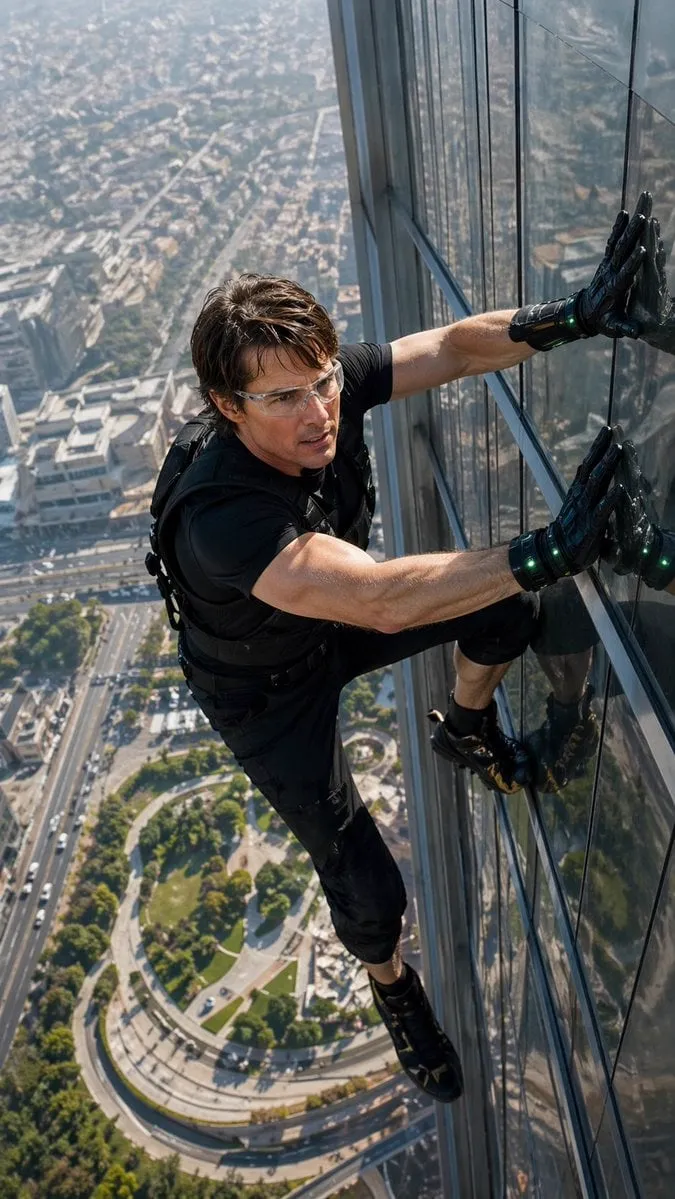

Why Short-Form AI Video Changed the Production Math
Two things used to limit short-form video output: how fast you could shoot, and how fast you could cut. Generative video tools removed the first bottleneck almost entirely and compressed the second into a few keyboard shortcuts. A single creator can now go from a written idea to a publishable vertical clip in under an hour, which means the constraint has moved. Production capacity is no longer the problem. Creative judgment is.
That shift matters because short-form platforms are attention auctions. You are not really competing on polish. You are competing on the first 1.5 seconds, the clarity of the promise you make, and the rhythm of the payoff. AI generation is very good at producing attractive filler and very bad at deciding what deserves to exist. The workflow below is built around that reality: automate execution, keep human taste in charge of structure.
The goal here is practical rather than theoretical. By the end you will have a repeatable pipeline covering hook selection, script compression, shot generation, consistency control, assembly, publishing, and measurement. No film crew, no rented studio, no six-week edit cycle.
The Four Layers of a Modern AI Clip Pipeline
Every efficient short-form workflow separates into four distinct layers. When people struggle, it is almost always because they are mixing layers, for example rewriting a script while generation is already running, or hunting for a better model when the real problem is a weak opening line.
Layer 1: Concept and hook
This is pure thinking. What is the single claim, surprise, or visual gag? Who is it for? What emotion should the viewer feel in the first second? Nothing here requires software. A notes app and twenty minutes of honest self-criticism is enough.
Layer 2: Generation
This is where models convert text, stills, and audio prompts into raw assets: video shots, voiceover, music beds, thumbnails, and captions. Treat this layer as a factory that produces parts, not finished products. The output is raw material.
Layer 3: Assembly
The edit determines whether the raw material becomes a clip or a slideshow. Pacing, cut points, caption timing, and sound design live here. Most AI clips fail at this layer, not at generation.
Layer 4: Distribution and feedback
Publishing, caption copy, thumbnail frames, posting cadence, and reading retention data. This layer feeds back into Layer 1, which is what turns a one-off clip into a system.
The practical rule: finish each layer before touching the next. Lock the hook, then generate, then edit, then publish. Iterating across layers simultaneously is how a two-hour project becomes a two-week one.
Start With the Hook, Not the Tool
A hook is not a title. It is the compressed reason a stranger should stop scrolling. Strong hooks do one of five things: promise a specific outcome, reveal a contradiction, show something visually impossible, name a familiar frustration, or open a loop that only closes at the end.
Try writing ten hooks for the same idea before generating a single frame. Examples for a clip about a fictional deep-sea research drone:
- The drone that mapped a trench nobody had seen (curiosity plus scale)
- We sent a submersible to a place it should not survive (tension)
- What the ocean floor looks like 11 kilometers down (concrete payoff)
- This footage was generated, and that is the point (meta-hook)
- Three seconds of silence, then the light fails (visual drama)
Notice that each hook implies a different edit. The concrete-payoff version wants a slow build and one big reveal. The meta-hook wants to break the fourth wall immediately. Choosing the hook early prevents you from generating footage that does not serve any of them.
A useful filter: imagine the clip playing with sound off in a crowded room. If a stranger cannot understand the hook from a single frame plus one line of text, rewrite it.
Write for Eight Seconds, Not Sixty
AI generation encourages a bad habit: because shots are cheap, creators write long scripts and then cut them down. This wastes generation time and usually produces bloated structure. Write short first.
A reliable short-form skeleton:
- Hook, 0 to 2 seconds. One line or one visual event.
- Context, 2 to 6 seconds. The minimum information needed to care.
- Escalation, 6 to 18 seconds. Two or three beats, each visually distinct.
- Payoff, 18 to 25 seconds. The answer, the reveal, or the punchline.
- Loop or call to action, final 2 to 3 seconds. Optional and often overused.
Read your script out loud with a timer. Spoken English comfortably fits roughly 2.5 to 3 words per second at an energetic pace. A 25-second clip holds about 65 to 75 words total. If your script is 200 words, you have written a two-minute video and should either split it or cut it.
Also write for the ear, not the eye. Short sentences. Concrete nouns. No subordinate clauses stacked three deep. If a line needs a diagram, delete it.
Finally, mark your script with visual beats as you write. A line under two seconds should correspond to one clear image. Writing and shot planning in the same pass saves an entire revision round later.
Generate Visuals: Models, Prompts, and Consistency
Generation is where most of the tool-specific decisions happen, and where the most time is wasted. The main categories you will work with are text-to-video, image-to-video, character or subject reference, lip sync, voice synthesis, and background music. You rarely need the best model in every category. You need one that is predictable in the category that matters most for your format.
Prompt anatomy that survives iteration
A prompt that produces one good shot but cannot be reproduced is a liability. Build prompts in layers so you can change one variable at a time:
- Subject: who or what, described concretely, including age, material, or texture
- Action: one clear verb phrase, not a sequence of events
- Setting: location, time of day, weather, and depth cues
- Camera: shot size, angle, and movement, such as slow push in, handheld follow, static wide
- Light: source and direction, such as soft window light from the left, hard rim light at dusk
- Style: film stock, lens character, color palette, animation style
- Constraints: what must not appear, such as text overlays, extra limbs, crowd noise
Write these as a consistent block. Then change only the camera line between shots of the same scene. That single habit is what makes a sequence feel shot by one filmmaker rather than assembled from unrelated generations.
Keep a prompt log. A simple spreadsheet with columns for shot number, prompt version, model used, and a one-word quality verdict will save you hours within a week.
Keeping characters and products consistent across shots
Consistency is the hardest technical problem in AI video, and the most common reason clips look amateur. Practical approaches, roughly in order of reliability:
- Reference-image conditioning. Feed the same still or set of stills into every generation so the model has an anchor for face, wardrobe, and silhouette.
- Multi-image fusion. Combine front, three-quarter, and profile references in one pass so the model interpolates a stable identity instead of guessing from a single angle.
- Scene locking. Generate all shots of one location back to back with identical setting and light lines, then move on.
- Wardrobe simplification. Distinct but simple clothing beats elaborate detail that shifts between frames.
- Insert shots as glue. Hands, objects, and over-the-shoulder angles hide small inconsistencies between two wider shots.
- Post-processing stabilization. A consistent color grade and grain pass unifies shots that were generated separately.
For product clips, generated close-ups of a specific physical object rarely match a real photograph. A hybrid approach works better: shoot or photograph the product once, then use image-to-video for motion around that fixed asset.
Matching generation to format
Different formats have different tolerance for imperfection. Talking-head or narrative clips expose face and lip consistency immediately. Abstract, nature, and motion-graphics clips hide almost everything. If you are learning, start with abstract and process-driven visuals, then graduate to character work once your prompt discipline is solid.
Assemble the Clip: Pacing, Captions, Sound
Assembly is where average AI clips become good ones. Three levers matter most.
Cut on motion and meaning
Cut when something changes: a movement completes, a new object enters, or an idea flips. AI shots often contain micro-jitter, so placing cuts slightly earlier than feels natural hides artifacts and increases perceived energy. Keep B-roll shots to 1 to 2.5 seconds in the first ten seconds. Longer holds are fine after the viewer has committed.
Burn in captions, but design them
Most short-form viewing is muted or half-attended. Captions are not accessibility decoration; they are the second hook. Use a bold sans-serif, high contrast, and a maximum of four to five words per line. Highlight the one keyword per line that carries meaning. Never let automated captions publish unchecked, because model-generated audio is exactly the kind of input that confuses speech recognition.
Build a sound spine
Sound carries perceived quality more than image does. The minimum stack is a rhythmic music bed, one or two intentional sound effects on transitions, and a voice track with light compression and a gentle high-pass filter. Duck music by roughly 6 to 10 decibels under speech. If you use synthesized voice, vary sentence pitch slightly rather than accepting a flat read, and consider switching voice identity between clearly separated characters so listeners can follow dialogue.
Export, Publish, and Read the First-Hour Data
Export settings for vertical platforms are simple: 1080 by 1920, 30 or 60 frames per second, H.264 or H.265, high bitrate. Deliver a file at the platform native aspect ratio rather than uploading a padded horizontal video, because padding wastes up to 40 percent of screen area.
Before publishing, check four things:
- First frame. Does it work as a still thumbnail on its own?
- Caption copy. Does the on-platform caption add information, or does it repeat the on-screen hook?
- Audio hook. Does the first second sound interesting without visuals?
- End behavior. Does the last frame invite a rewatch, a comment, or a follow?
The first hour of data is noisy but directional. Watch three metrics: average watch time as a share of clip length, retention at the three-second mark, and shares. Low three-second retention means the hook is weak. High retention but low shares means the payoff is fine but not worth passing on. High shares and low watch time means the clip is quotable but too long. Adjust one variable at a time in the next clip rather than rebuilding everything.
Mistakes That Kill Otherwise Good AI Clips
- Generation-first thinking. Opening a tool before writing a hook produces beautiful clips nobody finishes.
- Model shopping as procrastination. Switching platforms every week resets your prompt intuition. Depth beats breadth.
- Overlong intros. Anything before the promise is a tax on attention.
- Identical pacing throughout. Variation between fast and slow sections keeps viewers alert.
- Neglecting audio. Bad sound ruins good footage faster than bad footage does.
- Ignoring aspect ratio. A great clip letterboxed into vertical looks careless.
- Publishing without a caption strategy. The on-platform text is the cheapest second hook available.
- No feedback loop. If you are not reading retention data, you are guessing at every iteration.
Choosing Tool Categories Without Getting Locked In
Rather than committing to a single platform, think in categories and keep one working option in each:
- Ideation and scripting assistance for structure and hook variations
- Text-to-video for establishing shots and abstract visuals
- Image-to-video for product and reference-driven motion
- Subject or character reference for consistent identities
- Voice synthesis and cleanup for narration
- Music and sound effects for the audio spine
- Editing and captioning for assembly and export
A practical selection test for any new tool: can it produce a usable three-second shot from a written prompt in under two minutes, and does the interface let you change one variable without rewriting everything? If yes, it earns a place in your stack. If you cannot reproduce a result twice, the tool is a novelty, not infrastructure.
Also consider export hygiene. Tools that lock assets inside a proprietary project file create future friction. Prefer workflows where you can download clean, watermark-free source files at full resolution, because editing software is usually better at pacing and sound than a generator interface is.
FAQ: Practical Questions About AI Short-Form Video
How long should an AI-generated short clip be?
Most vertical platforms favor 20 to 40 seconds for narrative or educational content and 7 to 15 seconds for pure visual or comedic clips. Length should follow payoff density, not the maximum allowed. If you cannot name the payoff moment, cut the clip until you can.
Do I need a powerful computer?
Not necessarily. Browser-based generation shifts the heavy lifting to remote hardware, so a mid-range laptop is usually enough. Local editing benefits from a decent GPU and fast storage, but proxy workflows make 4K timelines manageable on modest machines.
How do I stop AI characters from changing between shots?
Lock a reference image set first, keep lighting and camera descriptions consistent, and change only the action line between generations. If drift persists, reframe tighter so the face occupies less variable space, and use insert shots to bridge inconsistencies.
Is it acceptable to disclose that a clip is AI-generated?
Disclosure is increasingly expected and often improves engagement when handled as part of the creative concept rather than an apology. Check each platform policy, since requirements differ, and always disclose when realistic human likenesses or sensitive topics are involved.
How many clips should I make per week to learn quickly?
Three to five finished clips per week is enough to build intuition without burning out, provided you review retention data and deliberately change one variable per clip. Volume without analysis teaches almost nothing.
Can AI clips work for product marketing?
Yes, especially for concept films, feature explainers, and lifestyle context that would be expensive to shoot. For the product itself, keep real photography and use AI for environment, motion, and scale.
What is the fastest way to improve quality immediately?
Rebuild your first two seconds. Strong hooks plus faster cutting in the opening ten seconds produce the largest visible improvement per hour of work.
Should I script differently for each platform?
Keep one master script and produce platform-length variants rather than rewriting from scratch. The hook stays constant; only pacing and the closing three seconds usually change.
Building the Habit That Outlasts Any Tool
The durable skill in this space is not model knowledge, which expires quickly, but workflow discipline: a locked hook, a compressed script, layered prompts, consistent references, deliberate assembly, and a feedback loop that changes one variable at a time. Tools will keep changing and generation quality will keep improving. The creators who benefit most will be the ones who treat those tools as a production line with clearly separated stages, rather than as a slot machine that occasionally hands them a good clip.
