

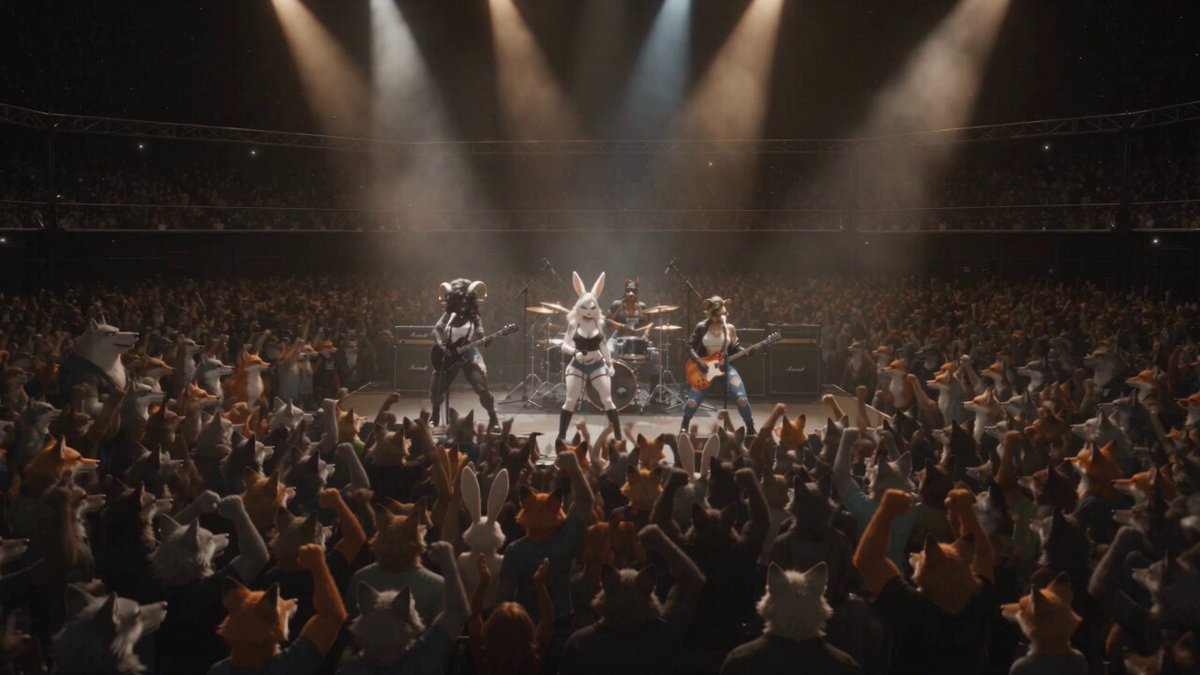

Most videos fail on sound before a single note is written. Music gets picked last, from whatever stock track is still on the shortlist at the end of a long edit, and it has to bend itself around a cut it was never designed for. A custom score made with an AI music generator flips that order: you decide what the audience should feel, describe it precisely, generate candidates, then shape them to the picture.
This guide is a repeatable workflow for that. It covers briefing, prompting, auditioning, editing, mixing, and delivering a soundtrack that supports your video instead of fighting it. It assumes you already edit video and now want music to behave like a deliberate creative decision rather than a last-minute filler.
Why a custom score changes the finished video
Stock libraries are built for breadth, not for your film. The same three tracks appear in a thousand unrelated videos, and audiences have learned to recognize the sonic shorthand: the same plucked ukulele for cheerful explainers, the same sub-bass riser for product reveals. Recognition is not the problem by itself. The problem is that the track never knows when your reveal happens, so the drop lands two seconds late and the joke dies.
Custom generation solves three specific problems. First, fit: the music can be written around your structure rather than trimmed to it. Second, identity: you can build a sonic palette that repeats across a series, so episodes feel like a family. Third, iteration cost: changing the key, tempo, or instrumentation of a generated track takes minutes, while commissioning a human composer for a revision round takes days and real budget.
There is a tradeoff worth naming honestly. AI music is strongest at texture, atmosphere, and genre-consistent beds. It is weaker at melodic hooks that must be memorable and legally distinctive, and at intricate live-performance nuance. The practical answer is a hybrid: use generation for beds, transitions, and variations, and reserve human composition or licensed tracks for the main theme you intend to build a brand around.
The building blocks of AI music generation
Before prompting anything, understand what these systems actually produce. Most text-to-music models are trained to map language onto acoustic patterns, which means they respond well to genre, mood, instrumentation, tempo, and production adjectives, and poorly to abstract intent like make it feel like my childhood.
Text-to-music, stem separation, and voice tools
The modern audio stack has three distinct layers, and confusing them causes most frustration:
- Text-to-music generators turn a description into a finished stereo mix. Good for beds, loops, and quick variations.
- Stem separation and extraction tools split a finished mix into drums, bass, vocals, and other parts. Essential when you need to remove an element or replace one layer.
- Sound design and voice tools handle risers, whooshes, ambience, Foley textures, and narration. They are not music tools, but they share the same timeline and need to be planned together with the score.
Some platforms bundle all three. Others expect you to export stems, process them in a DAW, and reassemble the mix yourself. Neither approach is better; the second gives more control, the first gives more speed.
What the models understand well, and what they do not
Reliable inputs: tempo in BPM, key and mode, named instruments, named genres and subgenres, era and production style, energy level, and density (sparse versus busy). Unreliable inputs: exact bar counts, precise hit points, emotional backstory, and negations. Asking for something like no drums and no bass often works less well than describing what you do want, for example a bare piano line with room tone.
Choosing the right layer for the job
If you need a thirty-second bed under narration, text-to-music is enough. If you need the drums removed from a generated track so dialogue can breathe, stem tools are the answer. If you need a three-second whoosh on a logo reveal, generate or design it separately rather than hoping the music carries it. Mapping each need to the correct layer keeps you from over-prompting a single tool.
Write the musical brief before you touch a prompt
A brief is a one-page document you write for yourself. It prevents the most common failure mode in AI music: generating twenty tracks, liking none of them, and concluding the tool is bad.
The seven lines every brief needs
Write these down before generating:
- Story beat. What is happening on screen in this section, in one sentence.
- Emotional arc. Where does it start, where does it land. Not a single mood, a movement.
- Reference. Two or three existing tracks or scores that share the feel, described in words rather than copied.
- Tempo range. A BPM window, not an exact number.
- Instrumentation. Three to five specific instruments or textures.
- Energy map. Where the music should be sparse and where it should open up.
- Length and format. Thirty-second bed, ninety-second bed with a button ending, or a loopable bed with no clear ending.
Example brief
A forty-second product film about a folding chair. Beats: empty studio, hands unfold the chair, it locks into place, the frame stops on the product. Arc: quiet curiosity into confident resolution. References: minimal electronic underscores with felt piano and soft analog pad. Tempo: 84-92 BPM. Instrumentation: felt piano, warm sub-bass, brushed percussion, airy pad. Energy: near-silent first eight seconds, percussive build from twenty seconds, single piano note at the lock, held pad under the final frame. Length: forty-five seconds with a clean tail, no fade.
That brief is now promptable, and it is also reviewable. When a generated track misses, you can point at a specific line and fix it instead of guessing.
Anatomy of a prompt that produces usable music
A strong music prompt reads like a compressed production note, ordered from most to least important. Models weight the beginning of a prompt more heavily, so lead with the core identity and save decoration for the end.
A reusable prompt skeleton
[genre and era] underscore, [tempo] BPM, [key and mode if it matters], [three to five instruments], [production adjectives], [energy description], [structure note], [length note]
A filled example: minimal cinematic electronic underscore, 88 BPM, D minor, felt piano, warm analog pad, soft sub-bass, brushed percussion entering late, intimate and slightly melancholic, sparse in the opening, building steadily to a restrained peak, no vocals, clean ending, forty-five seconds.
Structure notes that actually steer the model
Vague words like epic or emotional do very little. Structural language does much more. Phrases such as sparse opening, percussion enters halfway, single instrument outro, steady build without a drop, and loopable with no clear ending push the model toward arrangement rather than mood alone. If the tool supports section tags, use them literally, for example quiet intro, main build, and soft outro.
Iterate one variable at a time
When a result is close but wrong, change exactly one element and regenerate. Too busy? Remove an instrument. Too flat? Raise the energy adjective. Too modern? Add an era descriptor. Changing five things at once produces five new unknowns and destroys your ability to learn what the model responds to.
Generate, audition, and shortlist against picture
Never audition music on its own. A track that sounds dull in isolation can be perfect under dialogue, and a track that sounds exciting alone often overwhelms a voiceover. Drop candidates into the timeline and judge them in context.
Run a structured audition
Generate eight to twelve variations from the same brief, then score each on four criteria: does it support the story beat, does it leave room for dialogue, does the energy land where the cut lands, and is it interesting enough to survive three listens. Keep the top two. Delete the rest so you do not relitigate the decision later.
Handle the dialogue-first rule
If your video has narration or interviews, mute the music and cut the piece to the voice first. Lock the dialogue, then fit the score to it. This single ordering choice removes most of the mixing pain that arrives at the end of a project.
Edit, extend, and rebuild stems
Generated tracks rarely arrive at exactly the right length. Extending and editing is where the workflow becomes craft.
Looping without audible seams
Find a bar where the arrangement is thin, cut on that bar line, and loop there. Overlapping the tail of the outgoing section with the head of the incoming one by a quarter second, with a short crossfade, hides the join. Avoid looping through a crash cymbal or a vocal phrase, since both telegraph the seam immediately.
Extending with continuity
Some tools support continuation from an existing clip, which keeps instrumentation and key consistent. Where that is not available, generate a second section with the same prompt plus a structure note such as second half, higher energy, same instrumentation, then crossfade. Match tempo and key manually if the model drifts.
Rebuilding with stems
Stem separation turns a locked stereo file back into editable parts. Typical uses: remove the bass so it does not fight the voiceover, drop the percussion during dialogue, or isolate a pad to stretch under a long take. Keep a copy of the untouched mix before you start subtracting, because stem extraction is imperfect and you may want to return to the original.
Mix and master for video delivery
Video audio lives or dies on intelligibility. Two rules govern everything else: dialogue sits on top, and the music owns the space dialogue does not use.
Loudness and headroom targets
Deliver a mix that leaves headroom rather than pushing peaks to the ceiling. Aim for dialogue clarity first, then bring music up until it is felt but not followed. For online delivery, common integrated loudness targets sit in the -16 to -14 LUFS range with true peaks below -1 dBTP, checked against whatever the destination platform recommends.
Ducking and dynamic control
Use sidechain compression or a manual volume automation lane to pull music down two to four decibels under speech, then release it in pauses. Manual automation sounds more natural than aggressive sidechaining, because you can keep the music up in breaths and gaps where a compressor would pump. High-pass the music gently around 100-150 Hz when narration is present to free low-end space, and narrow the music slightly in the 1-4 kHz range where consonants live.
Transitions and stingers
Add a riser two to three seconds before a reveal, a short impact on the reveal itself, and a sub-drop underneath if the genre allows. Generate stingers separately so you can place them precisely rather than hoping the bed contains one at the right moment.
Syncing score to AI-generated visuals
AI-generated footage often has fewer hard cuts and more continuous camera moves than traditionally shot video. That changes how music should sit under it.
With long, drifting shots, short percussive loops create a jarring mismatch. Longer phrases, evolving pads, and slow harmonic movement fit better. With fast-cut montages built from generated clips, music can carry the rhythm: cut to the beat rather than fitting beats to the cut.
Practical techniques that work across both:
- Build an audio-first assembly when the visuals are still loose, then generate shots to fit the music's phrasing.
- Use tempo-matched loops when you need a beat grid, and free-tempo beds when you need atmosphere.
- Place one deliberate sync point per section, not on every cut. Too many hits read as noise.
- Let one element, usually a pad or a sub-bass note, persist across a scene change to tie two generated shots together.
For vertical short-form, front-load the most distinctive four seconds of the track, because most viewers decide in that window.
Mistakes that flatten AI soundtracks, and how to fix them
Prompting with emotions only. Fix: convert every emotional word into a tempo, instrument, or production adjective.
Chasing a perfect first generation. Fix: accept that you are searching a space, not ordering a product. Generate a batch, then refine.
Using the same track for the whole video. Fix: build two or three variations from one brief so the middle section feels different from the opening without feeling like a different film.
Ignoring the voiceover. Fix: lock dialogue before choosing music, and always audition with speech present.
Over-layering. Fix: if the mix sounds cluttered, the problem is usually too many elements at once, not too little music. Mute something instead of adding something.
Never checking on real speakers and a phone. Fix: most viewers watch on small speakers. If the score disappears on a phone, the low end is doing work that the mids should be doing.
FAQ
How long does a custom AI soundtrack take?
A single thirty-second bed, from brief to mixed, usually takes one to two hours once the brief is written. A ninety-second piece with stems, transitions, and stingers can take half a day. The brief is the variable that shrinks or inflates everything else.
Can AI-generated music be used commercially?
Terms vary by tool and by plan, and some services restrict certain outputs or require attribution. Read the license for the specific tool you use, keep your generated files and prompts organized, and if a track is central to a paid campaign, treat licensing review as part of the workflow rather than an afterthought.
Do I need a DAW?
Not for simple beds placed under narration in a video editor. A DAW becomes necessary when you want stem-level control, sidechain ducking, or precise fades and bus processing. Many editors handle basic volume automation well enough for short-form work.
Why does my generated track sound generic?
Usually because the prompt stayed at the genre level. Add specific instrumentation, an era or production descriptor, an energy shape, and a structural note. Specificity in the middle of a prompt is what separates a usable bed from wallpaper.
How do I keep music consistent across a series?
Write one master brief, then save your best prompts as templates. Keep the same tempo range and two or three signature instruments across episodes, and vary only energy and structure. That is how a series develops a recognizable sound without repeating the same track.
What is the fastest way to improve results?
Change one variable at a time, and always audition against picture with dialogue present. Those two habits remove more bad decisions than any single tool upgrade.
