
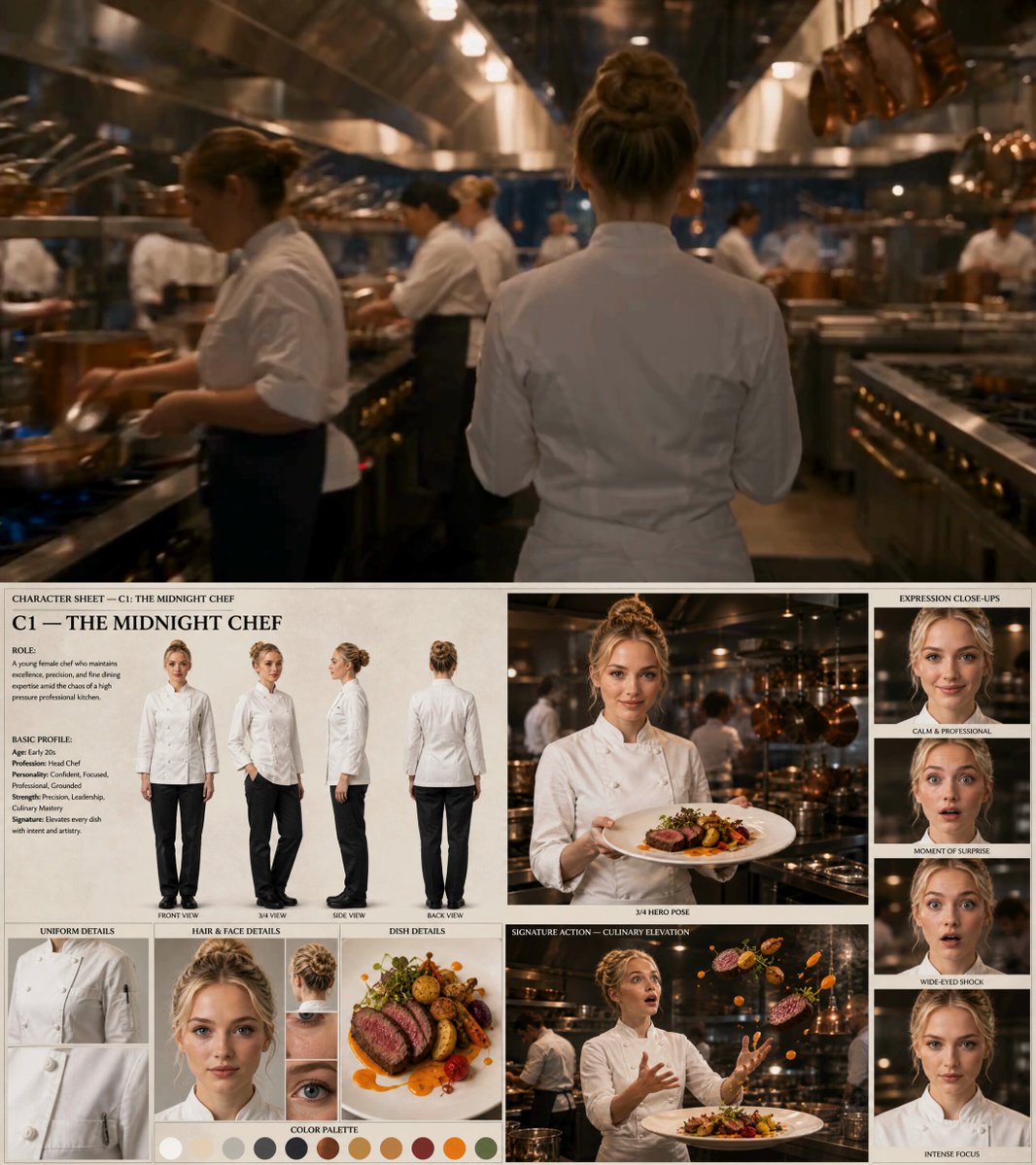
Why AI Video Storytelling Lives or Dies on Structure
Most AI video projects fail before the first frame is generated. Not because the model is weak, but because the story was never really planned. A generator can produce a stunning eight-second clip of a rain-soaked street; it cannot decide why the camera should be there, what the character wants, or how the audience should feel when the scene ends. That work is still yours.
The practical consequence is that AI filmmaking rewards people who think like editors and producers more than people who collect prompts. The bottleneck has moved. It used to be rendering power. Now it is continuity, pacing, and intent. Everything downstream — shot lists, prompts, model choice, sound design, the final cut — gets easier once you accept that the AI handles execution while you handle meaning.
There is also a distribution reality worth internalizing. Short-form feeds punish ambiguity. Viewers decide in roughly two seconds whether to keep watching, and they leave during transitions that feel arbitrary. AI-generated footage has a specific weakness here: individual shots can look gorgeous while the sequence feels weightless, because there is no causal thread pulling one image into the next. Structure is what turns a folder of impressive clips into something a person will finish.
This guide lays out a repeatable workflow for building narrative video with generative tools: how to plan a story spine, keep characters recognizable across a dozen shots, choose models per shot type, direct audio, edit for rhythm, and recognize the failure modes that make AI footage read as a demo reel instead of a story.
The Story Spine: What to Lock Before You Generate Anything
A story spine is a short, causal summary that forces you to commit. It is not a script and not a treatment. It is five to seven lines you can say out loud without notes. If you cannot say it out loud, the generation phase will drift.
The five-line spine
Use this skeleton and fill it honestly:
- Once upon a time, there was [character] in [situation].
- Every day, [the routine or pressure they live under].
- Until one day, [the disruption].
- Because of that, [first consequence].
- Because of that, [escalation].
- Until finally, [the choice or reversal].
- Ever since then, [the changed state].
That last line is the one most creators skip, and it is the one that makes a video feel like it meant something. A commercial spot, a product story, a documentary short, and a fictional scene all benefit from naming the changed state before production starts.
Deciding runtime and shot count
Runtime determines how much story you can carry. A common mistake is writing a three-act narrative into a fifteen-second slot. The result is a rushed montage with no room to breathe.
As a working rule:
| Target runtime | Useful shot count | Average shot length |
|---|---|---|
| 15 seconds | 5-8 shots | 2-2.5 s |
| 30 seconds | 8-12 shots | 2.5-3 s |
| 60 seconds | 14-20 shots | 3-3.5 s |
| 2-3 minutes | 40-70 shots | 3-5 s |
| 5+ minutes | 90+ shots or longer holds | 4-8 s |
Vertical social formats tend to favor shorter shots because the frame is small and the feed is impatient. Widescreen narrative formats tolerate longer holds because the audience has committed to sitting still. Choose the format first, then write to it.
Separating what must be seen from what can be implied
Once the spine exists, mark every beat as either shown, heard, or implied. Shown beats need a generated shot. Heard beats need dialogue or narration. Implied beats are handled by an edit, a reaction, or a sound cue. This single pass usually cuts your shot list by a third and makes the whole project affordable in time and effort.
Building Character and Style Consistency Across Shots
Consistency is the technical heart of AI narrative work. Viewers forgive imperfect physics; they do not forgive a protagonist whose face changes between cuts.
Reference sheets that actually work
A reference sheet is a small set of images that defines your character from multiple angles and expressions. Strong sheets share four properties:
- Neutral, even lighting. Dramatic lighting baked into a reference contaminates every future shot.
- Plain backgrounds. Busy reference backgrounds bleed into generated scenes.
- Three angles minimum. Front, three-quarter, and profile catch most generation drift.
- One wardrobe, clearly described. Write the outfit in words: charcoal wool coat over a cream knit, silver ring on the right hand.
Feed two to four of these references into any model that supports image conditioning. Fewer than two and the model improvises. More than five and the references start competing, which produces a blurred average face rather than a stable one.
Style locking with a look bible
Character consistency is only half the battle. The world also has to hold still. Build a one-page look bible that pins down:
- Palette. Three dominant colors plus one accent, described in plain words (not hex codes).
- Lighting logic. Where does the light come from, and does it change by scene?
- Lens language. Wide for geography, medium for conversation, long for pressure.
- Texture. Grainy and analog, or clean and digital? Pick one and stay there.
- Motion rule. Locked-off, handheld, or floating camera? Mixed rules read as an accident.
When a shot comes back looking off, the look bible tells you whether the problem is the model, the prompt, or your own inconsistency. Without it, you will keep regenerating blindly.
Turning a Script Into a Generation Queue
Generating video is a production line. Treat it like one: uniform inputs, sequential review, and no step that depends on remembering something from three days ago.
Writing prompts that behave like shot descriptions
A good generation prompt reads like a shot card a cinematographer could follow. Use a fixed order so you can spot what changed when something breaks:
- Subject and action
- Camera position and movement
- Lens and framing
- Lighting and time of day
- Environment and background detail
- Mood or emotional tone
- Duration and aspect ratio
Example: A woman in a charcoal wool coat steps off a crowded tram, medium shot, camera tracks left at walking pace, 50 mm look, overcast late-afternoon light, wet cobblestone street with blurred commuters behind her, quiet resignation, six seconds, vertical.
Notice what is missing: style buzzwords, artist names, and quality adjectives. Those words rarely help and often push every shot toward the same generic polish, which flattens the visual variety your edit needs.
Batch size and review cadence
Generate in small batches of three to five shots per story beat. Review each batch before moving on, and check four things: character identity, lighting match, camera direction, and whether the emotional register fits the beat. Fixing a drift after five shots is cheap. Fixing it after forty is a rewrite.
Naming and tracking
Use a naming convention that survives a week of work: scene03_shot02_take04_subject-action. Store the prompt, the reference images used, and the model alongside each clip. When a shot finally works, you will want to reproduce it, and memory will not be enough.
Choosing the Right Model for Each Shot Type
No single model wins everywhere. Strong pipelines assign models by shot function rather than by personal habit.
| Shot type | What matters most | Model behavior to look for |
|---|---|---|
| Dialogue close-up | Identity retention, lip sync | Strong face stability across frames, audio-driven mouth shapes |
| Establishing wide | Scene coherence, depth | Reliable geometry, believable scale relationships |
| Action insert | Motion clarity | Minimal blur artifacts, consistent limb count |
| Product or object hero | Surface detail, slow camera | Crisp textures, smooth controlled moves |
| Stylized sequence | Aesthetic control | Consistent illustration or painterly rendering |
| Transition or texture | Abstraction tolerance | Smooth morphs, gradient-friendly output |
Decision criteria when you are unsure
- If the shot carries plot information, favor consistency over beauty.
- If the shot is a mood beat, favor beauty over strict continuity.
- If the shot features hands, faces, or text, budget extra takes.
- If two shots must cut together, generate them with the same model and the same reference set, even if a different model would look better in isolation.
That last rule prevents more continuity problems than any prompt trick. Cross-model cuts are the most common source of visual whiplash in AI sequences.
Audio, Voice, and Emotional Timing
Audiences rate video quality largely through audio. A sequence with mediocre visuals and excellent sound feels professional; the reverse feels broken.
Voice direction
Synthesized voice works best when you direct it like an actor. Instead of feeding a flat paragraph, break it into lines and specify intent per line: this line is a question she already knows the answer to, or he is pretending to be calm. Where your tool supports it, control pace and pause separately — a half-second pause before a confession does more narrative work than any camera move.
Music and silence
Music should mark structure, not fill space. Use it in three modes:
- Establish. A short motif under the opening, then drop out.
- Escalate. Bring in additional layers as consequences compound.
- Resolve. Return to the opening motif, altered.
Silence is a tool. Cutting music for two seconds before a reveal makes the next sound enormous. New editors rarely use silence because it feels like something is missing; it is not, it is tension.
Sound effects and room tone
AI-generated footage frequently arrives with no ambience, which makes cuts feel like a slideshow. Add a continuous room tone under every scene — rain, distant traffic, ventilation hum — and lay specific effects on top. Match the effect to the frame: a door sound must land on the frame where the door moves, not a beat later.
Editing AI Footage Into a Coherent Sequence
Edit in three distinct passes. Mixing them produces endless fiddling.
The assembly pass
Lay every usable take on the timeline in story order, ignoring timing. Do not trim. The goal is to confirm the story reads from beginning to end with the material you actually have.
The rhythm pass
Set durations. Cut to the spine, not to the clip length. Look for the natural end of each action and trim one frame before it, which keeps energy forward. Where a beat needs emphasis, hold longer instead of adding motion.
The continuity pass
Watch at playback speed and list every break: gaze direction, light source, wardrobe, color temperature, camera height. Fix in priority order — faces first, then lighting, then background. Some breaks can be hidden with a cutaway rather than a regeneration, and cutaways are almost always faster.
Common Failure Modes and How to Fix Them
Character morphing between shots. Cause: inconsistent or too few references. Fix: rebuild the reference sheet with neutral lighting and reuse the same set for every shot in the scene.
Lighting shifts that reveal the cut. Cause: prompts describe time of day differently across shots. Fix: standardize lighting vocabulary in your look bible and paste it into every prompt.
Pacing that feels slow despite short clips. Cause: every shot performs the same function. Fix: alternate information shots, reaction shots, and texture shots.
Uncanny hands, teeth, or text. Cause: model limitations on fine detail. Fix: reframe so the detail is off-screen, out of focus, or implied by sound.
Overreliance on slow motion. Cause: slow motion hides motion artifacts, so creators use it everywhere. Fix: reserve it for one or two moments and keep the rest at natural speed.
Beautiful but meaningless sequences. Cause: no spine. Fix: go back to the five-line summary and cut anything that does not serve it.
Publishing, Repurposing, and Iteration
Finish one version before building variations. A completed two-minute piece teaches more than five abandoned experiments.
Repurposing without rework
Plan for adaptation during editing, not after:
- Keep a vertical safe area in mind when framing, so horizontal shots survive a crop.
- Export a caption-free master so you can add text per platform.
- Cut a cold-open version that starts on the strongest single shot for feeds.
- Keep a silent version with burned-in captions for autoplay environments.
Iterating on results
Track three metrics per publish: where viewers drop off, which segment gets rewatched, and which comment themes repeat. Drop-off usually points to a transition problem, not a story problem. Rewatches point to the visual or emotional peak, which is where your next piece should spend more time.
FAQ
Do I need a script before generating anything?
A full script is optional; a spine is not. You need to know the disruption and the changed state before you generate, or your shot list will be decorative rather than narrative.
How many reference images should I use per character?
Two to four. Fewer causes improvisation, more causes averaging. Keep lighting neutral and backgrounds plain.
Can I mix models within a single scene?
You can, but expect continuity friction. If a scene must cut together, generate all of its shots with one model and one reference set.
How long should an AI-generated shot be?
Three to five seconds for most narrative work, two to two and a half for vertical social. Generate longer than you need and trim in the edit.
Why does my sequence feel flat even though the visuals are strong?
Usually because every shot is the same distance and the same intensity. Vary framing, vary duration, and insert reaction shots.
What is the fastest way to improve quality?
Fix audio first. Room tone, clean voice direction, and one deliberate silence will raise perceived production value more than any visual upgrade.
Should I generate at the highest available resolution?
Generate at what your edit and export pipeline can handle comfortably, then upscale only the final cut. Long single-shot generations at maximum settings rarely pay off compared with more takes of the same shot.
How do I keep a multi-scene project organized?
One folder per scene, one file per shot, and a plain-text log recording the prompt, references, and model used for each take. Discipline here saves hours later.
