

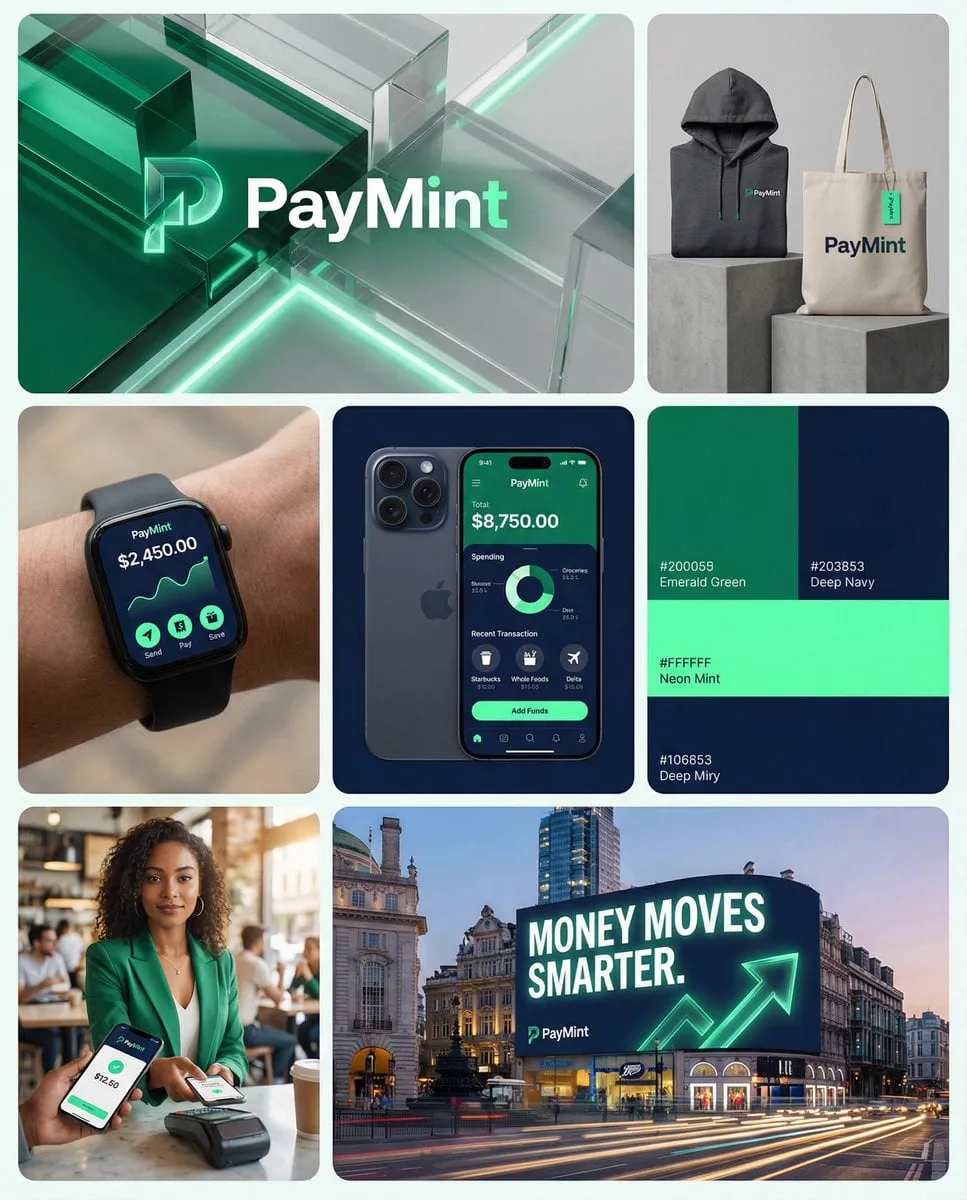
Video advertising used to be gated by a simple equation: the more ambitious the concept, the more money and time it demanded. A hero spot could consume weeks of pre-production, a location scout, a crew, talent, catering, a colorist, and a sound designer. Generative AI has broken that equation — not by making craft irrelevant, but by collapsing the distance between an idea and a watchable first draft.
That shift creates a new problem. When anyone can generate footage in minutes, the bottleneck moves from production capacity to judgment. Teams that consistently produce strong AI video ads are rarely the ones with the longest list of tools. They are the ones running a disciplined workflow: a sharp concept, engineered prompts, locked brand assets, deliberate sound design, and honest review before anything ships.
This guide walks through that workflow end to end — planning, prompting, brand control, assembly, sound, format strategy, quality control, and testing — with practical examples you can adapt to your own product.
Why AI Video Ads Reward Judgment More Than Tools
Generation has become cheap; attention has not. A viewer scrolling a feed decides in roughly two seconds whether your ad deserves a third. That decision is made on a mix of motion, contrast, face presence, text legibility, and whether something unexpected just happened. None of those qualities come from pressing a button. They come from decisions made before generation and after it.
The three-second contract
Treat the opening of every ad as a contract with the viewer. You promise a payoff — a reveal, a transformation, a joke, a solution — and you have to make that promise visible almost instantly. In practice this means the first shot should contain a subject in motion, a clear focal point, and readable text if you are using a hook line. A slow establishing drone shot of a city skyline is a beautiful way to lose half your audience.
Where AI genuinely wins
AI generation excels at visualizing concepts that would be expensive or impossible to shoot, iterating rapidly on look and mood, producing dozens of localized variants, filling gaps such as backgrounds and inserts, and building stylized worlds that would otherwise require heavy visual effects. It is also excellent at time compression: a storyboard that once took a week to approve can be previewed the same afternoon.
Where it still struggles
Hands manipulating fine objects, consistent faces across many shots, legible on-screen text generated in-frame, physical interactions such as pouring liquid or snapping a lid, and sustained logical continuity. Knowing these limits is a planning advantage. Design shots that avoid the weak zones instead of hoping a model improvises past them.
Start With the Ad Concept, Not the Model
The most common failure in AI ad production is starting with a model and hoping a concept appears. Reverse that order. Start with the promise, then decide which shots carry it, then choose the tools that can render those shots convincingly.
Write the one-line promise
Before any generation, write a single sentence stating what the viewer gets and why they should care. If the sentence needs a comma-heavy explanation, the ad will too. A skincare brand might promise visible calm in ten seconds; a business tool might promise an invoice approved before your coffee cools. Every shot either supports that line or gets cut.
Map the concept to shots
A thirty-second ad is usually six to ten shots. A fifteen-second cut is four to six. Write them as a shot list with columns for subject, action, camera movement, lighting, and duration. That list becomes your generation brief, your editing blueprint, and your quality checklist at once.
Decide what must stay real
Some elements should remain photographic: your product in hand, your logo animation, a founder speaking to camera, packaging details. Generate the world around those elements, then composite the real assets in the edit. Hybrid ads usually outperform fully synthetic ones because the product stays truthful.
Prompt Engineering That Produces Cinematic Footage
A prompt is not a wish; it is a specification. The difference between a mediocre and a striking clip is usually the presence of specific camera, lighting, and motion language rather than a longer list of adjectives.
Anatomy of a strong shot prompt
Build prompts in a repeatable order: subject, action, environment, camera and lens, lighting, mood, texture, and format. For example: a barista in a linen apron pouring milk into a ceramic cup, steam curling upward, medium close-up, 50mm lens, shallow depth of field, soft window light from camera left with a warm bounce, calm and precise mood, subtle film grain, vertical 9:16. Every clause removes ambiguity, and ambiguity is what makes generated clips look generic.
Reference images do the heavy lifting
Most modern tools accept a still image as a visual anchor. A single well-chosen reference — a color-graded frame, a product photo, a mood board image — does more for style matching than three paragraphs of description. Keep a folder of approved references for each campaign so every generator starts from the same visual baseline.
Negative prompts and technical guardrails
Use negative prompts to exclude what you never want: distorted hands, extra fingers, warped text, watermark artifacts, jump cuts, speed ramps, lens flare overload. Pair them with technical constraints — fixed camera, no zoom, steady motion — when a clip needs to sit quietly inside an edit without drawing attention to itself.
Keeping Brand Identity Consistent Across Many Generations
Consistency is what separates a campaign from a pile of clips. Models do not know your brand; they only know your prompt. So the brand has to be encoded deliberately.
Build a brand kit for generative tools
Document the palette as hex values, the typefaces by name and weight, the logo clear space, the approved end card, and the tone of voice in three adjectives. Reuse this kit inside prompts and inside editing templates. When a new team member or agency joins, the kit is the handoff document.
Character and location continuity
If your ad features a recurring person or set, generate a character sheet first: front, three-quarter, and profile views under consistent lighting. Use image-to-video with that reference for every shot. The same applies to locations — generate a wide establishing frame, then build the remaining shots from it so the space feels like one place.
Text and logos belong in post
Ask models for clean plates: shots with empty space where text will go. Add headlines, prices, legal lines, and logo animations in your editor. Generated in-frame text is the fastest way to make an ad look amateur, and it is also a compliance risk when the exact wording matters.
The Production Workflow, Step by Step
Pre-production
Lock the script, the shot list, and the aspect ratios. Approve references and the brand kit. Decide the target duration for each version: a fifteen-second primary cut with a six-second hook variation is often enough to start.
Generation
Generate in batches of three to five attempts per shot and label them immediately by shot number and take. Store the prompt next to the clip so you can reproduce or tweak it later. Reject fast; do not fall in love with an almost-right clip.
Assembly
Edit with rough timing first, then refine. Cut to the beat, keep shots short in the opening, and let one shot breathe near the payoff. Add subtle camera motion, grain, or transitions only where a cut feels mechanical. Export a clean master before adding text so you can re-version copy without re-exporting footage.
Review gate
Watch the cut on a phone, muted, at arm's length. If the story does not land without sound, the visuals are not carrying enough weight.
Sound, Voice, and Music Carry Half the Ad
Silent autoplay is the default viewing condition, but sound still drives completion and recall for everyone who unmutes. Treat audio as a first-class layer rather than an afterthought.
Voiceover and lip sync
Choose between a synthetic voice, a licensed voice actor, or your own founder's voice. Synthetic voices are fast and easy to localize, but they flatten emotion unless you vary pacing and leave room for breaths. When a person appears on camera speaking, use a dedicated lip-sync tool and keep the line short — long monologues amplify tiny sync errors.
Music that matches the edit rhythm
Pick music before finalizing the cut whenever possible. A track with a clear drop gives you a natural payoff moment to place your product reveal. For localized versions, swap the track rather than subtitling over mismatched energy.
The polish layer
Add three to five sound effects per ad: a whoosh on a transition, a click on a interface action, a soft impact on a logo reveal. These small cues do more for perceived production value than an extra hour of color work.
Format Strategy: Hooks, Ratios, and Platform Fit
Vertical first
Design in 9:16, then adapt to 1:1 and 16:9 by reframing rather than stretching. Keep the subject centered so a crop does not cut off hands or products. Safe zones vary by platform, so keep critical text and logos away from the bottom quarter and the outer edges.
Hook variations are the cheapest test available
Generate four to six different first shots for the same body and call to action. Change the opening frame, the first spoken line, or the on-screen hook text — one variable at a time. This is the highest-leverage experiment in AI advertising, because the opening drives most of the performance difference.
Subtitles as a design element
Burn in captions with a consistent type treatment, and style key words for emphasis. Captions also make your ad understandable in sound-off feeds, which is where most impressions occur.
Quality Control: Reviewing AI Footage Like an Editor
Run every clip through the same audit before it reaches an edit:
- Hands and fingers: check count, joints, and object contact.
- Eyes and faces: look for drift, asymmetry, or a gaze that never lands.
- Text: verify nothing generated in-frame that you did not intend.
- Physics: evaluate weight, liquid behavior, fabric, and shadows.
- Continuity: confirm wardrobe, props, and lighting match neighboring shots.
- Motion: watch for warping, morphing, or unnatural acceleration.
- Artifacts: scan edges for flicker, melting, or resolution collapse.
If two or more items fail, regenerate. If only one fails and it sits in the background, fix it in post with a crop, a mask, or a cut. Do not ship a clip because it took a long time to get — sunk cost is the most expensive habit in generative production.
Testing, Iterating, and Scaling a Modular Ad System
Build your ads as modules: hook, problem, solution, proof, call to action. Each module can be swapped without re-cutting the entire ad. That structure lets you scale creative volume without losing coherence, and it makes localization straightforward because the modules are self-contained.
Measure the metrics that map to your goal. For awareness, watch three-second and six-second hold rates. For consideration, watch completion rate and saves. For conversion, watch click-through and cost per result. Compare hook variants first, then body variants, then calls to action.
When a winner emerges, produce sibling versions rather than copies: same structure, new visuals, new hook phrasing, same promise. Refresh creative before frequency fatigue sets in, which for short-form tends to arrive faster than most teams expect.
Common Mistakes and How to Avoid Them
- Generating before defining the promise, which produces attractive clips with no argument.
- Using identical prompts across every tool and expecting consistent results; each model has its own vocabulary.
- Letting the model render brand text, which breaks consistency and invites typos.
- Overloading a shot with too many actions, forcing the model to compromise on all of them.
- Ignoring audio until the end, then discovering the pacing does not support the payoff.
- Testing too many variables at once, which makes results unreadable.
- Forgetting policy and legal review for claims, testimonials, and disclaimers.
FAQ
How long should an AI-generated video ad be?
Start with fifteen seconds and produce a six-second hook cut from it. Shorter cuts are easier to iterate and usually deliver stronger hold rates, while the longer version gives the story room to explain a considered purchase.
Do I need filming equipment at all?
Not necessarily, but a phone on a tripod still earns its place. A real product shot composited into a generated environment is often more convincing than a fully synthetic product.
How many generations does a good shot take?
Budget three to five attempts per shot, and expect one in ten ideas to be genuinely usable. Batch generation and early rejection keep the average cost of a usable clip low.
Can AI ads match an established brand look?
Yes, if you encode the look: reference frames, hex palette, lens choices, lighting direction, and a locked end card. Consistency comes from the system around the model, not from the model alone.
What is the biggest risk of scaling AI ad production?
Homogeneity. When every asset is generated from the same handful of prompts, audiences start to recognize the texture. Counter it with varied references, human-shot inserts, distinct music, and rotating visual ideas.
Bringing the Workflow Together
The practical lesson is that AI video advertising is a systems problem, not a tooling problem. A clear promise, a shot list, engineered prompts, a documented brand kit, a deliberate sound layer, and a disciplined review gate will outperform a bigger toolkit every time. Start with one campaign, one promise, and one format. Generate more than you need, cut harder than feels comfortable, and let performance — not taste — decide which hook survives. Then rebuild the same system for the next product, because the workflow, unlike any individual model, keeps its value.
