
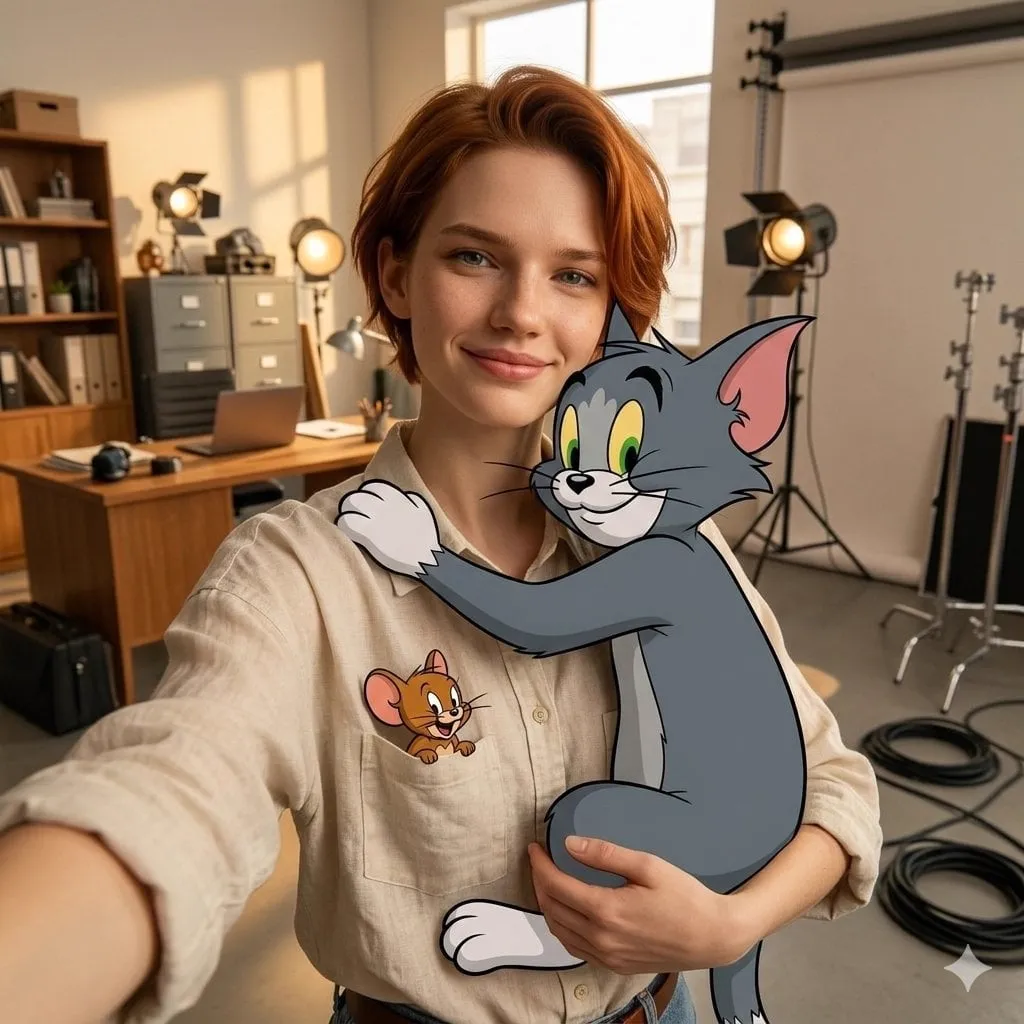


Why AI Video Changes the Content Marketing Equation
Video has been the best-performing format on most social platforms for years, but the economics never worked for small teams. A single polished sixty-second brand film could consume weeks of scripting, casting, shooting, and editing. That cost structure pushed most marketers toward static images and text, even when they knew video would earn more attention.
Generative video models collapsed that cost curve. A marketer can describe a scene in plain language and receive usable footage in minutes, then iterate on framing, lighting, or pacing without booking a studio. The important change is not that video became free — it is that the marginal cost of a second version dropped close to zero. That alters strategy: instead of betting a quarter's budget on one hero asset, a team can produce dozens of variants, test hooks quickly, and double down on what resonates.
The shift is organizational as much as technical. When production is cheap, the bottleneck moves to planning, review, and distribution discipline. Teams that treat AI video as a novelty produce scattered clips. Teams that build a workflow produce a content engine that compounds.
What Generative Video Tools Actually Do Well
Before building a process, it helps to be honest about capabilities. Modern text-to-video and image-to-video models are strong at environmental shots, product hero rotations, abstract transitions, b-roll, stylized animation, atmospheric establishing scenes, and vertical short-form loops. Some pipelines also handle talking-head avatars with acceptable lip sync.
They remain weak in specific, predictable places:
- Fine hand interaction. Gripping, pouring, buttoning, typing — small physical actions still break down.
- Continuity of a specific face across shots. Without a consistent reference image or character lock, the same person drifts between clips.
- On-screen text. Models render logos and words inconsistently, so add typography in post rather than asking the model for it.
- Long continuous takes. Most models work in short bursts; narrative length comes from editing, not generation.
- Precise camera instructions. "Slow dolly in, 3 feet" is rarely honored exactly.
When choosing a tool, compare candidates on the criteria that matter to your output: maximum shot length and aspect ratio support, image-to-video conditioning, camera and motion controls, style referencing, native audio, upscaling options, and how cleanly exports drop into your editor. A model that is brilliant at abstract motion may be useless for product accuracy, and the reverse is equally true. Run the same three test prompts through every candidate before committing a team to one.
A Repeatable Six-Stage AI Video Workflow
The teams that ship consistently follow roughly the same sequence. The details vary, but the shape does not.
Stage 1 — Brief With One Message
Write down the single idea the viewer should retain. If your brief contains three messages, you are making three videos. Include the target platform, aspect ratio, target duration, the audience's prior knowledge, and the action you want at the end. This one page prevents most downstream rework.
Stage 2 — Script and Shot List
Draft the script as voiceover or on-screen lines first, then convert it into a shot list. Each row should hold: shot number, duration in seconds, description, camera note, style note, and the asset needed afterward. A thirty-second video usually needs five to nine shots. This table becomes your production queue and your review checklist at the same time.
Stage 3 — Generate Stills Before Motion
Generate or source keyframes first. Stills are cheaper and faster to iterate, and a good still makes a good clip far more likely. Approve the look at the still stage — framing, palette, wardrobe, set — then use image-to-video to animate the approved frames. This single habit improves visual consistency more than any prompt trick.
Stage 4 — Generate in Small Batches
For each shot, request three or four variations rather than one perfect take. Judge them on motion realism, adherence to the brief, and how well they cut against neighboring shots. Keep the best, log the prompt that produced it, and move on. Selective pressure beats prompt perfectionism.
Stage 5 — Assemble, Caption, and Sound
Edit in a standard editor, cut on motion, and add captions burned in or as a track — most viewers watch muted. Music and sound design do more for perceived quality than another round of generation. If you use synthetic voice, keep the pacing slightly slower than feels natural; listeners tolerate imperfect visuals more easily than rushed speech.
Stage 6 — Review, Publish, Archive
Run the checklist below, get a second pair of eyes on brand and claims, then publish with platform-appropriate metadata. Archive the final render alongside the approved prompts and settings. Six weeks later, that archive is what lets you produce a sequel in an hour instead of a day.
Mapping AI Video to Every Stage of the Funnel
A common failure is producing one video and hoping it works everywhere. Different funnel stages need different video jobs.
Awareness and Discovery
Here you are buying attention, so prioritize the first two seconds. Use bold visual contrast, an unexpected image, or a question that names the audience's problem. Short, silent-friendly, loopable clips in vertical formats work best. Quantity matters more than polish: five hooks tested beat one hook polished for a week. Aim for a clear, single takeaway rather than a complete story.
Consideration and Evaluation
Viewers now know you exist and want proof. This is where demonstration videos earn their place: how the product works, what the setup looks like, what a typical week with it feels like. AI video shines for abstract or hard-to-film explanations — data flows, before-and-after states, exploded views of a process. Pair generated visuals with real screenshots or real footage wherever accuracy is non-negotiable, and always label synthetic scenes honestly.
Decision and Action
At this stage, familiarity beats novelty. Reuse the visual language established earlier so the viewer recognizes you instantly. Keep the call to action singular, put the offer on screen as text rather than relying on the model, and keep total length tight. A short testimonial-style clip with a clear next step often outperforms a beautifully generated cinematic piece.
Retention and Advocacy
Post-purchase content is chronically underused. Onboarding clips, feature walkthroughs, and community spotlights reduce support load and give customers something to share. Generated b-roll makes these cheap enough to produce weekly, which matters more than cinematic quality.
Consistency Across a Series: Characters, Style, and Look
A series that looks like ten different brands is worse than a single mediocre video. Consistency comes from three levers.
Reference first. Lock one approved still per recurring character or product angle. Feed that image into every generation for that subject. Change it deliberately, not accidentally.
Define a visual spine. Write down palette, lighting direction, lens feel, motion speed, transition style, and typography. Five lines, applied to every clip, do more than any style prompt.
Standardize the frame. Pick one or two aspect ratios and one caption style. Consistent framing makes a series feel intentional even when the content varies widely. If you need to stretch a library of shots, generate at a wide ratio and reframe to vertical in the edit rather than regenerating.
Production Operations for Volume
Volume without organization becomes a folder of unusable files. A few lightweight practices prevent that.
- Naming convention. Project, stage, shot number, version, date — for example
spring-launch/s03_v2_0412.mp4. Sortable, searchable, unambiguous. - A shot-status board. Columns for briefed, generated, selected, edited, approved. Anyone can see what is blocking.
- A prompt library. Save prompts that produced approved output, with the model and settings noted. Reuse beats rediscovery.
- Rights and provenance notes. Record which model produced each shot, what reference images were used, and whether any real person's likeness is involved. This takes seconds at creation time and saves hours during a legal review.
- A single review gate. One person owns final approval for brand, claims, and accuracy. Distributed approval produces contradictory feedback and endless revision loops.
- Storage hygiene. Keep originals, keep selected takes, delete the rest on a schedule. Generation files add up faster than anyone expects.
Quality Control Checklist Before Anything Ships
Run this list on every video, no exceptions:
- Does the first two seconds work without sound?
- Is the on-screen text spelled correctly and legible on a phone?
- Do hands, faces, and reflections hold up when paused?
- Do brand colors and typography match the guidelines exactly?
- Is any claim in the script verifiable, and is it substantiated?
- Are synthetic or dramatized scenes disclosed where required?
- Do captions match the audio word for word?
- Does the file meet the platform's ratio, length, and bitrate recommendations?
- Does the final frame leave a clear next step?
Most embarrassing mistakes are caught by items two, three, and five. Skipping them is how a polished clip becomes a public correction.
Measuring Whether AI Video Is Actually Working
Track two families of metrics: audience outcomes and production economics. Audience outcomes include hook rate (three-second retention as a share of impressions), average watch time, completion rate, click-through rate, and — most importantly — assisted conversions tied to a unique URL or offer code. Production economics include cost per finished video, cost per usable second of footage, and iteration velocity, meaning how many tested variants you can ship in a week.
The second family is where AI video usually wins first, but only the first family justifies continued investment. If iteration velocity rises while conversion rates stay flat, the problem is usually message, not production. Fix the script and the offer before generating another hundred clips.
Common Mistakes and How to Avoid Them
Chasing realism for its own sake. Uncanny near-realism draws attention to the technique instead of the message. A slightly stylized approach often reads as more intentional and ages better.
Generating before scripting. Producing footage without a locked script guarantees reshoots, and reshoots are where the time savings disappear.
Ignoring platform context. A cinematic sixteen-by-nine piece dropped into a vertical feed will underperform a simple, well-captioned native clip every time.
Treating generation as the finish line. Editing, sound, and captions are still where most of the perceived quality comes from.
No single owner for approval. Shared accountability means nobody is accountable, and the review cycle never closes.
Letting the library rot. If approved prompts and reference stills are not archived, every new video restarts from zero.
FAQ
Do I need a dedicated video team to make this work? No. One marketer with a clear brief, a shot list, and a consistent review process can produce a weekly series. A specialist editor helps most once you exceed roughly ten videos a month.
How long should an AI-generated marketing video be? Match the platform and the intent. Awareness clips often perform best between ten and twenty seconds, consideration content between thirty and ninety seconds, and onboarding or tutorial content can run several minutes if the pacing stays tight.
How do I keep the same character across multiple videos? Approve one reference image, reuse it as conditioning input for every generation, and keep wardrobe and lighting notes in your visual spine document. Never accept a fresh character design because the prompt drifted.
Is AI video content penalized by platforms? Distribution rules generally target misleading or undisclosed synthetic media rather than synthetic media itself. Follow each platform's disclosure policy, avoid implying real events that did not happen, and label dramatizations clearly.
What is a realistic starting budget of time? Plan for roughly two hours for a first thirty-second video: one hour of planning and prompt work, half an hour of generation and selection, half an hour of editing and captions. That number drops sharply by the third video once your prompt library exists.
Should every shot be generated? No. Mix generated footage with real product captures, customer photos, and screen recordings. The blend reads as more credible, and it protects you where models are weakest — accuracy and specific detail.
Getting Started This Week
Pick one product, one audience, and one platform. Write a single-message brief, build a six-shot list, generate keyframes, animate the best three, and ship a twenty-second vertical clip. Then ship a second version with a different first two seconds and compare retention. That small experiment teaches more than any amount of tool research, and it establishes the loop — brief, generate, select, edit, measure, archive — that turns AI video from an experiment into a dependable part of your content marketing.
