
Why AI Video Is Now a Baseline Marketing Capability
Marketing teams no longer debate whether generated video belongs in a campaign. The debate has shifted to which parts of the pipeline should be automated and which still need a human hand. The reason is simple arithmetic: audiences consume short video on every major platform, ad auctions reward frequent creative refresh, and a single production day with a crew costs more than a month of tool subscriptions. Generative video closes the gap between the volume of formats a channel needs and the throughput a small team can realistically deliver.
That does not mean a prompt replaces a director. It means the expensive, slow middle of the pipeline can be compressed: storyboards, rough cuts, localized variants, background plates, B-roll, and product shots on plain sets can be produced in hours instead of weeks. The teams that win treat generation as a manufacturing step inside a defined workflow, not as a magic button. This guide walks through the criteria that matter when picking tools, the jobs each tool family handles best, and a production workflow you can run repeatedly without rebuilding it every campaign.
Decision Criteria: Choosing a Tool for Your Team
Before comparing feature lists, define what good means for your channel. Five criteria separate tools that fit a marketing workflow from tools that only demo well.
Visual consistency and character lock
Consistency is the single most important capability for brand work. If a spokesperson, mascot, product, or set looks slightly different in every shot, the ad reads as amateur regardless of resolution. Look for reference-image conditioning, subject locking, seed reuse, and style transfer that survives across multiple generations. Test it brutally: generate eight shots of the same person in different framing and check whether the face, wardrobe, and lighting logic hold.
Shot control and camera language
Marketing video is built from specific shots: push-in on the product, over-the-shoulder reaction, wide establishing shot, macro detail. A tool that produces one interpretive clip per prompt forces you to fight it. Prefer tools that accept camera move instructions, start and end frames, motion strength, and duration control. The ability to define the first and last frame of a shot is disproportionately useful, because it turns generation into editing rather than gambling.
Audio, lip sync, and localization
Silent video is a wasted asset on most platforms. Check whether the tool generates ambience, music, or dialogue, whether it can lip-sync to an existing voice track, and how it handles dubbing into other languages. For brands running multi-market campaigns, keeping the same performance and swapping only the language track is often worth more than a marginal bump in visual fidelity.
Cost, throughput, and licensing
Two numbers matter: the cost of an accepted shot, not the cost of a generation, and the wall-clock time from brief to publishable cut. A cheap tool that needs twelve attempts per usable clip is more expensive than a premium one that lands in three. Read commercial licensing terms carefully, especially for faces, voices, music, and logos, and confirm that output can be used in paid media without additional clearance.
Integration and review
Ask how the output moves through your organization. Does it export clean, high-bitrate files with sensible naming? Can it hand off alpha channels, depth passes, or project files? Can reviewers leave time-coded comments? A tool that produces beautiful footage nobody can approve on schedule is not a marketing tool.
The Tool Landscape by Job to Be Done
Rather than ranking tools, sort them by the job they do. Most teams end up with two or three rather than one.
Cinematic realism and long-form coherence
Models such as Runway, Sora, and Kling push realism, physics, and narrative understanding. They handle complex prompts, multi-subject scenes, and shots that need to feel photographed rather than synthesized. Use them for hero moments: the opening three seconds of a campaign film, a product reveal with believable light, a dramatic scene that carries the story. They tend to be the slowest and most expensive per second, so reserve them for shots that will be watched closely.
Fast social-first clips
Luma, Pika, and similar tools optimize for speed and iteration. They are ideal for vertical, hook-driven content where the first frame matters more than the fifth second. Their strength is volume: ten variations of one concept in the time a cinematic model needs for a single pass. Use them for testing hooks, thumbnails, motion backgrounds, and rapid response content tied to trending conversations.
Reference-driven and multimodal generation
Tools like Vidu and Hunyuan lean into multi-reference conditioning, feeding several images of a product, a person, or a location so the model reproduces identity accurately. This is the family to reach for when brand consistency is non-negotiable: retail products with specific packaging, recurring characters, real estate, fashion. Open-weight options also matter for teams with data-residency constraints, since they can be self-hosted.
Image-to-video and keyframe control
Some models, including the Wan family, are built around precise start-frame and end-frame control. That makes them exceptionally good at product transitions, before-and-after sequences, morphs, and matching a generated shot to an existing live-action plate. If your editing team already works from storyboards, this family fits naturally because the storyboard frame becomes the input.
A Repeatable Six-Stage Production Workflow
Tool choice matters less than process. The following workflow is deliberately boring, which is why it survives contact with deadlines.
Stage 1: Brief, hook, and format
Write the hook in one sentence and the format in three numbers: aspect ratio, duration, and placement. Vertical, nine by sixteen, fifteen seconds, paid social cold audience is a brief. Make a cool video is not. Decide the single action you want from the viewer, then design the first two seconds around it. Most generated video fails here, not in the model.
Stage 2: Script, shot list, and style guide
Convert the hook into a shot list with one line per shot: subject, action, camera, duration, and the emotional beat it serves. Add a style guide with reference images: color palette, lighting direction, lens character, and a locked description of every recurring subject. This document is what you paste into prompts, and keeping it stable is what makes a campaign look like a campaign.
Stage 3: Asset preparation
Clean your references. Crop to consistent framing, remove watermarks, match exposure, and prepare a neutral background version of each product. For people, gather at least three angles. For sets, gather a wide, a medium, and a detail. Poor reference hygiene is the most common cause of identity drift.
Stage 4: Generation passes
Generate in three passes. First, a low-resolution concept pass to test composition and motion. Second, a refined pass at target quality on the shots that survived. Third, pickups for problem shots, using keyframes pulled from the best frames of failed attempts. Never generate a final-quality clip from a prompt you have not tested, and never delete a failure before exporting its strongest frame.
Stage 5: Edit, sound, and captions
Cut to rhythm, not to the length the model happened to produce. Add sound design, because roughly half of perceived quality is audio. Add captions with a legible font and safe-area margins. Where dialogue exists, record the voice track separately and lip-sync in post; it gives you control over pacing and makes localization far easier.
Stage 6: Versioning and distribution
From one master, export a vertical short, a square feed cut, a horizontal pre-roll, a silent loop, and a thumbnail frame. Reuse the same generated shots with different copy and music for the next wave. This is where the cost advantage compounds, because the marginal cost of the eighth variant is nearly zero.
Prompt Patterns That Hold Up in Real Campaigns
Structure prompts as a scene card, not a sentence. A reliable order is subject and wardrobe, action, environment, camera and lens, lighting, style reference, then negative constraints. Keep subject descriptions identical across every shot in a campaign by copying and pasting rather than retyping. Describe motion explicitly, for example slow dolly in with the subject turning left, because ambiguity produces drift. Use negative constraints for the artifacts that plague your specific tool.
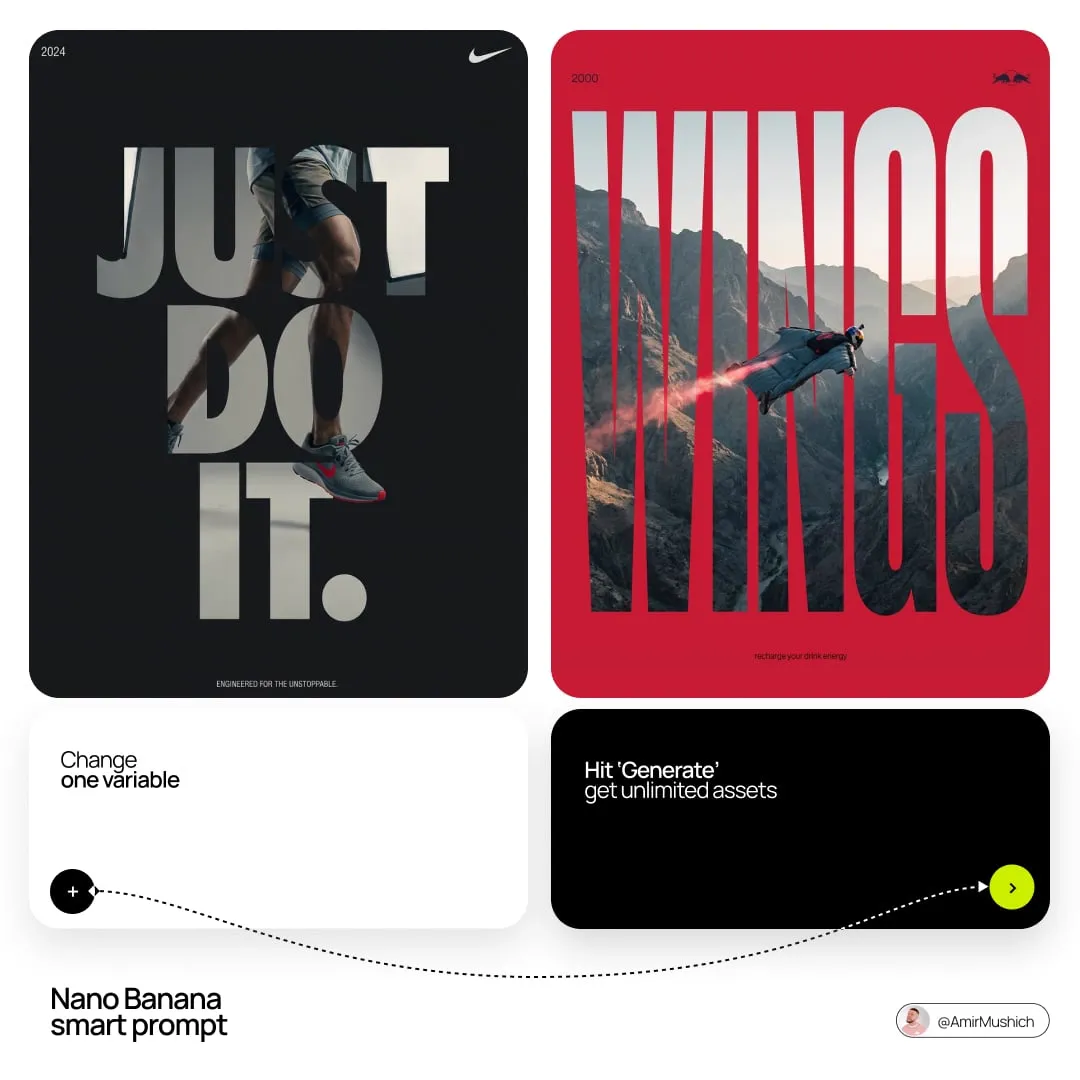
When a shot fails, change one variable at a time so you learn which word caused the problem. Keep a prompt library with the seed, the model, and a thumbnail of the result; the second campaign becomes dramatically faster than the first. Also record which prompts produced usable frames, not just usable motion, since a single good frame can seed an entire shot through keyframe control.
Quality Control Checklist Before You Publish
Check hands and fingers, eyes and gaze direction, teeth, jewelry, text on packaging, shadows, reflections, and continuity of wardrobe between shots. Watch at half speed once to catch warping and morphing. Verify that on-screen text is legible on a phone held at arm's length. Confirm that logos, taglines, and legal lines are correct. Run the audio check on both a laptop speaker and a phone speaker. If the piece includes a person, confirm consent for likeness and voice. Reject anything that would embarrass the brand if it were screenshotted out of context.
Common Mistakes and How to Avoid Them
The first mistake is generating before writing a shot list, which produces pretty footage nobody can assemble. The second is chasing realism when the creative idea is weak; a technically perfect ten seconds of nothing still performs like nothing. The third is ignoring audio, which is why so many generated ads feel like slideshows. The fourth is overloading a prompt with five competing ideas instead of one clear action. The fifth is failing to version assets, so the same clip runs unchanged for months and fatigues. The sixth is skipping the licensing review for voices, music, and likeness. The seventh is treating consistency as a post-production fix rather than a generation-time discipline.
Measuring Impact Without Vanity Metrics
Track hook rate, three-second view rate, completion rate, and cost per accepted shot alongside the usual conversion metrics. Hook rate tells you whether the first two seconds work, which is the element most affected by generation choices. Completion rate tells you whether the middle holds. Cost per accepted shot tells you whether your tool stack is actually cheaper than a shoot. Compare generated variants against live-action controls in the same placement to see where generation wins and where it does not. Most teams find generated content wins on volume and speed, while live action still wins on emotional close-ups of real people. That is useful budget information, not a reason to choose sides.
FAQ
Do I need more than one AI video tool?
Usually yes. One cinematic model for hero shots, one fast model for iteration, and often a reference-driven model for products and recurring characters. Two or three subscriptions typically cost less than a single additional shoot day.
How do I keep a character consistent across shots?
Lock a written description, gather multiple reference angles, reuse seeds where the tool allows, and generate sequentially rather than in unrelated batches. If the tool supports start-frame control, chain the last frame of one shot into the first frame of the next.
Is generated video good enough for paid advertising?
Yes for many formats: product demos, explainers, motion backgrounds, localized variants, and hook-driven short ads. Test against your existing creative rather than assuming either way, and disclose synthetic content wherever platform or local rules require it.
What is the biggest cause of wasted budget?
Generating at final quality before composition is approved. Concept passes at low resolution cost a fraction of final renders and catch most problems before they become expensive.
How long should a generated ad be?
Match the placement. Cold-audience social hooks often work best between six and fifteen seconds, mid-funnel explainers can run thirty to sixty seconds, and anything longer needs a narrative reason to exist.
Can one team manage multiple markets?
Yes, if you separate performance from language. Generate or record the performance once, then dub and subtitle. Keeping the visual track identical across markets also makes brand recall easier to measure.
What should be on the style guide?
Palette, lighting direction, lens character, aspect ratios, motion rules, subject descriptions, and a short list of banned looks. One page is enough, because consistency beats completeness.
How often should creative be refreshed?
Watch fatigue signals such as rising frequency and falling hook rate rather than following a fixed calendar. Keep a small bank of pre-approved variants so a refresh takes hours instead of a new production cycle.
Where should a small team start?
Pick one format, one placement, and two tools. Build the shot list, the style guide, and the prompt library on a single campaign, then reuse that scaffolding everywhere else. Process is the asset that transfers between tools.
