

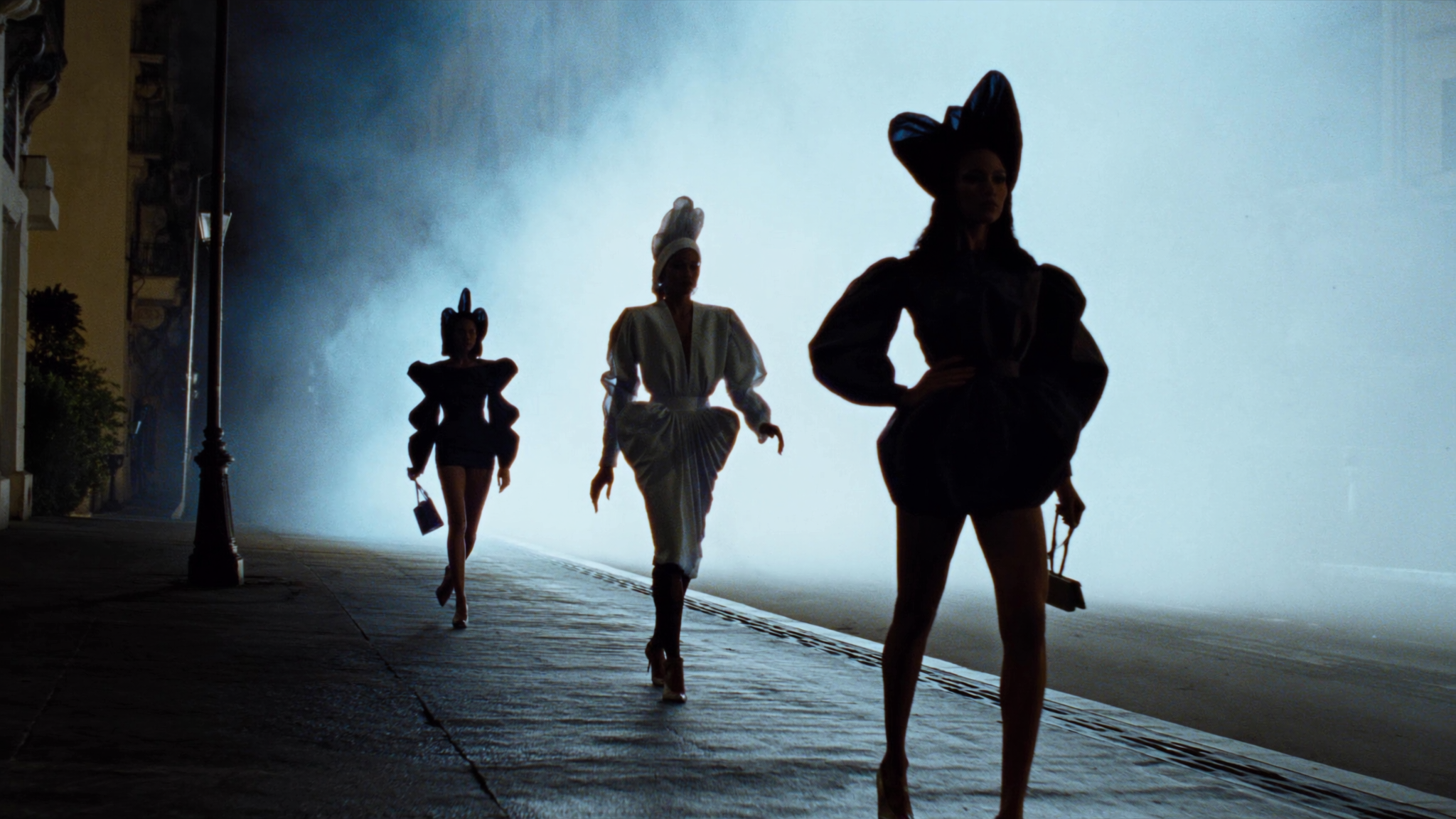

Text-to-video has crossed the line from demo to production tool. A few years ago, typing a sentence and receiving a coherent, moving image was impressive enough. Today, professional teams use text-to-video for advertising concepts, social content, product demos, and even narrative pieces, and the expectations have shifted accordingly. Viewers no longer forgive jittery motion, morphing faces, or broken physics just because a video was made by AI. This guide explains the current state of the AI video creation revolution, how to think about the model landscape, and how to build a workflow that produces reliable, high-quality results.
The revolution in one sentence
The most important change is that video creation is no longer gated by production resources. Film sets, crews, and expensive post-production were the barriers that kept video in the hands of studios and agencies. Text-to-video removes those barriers: the same person who writes the script can generate the shots, design the sound, and deliver a finished piece in a day. The revolution is not that AI makes better video than humans. It is that AI makes video production accessible to anyone with an idea and a willingness to iterate.
The consequence is a flood of content. When production cost approaches zero, differentiation moves to taste, storytelling, and consistency. The tools are available to everyone; the advantage belongs to whoever uses them with discipline.
Understanding the model landscape
The AI video model landscape changes fast, but it organizes into a few stable categories that survive version updates.
Premium generation models sit at the top for realism and control. They produce photorealistic humans, coherent physics, and style fidelity that holds up in close-ups. They are the right choice for hero shots, brand work, and any scene where a single visible flaw damages the result. They cost more per generation and take longer, so they are best used sparingly.
Balanced models offer a strong ratio of quality to cost. They are fast enough for iteration, good enough for most social and explainer content, and forgiving enough for beginners. Most projects should start here and escalate only when a scene demands it.
Specialized models cover niches: motion-heavy scenes, stylized animation, large-scale environments, and image-to-video transformation. When your scene depends on a specific capability, find the model that owns it instead of forcing a generalist to approximate it.
The strategic error is treating the model catalog as a menu of equals. Treat it as a toolbox: a few tools you use constantly, plus specialists you reach for when the job calls for them.
Why consistency is the make-or-break skill
The most visible failure mode in AI video is inconsistency. A character changes face between shots. A logo shifts size. A color palette drifts from scene to scene. Audiences may not articulate it, but they feel it, and it reads as unprofessional.
The skill that fixes this is reference discipline. Before generating a single clip, establish the visual identity of the project: the characters, the environment, the palette, the style. Then anchor every generation to that identity.
For characters, multi-image fusion is the key technique. Provide several reference images at once: a front portrait, a profile, a full-body shot, and ideally an image showing the outfit. The model extracts stable features and applies them across generations. With a solid reference set, you can place the same character in completely different scenes and the audience will recognize them instantly.
For environments and objects, the same principle applies. Build a reference library for recurring assets and reuse it. Consistency is not a feature you turn on; it is a habit you build into the workflow.
Building the pipeline: from prompt to finished video
A repeatable pipeline keeps quality high and effort predictable. The one below works for short-form and long-form alike, with adjustments to the number of scenes.
- Define the brief. Write down the goal, the audience, and the emotional tone in one or two sentences. Everything downstream should serve that brief.
- Lock the identity. Prepare reference images for characters, products, and environments. Approve them before generating anything.
- Storyboard the scenes. Break the video into shots. For a 30-second piece, five to eight shots is a reasonable target.
- Generate keyframes. Create a still image for each scene and review them as a set. Check for consistency, composition, and lighting before allowing motion.
- Generate the clips. Produce each scene, choosing the model according to the shot's needs. Review motion quality and regenerate failures with adjusted prompts.
- Design the audio. Add ambience, music, and effects. If there is narration, record or generate it before the final assembly.
- Assemble and export. Cut the scenes together, adjust pacing, apply final color, and export for the target platform.
The pipeline is simple, but the discipline is in the approval gates. Never let a scene advance to motion before its keyframe is approved. Never let a clip into the final assembly without checking its audio.
Writing prompts that produce cinematic results
Prompt quality is the highest-leverage skill in AI video. A vague prompt returns a vague clip; a specific prompt returns a specific result. The structure that works consistently covers five elements:
- Shot and camera: "medium shot, slow push-in" tells the model how to frame and move.
- Subject and action: who is in the shot and what are they doing.
- Environment and atmosphere: where the scene happens and what it feels like.
- Lighting and color: the light source, its temperature, and the palette.
- Style and mood: the aesthetic reference and the emotional tone.
Write prompts in the same order every time so the model receives consistent structure. Keep style keywords identical across scenes in the same project. If one scene says "cinematic" and another says "documentary," the finished video will feel like two projects glued together.
The role of the AI director
One of the most useful innovations in modern platforms is the agent director: a system that converts your brief into a concrete shot list. Instead of inventing every scene yourself, you describe the concept and receive a structured sequence with camera suggestions, shot sizes, and transitions.
The agent director shines in two situations. For beginners, it teaches the grammar of visual storytelling by example. For professionals, it removes the mechanical first draft of storyboarding so they can start from a strong structure instead of a blank page.
Use the director's output critically. It will not know your audience, your brand constraints, or your strongest assets. Treat its plan as a starting point, then edit it with the same judgment you would apply to a junior storyboard artist.
Audio: the half of the video everyone forgets
Text-to-video platforms produce images, but a video is images plus sound. Most creators under-invest in audio, and the result is a visible drop in perceived quality. The fix is a deliberate audio pass in every project:
- Ambience gives the scene a location. Add room tone, street noise, wind, or crowd murmur.
- Music sets the emotional rhythm. Match the track to the edit pace, not your personal playlist.
- Effects make the edit feel crafted. Add whooshes at cuts, impacts at key moments.
- Voice, when present, should be clean and prominent. AI voices work for narration; human voices still win for trust.
A useful test: watch your export on a phone speaker. If the video still communicates its message with energy, the audio pass worked.
Cost and iteration strategy
Text-to-video pricing usually ties cost to generation volume and model tier. The smart strategy is to spend most of your budget on approved work, not experiments. Iterate on keyframes and prompts at the cheapest tier that gives useful feedback, then generate the final version of each scene on the appropriate model.
Track your per-video cost for a month. Most teams discover that a few scenes consume most of the budget, and those are the scenes that benefit from premium generation. Budget the rest at balanced tiers.
Common mistakes and how to avoid them
- Prompting without references: characters will drift. Always anchor identity first.
- Reviewing everything after generation: approve scene by scene instead. Failures found late cost more.
- Changing models without re-validating: every model interprets references differently. When you switch, re-check the keyframes.
- Ignoring aspect ratio: generate and export in the format your audience watches.
- Forgetting the audio pass: silence reads as unfinished.
- Chasing perfection: AI video rewards iteration over perfectionism. Publish good versions, learn from data, and improve next time.
Use cases across industries
The same pipeline adapts to very different goals. Three examples show the range.
E-commerce and product marketing: teams generate product videos at scale by keeping a reference library for each product, then producing short clips for every channel: vertical for social, square for feeds, wide for landing pages. The consistency win is direct: the same product looks identical across every ad, which builds recognition and reduces returns caused by mismatched expectations. The iteration win is also direct: when a product changes, the library updates once and every video regenerates with the new design.
Education and explainers: a course creator or SaaS team turns documentation into video lessons by writing prompts from the same outlines they already maintain. Keyframes replace slides, and the audio pass carries the narration. The pipeline turns a content backlog into video without hiring a production team, and updates are cheap: a changed feature means regenerating one scene, not reshooting a segment.
Entertainment and series content: creators build recurring characters and worlds using multi-image fusion and reuse them across episodes. The reference library becomes the intellectual property: the character, the environment, and the style are assets that persist beyond any single video. As the library grows, production accelerates, because every new episode inherits the established identity instead of rebuilding it.
In every case the economics follow the same shape: the first video is the expensive one, because the references and workflow are being built. Every video after that is faster and cheaper. The investment that pays off is the one in references and process, not in fancier prompts.
When text-to-video is not the right tool
Honesty about limits saves time. Text-to-video excels at concept, atmosphere, and stylized content, but it is still weak in a few areas. Interview-driven content loses authenticity when the speaker is generated. Highly specific real-world products benefit from real footage, because accuracy to the millimeter matters. Legal or medical claims need a level of control that generation does not reliably provide. Long documentary narratives with real subjects are still the domain of cameras.
The professional approach is hybrid: generate what generation does well, film what film does well, and combine both in the same pipeline. The pipeline handles either source, because keyframes, references, and the audio pass apply to real footage too. Using AI as one tool among several, rather than a replacement for everything, produces the best ratio of speed to trust.
Frequently asked questions
How long does a finished video take? With a locked workflow, a 30-second video is realistic in a day, including revisions. The reference and keyframe phase takes most of the time, and that is money well spent.
Can text-to-video replace filming? For many content types, yes, especially concept, social, and explainer content. For documentary, interview, and brand-story work, real footage still carries authenticity that generation cannot fully replace.
Do I need to understand how the models work? No. You need to understand what they are good at, which you learn by testing. Technical depth is useful but not required.
How do I keep my brand consistent across many videos? Build a permanent reference library for your brand assets and reuse it in every project. Consistency comes from the library, not from memory.
Is generated video acceptable for advertising? Yes, and it is increasingly common. Check platform ad policies and disclosure rules for your region, and keep your own quality bar high enough that the AI origin is not a liability.
How much does it cost per video in practice? It depends on the tier and the number of retries. Budget for drafts on a fast model and finals on a quality model, and expect the first video to cost more than later ones. Track a month of real usage before making assumptions.
The AI video creation revolution is not a single product or model. It is a shift in who can produce video and how fast. The tools will keep changing, but the fundamentals will not: clear briefs, locked references, disciplined approval gates, deliberate audio, and constant iteration. Build your workflow around those fundamentals, and every new tool that appears will simply make you faster at the same craft.
