
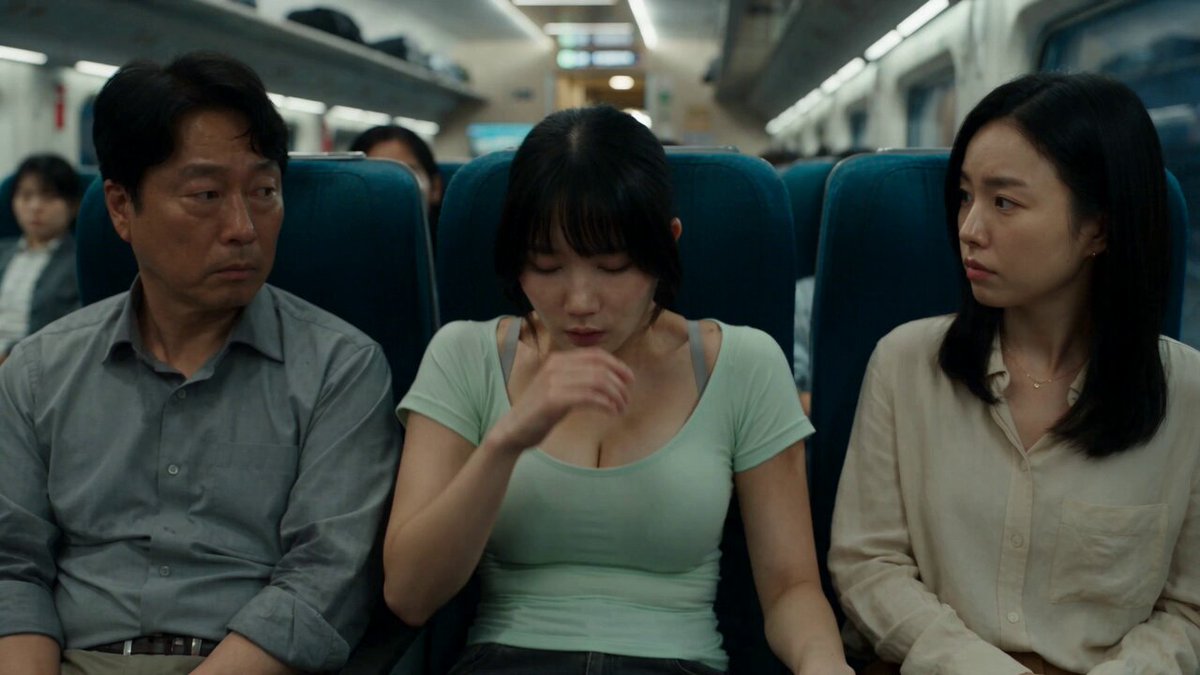

There is a moment in every video project when the raw footage is good but not quite right. The scene works, the pacing works, but you need one more insert, one different angle, one variation of a moment you already captured. In the old workflow, that meant shooting again, re-lighting, re-casting, maybe rebuilding the set. In the AI-assisted workflow, it means something completely different: you can take the footage you already have and tell a model to rebuild the scene, swap an action, or render an entirely new shot of the same character in the same world.
This guide is about that new standard of video editing. We are going beyond simple text-to-video generation into the practical techniques for reusing existing footage and reconstructing scenes. If you produce series content, repurpose assets across platforms, or manage a brand that needs its characters to stay consistent from one video to the next, the ideas here will reshape how you work.
Why cloning and reconstructing footage matters
The simplest form of video generation turns a text prompt into footage. Useful, but limited. Once your audience follows a character or a series, single-prompt generation stops being enough. You need your hero to walk through the same doorway in episode two that they entered in episode one. You need the lighting to match. You need the world to feel continuous.
That is the demand that cloning and scene reconstruction solve. Instead of generating from nothing, you start from what you have and extend it. The commercial value is obvious: reuse of intellectual property, consistent branding, and dramatically lower per-episode production costs. Rather than reshooting or rebuilding assets from scratch every time, you carry your characters and worlds forward.
Behind this practical value is real technology. Optical flow prediction helps models understand how pixels move between frames. Latent space consistency control keeps the underlying "idea" of a character stable even when the surface details change. Multi-image fusion lets a model combine several reference images into a coherent subject. These are not abstract buzzwords; they are the mechanisms that make a rebuilt scene feel continuous rather than disjointed.
The core challenge: keeping character and style stable
The single hardest problem in AI video is character and style consistency. A face that subtly changes from scene to scene pulls the audience out of the story. A wardrobe that shifts colors, a skin tone that drifts, a logo that wobbles — these kill immersion and, for commercial work, undermine the brand.
Modern platforms attack this by giving the model reference material. Feed it a still of your character or a set of established reference images, and it locks those visual facts into every generation that follows. This is the fundamental technique behind the entire workflow. Everything else, prompt tuning, camera control, scene planning, is layered on top of this stable foundation.
Building a reliable scene reference set
The quality of your output depends heavily on the quality of your references. When you build a reference set, include several angles of the character, different lighting conditions, and expression variations. The more complete the set, the less the model has to guess, and the fewer surprises you get in the render.
It is also worth locking down the environment: backdrops, color palettes, and props that define your world. When character references and environment references are both stable, scene reconstruction becomes far more predictable, because the model is not reinventing design decisions you have already made.
Deepening the craft: prompt engineering for scenes
Once your references are solid, prompting becomes a precise craft rather than a wish. Scene reconstruction is not just about keeping a character; it is about inserting a new action while preserving physics, spatial context, and mood. The prompt is your most direct control over all of that.
Write prompts with structure. Name the subject explicitly, describe the action clearly, place it in the environment, specify lighting and mood, and if you want a particular lens or camera move, say so. A prompt that separates subject, action, location, atmosphere, and camera is far easier for a model to honor than a single sprawling sentence.
Iteration matters more than perfection. Treat the first render as a draft. Read what the model got right and wrong, adjust the reference or the prompt, and render again. In the reconstruction workflow, your job is not to generate flawless video on the first attempt; it is to run a fast, informed loop between prompt, reference, and review.
Combining reference-based generation with video-to-video
Two techniques work well together. Reference-based generation builds a scene from your images and a prompt. Video-to-video takes existing footage and transforms it, preserving motion and structure while changing style or details.
A powerful editing approach is to pair them: use reference-based generation to create the master scene you want, then use video-to-video passes to explore style variations without losing the underlying action. This gives you a family of deliverable versions from a single solid core, which is exactly what multi-platform and multi-language content strategies need.
The role of keyframes and style references in scenes
Longer scenes benefit from structure. Rather than asking a model to hold a character consistent across many continuous seconds, break the sequence into shorter shots and anchor each one with keyframes or style references. Each shorter shot is easier to get right, and the keyframes bridge them so the assembled sequence feels like one continuous take.
Think of keyframes as signposts. They tell the model where the scene starts, turns, and ends. When every beat of the sequence is anchored, the model has far less room to drift, and the final cut holds together.
Reusing IP and protecting brand consistency
For businesses, the biggest payoff is asset reuse. A brand character, a mascot, a signature product shot, or a hero location can be produced once with a strong reference set and then reused across campaigns, ad creative, social posts, and localization. The visual identity stops being a cost center that repeats on every project and becomes a reusable asset.
Consistency here is a commercial feature, not a nicety. Viewers learn quickly what a brand looks like. When every asset matches that visual truth, trust compounds, recognition grows, and each new video reinforces the one before it. That compounding is why the investment in a good reference pipeline is repaid many times over.
Setting up a reconstruction workflow step by step
If you are starting from scratch, here is a repeatable sequence.
First, define the asset. Build the character or world reference set. Second, write the master scene prompt following the structure above. Third, generate the master scene and review it against your references. Fourth, create variations and video-to-video passes for the angles and styles you need. Fifth, assemble the shots, using keyframes to bridge them, and finish in a conventional editor.
Keep a library. Save every reference set, every good prompt, and every winning generation. Over time, this library becomes your production shorthand. Projects that once took days of planning and reshooting start in minutes, because you already know exactly what your character looks like and exactly what prompt produced the look you want.
Troubleshooting the common failure points
Even with a solid workflow, things go wrong. Knowing the usual failure points saves time and frustration.
The most common problem is reference leakage, where an element from one reference image leaks into a scene it should not belong to. Fix this by trimming your reference set to only what the scene needs and being explicit in the prompt about which element sits where.
Another frequent issue is style drift in longer sequences. The fix is more keyframes. Instead of expecting a continuous stretch to hold together, anchor more shots and let the keyframes bridge them. Shorter anchored shots almost always behave better than one long unfettered generation.
A third failure is over-loading the prompt. When a prompt asks for everything at once, the model compromises on all of it. Keep prompts focused, one clear subject and action, and layer complexity across multiple passes rather than cramming it into a single request.
When to retrain versus when to re-reference
As your needs grow, you will meet a fork in the road: keep using reference images, or invest in a fine-tuned model. References are faster and work well for most projects. A fine-tuned model pays off when a character or style appears so often, and demands such fidelity, that reference-based control is no longer reliable enough.
Start with references. Only move to fine-tuning when you can point to a concrete failure that references cannot fix. Most series, especially early on, never need fine-tuning, and the discipline of strong references saves you considerable time and cost.
Workflow efficiency across platforms and formats
The same cloned scene rarely needs to ship in one form. Social clips use a different ratio and pacing than a long-form episode. Ads want tighter cuts; explainers want clarity. Reconstruction shines here, because once your master scene is assembled, adapting it is mostly a matter of cuts, crops, and targeted restyles rather than regenerating from scratch.
Plan for reuse at the start. Generate your master scene in a way that leaves room to crop, to swap the style layer, and to adjust the pacing, so each adaptation is cheap. The teams that build this reuse into the workflow from day one scale across platforms without multiplying their production effort.
The business case for a living footage library
Treating footage as a living asset changes the economics of production. Instead of spending to create and then discarding, each project enriches a library you draw on for years. The cost of the first episode is an investment whose returns keep appearing in the fiftieth.
This is especially true for brands with recurring characters, product worlds, and established visual languages. A well-maintained library turns future production into assembly rather than invention. It reduces risk, shortens timelines, and keeps the visual identity consistent across every piece of content you publish.
Building the habit of review
None of this works without a strict review habit. After every generation, compare it against your references before you move on. Look for drift in the face, the wardrobe, the environment, and the lighting. Catch problems at the single-shot stage, where they are cheap, rather than after you have assembled a sequence.
A review habit also feeds improvement. Every time you notice a drift and correct it, you learn something about your references and prompts. Over a few months, that learning accumulates into an intuition for what will hold and what will break, and your rework rate falls sharply. The discipline of review is the quiet engine behind every consistently good reconstruction workflow.
Common questions about cloning and reconstructing scenes
Do I need a powerful computer for this? No. Generation happens in the cloud, so your machine only needs a stable connection.
How long does it take to get consistent output? There is a learning curve, usually a few projects. Once your reference set is solid and your prompts are structured, consistency improves dramatically and fast.
Can I reconstruct a scene from footage I already shot? Yes. Video-to-video transforms preserve motion and structure, so you can restyle or extend real footage into new scenes.
Is this technique only for fiction? Not at all. Explainers, product demos, advertising and training content all benefit from consistent scenes and reusable characters.
Final thoughts
The new standard in AI video editing is not bigger or flashier generation; it is control over continuity. Cloning existing footage and reconstructing scenes turns the finite, expensive world of "we can only shoot it once" into a flexible environment where your characters and worlds are reusable assets. With solid references, structured prompts, and a disciplined review loop, you stop hoping for good results and start directing them.
The future of production belongs to editors who treat their footage as a living library rather than a one-time output. Build that library, keep it consistent, and every future video becomes faster, cheaper, and more cohesive than the last.
