


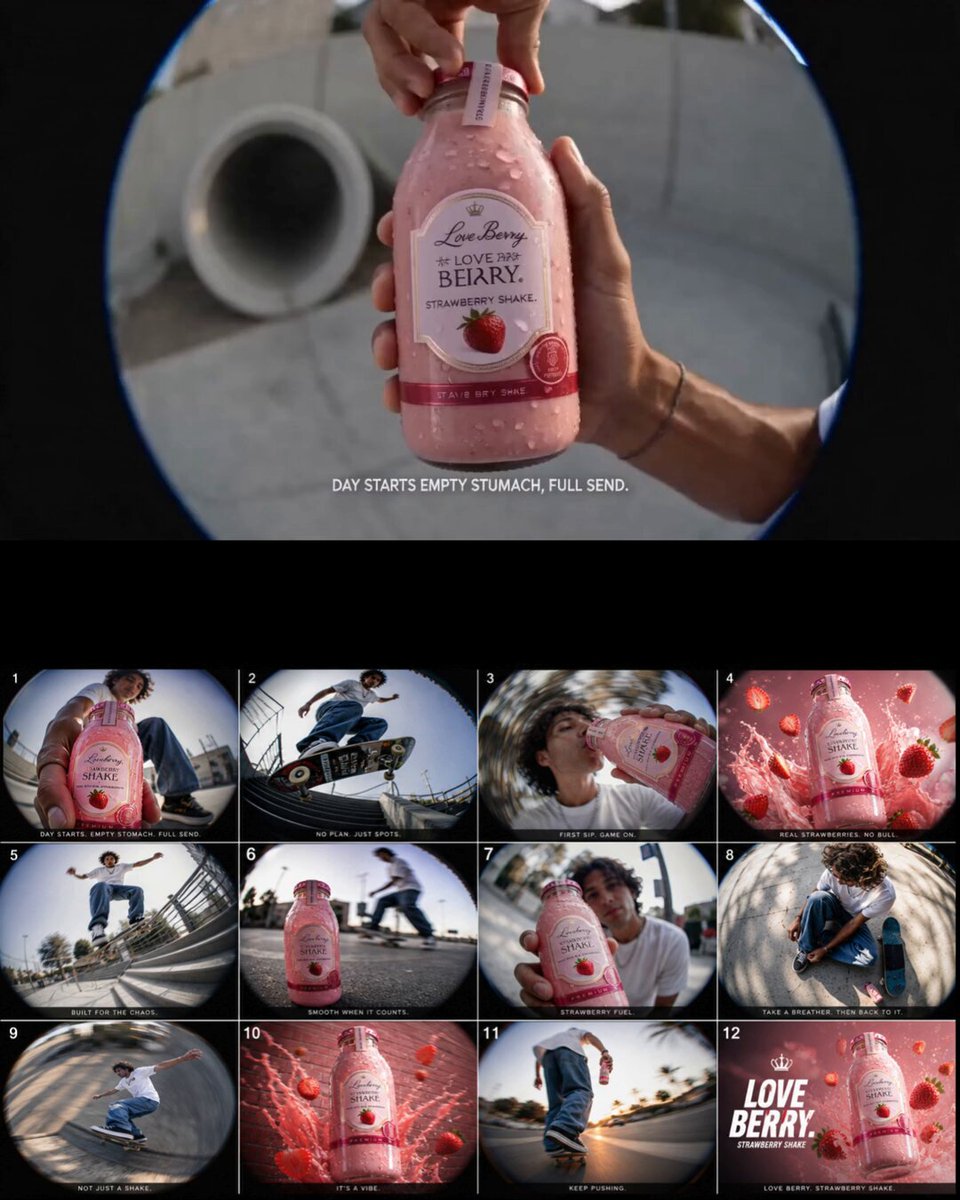
Audio and transitions are the two places where an otherwise impressive AI-generated video falls apart. Viewers rarely say "the transition was mistimed," but they feel it. A cut that lands half a beat late, a music bed that swallows a punchline, a voice-over that drifts a third of a second out of sync — these small failures accumulate into the impression that a video was assembled rather than directed.
That impression matters more than ever, because generation tools have made footage cheap and editing judgment expensive. Anyone can produce a dozen clips in an afternoon. Far fewer people can turn those clips into ninety seconds that hold attention to the final frame. This guide focuses on the craft layer: how to use AI for layered audio and transitions without handing over the decisions that make an edit feel human.
Why audio and transitions decide whether an edit feels professional
Human perception is brutally sensitive to timing. We forgive soft focus, slightly off color, and even a wobbling handheld shot. We do not forgive a voice that arrives late, or a scene change that lands while the eye is still reading the previous frame. Audio and transitions are the load-bearing walls of perceived quality.
AI helps because these are pattern problems. Detecting speech onsets, estimating tempo, matching a cut to the direction of motion, normalizing loudness across wildly different source clips — all of this is measurable, repeatable, and tedious. It is exactly the kind of work that should be automated, as long as the final call remains yours.
The failure mode shows up when creators let automation make the taste decisions too. Auto-cutters that chop on every detected silence produce frantic, breathless edits. Auto-ducking that slams music down the instant a voice begins creates a pumping, artificial feel. Auto-transitions that insert a whip-pan between two static shots look like a preset was dropped on the timeline.
So the working principle for this entire article is simple: automate measurement, decide intention.
What AI does well — and what it still cannot judge
Before building a workflow, it helps to be honest about capability. Current tools are strong at five things and weak at several others.
Strong at: speech transcription with word-level timestamps, beat and tempo detection, loudness measurement and matching, silence and filler-word detection, and matching cut points to motion vectors or optical flow.
Weak at: knowing whether a pause should breathe or be cut, deciding whether a joke needs a beat of silence after it, judging whether a transition supports or distracts from the emotional beat, and understanding why a specific mistake is intentional.
Pattern recognition versus editorial taste
AI models learn from existing edits, which means they gravitate toward the average. The average edit is fine, forgettable, and instantly recognizable as template-driven. Your advantage as a human editor is deviation: holding a shot two seconds longer than expected, cutting a beat early to create urgency, letting silence do the work of a score.
Where automation genuinely saves hours
Transcription and subtitle timing. Loudness matching across a dozen source clips recorded in different rooms. Beat grids for music-driven sequences. Sync checks between narration and picture. Silhouette and subject tracking for text placement. These are the tasks where AI returns an hour for every ten minutes invested.
The building blocks: timing, layering, and continuity
Every seamless result comes from the same three foundations. Understand them and the tool choice becomes secondary.
Speech and beat detection as a shared timeline
When you transcribe audio with word-level timestamps, you gain a map of the edit. Every pause becomes visible. Every emphasis becomes a marker. Layer a beat grid from the music track on top of that map and you have a combined rhythm track that tells you exactly where a cut can land without stepping on a word or fighting the downbeat.
This is the single highest-leverage habit in AI-assisted editing: never place a cut until you can see both the speech map and the beat grid.
Loudness, ducking, and perceived space
Two clips can measure identically and feel completely different because of dynamic range. A compressed voice-over sits forward; a naturalistic room recording sits back. AI normalization tools handle the numeric target, but you still choose the relationship: how far forward the narration sits, how much room tone remains, how aggressively music ducks.
A practical starting point is a gentle duck of three to six decibels on the music bed, with a short attack and a longer release measured in hundreds of milliseconds. Hard ducks of twelve decibels or more are audible as pumping, and they make a mix feel cheap.
Continuity through consistent keyframes
Visual continuity breaks most often when the same subject is treated differently shot to shot. Position, scale, color temperature, motion blur, and grain should evolve smoothly. If you are using AI for stabilization, relighting, or upscaling, apply consistent parameters across an entire scene rather than per clip. Inconsistent processing is one of the most common reasons an AI-assisted sequence feels stitched.
A repeatable workflow for AI-assisted video editing
This five-stage process works for narrative shorts, product videos, explainers, and social content. Adapt the duration of each stage, not the order.
Step 1: Ingest, transcribe, and tag
Import everything, create proxies if the source is heavy, and run transcription on every clip containing speech. Then tag clips by content type: interview, b-roll, product detail, reaction, transition-capable motion. Tagging is boring and pays for itself within the first hour of editing.
Generate subtitle tracks now, even if you plan to write your own. The word-level timing data is the foundation for everything that follows.
Step 2: Lock the visual spine before adding anything
Build a rough cut using only the strongest shots, in order, with hard cuts. No transitions, no music, no effects. Watch it end to end and ask one question: does this hold attention?
If the answer is no, no amount of audio polish will fix it. This stage is where you make structural decisions — what to cut entirely, what to reorder, where the story turns. AI can suggest candidates by grouping similar shots or flagging visually weak clips, but the assembly is editorial work.
When the spine is locked, duplicate the sequence so you always have a clean version to return to.
Step 3: Build the audio stack in layers
Add audio in a fixed order, one layer at a time, checking on headphones and on a phone speaker at each step.
- Dialogue and primary voice. Clean it first: noise reduction, de-essing, breath control, loudness targeting. Only after this is solid should anything else be added.
- Music bed. Choose a track whose tempo aligns with your cut rhythm. Set the level against dialogue, then duck it.
- Ambience and room tone. This is what makes cuts invisible. A consistent low ambience layer across a scene hides the micro-gaps between shots recorded at different times.
- Foley and impact sounds. Whooshes on transitions, subtle clicks on text reveals, cloth movement on cuts to close-ups.
- Narration or synthesized voice-over. Add last, so it sits above a mix that already works.
Synthesized voice is genuinely useful for scratch narration, translations, and internal review. It is riskier as final audio, because synthetic voices often lack the micro-variation that makes long stretches of speech tolerable. If you use it in a final cut, vary pacing between sentences and avoid a single flat delivery across a whole piece.
Step 4: Place transitions deliberately, not rhythmically
Resist the urge to decorate every cut. Most transitions in a strong edit are hard cuts, and they are invisible.
Use transitions when one of these conditions is true: a significant change in time, a change in location, a change in perspective or speaker, or a deliberate tonal shift. When none applies, cut hard. When one applies, choose based on the relationship between the outgoing and incoming shots.
Step 5: Mix, monitor, and export
Do a full pass with your eyes off the screen, listening only. Then a pass with the audio muted, watching only. Then a full pass on a phone at low volume. Three passes catch nearly everything.
Export a high-quality master, plus platform-specific versions if you need vertical crops. Check that any auto-reframing kept faces inside safe areas on both aspect ratios.
Overlay audio techniques that hold up under scrutiny
Overlay audio is where most AI-assisted projects either shine or collapse. These four techniques cover the majority of situations.
Voice-over and lip-sync alignment
When narration accompanies a speaker on screen, alignment errors of a few frames are noticeable. AI-driven waveform alignment can nudge narration into place, but it cannot fix a script that describes the wrong shot. Write to picture, then align, then re-check the three most visually detailed moments in the piece — mouths, hands, and written text on screen.
Music beds and ducking curves
Instead of relying on automatic ducking everywhere, design two or three ducking presets: one for dense narration, one for sparse dialogue, one for montage with no speech. Apply the preset that matches the section, then adjust only the transitions between sections by hand.
Foley, room tone, and the illusion of continuity
Scenes feel continuous when the background never truly disappears. Extend a single ambience layer under an entire scene, then layer spot effects on top. Trim effects so they begin slightly before the cut and end slightly after it. That overlap is what sells seamlessness.
Audio for vertical and short-form
Vertical video is consumed on small, often poor speakers. Prioritize voice intelligibility, reduce the stereo width of music, and lower the low-frequency content that small drivers cannot reproduce. If a mix sounds thin on a laptop but full on headphones, it will translate better to mobile than the reverse.
How to make transitions feel invisible
A transition is invisible when the viewer's attention is already moving in the direction the edit takes it. Three practical techniques achieve this consistently.
Match the motion. Match a leftward camera pan to a leftward wipe or cut to a shot with continued leftward movement. AI motion analysis can flag candidate pairs automatically.
Match the shape or color. Cutting from a circular object to another circular object, or holding a dominant color across the cut, makes the change feel designed.
Cover the change with sound. A subtle whoosh, a shift in ambience, or a music accent can mask a transition that would otherwise draw attention to itself. This is the least obtrusive option and the one most editors underuse.
Avoid transitions that announce themselves: elaborate 3D flips, heavy glitch effects, and zoom transitions applied uniformly. One or two signature moves per video is a style. Twelve is noise.
Decision criteria: automate, assist, or do it by hand
Use this rough framework when deciding how much to delegate.
- Automate fully: transcription, subtitle timing, loudness normalization targets, silence detection, proxy generation, reframing for aspect ratios.
- Use AI as an assistant: transition candidate suggestions, beat grid alignment, voice synthesis for scratch tracks, color matching across shots.
- Keep manual: final cut placement on dialogue, transition selection, music level relationships, and every decision that carries emotional weight.
The tiebreaker question is always the same: if this choice is wrong, will the viewer notice, or will they just feel vaguely disappointed? Anything in the second category deserves a manual pass.
Troubleshooting the most common problems
Speech sounds robotic or rushed. Check for over-compression and excessive noise reduction. Aggressive cleanup removes breath and room information, which our ears interpret as unnatural. Back off the reduction and add a touch of room tone back in.
Cuts feel abrupt even though they are clean. You are missing an ambience bridge. Extend background audio across the cut and let it overlap for two to four frames on both sides.
Music fights the dialogue. Reduce the musical elements in the same frequency range as the voice — typically the low-mid range — rather than lowering the whole track.
Transitions look like presets. Replace two-thirds of them with hard cuts. Then keep only the transitions that mark a real change in time, place, or perspective.
Subtitles drift out of sync after a re-edit. Re-run alignment after every structural change. Never assume timing survived a trim.
The edit feels long even though the runtime is short. Look for repeated information, not slow pacing. Cutting a redundant sentence often does more than trimming thirty frames from ten different shots.
Quality control checklist before export
- Watch once with audio muted. Does the story read visually?
- Listen once with the screen off. Is every word intelligible?
- Check loudness consistency between the loudest and quietest sections.
- Verify that no transition lands on a word onset or a musical downbeat unintentionally.
- Confirm safe areas for text and faces in every aspect ratio you deliver.
- Confirm that all AI-generated voice or imagery has been reviewed for factual accuracy and unintended artifacts.
- Export a master plus platform versions, and archive the project with original media paths intact.
Frequently asked questions
Do I need a dedicated AI editor to do this?
No. Most of the benefit comes from three capabilities you can find in many editing suites: word-level transcription, loudness matching, and beat detection. If your tool has those, you can build this workflow today.
How much audio layering is too much?
If you cannot mute a layer and immediately notice what disappeared, that layer is probably not earning its place. Aim for four to six simultaneous layers at peak: dialogue, music, ambience, spot effects, and narration.
Should transitions always match the music?
No. Matching every cut to the beat creates a mechanical rhythm that becomes predictable within twenty seconds. Let the music support the cut pattern rather than dictating it.
Is synthesized narration acceptable in client work?
For internal review, localization drafts, and scratch tracks, yes, without hesitation. For final delivery, it depends on the audience and the disclosure norms in your market. Always confirm expectations before shipping synthetic voice as final audio.
How do I keep an AI-assisted edit from looking generically "AI"?
Break symmetry. Hold a shot past its natural exit point, cut a beat earlier than expected, and let silence replace score at least once. Templates are symmetric; human edits are not.
What is the fastest way to improve transitions?
Delete most of them. Editors who are new to transitions tend to add; editors who are experienced tend to subtract. A timeline of hard cuts, an ambience bridge, and sound design that carries the viewer across the change will outperform an effects-heavy sequence almost every time.
The real shift in AI-assisted editing is not that machines can now cut video. It is that they have removed the measurement work that used to consume the first day of every project. That gives you more time on the two things that decide whether anyone watches to the end: how the audio sits, and how the picture changes. Get those right, and the tools become invisible — which is exactly the point.
