

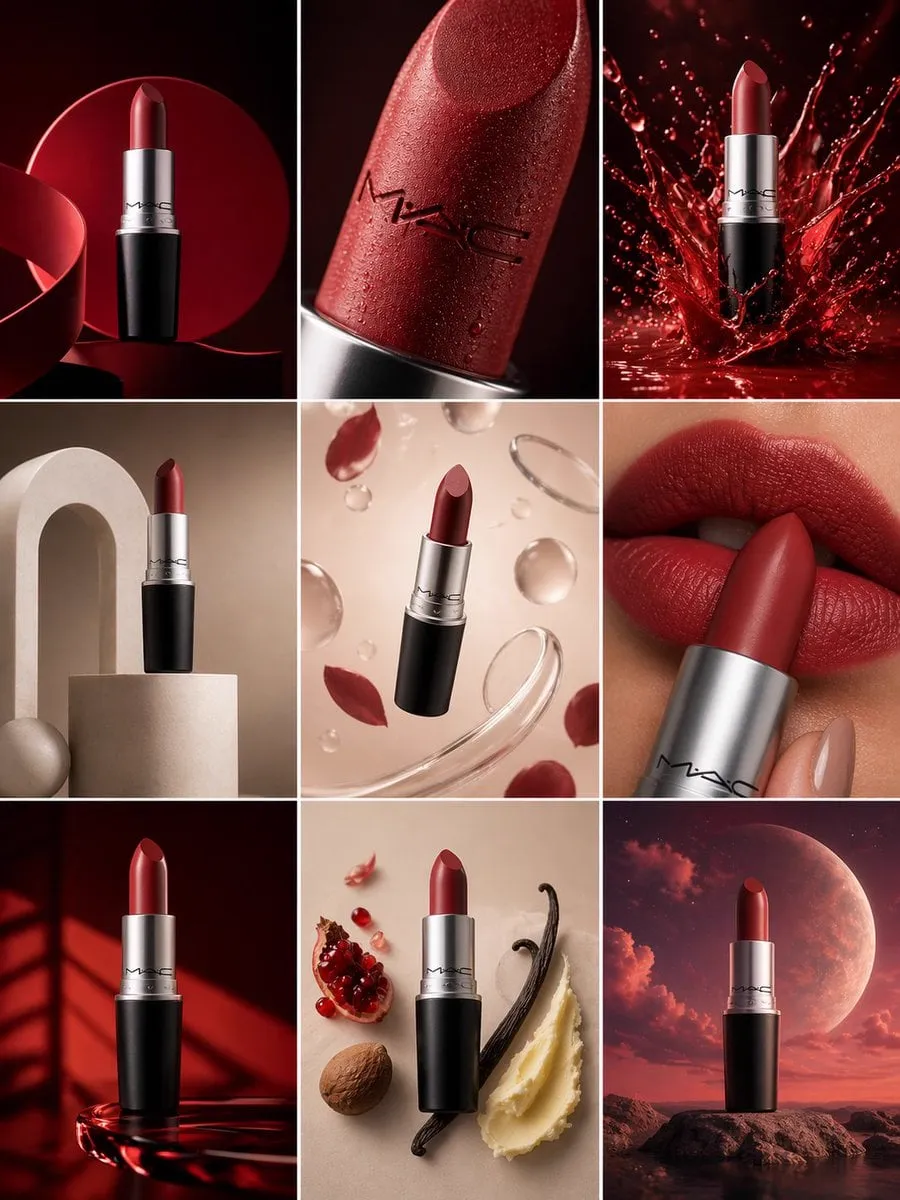
Understanding the Current AI Video Landscape
Text-to-video has stopped being a demo category and started being a production category. The shift that matters is not that one model finally beat all the others, but that the field has split into clear layers. There are frontier generalists that attempt everything, editing-first creative suites built around shot-level control, and a fast-moving specialist tier of open-weight and regional models that solve narrow problems extremely well. Flux, Runway, and Sora each live in a different layer, which is why comparing them on a single "quality" axis usually produces bad decisions.
A practical way to think about the landscape is to separate three jobs: generating a still that defines the look, generating motion that respects that look, and assembling many shots into something that reads as a coherent piece. Most teams lose time because they try to make one tool do all three. The stronger approach is to treat models as interchangeable stages in a pipeline, then route each stage to whichever tool is best at it.
This guide walks through what Flux, Runway, and Sora are actually good at, how the specialist tier fits in, and how to build a repeatable workflow that survives model updates. If you produce anything longer than a single clip, the workflow matters more than the model.
Flux, Runway, and Sora: What Each One Is Actually Good At
Flux: still-image fidelity that anchors a video pipeline
Flux is best understood as an image model family whose real value in video work is upstream. It produces clean, prompt-faithful stills with strong text rendering, reliable anatomy, and excellent style consistency across a batch. In a video pipeline, that makes it the keyframe engine: you generate the establishing shot, the character reference, and the style frames, then hand those stills to an image-to-video model.
Its advantages show up when you need repeatable look development. Producing ten variations of a character with consistent facial structure, wardrobe, and lighting is far easier in a stills-first approach than in pure text-to-video. The same applies to product shots, title cards, and any frame that needs readable typography.
The tradeoff is that Flux does not animate. You are still choosing a separate motion model, and you inherit the usual image-to-video problem: the model will drift, morph hands, or flatten depth unless your prompt and reference frames are disciplined.
Runway: the editing-first creative suite
Runway's strength is not a single model but a suite of controls wrapped around generation. Motion brushes, camera direction, inpainting and outpainting, background removal, frame interpolation, and shot extension are all part of the same workspace. That matters because most real projects need to fix things, not just generate them.
If your work involves matching an existing plate, extending a shot that ended too early, isolating a subject for compositing, or turning a rough sequence into a smooth one, an editing-first suite saves enormous time. You spend less effort describing what you want and more effort adjusting what you got, which is exactly how professional post-production already works.
The limitation is abstract ambition. Runway tends to excel at controlled, deliberate shots rather than sprawling, physically complex sequences. If you need a camera to travel through a chaotic environment with many interacting objects, a generalist frontier model is often a better first attempt.
Sora: narrative realism and world simulation
Sora's reputation comes from long, coherent shots with plausible physics and camera language that feels intentional. It reads prompts about lens choice, movement, and lighting the way a cinematographer would describe them. For narrative sequences where the camera, subject, and environment all need to behave consistently for several seconds, it is often the fastest route to something convincing.
Where it struggles is fine control. Getting an exact framing, a precise cut point, or a specific object placement can take many attempts, and iteration is not always instant. It is also the least predictable tool for teams that need deterministic outputs, since small prompt changes can produce large stylistic jumps.
Used well, Sora is a sequence generator: you accept less control in exchange for coherence and realism. Many teams pair it with a stills-first pipeline so the look is locked before motion generation begins.
The Specialist Tier: Models That Solve Specific Problems
The big three get the headlines, but a large share of finished work passes through specialist models at some point. Knowing them changes how you plan shots.
Motion-heavy action and physical interactions are where several newer models shine, producing convincing weight, cloth, and collision behavior that generalists sometimes smooth into mush. Natural camera moves, sweeping drone-style passes, and slow push-ins tend to look best from models tuned specifically for camera motion. Stylized effects, anime-adjacent looks, and loopable short-form clips are another specialty, with dedicated tools that outperform generalists on stylization at the cost of photorealism.
Character consistency is its own niche. Some models accept multiple reference images and maintain identity across shots far better than a generic prompt does. Open-weight families matter for a different reason: they can be run locally, fine-tuned on a private dataset, and integrated into custom pipelines without sending footage off-site. For studios with strict asset policies or unusual visual signatures, that flexibility outweighs benchmark scores.
The practical conclusion is that you should not be loyal to a brand. Keep a short list of three to five models you know well, and record which one wins for which shot type.
A Decision Framework for Choosing the Right Model
Before generating anything, answer these questions in order. Each one narrows the field fast.
| Question | What it decides |
|---|---|
| Is the shot a still with light motion, or genuine movement? | Image-to-video versus text-to-video |
| Does a character need to be recognizable across shots? | Reference-image support and consistency tooling |
| How long is the shot? | Models with reliable extension versus short-clip specialists |
| How precise is the framing? | Editing-first suites versus generative generalists |
| Does footage need to stay on-premises? | Open-weight models |
| How many iterations can you afford? | Latency and predictable usage costs |
| Is commercial use permitted? | Licensing terms, checked before the shoot |
Two additional criteria are easy to forget. First, resolution and aspect ratio support: a model that only outputs square or 16:9 frames will fight you if the deliverable is vertical social video. Second, pipeline fit: exporting to a format your editor, compositor, or upscaler accepts cleanly saves more time than a marginal quality gain.
A useful habit is to score each model from one to five on control, realism, consistency, speed, and cost predictability, then weight those scores per project. A product ad weights control and consistency. A mood piece weights realism and speed. The same shortlist produces different winners.
A Complete Workflow From Script to Final Cut
Lock the script and the shot list first
Generation amplifies ambiguity. If the script says "they argue," every model will produce something different and none of it will cut together. Write the shot list at the level of a single action per shot: who is in frame, what they do, where the camera is, and how the shot ends. Note the duration you need, because most models default to a handful of seconds and you will otherwise extend shots in post.
Generate keyframes and style frames
Use a strong stills model to produce the visual anchor: one or two frames per shot plus a character sheet and a lighting reference. This is where consistency is cheapest to establish. Iterate on stills until the look is right, then stop. Every change after motion generation costs dramatically more time.
Turn stills into motion
Route each keyframe to the motion model that suits it. Calm dialogue shots, product rotations, and establishing frames usually do best with image-to-video. Complex action, environment traversal, and physically dynamic sequences go to a generalist. Keep the motion prompt short and physical: subject action, camera move, and one lighting or atmosphere note.
Assemble, sound design, and grade
Cut in an editor, treat generated clips as raw footage, and expect to trim heads and tails. Generate two or three takes per shot and keep a library of alternates; a shot that fails alone often saves a different scene. Add sound deliberately, since audio carries far more of the perceived realism than most creators expect. Finish with a mild grade and grain pass to unify shots from different models.
Prompting Patterns That Transfer Across Tools
Most prompt failures come from structure, not vocabulary. A reliable template is: subject and wardrobe, action, camera position and movement, lens and depth of field, lighting, environment, and style reference. Negative cues help too, but keep them specific and short.
For image-to-video, do not repeat the whole image description. Describe only what changes: "slow dolly in, hair moves in the breeze, background crowd stays soft and out of focus." Over-describing a still causes the model to redraw it.
For text-to-video, front-load the camera. Models weight the first clause most heavily, so "handheld medium shot of a cyclist turning a corner at dusk" beats "a cyclist at dusk, turning, handheld, medium shot." Keep one action per shot; two verbs almost always produce a swap or a morph.
Finally, save prompts that work. A personal prompt library organized by shot type outperforms any prompt-pack you buy, because it encodes your style rather than someone else's.
Continuity, Characters, and Style Consistency
Consistency is a pipeline problem, not a prompt problem. Use fixed seeds and reference images where supported, keep the same style frames across a sequence, and resist the urge to change wording between shots that belong together.
For recurring characters, build a small identity kit: three to five images from different angles under consistent lighting, plus a written description of permanent features. Feed these into every shot, then check face shape and wardrobe before accepting an output. Some teams fine-tune an open-weight model on this kit, which produces the strongest results but requires technical overhead.
Style consistency follows a similar pattern. Lock a color palette, a grain level, and a lighting direction early, then apply them as constraints rather than as descriptive adjectives. When shots still clash, a light grade and a shared film emulation in post hides more inconsistency than another round of generation.
Common Mistakes and How to Avoid Them
Cramming multiple actions into one shot. Models handle one clear action. Split the shot instead of writing "he stands, turns, and walks away."
Skipping the shot list. Without a list, you generate pretty clips that cannot be edited into a story. Write it before you touch a model.
Ignoring aspect ratio and duration limits. Decide the delivery format first; vertical, square, and widescreen each change framing and composition.
Judging on a single output. First generations are drafts. Budget three attempts per shot and you will stop discarding good ideas prematurely.
Over-committing to one tool. Every model has a failure mode. A shortlist with fallbacks keeps a deadline intact when one tool underperforms that week.
Treating generated footage as finished footage. It needs trimming, sound, and grade. Teams that skip this step produce work that looks unmistakably synthetic.
Assuming licensing is obvious. Check commercial-use terms and any restrictions on likeness, before the client sees a cut.
Budgeting Time and Iterating Without Losing Quality
Generation is cheap per attempt and expensive per hour of human review. The cost model that works is: many low-resolution drafts, few high-resolution finals. Draft at the lowest quality that still reveals composition, approve a shortlist, then re-render only the winners.
Track two numbers per project: attempts per usable shot, and minutes of review per finished second. Both improve quickly with a saved prompt library and a consistent shot list. When attempts-per-shot climbs, the problem is usually the prompt or the reference frame, not the model.
Build review gates into the schedule instead of reviewing everything at the end. Approving keyframes before motion, and motion before sound, prevents the expensive scenario where a whole sequence is finished and the character no longer matches.
FAQ: Practical Questions From Real Projects
Which of Flux, Runway, and Sora should I start with?
Start with the deliverable. Stills-driven work with stable styling starts with Flux. Shot-level control, compositing, and repair work start with Runway. Long, physically coherent narrative shots start with Sora.
Can I use one model for an entire project?
You can, and for very short pieces it is often the fastest route. For anything with recurring characters, multiple locations, or specific framing needs, mixing a stills model with a motion model produces noticeably better continuity.
How long should a generated shot be?
Generate slightly longer than you need, then trim. Clips that are exactly the right length usually have weak start and end frames, and trimming gives you handles for transitions.
Why do my characters change between shots?
Usually because each shot was prompted independently. Use reference images, fixed seeds, and an identical character description across shots, or fine-tune a model on a consistent identity kit.
Do I still need an editor?
Yes. An editor handles timing, sound, and pacing, which is where most of the perceived quality lives. Generation produces raw material, not a finished film.
How do I keep up as models change?
Invest in the pipeline and the prompt library rather than any single tool. If your workflow is stage-based, swapping a model takes an afternoon instead of a rebuild.
Where This Is Heading
The direction is clear: generation quality keeps rising, and control is the battleground. Expect stronger reference conditioning, better motion consistency, and more tooling around editing rather than raw synthesis. The teams that benefit most will be the ones that already think in stages, measure attempts per usable shot, and treat every model as a replaceable component rather than a creative identity.
Build the pipeline once, document it, and let the models rotate through it. That is the difference between chasing tools and shipping finished work.
