
Text-to-video used to be a party trick. You typed a sentence, waited a minute, and received four seconds of shimmering motion that looked impressive in a feed and completely unusable in an edit. That phase is finished. Current models can hold a face steady across a shot, obey a camera instruction, and generate clips long enough to cut into something with rhythm. The part that separates a demo from a deliverable is no longer the model. It is the workflow wrapped around it.
This guide walks through a complete production pipeline for AI video: choosing the right model family for each shot, writing prompts that produce controlled motion instead of random motion, locking character and style continuity, and handling the editing, sound, and rights work that most tutorials skip entirely.
Why Generation Is No Longer the Bottleneck
For the past two years, the limiting factor in AI video was raw output quality. Motion warped, hands melted, and anything past five seconds drifted into abstraction. That constraint has largely dissolved. Modern systems produce plausible physics, readable faces, and stable backgrounds across clips that run well beyond the old ceiling.
The consequence is that the bottleneck moved upstream and downstream at the same time. Upstream, it moved to direction: deciding what the shot is for, what the camera is doing, and how it connects to the shot before and after it. Downstream, it moved to assembly: pacing, sound design, color, and the hundred small decisions that turn isolated clips into a sequence an audience will sit through.
A useful mental model is to treat generation like a camera department rather than a vending machine. A camera department does not invent the film. It executes a plan with precision. The better your plan, the less you rely on luck, and luck is expensive when you are iterating through dozens of variations.
The practical implication: spend less time hunting for a magic prompt and more time building a shot list, a reference kit, and a review process. Teams that do this consistently ship in a fraction of the time, because they stop re-rolling the same shot hoping for a different outcome.
Model Families and What Each Does Best
There is no single best model, only models that are best for a specific job. Treating them as interchangeable is the fastest way to waste a day. In practice, current tooling falls into four families, and most finished projects use three of them.
Image models as the visual foundation
Image generators built for high fidelity and style control remain the most underrated part of an AI video pipeline. They are cheap, fast, and deterministic enough to iterate on. Use them to establish the look before you commit to motion: key art, character sheets, location concepts, lighting studies. A strong still is a strong constraint. When you later feed that still into a video model as a starting frame, you have removed most of the randomness from the shot.
Look for models with strong style adherence and the ability to keep a face or product consistent when you vary the pose. That consistency is what makes a character sheet usable rather than decorative.
Narrative text-to-video models
These are the systems designed to interpret a scene description and produce coherent action: a person walks into a room, sits down, glances at a window. They tend to excel at understanding relationships between subjects, handling multiple characters, and producing camera movement that reads as intentional. They are the right choice for establishing shots, environmental storytelling, and any moment where the action itself carries meaning.
Their weakness is precision. If you need an exact hand gesture or a specific prop orientation, they will approximate. Plan for that by keeping these models on shots where approximation is acceptable.
Video-to-video and motion control models
This family takes existing footage or a rendered animatic and restyles, extends, or re-times it. They are the workhorse for anything requiring control: matching a live-action plate, changing the time of day, converting a blockout into a finished look, or generating camera moves that obey a defined path. If you have previz, this is where it pays off.
Performance, lip-sync, and avatar models
Dialogue-driven content needs a different toolchain entirely. These models focus on mouth shapes, head motion, and micro-expression, and they are judged on whether a viewer notices the seam. Use them for talking-head segments, dubbing, and localized versions of a spot. Keep shots short and cut on movement; the illusion holds better when the audience has less time to study it.
A simple decision table
| Shot need | Best family | Why |
|---|---|---|
| Establish a world or mood | Image model, then narrative video | Look is locked before motion is spent |
| Multi-character scene with dialogue beats | Narrative video | Better subject relationships |
| Restyle or extend existing footage | Video-to-video | Preserves composition and timing |
| Exact camera path or product rotation | Motion control | Geometry stays under your control |
| Spoken lines and close-ups | Performance and lip-sync | Expression and phoneme accuracy |
| Fast iteration on look | Image model | Seconds per variation, not minutes |
Pre-Production: The Shot List Comes Before the Prompt
Most failed AI video projects fail before anyone opens a generation tool. The team starts with a vibe, generates twenty attractive clips, and then discovers they cannot be assembled into anything coherent. The fix is unglamorous: write the shot list first.
A workable AI shot list has five columns. Shot number and duration. What the audience must understand from this shot. The subject and their action. The camera behavior. The continuity anchors, meaning which character, wardrobe, location, and lighting details must match the neighboring shots.
That last column is the one people skip, and it is the one that determines whether your sequence feels like a film or a slideshow. If shot three and shot four share a character, note the exact jacket, hair state, and light direction. If they share a location, note the time of day and the dominant color. Forcing yourself to write these down before generating means you will notice mismatches on paper, where they cost nothing, instead of in the timeline, where they cost a re-render.
Then group your shots by generation family. Shots needing precise geometry go to motion control. Shots needing emotion and dialogue go to performance models. Shots needing scale and atmosphere go to narrative models. This grouping also lets you batch work: run every image-model task in one session, then every video task, then every sound task. Context switching is the silent killer of iteration speed.
Prompting for Motion
A prompt for a still image describes a moment. A prompt for a video has to describe a change over time, and that is a different grammar. The most common failure is writing a beautiful static description and hoping the model invents motion on its own. It will invent something, but rarely the thing you wanted.
The five slots of a controllable prompt
Build prompts from five slots, in order. Subject and wardrobe. Action, expressed as a verb phrase with a clear beginning and end. Environment and time of day. Camera, including shot size, angle, and movement. Look, covering lens, grain, color, and genre reference.
An example: "A woman in a charcoal wool coat lifts a paper envelope from a wet pavement, straightens, examines it; empty rain-slicked street at dawn; medium shot, slow push in, shallow depth of field; muted teal grade, 35mm grain, restrained documentary feel." Every slot is present, and the action has a clear arc.
Camera language that models understand
Terms like "dolly in," "slow push," "crane up," "handheld follow," "static locked-off frame," and "arc around subject" translate well. Vague instructions like "cinematic movement" do not. If a model ignores your camera instruction, simplify: remove the other slots temporarily and test the camera term alone. Once it responds, add the rest back.
For multi-shot sequences, vary your camera grammar deliberately. If every shot is a slow push in, the sequence will feel hypnotic in a bad way. Alternate wide static frames with moving mediums, and let cuts do the work.
Boundary instructions and negative phrasing
Telling a model what not to do is less reliable than telling it what to do, but a few boundaries help: no text overlays, no logos, no extra limbs, no lens flare, no jump cuts. Keep the list short. Long negative lists tend to dilute the positive description and can cause the model to hallucinate the very thing you banned.
Consistency and Control Across Shots
The hardest problem in AI video is not generating a good shot. It is generating eleven good shots that belong to the same film. Consistency breaks down in three places: faces, wardrobe and props, and lighting and grade. Each has a practical countermeasure.
Character lock with reference images
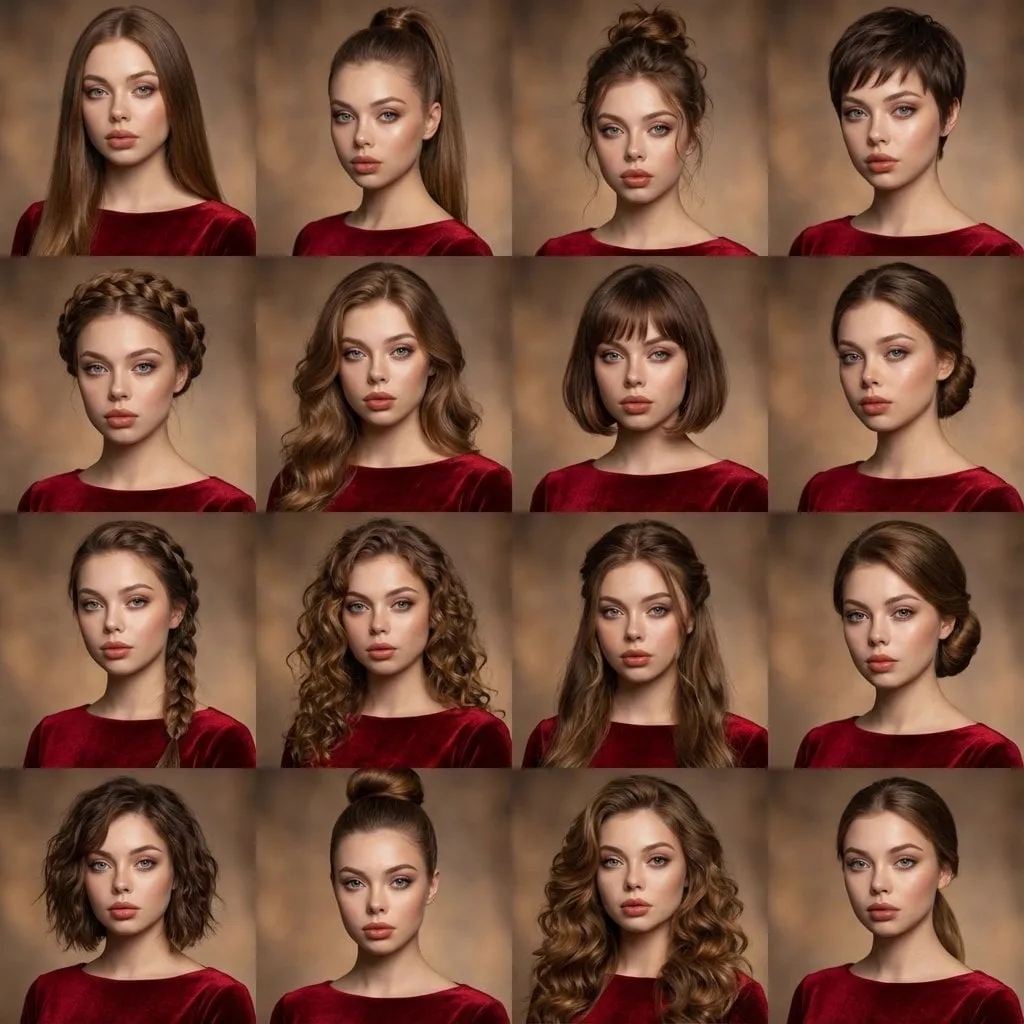
Build a character sheet before production: neutral front, three-quarter, and profile views, plus two or three expression variations, all in consistent lighting. Feed those references into every shot where the character appears. When a model supports multiple reference images, use two or three rather than ten. Too many references blur the identity, because the model averages them.
Style continuity
Pick a single look reference and apply it across the sequence rather than per shot. Describe the look in the same words every time, down to the grade and grain. Inconsistency in your own vocabulary produces inconsistency in the output.
Keyframe and first-last frame control
Where a tool supports specifying the opening frame, the closing frame, or both, use it. First-last frame control is the most reliable way to guarantee that a shot lands where the next shot begins, which makes editing almost trivial. Generate the stills for the key moments, then let the model interpolate the motion between them.
Multi-image and subject fusion
Some tools let you fuse a subject from one image with a setting from another. This is excellent for placing a locked character into a new environment, and it is the fastest route to a coherent multi-location sequence without rebuilding the character each time.
A Practical End-to-End Workflow
The following sequence works for a thirty to sixty second piece and scales reasonably to longer projects.
- Write the script or beat sheet. Six to ten beats is plenty for a minute.
- Convert beats into a shot list with the five columns described above.
- Generate stills for every shot using an image model. Iterate on composition and light here, where changes are cheap.
- Select the strongest still per shot and note which ones will need motion control rather than free generation.
- Build the character and look reference kit from the selected stills.
- Generate motion for each shot using the appropriate family, one shot at a time, reviewing against the shot list.
- Assemble a rough cut with placeholder sound to test pacing before refining any single shot.
- Replace weak shots identified in the rough cut, not before. Pacing problems are invisible in isolation.
- Upscale and stabilize the final selects, then apply a consistent grade across the whole piece.
- Add sound design, music, and any dialogue or voice work, then do a final pass for continuity errors.
The key discipline is step seven. Rough cutting early tells you which shots actually matter. Many beautiful clips die in the rough cut, and that is a feature, not a failure.
Common Mistakes and Fixes
Overwriting the prompt. Long prompts with stacked adjectives produce muddy results. Keep prompts under roughly sixty words and let references carry the aesthetic.
Generating full scenes in one clip. A twelve-second clip with three actions will perform none of them well. Split into separate shots and edit them together. Cutting is faster than prompting.
Ignoring the last frame. If a shot ends in a position that does not connect to the next shot's opening, the cut will jar. Use last-frame control or accept that you will need a transition.
Chasing resolution first. Resolution does not fix composition. Lock the composition at lower resolution, then upscale the winners.
Inconsistent naming. Save files with a consistent scheme that encodes shot number, take, and model used. You will need to find take four again.
Skipping sound during previz. Silent rough cuts hide pacing problems. Even a temporary music bed exposes rhythm issues immediately.
Letting one model do everything. Different families solve different problems. Mixing tools is a workflow, not a compromise.
Editing, Upscaling, and Sound
AI-generated footage behaves differently from camera footage in the edit. Motion is often slightly too smooth, so subtle speed ramps and frame-level micro-cuts help restore energy. Watch for drift in the background: a wall that slowly changes texture over three seconds will read as wrong even if nobody can name why.
For upscaling, process final selects only, and check faces at full size before committing. Some upscalers enhance texture and others sharpen edges, and the wrong one will make skin look like plastic. Stabilization should be applied sparingly; a locked-off shot rarely needs it, and aggressive stabilization can introduce warping at the frame edges.
Sound is where AI video projects are most often let down. Layered ambience, a consistent room tone, and one strong music cue will do more for perceived production value than another round of generation. Keep dialogue short and cut on movement to mask mouth-shape imperfection. If a line is critical, consider recording it and using a performance model only for the visual layer.
Rights, Disclosure, and Client Expectations
Before delivery, confirm what you can and cannot claim. Check the terms attached to each tool you used, particularly around commercial use, likeness, and training data restrictions. Never generate a recognizable public figure or a real person's likeness without documented permission. Keep a simple production log: which tool produced which shot, on what date, with what references. That log protects you during revisions and reviews.
Disclosure norms are still settling, but the safe default with commercial clients is transparency. Tell them what was generated and what was captured. Many brands are fine with generated footage as long as nobody is misled, and the conversation is far easier before delivery than after.
FAQ
How long should an AI-generated clip be?
Target three to six seconds per shot. Longer clips tend to drift, and short shots cut together with more energy anyway. Reserve longer durations for wide establishing shots where motion is minimal.
Do I need multiple tools, or can one cover everything?
Almost every polished project uses at least two families: image generation for look development and a video model for motion. Add motion control or performance tools only if the brief specifically requires them.
Why does my character's face change between shots?
Usually because references were inconsistent or too numerous. Build one character sheet, use two or three references maximum per shot, and keep the wardrobe description identical in every prompt.
What resolution should I generate at?
Generate at the native resolution the model handles best, not the largest it advertises. Composition decisions matter more than pixel count, and you can upscale final selects afterward.
How do I fix flicker or texture crawl?
Shorten the clip, reduce camera movement, and avoid prompts that stack competing stylistic references. If flicker persists, generate the shot from a still using first-frame control, which stabilizes the opening state.
Is prompt engineering a real skill or a temporary phase?
It is real for now and probably converges toward shot design over time. The transferable skill is not memorizing phrases; it is describing action, camera, and light with precision, which is what directors have always done.
How many takes should I expect per shot?
Plan on three to eight for a shot with clear requirements, and one to three for atmospheric shots. If you are past twelve without a usable result, the prompt or the model family is wrong, not your luck.
Can AI video replace a full production?
For product spots, mood pieces, and social content, often yes. For performance-driven narrative work with complex blocking, it currently supplements rather than replaces, working best alongside real plates and real sound.
The through-line across all of this is straightforward. Models continue to improve on their own schedule. Your shot list, reference kit, and review process are entirely under your control, and they determine whether the next model release makes your work faster or just makes your backlog bigger.
