

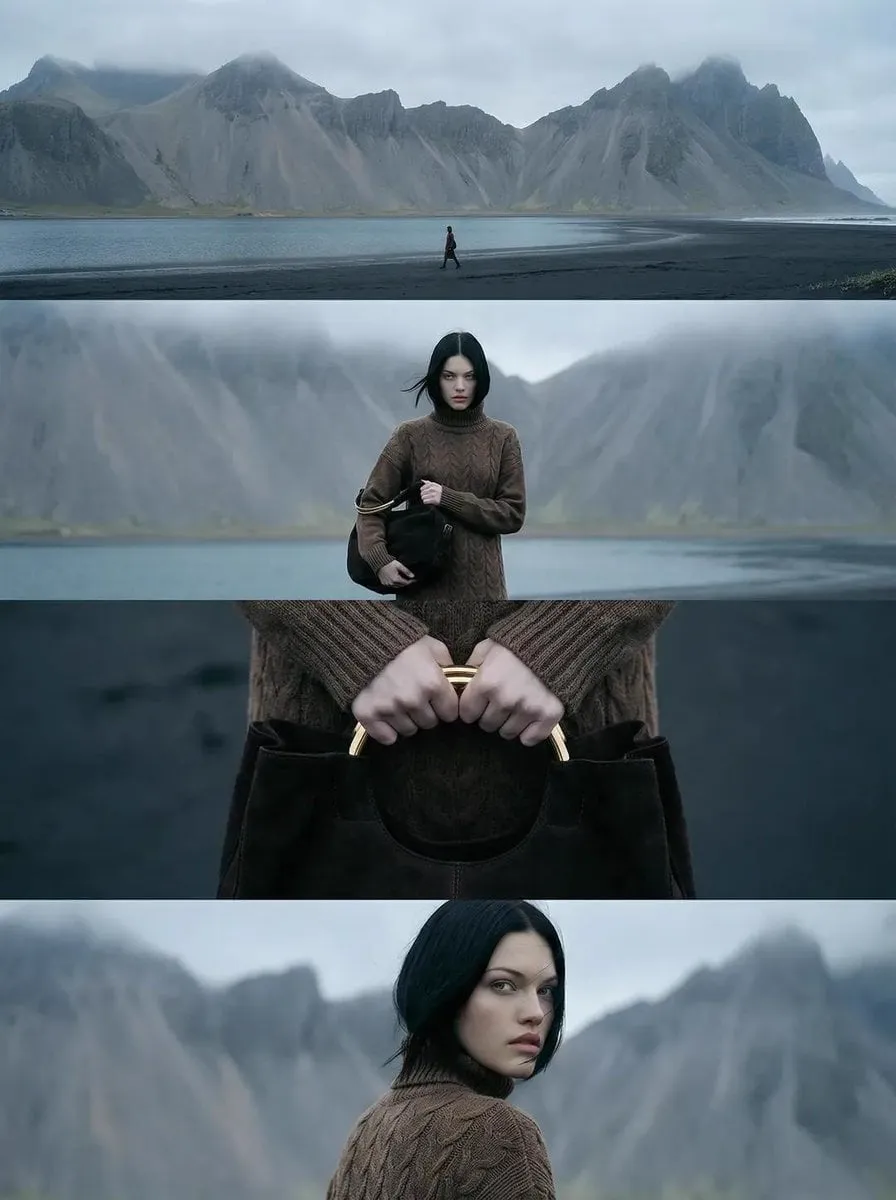
Why AI video generation is changing content pipelines
Video has been the dominant format on the internet for years, but the bottlenecks around it have barely moved. Scripting, shooting, editing, localizing, and versioning a single clip still takes days of coordinated human effort. That math stops working the moment a team needs fifty variants of the same message for different audiences, regions, or placements. The pressure is not about making one beautiful film anymore. It is about making a steady, reliable stream of watchable video without doubling headcount every time volume doubles.
Generative models changed the economics of that equation. Instead of treating every clip as a bespoke production, teams can now treat video as a pipeline: a brief becomes a script, a script becomes a shot list, a shot list becomes a set of generated plates, and those plates become an edited sequence with sound and captions. Each stage is a place where a model can accelerate work, and each stage is also a place where quality can collapse if the handoffs are sloppy.
The shift is less about any single breakthrough model and more about how these tools get assembled. The interesting questions for a working team are practical: which model do you point at which job, how do you keep a character recognizable from shot to shot, how do you store and name hundreds of takes, and how do you know when a fast draft is good enough to ship? This guide walks through those decisions in the order you will actually face them.
The model landscape: what to evaluate before you commit
Every few months a new generation model appears with a better demo reel. Demo reels are marketing, not benchmarks. What matters is whether a model fits the specific jobs your pipeline produces. Before you standardize on anything, run the same five test prompts through three or four candidates and compare them on your own content, not on someone else's cherry-picked examples.
Generalist models versus specialist models
Generalist text-to-video models are convenient because one interface handles many styles. They tend to be strong at atmosphere, landscapes, and abstract motion, and weaker at precise choreography, readable on-screen text, and human faces in motion. Specialist models — image-to-video, lipsync, motion transfer, background replacement, upscaling — do one thing and usually do it better.
A workable rule: use a generalist model to explore and block out, then move finished shots into specialist tools for anything that needs precision. This keeps you from paying premium generation cost for shots that will be replaced anyway.
Open-weight and self-hosted options
Open-weight models matter when you have sensitive footage, predictable volume, or a need to fine-tune on your own visual style. They also matter when you want to avoid a hard dependency on a single vendor's roadmap. The trade-off is real: self-hosting means you own the GPU scheduling, the model updates, the failure modes, and the evaluation work. Budget for that honestly — a self-hosted stack is a small platform project, not a weekend install.
Language, region, and style tuning
If your content ships in more than one language, check how each model handles non-English prompts, on-screen text, and culturally specific visual references. Some models silently translate your intent into a generic Western look. Others handle regional architecture, clothing, and signage well but mangle dialogue timing. Test with prompts written the way your actual scriptwriters write, including idioms and product names.
| Evaluation criterion | What to test | Red flag |
|---|---|---|
| Subject fidelity | Same person across five prompts | Face drifts every shot |
| Motion quality | Walking, hand gestures, camera pans | Warping limbs, melting edges |
| Text rendering | Short captions, logos, signage | Garbled or invented letters |
| Prompt adherence | Multi-clause prompts with constraints | Ignores half the instructions |
| Cost per usable second | Ten drafts, count keepers | High price, low hit rate |
The infrastructure layer most teams underestimate
Creative teams tend to plan around models and forget that models are the smallest part of a working system. The parts that decide whether you ship on time are orchestration, storage, and queue management.
Orchestration and API design
A structured backend — a typed service layer, clear endpoints, versioned prompts — turns generation from a manual scramble into a repeatable job. Typed languages help here because prompt payloads, reference image sets, and output schemas are easy to get subtly wrong. When a prompt template changes, you want a version number attached to every output so you can trace which variant produced which shot.
Practical steps: store prompts as templates with named variables, log every request and response, and make each generation job reproducible from its stored parameters alone. If you cannot re-run last month's job and get a comparable result, your pipeline is not yet a pipeline.
Storage, metadata, and data integrity
Video assets are big, and the takes multiply fast. A naming convention that encodes project, scene, shot, model, prompt version, and take number will save more time than any single model upgrade. Pair it with a relational database that tracks relationships between projects, shots, references, and outputs. Losing the link between an approved take and the prompt that produced it means you cannot iterate on what worked.
Also plan retention. Raw takes are the cheapest thing to delete and the most expensive thing to lose mid-project. Keep raw outputs until the project locks, then archive only the approved takes plus their parameters.
Job queues, throughput, and compute budgets
Generation is bursty. Ten people submit twenty jobs each and suddenly the queue is the product. A proper job queue with priorities, retries, timeouts, and progress reporting prevents the silent failures that erode trust — the job that never returns, the render that half-completes, the duplicate charge nobody notices.
Set explicit budgets per project: maximum concurrent jobs, maximum retries per shot, and a hard ceiling on spend per deliverable. Track cost per approved second, not cost per generation. That single metric tells you more about efficiency than any model leaderboard.
A repeatable AI video workflow, stage by stage
The teams that get consistent results do not improvise. They run the same stages every time, with a clear definition of done at each handoff.
Brief, script, and shot list
Start with the message, the audience, the runtime, and the delivery formats. Write the script in spoken language, read it aloud, and cut anything that sounds like brochure copy. Then convert it into a shot list with one row per shot: description, duration, camera movement, subject, setting, mood, and whether the shot needs a real reference image.
This stage is where language models genuinely help. Use them to generate three script variants, to compress a long script into a fifteen-second hook, or to produce shot descriptions in a consistent format. Review everything by hand — an unreviewed AI script is the fastest way to produce polished but empty video.
Reference building and visual planning
Before generating motion, lock the look. Build a small reference kit: two or three character images, a color palette, a lighting reference, a location reference, and a style frame. These images become the anchor for every subsequent generation and the reason your shots feel like one film rather than a stock-footage collage.
Keep the kit small and consistent. Ten contradictory references produce ten contradictory outputs, and the model will average them into mush.
Generation passes and iteration loops
Work in passes. Pass one is blocking: cheap, fast, low resolution, focused on composition and timing. Pass two refines the shots that survived, using image-to-video or higher-quality settings. Pass three is finishing: upscaling, stabilization, and any cleanup.
Between passes, review against a fixed checklist rather than vibes. Does the shot read at thumbnail size? Is the subject recognizable? Does the motion match the beat? Reject fast and reject often — keeping a mediocre take because it took four attempts is how projects bloat.
Assembly, sound, and finishing
Editing is where generated clips become video. Cut on motion and on beat, add sound design early rather than last, and treat music as a structural element that dictates pacing. Voiceover generated from text needs a manual pass for emphasis, breath, and pronunciation of brand names.
Finish with captions, safe-area checks for vertical crops, color consistency across shots, and a loudness pass. Most AI-generated footage looks dramatically better after a light grade and real sound design, because the eye forgives texture but not mismatched audio.
Solving consistency across shots and episodes
Consistency is the single hardest problem in AI video, and it is the difference between a demo and a series.
Character consistency
Keep a canonical character sheet with front, three-quarter, and profile views, consistent wardrobe, and fixed descriptive language. Reuse the exact same wording in every prompt — synonyms change the face. When a model supports identity references, supply the canonical image alongside the prompt rather than describing the person again.
For dialogue-heavy scenes, generate the performance first and match the face later, or use a dedicated lipsync tool on a stable plate. Trying to get a generalist model to nail both performance and identity in one pass is the most common wasted effort in this field.
Style and brand consistency
Brand consistency lives in constraints: fixed palette, fixed lens feel, fixed grade, fixed typography. Write these into your prompt templates so nobody has to remember them, and bake them into your post-production presets so unplanned shots still land in the same visual world.
A continuity checklist
Before a sequence locks, verify: same wardrobe, same hair, same props, consistent light direction, consistent time of day, matching grade, and no visible text artifacts. A five-minute checklist run before delivery catches problems that cost hours to fix after approval.
Multimodal inputs: getting more control per generation
Text prompts are the weakest form of control available. Every additional modality you add — image, depth map, pose skeleton, audio track — reduces the space of possible outputs and improves your hit rate.
Useful combinations:
- Image plus text: lock the composition with a still, describe only the motion.
- Pose or motion reference plus text: drive choreography without describing anatomy in words.
- Audio plus text: generate a performance timed to a track instead of hoping the beat lines up.
- Depth or segmentation maps: keep camera moves physically plausible and keep backgrounds stable.
- Style frames: transfer a look without stuffing adjectives into the prompt.
The practical benefit is fewer generations per usable shot. If adding a reference image cuts your average attempts from eight to three, that is a bigger win than any incremental model upgrade.
Quality, speed, and cost: choosing your trade-offs
You cannot maximize all three at once. Decide per deliverable which one matters most.
| Scenario | Priority | Recommended approach |
|---|---|---|
| Concept pitch to stakeholders | Speed | Fast low-resolution drafts, no upscaling |
| Paid social variants | Volume | Templated prompts, reusable references, batch rendering |
| Hero brand film | Quality | Premium models, manual finishing, human editor |
| Localized versions | Consistency | Locked visuals, swap only voice and captions |
| Evergreen library content | Balance | Mid-tier models, strict continuity checks |
A useful habit is to define the minimum acceptable quality before you start generating. Without that threshold, review becomes subjective and revision loops never close.
Common mistakes that break AI video projects
Generating before planning. Motion generation is the expensive part. Storyboard on paper or in stills first and you will spend far less.
One giant prompt. Models degrade with long, contradictory instructions. Split constraints across reference images and short, focused prompts.
No naming convention. Teams lose approved takes in shared drives within weeks. Name files the moment they are produced.
Ignoring audio until the end. Bad audio makes good footage feel amateur. Plan sound alongside visuals.
Treating outputs as final. Almost every generated clip needs a trim, a grade, or a stabilization pass. Budget time for finishing.
Skipping evaluation. Without a repeatable test set, you will switch models based on demos and lose consistency every time.
Governance, rights, and disclosure basics
Before publishing, understand what you are allowed to distribute. Check the licensing terms of each model and asset source, and keep records of reference images you supplied — particularly anything depicting real people, trademarks, or recognizable locations.
Adopt a disclosure policy that matches your audience and jurisdiction, and apply it consistently across channels. If talent likeness or voice is involved, get written permission and store it with the project record. Also keep a simple audit trail: which model produced which shot, when, and with what inputs. That trail protects you during a takedown dispute and makes future reruns possible.
Finally, brief your legal and brand stakeholders early. Retrofitting compliance onto a finished campaign is expensive and often means re-rendering sequences you already approved.
FAQ
How many models does a typical AI video workflow need?
Most teams settle on three to five: one generalist for exploration, one image-to-video model for controlled shots, a lipsync or performance tool for dialogue, and an upscaler for finishing. Fewer than three usually means compromising on one stage; more than six usually means overlap and confusion about which tool owns which job.
Can AI video replace a traditional production crew?
For certain formats — explainers, social variants, internal communications, abstract brand pieces — yes, largely. For anything with complex human performance, precise product interaction, or regulated claims, generated footage still needs human capture or heavy supervision. The realistic model is augmentation: AI handles volume and iteration, people handle judgment and polish.
What is the fastest way to improve output quality?
Improve your inputs. Better reference images, shorter prompts, and a locked style kit raise quality faster than switching models. Spending ten minutes building a character sheet typically saves hours of regeneration.
How do I keep a character recognizable across many shots?
Use the same reference image set, the same descriptive wording, and the same model version throughout a sequence. Store those parameters with the project so future shots match. If identity drifts, fix it with an identity-reference feature rather than rewriting the prompt.
Should we self-host models or use hosted services?
Self-host if you have sensitive footage, high predictable volume, or a need to fine-tune on proprietary style, and if you can maintain GPU infrastructure. Use hosted services if you need fast iteration, access to new models, and no infrastructure overhead. Many teams run both: hosted for exploration, self-hosted for sensitive or high-volume production.
What should we measure to know the pipeline works?
Track cost per approved second, average attempts per usable shot, time from brief to locked cut, and revision rounds after approval. If attempts per shot are falling and approvals are rising, your references and templates are doing their job.
Where this is heading
Model quality will keep improving, and each improvement will raise expectations rather than reduce work. The teams that benefit most will not be the ones chasing every new release. They will be the ones with clean pipelines: stored parameters, disciplined references, evaluated trade-offs, and a finishing process that makes generated footage feel intentional.
Start small. Pick one format, build a reference kit, run three models against the same five prompts, and measure your attempts per usable shot. Once that loop is stable, expanding to more formats and languages becomes a matter of scaling a process rather than reinventing one — and that is what turns AI video from an experiment into a dependable content channel.
