
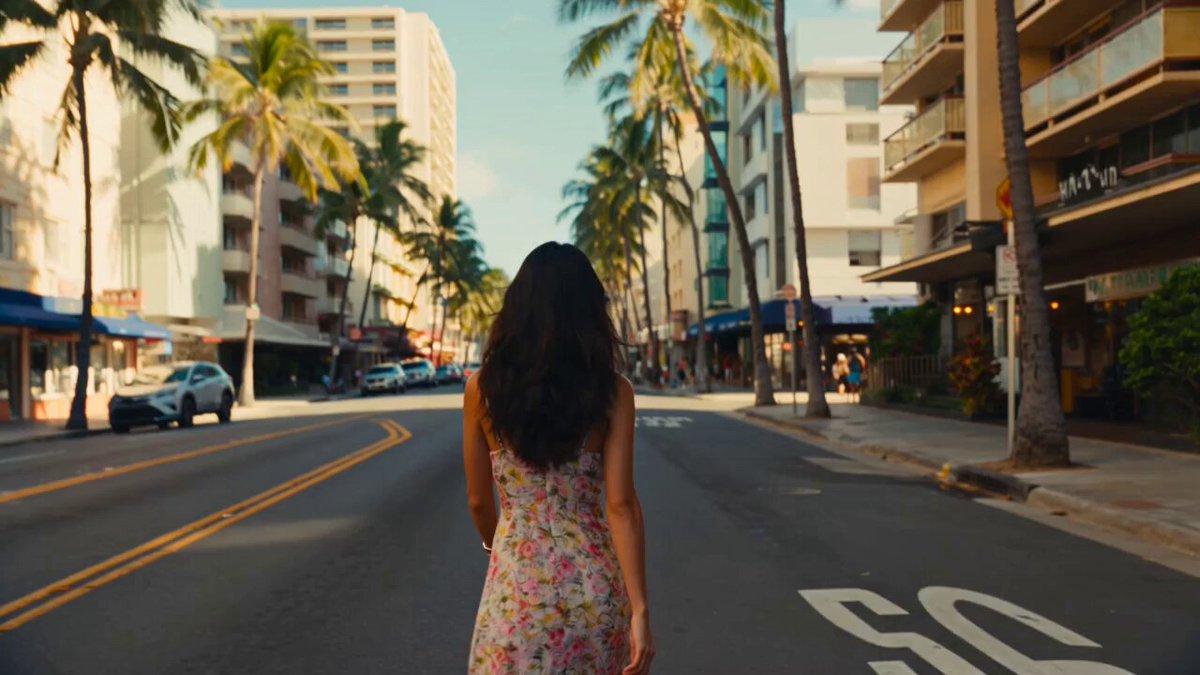

The first generation is easy. A prompt, a click, eight seconds of something that looks almost like a film shot. The hard part arrives fifteen minutes later, when you try to build a second shot that matches the first, and a third that continues the story, and suddenly the tools that felt magical feel like a slot machine with a very long lever.
The gap between "I made a cool clip" and "I made a video" is not a matter of finding a better model. It is a matter of building a workflow that treats generative video engines as cameras rather than as oracles. Cameras are predictable, controllable, and interchangeable. That is exactly the mental shift that separates creators who ship finished pieces from creators who accumulate folders of disconnected fragments.
This guide lays out a model-agnostic production workflow: how to plan shots, how to pick the right engine category for each shot, how to prompt for motion instead of stills, how to hold a character together across scenes, and how to finish the edit so the result looks intentional.
Start With the Story, Not the Model
Almost everyone learns this lesson in the wrong order. They open a browser tab, scroll a gallery of example outputs, get excited about a specific style, and start generating. Two hours later they have twelve beautiful clips that share no characters, no palette, and no continuity. The footage is impressive in isolation and unusable in sequence.
The alternative is unglamorous and dramatically faster: write the piece first. Not a full screenplay — a beat sheet. Six to twelve lines describing what the audience sees and what changes between the start and the end of each line. For a thirty-second social spot that might be three beats. For a two-minute narrative short it might be twenty.
Once the beats exist, you can ask a structural question that no model can answer for you: which of these beats actually needs motion? Generative video is expensive in time, compute, and iteration count. A close-up of a hand holding a photograph can be a still image with a slow push-in added in the edit. A landscape establishing shot can be a still with parallax. Save the generative video passes for the beats where something must move, transform, or perform.
That single filtering decision routinely removes a third of the shots from a project before any generation begins. It also improves the final result, because viewers read camera movement as emphasis. If every shot moves, nothing is emphasized.
Mapping the Model Landscape Without Getting Lost
There are dozens of viable engines in circulation, with new ones appearing constantly. Memorizing a list is a losing game. What stays useful is understanding the four functional categories, because almost every engine is strong in one and mediocre in the others.
Photoreal and cinematic engines
These aim at believable light, skin, depth of field, and camera language. They excel at landscapes, cityscapes, product shots, and restrained human performance. They tend to be the best choice for advertising, documentary-style sequences, and anything that needs to pass as footage rather than illustration.
Their weakness is stylization. Ask a photoreal engine for a hyper-stylized anime transformation and you often get a compromise: not realistic, not stylized, just soft. It is usually faster to use a purpose-built stylized engine than to fight a cinematic one into an aesthetic it resists.
Stylized and animation-first engines
These handle illustration, anime, 3D-render looks, and painterly motion with far more confidence. Character design reads cleanly, line work holds, and color behaves the way an animator expects. They are the natural fit for explainers, music videos, and narrative work with a defined illustrated style.
Watch for consistency drift here. Stylized models often mutate character details — hair length, costume trim, eye color — between shots. Locking down a reference image and using an image-to-video pass improves stability considerably compared to text-only prompting.
Motion and physics specialists
Some engines are built for how things move: water, cloth, smoke, crowds, vehicle chases, athletic motion, particle effects. They are rarely the best at faces. They are frequently the best at the shot where a car drifts around a corner or a cape snaps in the wind.
Use them surgically. A three-second insert from a motion specialist, cut into a sequence built from a cinematic engine, often looks better than trying to get one engine to do everything.
Identity and consistency tools
This is the newest and most consequential category. These tools take a reference — a face, a character sheet, a product photo, an environment — and try to preserve it across generations. Some do this within a single engine; others do it as a separate pass that stabilizes footage after the fact.
If your project has a recurring character, this category is not optional. It is the difference between a story and a montage of strangers who happen to wear the same jacket.
A Shot-Planning Framework That Survives Contact With AI
Generative video punishes vague ambition. "A tense confrontation" is not a shot. Here is a planning method that produces prompts almost automatically.
Break the script into beats
Write each beat as a single sentence with a subject, an action, and a consequence. "Mara enters the empty diner and realizes the booth in the back is already occupied." That sentence contains everything: a character, a location, a movement, and an emotional turn. It also contains a shot idea — the realization is the moment, so the camera should be on her face when it happens.
Beats that resist being written as one sentence are usually two beats pretending to be one. Split them.
Assign each beat a generation strategy
For every beat, decide the source of the image. There are only four real options:
- Text-to-video. Fastest, least controllable, best for establishing shots and atmosphere.
- Image-to-video. Generate or shoot a keyframe first, then animate it. This is the workhorse of any serious project because it lets you approve composition and lighting before spending time on motion.
- Video-to-video or restyle. Take real footage or a rough render and transform its look. Ideal when timing and performance already exist.
- Traditional post. Still image plus parallax, crop, push-in, or a practical effect. Cheapest and often cleanest for quiet beats.
A healthy thirty-second piece usually mixes at least three of these. Monoculture — all text-to-video, all the time — is the most common reason amateur AI video looks amateur.
Define the handoff points
Before generating, write down the frame at which each shot begins and ends. Generative clips rarely end where you need them to, so you will be trimming. Knowing your intended in and out points means you can generate a little long and cut into the middle, which is where the motion is most stable anyway. The first and last fractions of a second in most generative clips contain artifacts, morphing, or settling. Plan to throw them away.
Prompting for Motion Instead of Stillness
Most prompting advice is inherited from image generation, where describing an object well is the whole job. Video adds a second dimension: time. A prompt that describes a beautiful room produces a beautiful room that sits there.
Three adjustments fix most weak video prompts:
Specify the verb before the noun. The action is the anchor. "A woman walks toward the window, morning light shifting across her face as she moves" gives the engine a trajectory. "A beautiful woman in a sunlit room, cinematic" gives it a photograph with ambition.
Describe camera behavior as a separate clause. "Slow dolly in," "handheld follow," "static wide," "crane up revealing the street below." Engines respond to camera language far more reliably than to adjectives like "epic." Vague intensity words mostly produce contrast and saturation changes.
Name one change that happens over the duration. A door opens. A light turns on. A smile fades. A glass tips over. A single clear transformation gives the clip a beginning, middle, and end, which makes it cuttable. Clips with no internal change are the hardest to edit because every frame is equivalent.
A workable template looks like this: subject + specific action + camera move + one environmental change + style and lighting note. Keep it under about forty words. Long prompts do not add control; they add competing instructions, and the engine picks one at random.
Negative prompting is worth a short list — text overlays, watermarks, extra limbs, warped faces, jitter — but not an essay. Extremely long negative lists often suppress legitimate detail along with the artifacts.
Keeping Characters and Sets Consistent Across Shots
Consistency is the single biggest technical hurdle in AI video, and it is solved in layers rather than in one move.
Layer one: a character sheet. Generate a set of reference images — front, three-quarter, profile, full body, plus two or three expressions. Approve them. These images are now your actor. Do not regenerate them mid-project.
Layer two: image-to-video as default. Every shot featuring that character starts from a reference-derived keyframe, not from text. This single habit eliminates most identity drift.
Layer three: fixed vocabulary. Lock a written block describing the character — age range, build, hair, wardrobe, distinguishing details — and paste the identical block into every prompt. Paraphrasing across shots introduces variation the model will happily interpret literally.
Layer four: environmental anchors. Do the same for locations. A reference frame of the diner at night, with a specific arrangement of tables and a specific neon sign, keeps the space coherent across scenes shot days apart.
Layer five: post-hoc repair. When a shot drifts anyway, and some will, fix it in the edit. Shorten the shot. Cut away to a reaction. Push in on the portion that holds up. Replace the face with a masked compositing pass. Editors have hidden worse problems for a century.
One more practical note: consistency is easier with fewer variables. A character in a plain costume in consistent lighting will hold together across twenty shots. A character in a complex patterned outfit under wildly varied lighting will not, regardless of which engine you use.
Assembling, Editing, and Making Clips Look Finished
The moment raw clips land in a timeline, the project starts looking like a real film. Three things do most of that work.
Trim hard. Cut into each clip past its unstable opening and out before the artifacts begin. Generous trims cost nothing and remove the majority of visible imperfections.
Unify the grade. Clips from different engines have different color science, contrast curves, and sharpness. Apply a single adjustment layer with consistent lift, gamma, gain, and a touch of grain. Grain is underrated: it homogenizes footage from mixed sources better than almost anything else.
Layer sound before you polish picture. Room tone, footsteps, cloth movement, and a music bed change how viewers read imperfect motion. A slightly floaty walk cycle becomes convincing when you hear shoes on tile. Many creators postpone audio until the end, then discover the edit needed restructuring. Do a rough sound pass early.
Speed ramps are the other reliable repair tool. A clip that looks uncanny at normal speed often looks intentional at 70 percent or 130 percent. Motion blur applied in post can hide frame-to-frame inconsistency, and a subtle camera shake preset can disguise residual jitter.
Time, Compute, and Where Projects Actually Leak Effort
Inexperienced projects do not fail because the model is bad. They fail because of rework loops.
The biggest leak is generating before approving the keyframe. If the composition is wrong in the still, it will be wrong in the motion, and you will regenerate five times to fix a problem that a thirty-second image revision would have solved.
The second leak is iterating on a clip that was never going to work. Set a rule: three attempts per shot, then change approach — different engine category, different keyframe, different framing, or cut the shot. Endless tweaking of a fundamentally mismatched prompt is the most expensive habit in the craft.
The third leak is resolution. Generate at a moderate resolution, approve the motion, then upscale the winner. Rendering a shot you might discard at maximum settings burns time on work you will delete.
The fourth is batch size. Generating four variations simultaneously is efficient. Generating forty is not, because reviewing them takes longer than the generations did, and decision fatigue leads to worse choices than the ones you would have made with four.
A reasonable rhythm for a short project: plan in one sitting, build an approved keyframe set in a second, generate shots in prioritized order — hardest and most important first — then finish. Prioritizing the hard shots early means a failure changes your plan while changes are still cheap.
Common Mistakes That Derail First Projects
Chasing a model instead of a style. The engine matters far less than a locked palette, a locked lens language, and a locked reference set. Two creators using the same engine will produce wildly different quality based on those three things alone.
Asking for complex physical interaction in one pass. Two characters wrestling, a hand passing an object, a character mounting a horse — these are among the hardest things to generate. Break them into separate shots with cuts, or frame them so the interaction is implied rather than shown.
Ignoring aspect ratio planning. Vertical, square, and widescreen compositions are not crops of each other. Framing that works in 16:9 often decapitates the subject in 9:16. Decide distribution before you generate, or accept re-framing work later.
Overloading a single prompt with plot. Models render moments, not arcs. One shot, one idea.
Skipping the paper edit. Laying out the beat sheet with durations and a rough music track before generating saves more time than any prompt trick.
Neglecting text rendering. On-screen text, signage, and logos remain unreliable in generative output. Add them in post with a proper title tool.
A Simple Decision Framework for Tool Selection
When you are staring at a new project and an unfamiliar engine, four questions resolve most of it.
- Does the shot need believable human faces at length? Prioritize an engine with identity preservation, and start from a reference keyframe.
- Does the shot need stylized illustration? Use a stylization-first engine rather than fighting a photoreal one.
- Does the shot hinge on complex motion — water, cloth, crowds, vehicles? Use a motion specialist for a short insert and cut it in.
- Is the shot quiet and static? Consider not generating video at all. A still with a push-in will look better and cost less time than a mediocre generation.
Then apply the tiebreakers: how fast is iteration, how stable is the output across repeated runs, and how well does the tool accept a reference image. Iteration speed usually beats output quality, because a tool that lets you try ten ideas will produce a better final shot than a tool that produces one beautiful attempt you cannot adjust.
FAQ
How long does a one-minute AI video take to produce?
With a locked script and reference set, a realistic range is one to three working days for a solo creator, dominated by iteration rather than rendering. First projects take considerably longer because the planning happens during production.
Do I need multiple engines or can I use just one?
You can finish a project with one, but almost every polished piece uses at least two: one for performance-heavy shots and one for motion or stylized inserts. The mixing is what makes it look professional.
How do I stop characters from changing between shots?
Approve a reference sheet, generate keyframes from it, reuse an identical written character description in every prompt, and keep lighting and wardrobe simple. Post-hoc repair handles the remainder.
Is image-to-video always better than text-to-video?
For continuity, yes. For atmosphere and establishing shots, text-to-video is faster and often more surprising in a good way. Mix both deliberately.
What resolution should I generate at?
Generate at a moderate resolution for approval, then upscale only the approved clips. This keeps iteration cheap without sacrificing final quality.
How many attempts should a shot get before I give up?
Three. If the third attempt does not work, the problem is the approach, not the settings.
What is the most common reason AI video looks amateurish?
Inconsistent color and contrast across shots. A single unified grade with added grain fixes more than any generation setting.
Pulling It Together
The technology will keep changing, and the specific engines that matter this year will be replaced. The workflow will not. Story first. Beat sheet into shots. Keyframes approved before motion. Reference sets for anything recurring. Deliberate mixing of engine categories. Hard trims, unified grade, real sound. Three attempts per shot, then a new approach.
Build that pipeline once and every new model release becomes an upgrade to a machine you already understand, rather than a new toy that resets your progress. That is the difference between generating clips and making films.
