

Start With the Job the Video Has to Do
Before you compare tools, define the job. A forty-second vertical ad, a six-minute product walkthrough, a fourteen-minute training module, and a cinematic short all push an AI video pipeline in different directions. The job determines aspect ratio, shot length, tolerance for visual artifacts, how much footage you must shoot yourself, and how strict the brand review will be.
Write a one-paragraph brief. Include the audience, the single takeaway, where the video will be watched, and the action you want at the end. Then list constraints: deadline, budget, language coverage, approval chain, and whether a real human presenter must appear on screen. Teams that skip this step generate attractive clips that do not fit the edit, then blame the model. The model was never the problem.
A second filter is scale. Are you making one video this month or thirty? A tool that is perfect for a single hero launch film can be disastrous for a weekly social cadence, and vice versa. Single projects reward maximum visual quality; repeating formats reward consistent templates, batch processing, and predictable export settings. Decide which game you are playing before you open a single browser tab.
What Modern AI Video Generators Actually Do Well
Current platforms cluster into four capability groups. Most tools do one or two of them well and the rest badly, which is why serious creators usually run two or three in parallel rather than searching for a single winner.
Text-to-video and script-to-video
Text-to-video models turn a written prompt into a moving shot. They excel at atmosphere, landscapes, abstract motion, product beauty shots, and stylized sequences that would otherwise need a shoot day. Script-to-video tools take this further by segmenting a script into scenes, suggesting visuals, and assembling a rough edit with voiceover and music.
Where they struggle: precise physical interactions, hands, text on screen, and anything requiring exact continuity between two shots. Treat them as a cinematography partner, not a documentary crew.
Image-to-video and first-frame control
This is often the most practical mode for commercial work. You generate or supply a still image, then animate it. Because the composition is already decided, you control framing, colour, and branding far more tightly. It is also the fastest route to a consistent look across a series of shots: lock the style in stills, then animate each one.
Use image-to-video when you need a specific product angle, a defined character design, or a visual identity that must match an existing campaign.
Avatar, voice, and presenter video
Avatar-led tools handle the human element without a camera. They are strong for explainers, internal training, localization, and localized variants where you need the same script delivered in multiple languages. Quality varies most in lip sync, micro-expression, and eye movement. Always test with a full paragraph, not a single sentence, because problems usually appear at the transition points between sentences.
Voice cloning and synthetic narration belong in this category. For narration-heavy content, a dedicated voice tool combined with a visual generator often beats an all-in-one platform.
Assembly, editing, and repurposing
The least glamorous group is the one that saves the most time. These tools add captions, resize a landscape edit into vertical cuts, remove filler words, generate chapter markers, or pull short clips out of a long recording. If your output volume is high, this layer matters more than raw generation quality, because a slightly imperfect clip that ships beats a perfect clip that never leaves the timeline.
Choosing a Tool: A Practical Scorecard
Score candidates on the dimensions that actually change your working week.
- Output length and resolution: Can it produce the shot length you need in one pass, or does it cap at a few seconds? Does it export at the resolution your delivery channel demands?
- Aspect ratios: Native vertical, square, and widescreen support saves hours of reframing.
- Style control: Can you reference an existing image, use a style preset, or fine-tune? Or are you stuck re-rolling prompts until something fits?
- Consistency: Can it hold a character, product, or palette across multiple shots?
- Audio: Native sound, voiceover, music beds, or a clean handoff to your editor?
- Batch and API: Essential if you produce more than a handful of clips per week.
- Collaboration: Comments, version history, and shared asset libraries matter as soon as two people touch a project.
- Licensing and commercial terms: Read them before you build a campaign on top of an output.
- Export formats and metadata: ProRes, H.264, alpha channels, and clean file naming.
Matching tool class to project
Use a high-fidelity generative model for hero visuals, a script-to-video tool for explainers with heavy narration, an avatar platform for training and localization, and an editing assistant for repurposing. Mixing classes deliberately produces better results than forcing one platform to cover everything.
Signals that a tool will not fit
Walk away if the free trial caps output so aggressively that you cannot evaluate a real shot, if there is no way to control framing, if export adds watermarks on paid tiers, or if the support documentation never explains how commercial use works. These are structural problems, not learning curves.
A Repeatable Production Workflow
A workflow beats a tool list. The following sequence works whether you are a solo creator or a small team, and it scales from one video to a series.
Brief and shot list
Convert your brief into eight to twenty shots. For each, write one sentence describing the subject, one describing the camera, and one describing the mood. This shot list becomes your generation queue and your editing map. It also exposes problems early: if three shots in a row need the same actor in the same outfit, you know consistency is your biggest risk.
Reference and prompt design
Collect references before generating. Mood boards, existing brand assets, product photography, and stills from previous videos all reduce guesswork. If the tool supports image input, start there. If not, translate your references into explicit prompt language covering subject, environment, lighting, lens, movement, and pace.
Generation passes and iteration
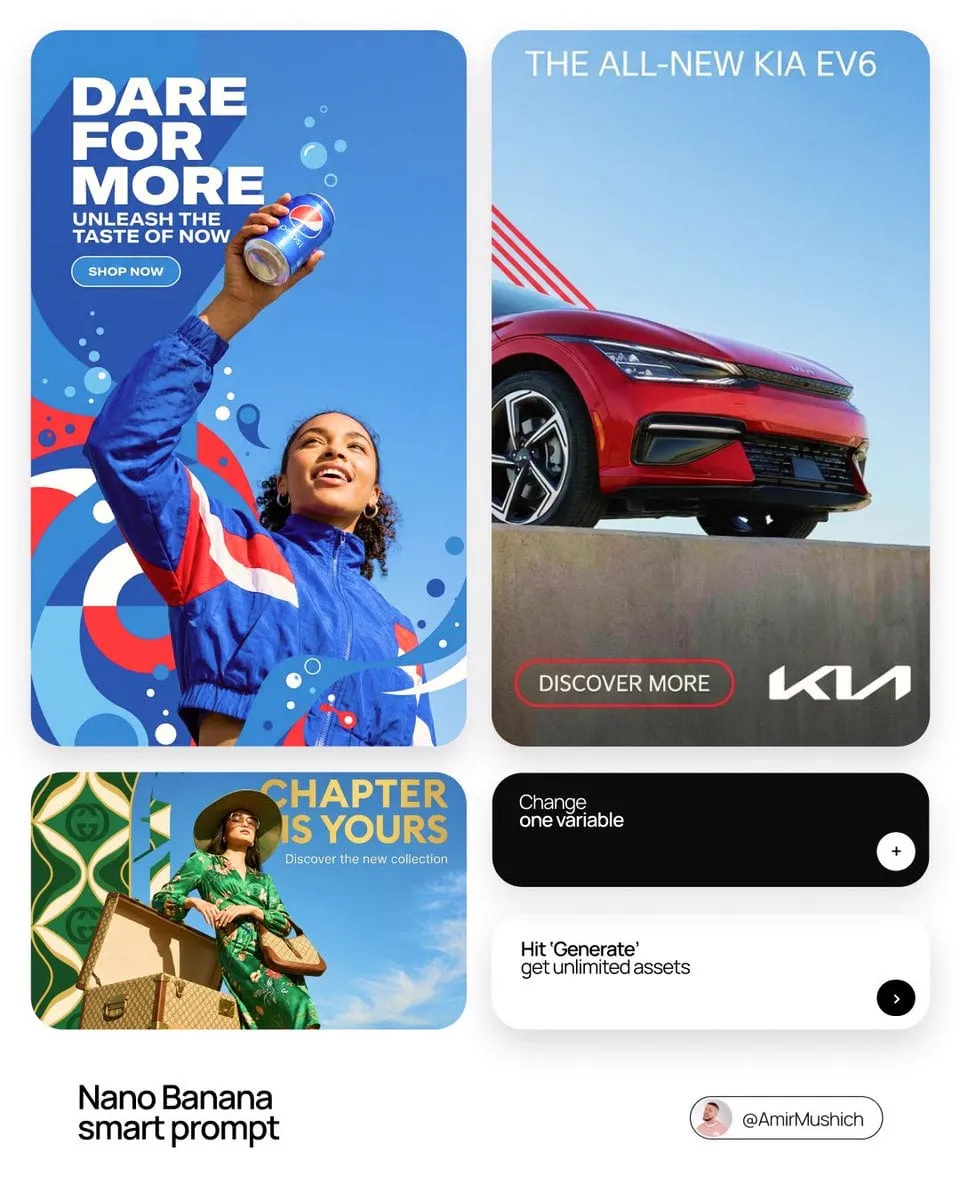
Generate in batches of four to eight variations per shot rather than one at a time. Review quickly, keep the best, and note what failed. Change one variable per pass: if you alter the lighting, the camera angle, and the pacing simultaneously, you learn nothing about which change helped.
Expect a hit rate. A realistic first pass might give you one usable clip out of six for complex motion, and three or four out of six for simple scenes. Budget your time accordingly instead of assuming every generation will be a keeper.
Assembly, sound, and captions
Bring selects into your editor. Cut for rhythm first, then add sound. Audio usually has more impact on perceived quality than another round of visual polish: room tone, footsteps, a subtle whoosh on transitions, and a music bed that ducks under narration.
Add captions manually or via a transcription tool, then correct names and technical terms. Automatic captions still fail on jargon, brand names, and accents, and those are exactly the words your audience notices.
Export, naming, and versioning
Export a master plus channel-specific versions. Name files with a consistent pattern: project, version, aspect ratio, and date. Store the shot list, prompts, and selected seeds alongside the project. When a client asks for a variation two months later, that record is the difference between a quick edit and starting over.
Prompt Patterns That Improve Output Quality
Prompt writing is a craft, but a few patterns reliably raise average quality.
Camera and lens language
Describe the shot like a camera operator would. Wide establishing shot, slow dolly in, shallow depth of field, 35mm lens, low angle, handheld follow. This vocabulary steers framing and motion far more effectively than adjectives about beauty or quality.
Motion, pacing, and duration
State the motion explicitly: slow push, gentle pan left, static tripod shot, subtle parallax. Keep prompt duration matched to the tool's strengths. Short, controlled movements hold together; dramatic camera moves over long durations tend to warp.
Consistency across shots
Reuse the exact same descriptive block for characters, wardrobe, lighting, and colour palette across every shot in a sequence. Only change the action and camera line. This small discipline produces more continuity than most consistency features.
Negative prompts and fixes
If a tool supports negative prompts, list recurring problems: text artifacts, warped hands, flickering, extra limbs, oversaturated skin tones. Without negative prompt support, add corrective language to the main prompt, such as clean background, no on-screen text, natural skin tones.
When a shot keeps failing, change the framing rather than the wording. A close-up of a hand is hard; a medium shot where the hand is incidental is easy.
Common Mistakes and How to Avoid Them
- Generating before writing the shot list. Fix: script and storyboard first, always.
- Judging a model by its best demo. Fix: run your own five-shot test with your own subject matter.
- Chasing resolution over composition. Fix: solve framing and lighting first; upscaling cannot rescue a weak shot.
- Ignoring audio until the end. Fix: sketch the sound design during assembly, not after picture lock.
- No naming convention. Fix: adopt one on day one, even for personal projects.
- Treating outputs as final. Fix: plan a colour pass, an audio pass, and a caption pass on every deliverable.
- Overloading a single prompt. Fix: split complex scenes into multiple shots and cut between them.
Rights, Disclosure, and Platform Rules
Before publishing, answer four questions. Do you have the rights to use every input image, voice, and musical element? Does the platform require disclosure of synthetic media, and if so, how is it labelled? Are there restrictions on depicting real people, public figures, or branded products? Does your client or employer have an internal policy on generated visuals?
Keep a simple record for each project: inputs used, tool versions, and the date of generation. This is not bureaucracy. It protects you if a question arises later, and it makes revisions dramatically easier.
Also check music and sound licensing separately. Generated sound effects are not automatically cleared for commercial use, and a track that is fine for a personal channel may be blocked in a paid campaign.
Building a Repurposing System Around AI Video
The compounding value of AI video comes from reuse, not from one-off hero pieces. Build a system with three layers.
First, a master asset: a long-form video, webinar, or podcast that carries the core message. Second, derived clips: vertical cuts of the strongest ninety seconds, each with its own hook and caption treatment. Third, static derivatives: quote cards, thumbnail variants, and short looping clips for channel banners.
Automate what is repetitive. Transcription, captioning, resizing, and clip extraction can all run through templates. Reserve human attention for hooks, rhythm, and the two or three moments that actually carry the message.
Budget, Time, and Team Reality
Estimate time in three buckets: pre-production, generation and iteration, and post-production. Post-production is consistently underestimated, often taking as long as everything else combined for polished commercial work.
On cost, compare total cost of ownership rather than headline pricing. Factor in the editing suite, stock or music subscriptions, storage, and the hours spent iterating. A cheap generator that doubles your revision time is expensive. Conversely, an expensive tool that eliminates a shoot day can pay for itself on a single project.
For teams, assign clear roles even if one person wears several hats: one owner for prompts and generation, one for edit and sound, one for review and compliance. Ambiguity here is where deadlines die.
FAQ
Do I need multiple AI video tools?
Usually yes. Most creators pair one generative model for visuals with one editing or repurposing tool. Add an avatar platform only if you regularly produce presenter-led or localized content.
How long should an AI-generated shot be?
Three to six seconds is a comfortable range for most tools. Longer shots are possible but demand simpler motion and a static or slowly moving camera to avoid warping.
Can AI video replace filming entirely?
For abstract, atmospheric, and stylized content, often yes. For demonstrations that require precise hands, real products, or verifiable claims, filmed footage still wins. Hybrid approaches work best: shoot what must be accurate, generate what would be expensive to stage.
How do I keep a character consistent across shots?
Lock a reference image or still frame, reuse identical descriptive text for wardrobe, lighting, and palette, and change only the action and camera line between shots. Expect to regenerate a portion of shots regardless.
What should I check before publishing?
Rights to all inputs, correct captions, audio levels, aspect ratio per channel, disclosure requirements, and a final pass for artifacts such as warped hands or flickering text.
Is a free tier enough to evaluate a tool?
Only if it lets you generate a complete shot at usable resolution without a watermark. Otherwise you are evaluating the pricing page, not the product.
A Final Checklist Before Your Next Video
Define the job and the audience. Write the shot list. Collect references. Generate in batches, changing one variable at a time. Cut for rhythm, then design sound. Caption and correct. Export a master and channel versions. Archive prompts, inputs, and notes.
Repeat that loop and the tool question becomes much smaller. The best generator is the one that fits a workflow you can run every week without burning out, not the one with the most impressive demo reel. Pick for the work you actually do, and the quality of your output will climb faster than any model upgrade can move it.
