
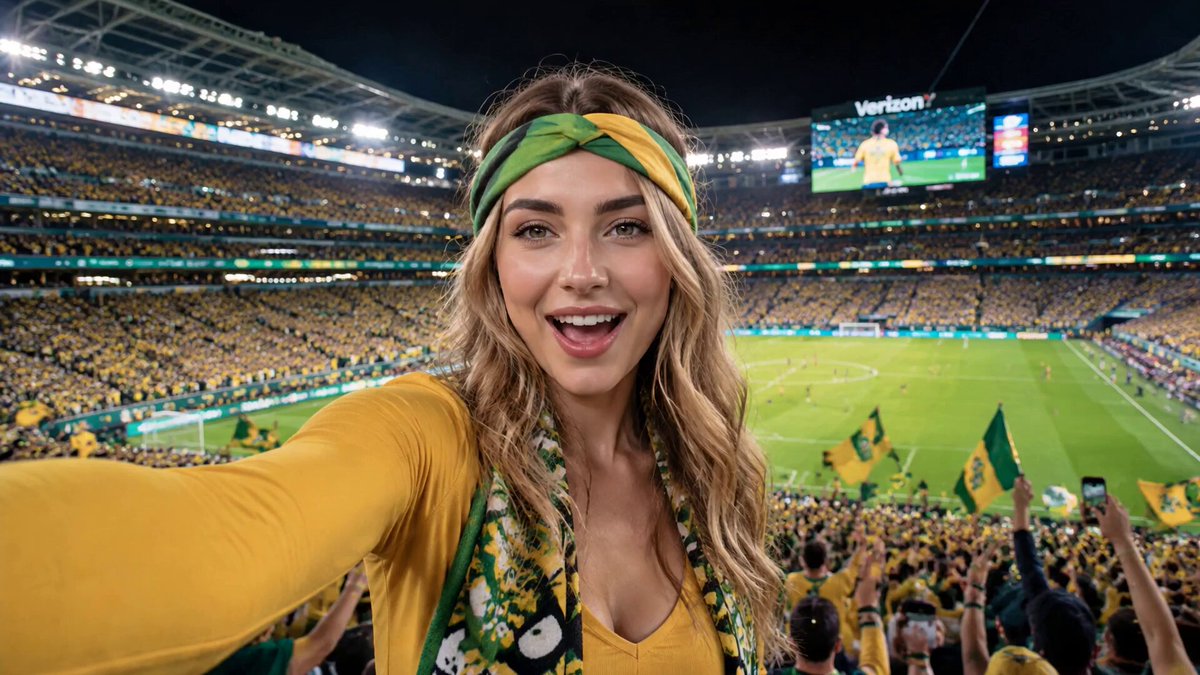

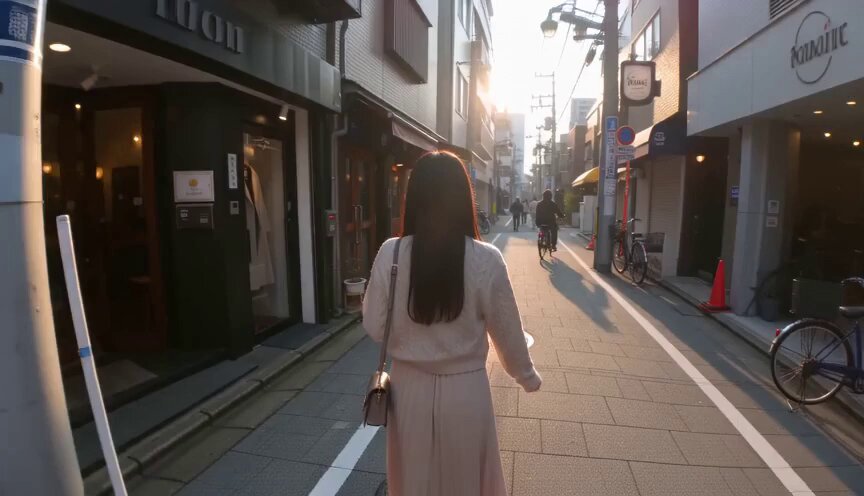
AI video generation has moved from novelty to production line. A brand that once booked a studio, a crew, and a travel day for a thirty-second social spot can now produce a dozen variations of that spot before lunch, each tuned to a different platform and audience. The real shift is not cost. It is iteration speed: the ability to test twenty hooks in a week and scale only the ones that survive contact with a real feed.
This guide covers how the leading generators actually differ, how to choose between them, and how to build a workflow that produces influencer-style video consistently rather than accidentally.
Why AI Video Generators Reshaped Influencer Content
The economics of social video used to punish experimentation. Every test cost a shoot day, a location, and an editor's afternoon, so teams shipped one hero asset and hoped. Generative models broke that constraint. When a new angle costs a prompt and a few minutes of rendering, the rational strategy flips from protecting a single idea to exploring many.
There is a second, subtler effect. Much of what makes influencer content perform is not polish. It is the sense of a real person, in a real space, talking about something they genuinely use. That register is easier to hit with generative tools than with a traditional commercial shoot, because the visual grammar of handheld, imperfect, natural-light footage is exactly what these models learned from.
What has not changed is strategy. Tools lower production cost; they do not lower the cost of a bad idea. The teams getting the most from these platforms are the ones who treat generation as a step inside a disciplined content process, not as a replacement for one.
What Actually Separates Good Output From Bad
Tool comparisons often devolve into demo reels. Demos are selected for spectacle. A working creator needs four boring qualities instead.
Temporal and spatial consistency
Watch a ten-second clip and ask whether objects keep their shape, whether a hand stays attached to a wrist, and whether a background stays put when the camera moves. Models that hold coherence across a long shot are worth more than models that produce one beautiful frame. This is where the biggest quality gaps still live.
Prompt adherence
A model that ignores half your instructions is expensive even when it is cheap. Test adherence with a compound prompt: a subject, an action, a camera move, a lighting condition, and a mood. Count how many of the five survive.
Motion realism
Weight, momentum, and contact matter more than resolution. Cloth that folds correctly, liquid that behaves like liquid, and footsteps that match the surface all signal quality far more reliably than a sharp 4K frame.
Controllability
Can you specify camera movement, lock a shot length, extend a clip, or edit a region without regenerating everything? Controllability is what turns a toy into a tool, because it lets you fix a single flawed second instead of rerolling the whole scene.
The Main Contenders and What Each One Is Best At
Generators cluster into four families, and most production pipelines end up using more than one.
Generalist text-to-video models
Large generalist models excel at cinematic coherence and long, physically plausible shots. They are the right first stop for establishing shots, product hero moments, and anything where the camera does the storytelling. Their weakness is precision: they interpret rather than obey, so they are less reliable for tightly scripted dialogue or exact brand choreography.
Editing-first platforms
Platforms built around an editor tend to be weaker at raw realism but far stronger at iteration. Motion brushes, inpainting, style transfer, and clip extension let you shape a shot after generation instead of gambling on the next roll. For social teams shipping daily, that control loop usually beats marginally better pixels.
Specialist and regional models
Several models optimize for a specific look: stylized animation, vertical-first framing, or regionally specific faces and settings. If your audience is highly localized, these can outperform global models on authenticity, and they often run faster and cheaper for narrow tasks.
Avatar and talking-head tools
When the content is a person speaking, dedicated avatar tools beat general video models on lip sync and facial stability. The trade-off is range: they are excellent for direct-to-camera monologues and weak for dynamic scenes. Many teams pair an avatar tool for the talking segments with a generalist model for B-roll.
A Repeatable Workflow for Influencer-Style AI Video
The difference between teams that ship and teams that stall is process. Seven stages, run in order, will carry a concept from brief to published post.
Stage 1: Brief, hook, and platform map
Write the hook before anything else. A hook is one sentence that names the audience, the tension, and the payoff. Then map the deliverable: a 9:16 vertical cut for short-form feeds, a 1:1 for feed placements, and a 16:9 version for embedded use. Deciding this up front prevents a painful crop later, because generative models rarely handle reframing gracefully.
Stage 2: Script beats and shot list
Keep the script to five or six beats. For each beat, write the visual, the on-screen text, and the audio intent. A beat sheet is not bureaucracy; it is the document that lets you prompt precisely instead of vaguely. Vague prompts produce vague footage, and vague footage cannot be fixed in the edit.
Stage 3: Reference assets and character bible
Before generating anything with a recurring person, assemble a character bible: face references, wardrobe, hair, and two or three signature props. Lock the description in a reusable prompt block. Consistency almost never comes from the model's memory; it comes from you feeding the same constraints every time.
Stage 4: Generation passes and selection
Generate in passes rather than one shot at a time. First pass: wide coverage of every beat, low effort, multiple seeds. Second pass: refine only the shots that earned their place. Third pass: fix specific defects. Grade shots against three criteria, sharpness, emotional fit, and continuity with neighbors, and delete anything that fails two of the three. A ruthless selection pass saves more time than any prompt trick.
Stage 5: Assembly, sound, and captions
Most social video is watched muted first. Cut for silence, then add sound. Sequence the shots so a viewer who never enables audio still understands the story from frames and captions alone. Keep captions inside the safe area, use a legible sans-serif, and time them to speech rhythm rather than to scene changes.
Stage 6: Platform formatting and publishing
Export the aspect ratios you mapped in stage one, verify the first three seconds, and check the caption hook separately from the video hook. Both must work, because they are consumed in different states of attention. Publish with a consistent naming convention so you can find the asset in three months when someone asks for a derivative.
Stage 7: Review and iteration
Log three things per post: hook type, visual style, and retention shape. Over a month, patterns appear. You will discover that certain hooks always spike in the first two seconds, or that a particular visual treatment holds attention past the midpoint. That log is the asset. The videos are disposable.
Prompting Patterns That Reliably Improve Output
A few structural habits consistently lift results.
Describe the shot, not the concept. "Medium shot, subject seated at a kitchen counter, soft window light from the left, slow push in" gives a model something to obey. "Cozy morning vibe" gives it something to hallucinate.
Specify the camera explicitly. Camera language is the single highest-leverage addition to any prompt, because it controls pacing and, by extension, perceived quality.
Put constraints last. Long prompts drift. Keep the subject and action in the first sentence, then append technical constraints like aspect ratio, lens feel, and duration.
Use negative guidance sparingly. Listing what you do not want sometimes introduces it. Prefer positive description of the desired state.
Iterate one variable at a time. Change the lighting or the camera move, never both, or you will not know which change caused the improvement.
Keeping Characters and Wardrobe Consistent Across a Series
Consistency is a systems problem, not a prompting problem. Three habits do most of the work.
First, lock a canonical description string and paste it, unchanged, into every prompt for that character. Second, keep a reference folder with three to five images covering front, profile, and full body. Third, generate in the same aspect ratio and lighting family across the series, because shifts in either make the same character read as a different person.
When a model will not cooperate, fall back to partial framing. Hands, back-of-head shots, and over-the-shoulder angles hide identity drift better than a full frontal. Editors have used this trick for a century, and it works just as well on generated footage.
Rights, Disclosure, and Platform Rules
Three questions belong in every project kickoff.
Do you have the rights to the reference material? A face, a logo, or a piece of music used as a generation input carries the same legal weight as using it in a finished edit.
Is disclosure required? Many platforms require labeling synthetic or altered media, particularly when a realistic person appears to say or do something. Adding a clear, plain-language label costs nothing and protects the account.
Does the output clear brand review? Generated footage can contain unintended text, symbols, or resemblance to real people. A quick frame-by-frame check before publishing catches most of it. Keep the check on the checklist rather than relying on memory.
Common Mistakes That Waste Time
Generating before writing the beat sheet. Without a shot list, you accumulate beautiful clips that do not cut together.
Chasing realism instead of clarity. A stylized clip that communicates instantly outperforms a photoreal clip that requires explanation.
Ignoring the first two seconds. Most drop-off happens immediately. If the opening frame does not pose a question, nothing later matters.
Reusing one look across every post. Feeds reward pattern interrupts. A series needs a recognizable signature, but not identical framing every time.
Skipping the sound pass. Audio carries emotional weight that generated visuals frequently lack, and it is the cheapest quality upgrade available.
Measuring Whether the Video Actually Worked
Track four numbers: three-second hold rate, completion rate, saves, and profile visits. Hold rate tells you whether the hook worked. Completion tells you whether pacing worked. Saves indicate usefulness. Profile visits indicate whether the content made viewers curious about the person or brand behind it.
Compare against your own baseline rather than against viral outliers. A clip that beats your median hold rate by twenty percent is a real signal, even if it never trends. Feed the winning traits back into the next brief, and the process compounds.
FAQ
Do I need more than one generator?
Most serious pipelines use two: a generalist model for cinematic scenes and an editing-first tool for iteration and fixes. Budget for both rather than trying to force one model to do everything.
How long should an AI-generated influencer clip be?
For short-form feeds, eight to twenty seconds per asset, cut into a thirty-to-sixty-second piece. Generated footage gets harder to control as it gets longer, so short segments assembled in the edit beat one long render.
Why does my character change between shots?
Usually because the description string, reference images, or lighting changed between generations. Lock all three, and prefer partial framing on any shot where identity matters less than atmosphere.
Can generated footage look indistinguishable from a real shoot?
At small sizes and in motion, often yes. Under scrutiny, artifacts in hands, text, and complex physics still give it away. Frame compositions so those elements stay out of the critical area, and the question rarely comes up.
What is the fastest way to improve output quality?
Add explicit camera language to every prompt and cut harder in the edit. Better selection raises perceived quality more than any single model upgrade.
Should I disclose that the video is AI-generated?
If a realistic person appears to speak or act, yes. Beyond platform rules, audiences respond better to transparency than to being fooled, and the disclosure rarely reduces performance when it is handled casually rather than apologetically.
