

Why Visual Storytelling Now Decides E-commerce Growth
Online retail has quietly moved its center of gravity from search results to scroll-stopping motion. Shoppers browsing short-form feeds expect to see a product in context within the first two seconds: how it moves, how it fits, how it feels in someone's hand. Static catalog photography still has a job, but it no longer carries the persuasion load on its own.
The consequence for brand teams is uncomfortable. Demand for video has multiplied across channels, formats, aspect ratios, and languages, while the time available to produce each asset has shrunk. A single product launch can now require dozens of cuts: a vertical hook for short-form feeds, a square version for a marketplace listing, a longer narrative piece for a landing page, localized variants, and a handful of experimental hooks for paid testing.
That is the gap AI video tooling actually fills. It does not replace creative direction. It replaces the slow, expensive middle layer of production — the scheduling, the studio time, the reshoots for a minor copy change — so that teams can ship more variations and learn faster from real audience response.
This guide walks through a practical workflow: which model types to use for which shots, how to keep a brand visually consistent across dozens of generated clips, how to plan a pipeline your team can repeat weekly, and which metrics tell you whether it is working.
The Shift From Manual Production to Directed AI Workflows
The important change is not that machines can render pixels. It is that the human role moves up a level. Instead of operating a camera and managing a shoot day, the creative lead operates a model library and a shot list.
Think of it as the difference between editing footage and directing a scene. In a directed workflow, you decide what the frame should communicate, choose the generation approach that gets closest to that intent, then refine the output with targeted edits rather than full reshoots.
What the first draft looks like now
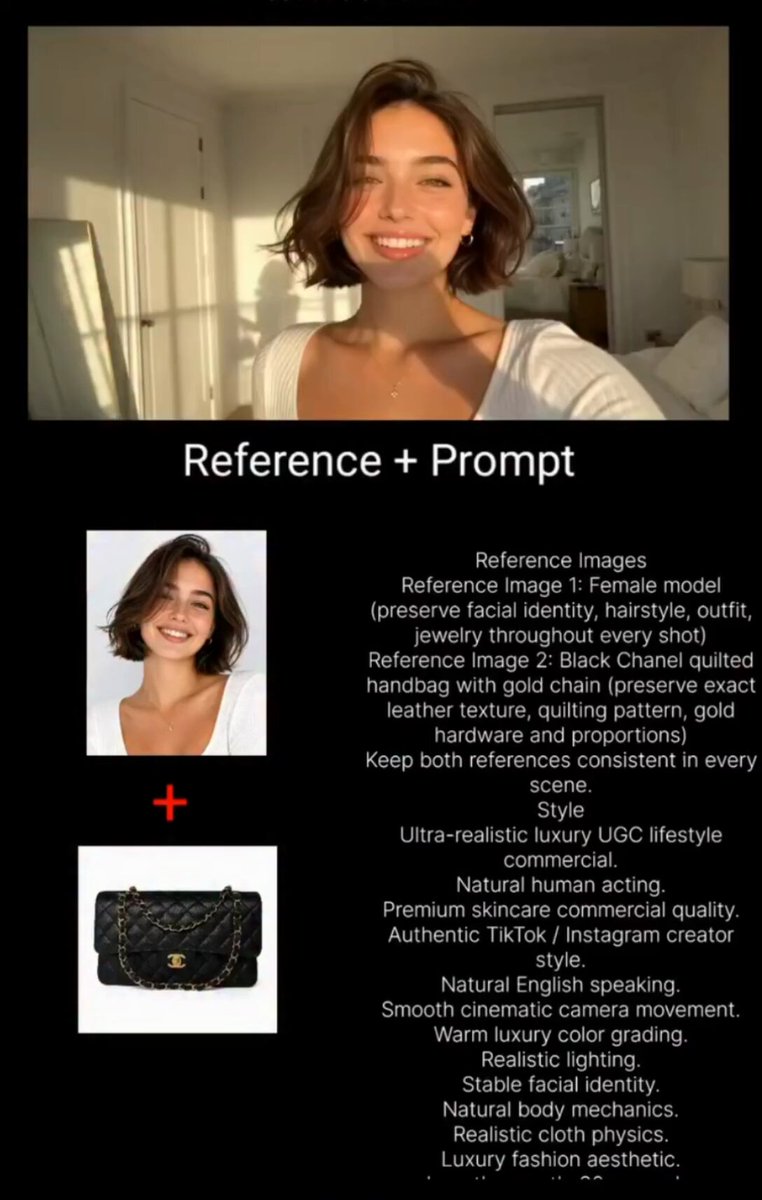
A brand can start from a single high-resolution product photo and generate a short clip of that product rotating on a surface, or being revealed by a hand, or sitting in a lifestyle setting. It can start from a text description and produce an abstract brand mood piece. It can start from an existing filmed clip and extend, restyle, or reframe it.
None of these are finished commercials. They are first drafts that arrive in minutes instead of weeks, which changes how many ideas survive the journey from pitch to published asset. When the cost of trying an idea drops, teams try more ideas, and the winning concept is usually better than what a single expensive production would have produced.
Where human direction still wins
Continuity, taste, and judgment remain human territory. Models are excellent at plausible motion and less reliable on product truth: a logo that warps, a strap that attaches in the wrong place, a fabric sheen that misrepresents the color. The directed workflow assumes a human reviewer at defined checkpoints, not a fully autonomous pipeline.
Practical rule: let AI handle texture, timing, background motion, and format adaptation. Keep human sign-off on anything that could be considered a product claim — size, material, function, fit, and color accuracy.
Choosing the Right Model for Each Job
"AI video" is not one tool. It is a family of approaches, and picking the wrong one wastes both time and compute. A useful way to organize the decision is by input type.
Text-to-video
Best for: mood pieces, abstract brand moments, background plates, opening hooks with no specific product in frame.
Weaknesses: precise product representation, readable on-screen text, and consistency of a physical object across multiple clips.
Use text-to-video when the shot is atmospheric rather than evidential. If the viewer needs to recognize a specific SKU, start elsewhere.
Image-to-video
Best for: product hero shots, lifestyle context, before-and-after sequences, catalog assets that need motion.
This is usually the workhorse for e-commerce because the input image already locks in the product's appearance. Your job becomes controlling motion and camera behavior rather than inventing the subject. A clean, well-lit source image on a plain background generates far more usable motion than a cluttered lifestyle photo.
Video-to-video and editing models
Best for: restyling existing footage, changing lighting or season, extending a clip, reframing a horizontal shoot into vertical, and cleaning up imperfect takes.
This category is underused. Most brands already have a library of usable footage that never gets repurposed because reformatting by hand is tedious. Automated reframing and restyling turn dead assets into inventory.
A quick selection heuristic
- If the product must be recognizable: image-to-video, with the source photo retouched first.
- If only the mood matters: text-to-video.
- If you already filmed it: video-to-video or automated reframing.
- If you need many variations fast: generate a small set, then branch from the best one.
The product fidelity checklist
Before approving any generated clip, check four things: silhouette accuracy, color accuracy against a physical reference, logo integrity, and whether motion implies a function the product does not have. Failing any of these is a rejection, not a note for later.
Building a Repeatable Brand Video Pipeline
Ad-hoc generation produces one-off clips. A pipeline produces a stream of on-brand assets without a scramble every campaign. The structure below works for a team of one as well as a team of twenty.
Step 1: Prepare the asset library
Collect per product: a hero shot on a neutral background, two or three lifestyle angles, a detail macro, and any existing footage. Retouch before generation, not after. Straightening a crooked product photo is easier in an image editor than in a video prompt.
Also assemble a brand kit: two or three approved color values, a typographic reference, a list of signature camera moves (slow push-in, gentle orbit, top-down reveal), and a list of banned looks.
Step 2: Write the shot list, not the prompt
Prompts are a means, not a plan. Start by writing the shot list you would hand a videographer: what each shot must prove and how long it lasts. A ten-second product spot might break into a three-second hook, a four-second proof shot, and a three-second call to action.
Once the shot list exists, each shot gets a generation approach and a prompt. This ordering prevents the classic failure mode where a team generates beautiful clips that do not assemble into a coherent story.
Step 3: Generate in small batches with locked settings
Generate three to five variations per shot rather than twenty. Lock seed, aspect ratio, motion strength, and style parameters between shots in the same sequence so the clips feel like they come from the same shoot.
Keep a simple log: date, model, settings, prompt, verdict. After a month you will have a private playbook far more valuable than any generic prompt list.
Step 4: Assemble and quality check
Bring clips into an editor, cut to a tempo that matches the platform, add sound design, and overlay text. Most perceived quality in short-form video comes from pacing and audio, not from render fidelity.
Run a two-pass check: a technical pass (edges, hands, text legibility, frame consistency) and a truth pass (does anything misrepresent the product?).
Step 5: Produce platform variants deliberately
Do not simply crop. Re-decide the hook for each platform, then let reframing tools handle the mechanical work. A vertical feed rewards a fast, human opening; a marketplace listing rewards clarity and a visible price or bundle; a landing page rewards a slower demonstration.
Step 6: Archive with metadata
Store generated clips with their prompts and settings. Six weeks later, when a new campaign needs the same product in a different season, reusable source material saves more time than any single generation run.
Personalization and Segmentation at Scale
Once a base asset exists, the interesting work begins: making it relevant to different audiences without rebuilding it from scratch.
Map segments to creative variables
List your three to five most commercially distinct audiences — for example, first-time buyers comparing options, repeat customers buying refills, and gift shoppers with a deadline. For each, identify the single variable that matters most: proof, convenience, or urgency.
That variable determines what changes between variants. Often it is only the first three seconds and the closing card; the middle can stay identical, which keeps production cost near zero per additional variant.
Generate variants systematically
Swap hooks, swap the opening frame, swap the benefit overlay, swap the language. A base clip plus six hook variations and two closing cards gives twelve testable combinations from one generation pass. This is where AI video changes the economics of paid testing: the constraint moves from production capacity to how many variants your media buying team can actually read.
Keep localization honest
Localized video is not subtitled video. Text length changes, humor does not translate, and product naming conventions differ. Generate localized overlays and, where budget allows, localized voiceover, then have a native speaker check the result before publishing. Machine translation plus a native review pass is far cheaper than a full re-shoot and far safer than publishing unchecked.
Production Economics Without the Guesswork
Teams adopting AI video usually make the same accounting mistake: they count generation cost and ignore review time. Review is the real bottleneck.
A more useful model tracks three numbers per published asset: minutes of generation, minutes of human review, and minutes of editing. If review time is climbing, the fix is usually upstream — better source images, tighter shot lists, fewer locked settings to re-tune.
A second useful habit is tiering your assets:
- Tier 1 — hero content: flagship launches, paid campaigns. Human-directed, AI-assisted, fully reviewed.
- Tier 2 — everyday content: organic posts, listing videos, email embeds. Pipeline-driven with a light review.
- Tier 3 — experimental: hook tests and format probes. Fast, cheap, published only in test environments.
Most teams overspend by applying Tier 1 review standards to Tier 3 experiments and Tier 3 carelessness to Tier 1 launches. Matching rigor to stakes is the whole game.
Common Mistakes That Kill AI Video Campaigns
Chasing fidelity over clarity. A hyper-detailed render that never shows the product clearly loses to a simpler clip that does.
Ignoring the first second. Viewers decide instantly. If your hook is a three-second logo animation, you have already lost the scroll.
Letting style drift. Ten clips generated with ten different style settings look like ten different brands. Lock your visual parameters and audit quarterly.
Skipping the truth pass. Generated hands, reflections, and fabric can imply product features that do not exist. This is a compliance issue, not a creative one.
Generating without a shot list. Beautiful orphan clips do not assemble into stories.
Never reusing assets. If every campaign starts from zero, you are paying full price for a library you already own.
Treating AI output as final. Generation is the first draft of an edit, not a finished deliverable.
Measuring Performance: Metrics That Actually Matter
Vanity metrics — view counts, follower growth, total reach — will not tell you whether AI video is helping. Track these instead:
- Hook retention: the percentage of viewers still watching at three seconds. This is the single most diagnostic number for short-form video.
- Cost per published asset: generation plus review plus editing, divided by shipped assets. Watch this fall as your pipeline matures.
- Variant win rate: how often your test winner beats the control by a meaningful margin. If it never does, your variants are too similar.
- Assistant-assisted conversion rate: the share of visitors to a product page who watched a video before adding to cart.
- Time from brief to publish: the operational metric that determines how many tests you can run per quarter.
Set a baseline before you scale. Run one month of your existing process, measure these five, then compare after a month of the directed pipeline. The comparison usually reveals that the gain comes from volume of experimentation rather than from any single clip being dramatically better.
A Practical Seven-Day Pilot
If you want to test this without reorganizing a team, run a contained pilot.
Day 1: Select one product with strong photography and clear demand. Assemble the asset library and brand kit.
Day 2: Write a nine-second shot list: hook, proof, close. Choose a generation approach per shot.
Day 3: Generate three variations per shot with locked settings. Log everything.
Day 4: Edit the two best assemblies. Add sound and on-screen text.
Day 5: Produce four hook variants and two closing cards for the strongest edit.
Day 6: Publish as a small paid test with a fixed budget and one control using your existing creative.
Day 7: Review hook retention and conversion against the control. Decide what to standardize.
A pilot this small answers the only question that matters early on: does faster iteration produce better results for your specific audience? If yes, formalize the pipeline. If not, adjust the shot list and source imagery before adding more tools.
FAQ
How much of a product video can be AI-generated before it feels fake?
Audiences tolerate AI-assisted motion far more than AI-invented products. Backgrounds, transitions, camera movement, lifestyle context, and format adaptation pass unnoticed. Invented product details do not. Keep the product itself sourced from real photography and let generation handle everything around it.
Do I need a technical team to run this?
No, but you need someone who can maintain a consistent process. The scarce skill is not prompt writing; it is knowing how to evaluate a shot and kill a bad one quickly.
How do I keep brand consistency across many generated clips?
Lock three things: a color palette, a small set of approved camera moves, and a fixed style parameter across all generations in a sequence. Review quarterly, because small drifts compound into a visibly different brand over a year.
Should I replace my existing video agency?
Usually not. The pattern that works best is agencies owning Tier 1 hero storytelling and in-house teams owning Tier 2 and Tier 3 volume. The two feed each other: pipeline output reveals which hooks deserve a bigger production.
What about rights, likenesses, and disclosure?
Treat generated footage like any other commercial asset. Confirm you hold rights to source photography, avoid generating recognizable real people without consent, and follow the disclosure rules of the platforms you publish on. When in doubt, disclose.
How many variants should I test at once?
Four to six. Fewer and you learn nothing conclusive; more and your budget spreads too thin to reach statistical confidence in a week.
Does AI video work for high-consideration products?
Yes, but the job changes. For expensive or complex purchases, use video to demonstrate and explain rather than to hook. Generate clear, patient demonstration clips and sequence them by question order — what it does, how it works, what it costs, what happens if it goes wrong.
The through-line across all of this is simple: AI video does not remove the need for creative judgment. It removes the excuse for not testing it.
