

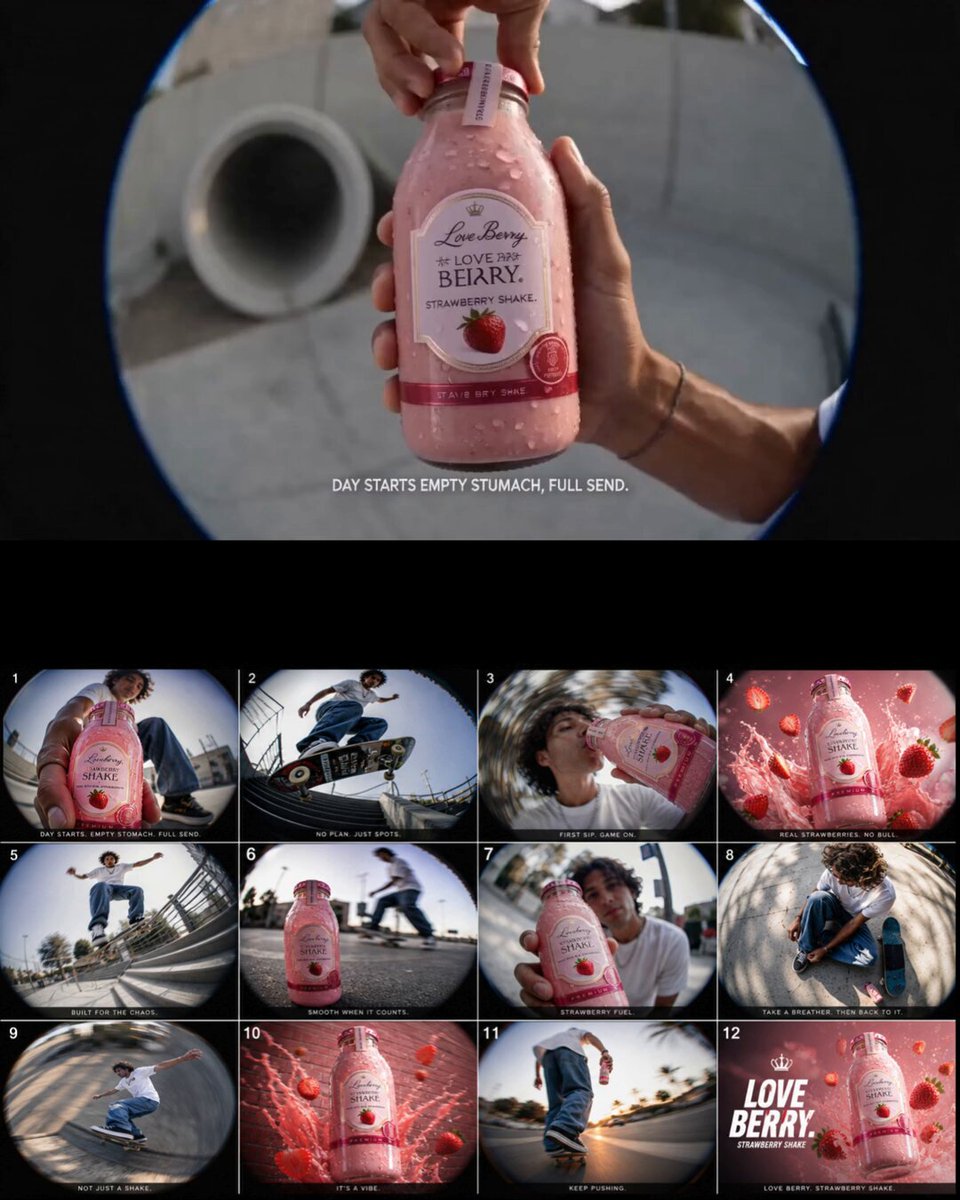


Short-form vertical video has become the default way people discover brands. Every day, millions of clips compete for attention inside Instagram Reels, TikTok's For You feed, and YouTube Shorts. For marketers, the implication is uncomfortable: the teams that used to win with a single polished campaign per quarter now need fresh, native video every single week.
The good news is that the cost of producing that video has collapsed. Generative AI tools can now turn a short written brief into a usable clip in minutes, handle captioning and resizing automatically, and keep a consistent visual identity across dozens of posts. This guide explains how to build a video content marketing system on Instagram and TikTok around AI tools, without needing a film crew or a big budget.
We will cover the strategic shift that made short-form video the center of digital marketing, the concrete ways AI changes production, how to choose between quality-focused and speed-focused models, how to keep characters and scenes consistent, and how to turn all of it into a repeatable weekly workflow. The goal is not a collection of tricks. The goal is a system.
The Shift to Vertical Short-Form Video
Static images and long-form text still have a place, but the growth curves are not subtle. Platforms optimize their algorithms around watch time and engagement, and short-form video consistently delivers the strongest signals. Instagram has pushed Reels into every surface of the app; TikTok built an entire business around a vertical feed; YouTube answered with Shorts. Brands that ignore this are competing with one hand tied behind their back.
For marketers, the practical consequence is a dramatic increase in demand for video assets. A typical brand might now need teaser clips for product launches, educational explainers, behind-the-scenes moments, user-generated-content-style testimonials, and trend-jacking posts, often all in the same week. The old agency workflow, which involved scripts, shoots, editing, and multiple approval rounds, simply cannot scale to that volume.
AI tools do not replace strategy or taste. They remove the production bottleneck. A prompt-based video generator can turn a product description into a lifestyle clip, a model can animate a still photo of your packaging, and an editing pipeline can batch-resize everything to 9:16. The marketer's job shifts from how do we produce this to what should we say, and to whom.
What AI Actually Changes in Video Production
To use AI tools well, it helps to be precise about what they change. The most obvious change is speed. What used to take a production team days can now be iterated in minutes. The second change is cost. Instead of paying for a shoot, you pay per generation, which means you can test ten visual directions and keep the one that works. The third change is consistency. With reference-based tools, you can lock a character, a product, or a color palette across many clips.
There are also real limits. AI models still struggle with long logical sequences, precise text rendering in some languages, and complex multi-character interactions. A model may nail a single shot and then drift in the next one. This is why the best workflows treat AI as the engine inside a pipeline, with a human making creative decisions at the start and the end: brief, generation, review, edit, publish.
Choosing the Right AI Video Models
Not all generation models are the same, and the differences matter more than the brand names. You can group them into three rough categories: cinematic quality, speed and cost efficiency, and reference-driven control. A mature content operation uses all three at different moments.
Cinematic Quality: When First Impressions Decide Everything
For hero content, meaning the launch video, the brand film, or the ad you put budget behind, quality is the priority. Audiences in 2025 are visually literate. They have seen hundreds of thousands of clips, and their brains classify cheap AI within a second. High-end models produce richer lighting, more natural motion, better physics, and more convincing faces. If the first impression fails, no amount of clever copy will save the post. Use the best rendering models for the pieces that define your brand, and be willing to spend more per generation on those.
Speed and Efficiency: Staying Consistent at Scale
Consistency on social platforms is a volume game. One viral post is luck; a dozen good posts a week is a strategy. For this middle layer, optimize for throughput. Fast, cheaper models are perfect for trend responses, daily tips, and reactive content where the half-life of the topic is measured in hours. The quality bar is lower because the content itself is ephemeral. The key is to have a clear routing rule: expensive models for assets that will live for months, efficient models for assets that will live for days.
Reference Models and Scene Stability: Controlling the Story
The third category is the most important for branded content: models that accept reference images and keep scenes stable. If your video shows a product in shot one and a completely different product in shot three, the post is dead. Reference-based generation lets you feed a few keyframes of the product, character, or environment, and the model holds those details across the clip. This is the difference between random generations and a controllable storytelling tool.
How an AI Director Fits Into Your Workflow
The most interesting development in AI video is not a single model but the idea of an agent that directs the whole process. Instead of generating one isolated clip, you describe a story and the system plans shots, suggests composition, and keeps the narrative coherent. Think of it as a junior director that never sleeps.
Composition and Visual Rules
An AI director can enforce basic cinematography: rule of thirds, headroom, camera movement that matches the emotion of the scene, and consistent lighting direction. For a brand, this means every post follows the same visual grammar without you having to write it into every prompt. Define the rules once, such as warm tones, low-angle product shots, and quick cuts, and let the system apply them.
Automating Narrative Flow and Scene Transitions
The hardest part of short-form video is structure. You have seconds to hook the viewer, a middle that must not drag, and an ending that drives action. AI direction helps by mapping your content to proven structures: hook first, payoff fast, loop-friendly endings. Scene transitions can be automated so the clip feels like one intentional piece instead of three unrelated shots stapled together.
Directing for Specific Audiences
Different audiences respond to different rhythms. A creator audience tolerates slower, craft-forward pacing; a commerce audience needs the product visible in the first second. An AI director that can be tuned per audience lets you produce the same underlying story in multiple versions, each optimized for a different segment or platform. This is where AI stops being a cost center and starts being a force multiplier.
Building a Scalable Content Pipeline
Tools are only half the system. The other half is process. A scalable pipeline has three layers: queue, variety, and alignment.
Task Queues and Resource Management
Generation platforms are asynchronous. You submit a job, and it renders in the background. Treat this as a feature: build a queue of planned content, submit batches overnight, and review the results in the morning. This turns generation from a blocking task into a pipeline you can run while you do everything else. If you are producing for multiple platforms or accounts, keep separate queues so a spike in one channel does not starve the others.
Multi-Model Variety for Fresh Output
If every post uses the same model with the same prompt template, your feed starts to feel repetitive. Algorithms and audiences both reward variety. Mix models with different strengths: a realism model for product shots, a stylized model for explainer metaphors, a fast model for trends. The variety also gives you a hedge. If one model's style starts feeling dated, the rest of your feed still looks fresh.
Image Editing Integration for Brand Alignment
Video generation rarely happens in isolation. In practice you will want to prepare reference images, clean up stills, and composite elements before and after generation. A pipeline that combines image editing with video generation lets you enforce brand elements such as logos, colors, and product shots before the model ever sees the scene. This is the difference between on-brand AI content and generic AI content.
SEO and Discoverability for Social Video
Social platforms are search engines now. TikTok search, Instagram search, and YouTube search all surface video based on text signals: captions, on-screen text, hashtags, and descriptions. Optimize for that.
Auto-Generated Captions
Most viewers watch with sound off. Auto-captions solve comprehension, increase watch time, and improve accessibility. AI tools can generate captions in multiple languages, which also lets one video travel beyond your home market. Always check the output, though. Models make transcription errors, and a wrong product name in a caption is a credibility killer.
Metadata That Helps the Algorithm
Write the title, description, and hashtags the way you would write a search query a viewer would type. Use natural phrases, not keyword soup. For example, instead of AI video tools, use how to make AI product videos for Instagram. The platforms use these signals to decide who sees the post. Treat metadata as part of the creative work, not an afterthought.
Platform Optimization: Reels vs TikTok
Instagram and TikTok are often grouped together, but the native formats differ. TikTok rewards raw, fast, trend-driven content and aggressive use of trending sounds; the feed is discovery-first and users expect quick cuts. Instagram Reels sits inside a broader ecosystem where polished content performs well, and the same video can be cross-posted to Stories and the main grid. YouTube Shorts, in turn, rewards searchable, evergreen titles.
A practical approach: produce one master video, then render platform-specific versions. TikTok gets a faster cut with a trending sound. Reels gets a slightly polished version with a stronger caption and call to action. Shorts gets a searchable title. This is where a batch pipeline pays for itself. The marginal cost of the third version is near zero.
A Step-by-Step Workflow for a Week of Content
Here is a concrete weekly loop you can adapt:
- Plan: pick 5-7 content angles for the week. One hero piece, two educational pieces, one reactive trend piece, one community piece, and one product highlight.
- Brief: write a 3-5 sentence brief per piece covering audience, hook, message, call to action, and reference images.
- Generate: submit the batch to your generation queue. Mix models deliberately.
- Review: delete the failures immediately. Keep the pieces that work and fix the ones that are close.
- Edit: add captions, on-screen text, sound, and platform-specific formatting.
- Schedule: publish at consistent times. Log what worked.
- Learn: every week, look at the retention curve for each post. Double down on the structures that hold viewers past the three-second mark.
Common Mistakes and How to Avoid Them
- Chasing trends you cannot own. If the trend does not fit your brand, skip it.
- Using one model for everything. Variety beats monoculture.
- Ignoring the first second. If the hook is weak, the algorithm will not save you.
- Publishing without captions. You are losing the majority of viewers.
- No feedback loop. Posting without reviewing analytics is just shouting into the void.
FAQ
Do I need a big budget to start? No. Start with free or low-cost tiers, learn the workflow on a single account, then scale what works.
Can AI videos look like my brand? Yes, if you invest in reference images and consistent prompting. Brand consistency is a process, not a setting.
How many posts per week should I publish? Consistency beats volume. Three good posts a week outperform ten random ones.
Will platforms penalize AI content? Platforms generally care about value, not provenance. Content that is useful and original performs; spam gets suppressed.
Should I use AI for everything? No. Use AI for volume and iteration, and keep human taste for strategy, big creative decisions, and final quality control.
The brands winning on Instagram and TikTok in 2025 are not the ones with the biggest budgets. They are the ones with the most reliable systems. AI video tools have removed the production bottleneck; the remaining competitive advantage is judgment, choosing the right stories, the right formats, and the right models for each moment. Build the system, review the data, and let the pipeline do the heavy lifting.
