

Why AI video is reshaping marketing production
Video has become the default way audiences evaluate a product. People watch a short clip to decide whether a brand is credible long before they read a landing page. That shift created a production problem: teams are now expected to ship more variants, in more formats, in more languages, on a schedule that traditional shoots and edit suites were never designed to support.
Generative video changes the economics of that problem. Instead of paying for a full production cycle every time an idea is tested, a team can generate scenes, refine them, and discard weak directions before a camera is ever booked. Strategy does not become less important — it becomes testable, because iteration is no longer the expensive part.
The practical consequence is that marketing video work now looks less like a single annual campaign and more like a continuous pipeline. The teams that do it well are not the ones with the biggest budgets. They are the ones with the clearest briefs, the tightest review loops, and a small set of repeatable scene templates they can recombine quickly.
The four layers of a modern AI video production stack
Most confusion about AI video comes from treating every tool as a competitor to every other tool. In practice, production runs through four distinct layers, and each layer solves a different problem.
Layer 1 — Generation engines
This is where raw footage comes from. Text-to-video engines turn a written shot description into motion; image-to-video engines animate a still frame; video-to-video engines restyle or extend existing footage. Tools such as Runway, Kling, Luma Dream Machine, Pika, Google Veo, and OpenAI's Sora occupy this layer, alongside still-image generators like Midjourney, Flux, and Stable Diffusion when a project needs locked reference frames rather than motion.
The decision rule here is simple. Use still generation when you need precise control over composition and product accuracy. Use text-to-video when the shot is about atmosphere, motion, or scale. Use image-to-video when you already have an approved look and want movement inside it.
Layer 2 — Direction and continuity tooling
A generation engine produces clips. A director produces a film. This layer includes storyboard tools, shot-list managers, reference-image libraries, seed control, character reference features, camera-move prompting, and motion brushes. It is the layer that keeps a character's face, a product's proportions, and a location's light consistent across twenty separate generations.
This is also where professional habits matter most. Numbering shots, naming files with scene and take identifiers, and keeping a single canonical reference sheet per recurring subject will save more production time than any single model upgrade.
Layer 3 — Audio, voice, and sound design
Silent video underperforms almost everywhere. Voice generation tools such as ElevenLabs and PlayHT handle narration and character dialogue; music tools like Suno and Udio generate beds and stingers; cleanup tools such as Adobe Podcast Enhance and Descript's studio sound repair imperfect room recordings. Increasingly, this layer also handles dubbing and lip-sync, which is what makes one master cut usable across several markets.
Layer 4 — Assembly, captions, and delivery
Final assembly happens in CapCut, Adobe Premiere Pro, DaVinci Resolve, or a browser editor. This is where pacing is fixed, captions are burned in or exported, aspect ratios are cut for vertical and horizontal placements, and loudness is normalized. Keep this layer boring and standardized. A consistent export preset saves hours every week.
A repeatable workflow from brief to published cut
The most common failure in AI video marketing is not bad generation quality. It is starting with the tool instead of the brief. A repeatable sequence solves that.
Step 1 — Define the single job of the video
Write one sentence describing what the viewer should do or believe after watching. A product teaser, a feature explainer, a testimonial, and a retargeting hook are four different videos with four different structures. Trying to satisfy all of them in one cut produces a video that satisfies none.
Step 2 — Write a shot list, not a script
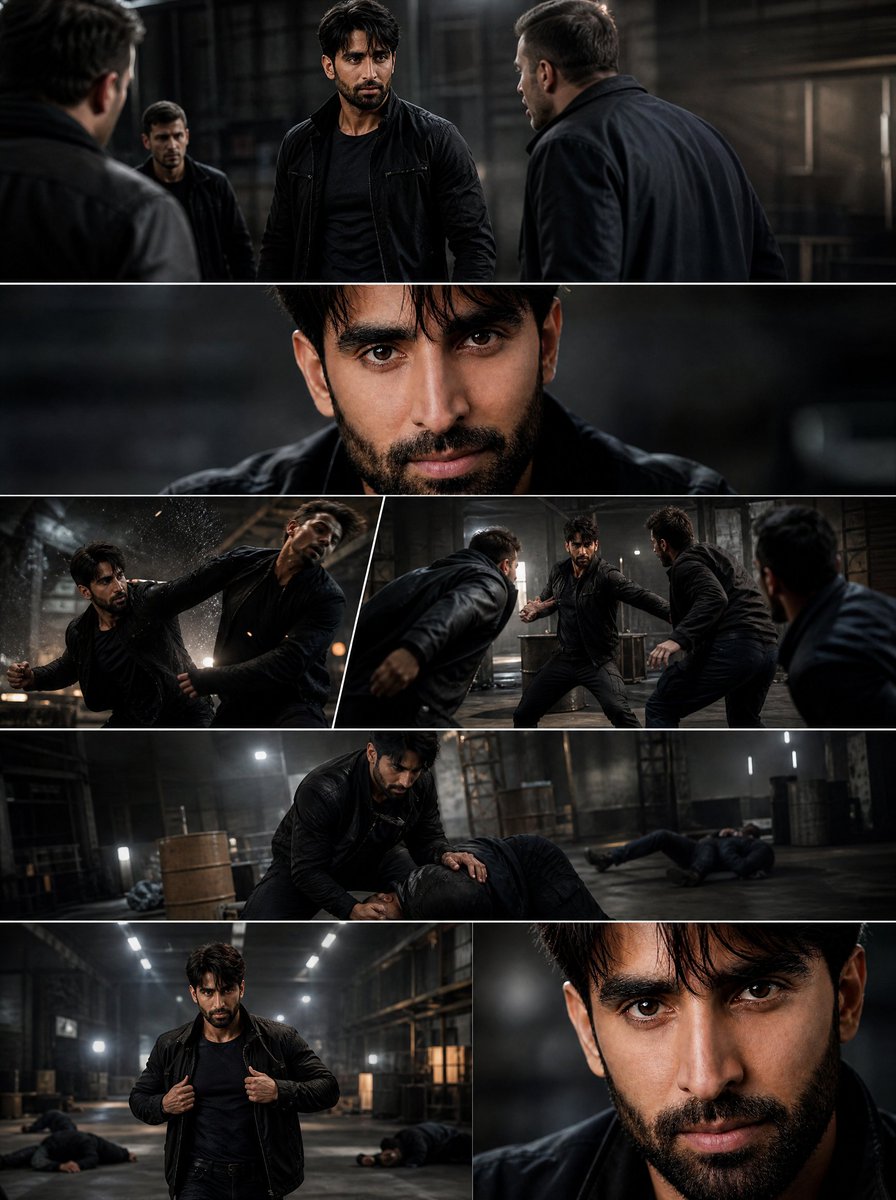
AI engines respond far better to visual descriptions than to dialogue. A useful shot list entry reads like this: wide shot, rain-slicked street at night, single subject walking toward camera, neon reflections, slow push-in, shallow depth of field. Repeat this for six to twelve shots. Dialogue belongs in the audio layer, not in the video prompt.
Step 3 — Generate in small controlled batches
Generate three to five variations per shot rather than twenty. Review immediately, keep the best, and note why it won. Batching more than that creates an unmanageable review pile and hides the fact that the prompt itself is wrong. If five attempts all fail, the brief is the problem, not the model.
Step 4 — Assemble, caption, and lock
Edit for pacing first, then add captions, then add sound design. Captions should be readable at a glance on a phone at arm's length; oversized or novelty fonts that look striking in a timeline often become unreadable in feed. Normalize audio to a consistent loudness target so the paid placement does not sound quieter than everything around it.
Step 5 — Version and distribute
Cut the master into the placements you actually buy: vertical, square, horizontal. Produce at least two hook variants per placement, since the first two seconds drive the majority of performance differences. Label every file with campaign, audience, hook, and placement so reporting stays clean.
Step 6 — Review and feed the pipeline
After two weeks of delivery, review which hooks held attention and which shots were dropped by editors. The dropped shots are a signal that your shot list template needs refinement. This feedback loop is what turns a one-off AI experiment into a production system.
Shot continuity: consistency is the real bottleneck
Audiences forgive imperfect physics. They do not forgive a product that changes shape between two shots, or a character whose face shifts halfway through a story.
Build a reference sheet per recurring subject
For each character, product, and location, keep one canonical image plus three short descriptive lines covering wardrobe, color, and lighting. Feed that reference into every relevant generation. Text descriptions alone drift; a reference image anchors the model.
Protect product accuracy
When a real product appears on screen, generate the environment and motion around it rather than asking the model to invent the product. Compositing a real product photograph into a generated background is usually faster and always more accurate than prompting for a facsimile.
Lock lighting and color early
Choose one lighting direction and one color temperature per scene, and apply it across every shot in that scene. Apply a consistent color treatment in the edit so that clips generated by different engines sit together without a visible seam.
Budgeting and throughput planning
Generative video planning fails when teams treat it as free. There are four recurring costs: generation usage on your chosen plans, render and iteration time, human review hours, and final delivery work.
Estimate using a simple per-finished-variant model. Count how many raw generations a finished thirty-second cut consumes in your actual practice — including the failed attempts — then multiply by the number of variants you plan to ship per month. That number, not the subscription price, is your real production cost.
Three decision criteria help here. First, if a shot needs a real person on camera, film it; generation is not worth the accuracy risk. Second, if a shot will be reused across many campaigns, invest more attempts in it, because its value compounds. Third, if a variant will only run for a few days in a small test, keep it cheap and accept rougher craft.
Case patterns across three sectors
E-commerce: compressing the product content cycle
Retail teams generate lifestyle context around existing product photography rather than shooting new sets. A single product image becomes a kitchen scene, a gym scene, and a travel scene, each with a short vertical cut. The result is faster coverage of seasonal inventory without booking studios for every SKU.
Software and B2B: explainers that stay current
Interface-heavy products change constantly, which makes filmed explainers obsolete quickly. Teams now generate the human and environmental footage and composite current interface recordings on top. When the product updates, only the screen layer is replaced.
Local services and retail: many locations, one campaign
A franchise can generate one master structure and swap location details, signage, and language variants. Instead of one national ad, it ships dozens of locally relevant cuts from the same shot list, which typically improves response rates in smaller markets.
Quality control checklist before you publish
- Watch the first two seconds with sound off. Does the hook still read?
- Check every frame where a logo, product, or price appears. Is it accurate?
- Read captions aloud. Do they match the audio exactly?
- Verify text rendering in generated scenes. Any garbled lettering should be replaced with an overlay.
- Confirm aspect ratios and safe zones for each placement.
- Confirm loudness consistency across the version set.
- Check licensing for music, voices, and any real people depicted.
- Watch the full cut once on a phone, once on desktop, and once muted.
Common mistakes that waste production cycles
Prompting for plot instead of pictures. Models render images, not narrative. Describe what the camera sees.
Generating at scale before the brief is stable. Twenty clips built on a wrong premise is twenty clips of wasted review time.
Ignoring the hook. Teams spend hours polishing shot seven and seconds on the first two seconds, which is where most viewers decide.
Chasing realism at the expense of clarity. A slightly stylized look that reads instantly often outperforms a photorealistic scene that needs a second viewing to understand.
Skipping audio. Weak sound design makes good footage feel amateur, and muted-first viewing means captions are not optional.
No naming convention. Without file labels tied to campaign and hook, performance data becomes unusable within a month.
Measurement: what actually matters after launch
Views are a vanity signal in paid video. Track hook rate — viewers who stay past the first few seconds — alongside average watch time, completion rate for short cuts, click-through rate, and cost per acquisition. For brand work, add aided recall and message association.
Compare like with like. Hook variants should be judged on hook rate; full cuts should be judged on completion and downstream conversion. And keep one control: a previously successful human-filmed or manually edited cut. If AI-generated variants do not beat the control, the workflow is not saving anything yet.
FAQ
Do AI video tools replace a production team?
No. They replace the most repetitive parts of pre-production and iteration. Strategy, casting decisions, brand judgment, editing taste, and performance analysis remain human work.
How many generations does a finished video usually require?
Plan for roughly five to ten raw generations per finished shot in early projects, dropping as your prompt templates and reference library mature. Budget for the failures, not just the wins.
Which engine should a beginner start with?
Pick one text-to-video engine and one still-image generator, and learn them deeply for a month. Tool-hopping early hides the fact that prompt structure, not model choice, is usually the limiting factor.
How do I keep characters consistent across shots?
Use a single approved reference image per character, repeat the same descriptive lines in every prompt, and lock wardrobe and lighting per scene. Reuse the same seed when the tool supports it.
Is AI-generated video acceptable for regulated industries?
Often yes, with review. Avoid generating medical, financial, or legal claims inside imagery, keep all text as overlays, and route every cut through the same compliance review as filmed content.
What is the fastest way to localize a campaign?
Build the master cut with clean audio stems and no burned-in text, then produce language versions by regenerating or re-recording voice and re-adding text overlays. This keeps one visual master and many localized deliveries.
How should we evaluate whether the workflow is working?
Measure cost per finished variant, time from brief to publish, and variant volume per month. If those three improve while performance holds steady against your control, the pipeline is working.
Where does AI video still fall short?
Complex physical interaction, precise hand movement, and long continuous takes remain unreliable. Design shot lists that work around those limits instead of fighting them, and the output will look intentional rather than compromised.
