

The End of the Fragmented Video Workflow
Video production has always been a chain of specialized tools. You write the script in one application, design the storyboard in another, generate assets in a third, edit in a fourth, and master the sound in a fifth. Every handoff costs time, and every format change introduces friction. For a solo creator or a small studio, the chain is the bottleneck.
AI is collapsing that chain. In 2025, the distance between a conceptual script and a finished film is smaller than it has ever been, and the most interesting developments are not individual models but integrated workflows that carry a project from the first idea to the final render. This guide explains how modern AI video production works end to end, what to look for in a production system, and how to build a pipeline that produces consistent, professional results.
The Architecture of Integrated AI Video Production
A complete AI video production system is more than a video generator with a nice interface. Behind the scenes, it needs the architecture to manage complex, resource-intensive work.
The Backend: Queues, Storage, and Typed Logic
Video generation is GPU-intensive and asynchronous. A clip does not render instantly; it enters a queue, waits for compute, and returns when ready. A production-grade system manages this with a task queue that tracks every job from submission to completion, handles failures gracefully, and scales with demand.
The backend also needs reliable storage for assets: source images, generated clips, reference sets, and final exports. A strong system treats these as first-class objects with clear ownership, versioning, and retrieval, so a project can be revisited months later without hunting for files.
Underneath, a typed language and a modular framework keep the system predictable. When you are orchestrating dozens of models and thousands of tasks, predictability is not a luxury; it is what makes the pipeline debuggable and safe to scale.
The Model Library: Choice as a Feature
The most important architectural decision is whether the system is locked to one model or connected to many. A single model is simpler but limited: you are betting the whole pipeline on one engine's strengths and accepting its weaknesses.
A model library changes the economics of creation. Each model in the library has known strengths: one is best at photorealistic faces, another at stylized animation, another at complex motion, another at fast iteration. The system can route each shot to the model most likely to execute it well, and the creator can override the choice when they have a preference.
For creative freedom, choice is the feature. For a production team, the library also provides resilience: when one model degrades or changes its terms, the pipeline can shift to another without a redesign.
Consistency: The Layer Everyone Forgets
The difference between a demo and a product is consistency. A single impressive clip is easy; a coherent sequence, a series, or a campaign is hard.
Modern production systems address consistency with two mechanisms:
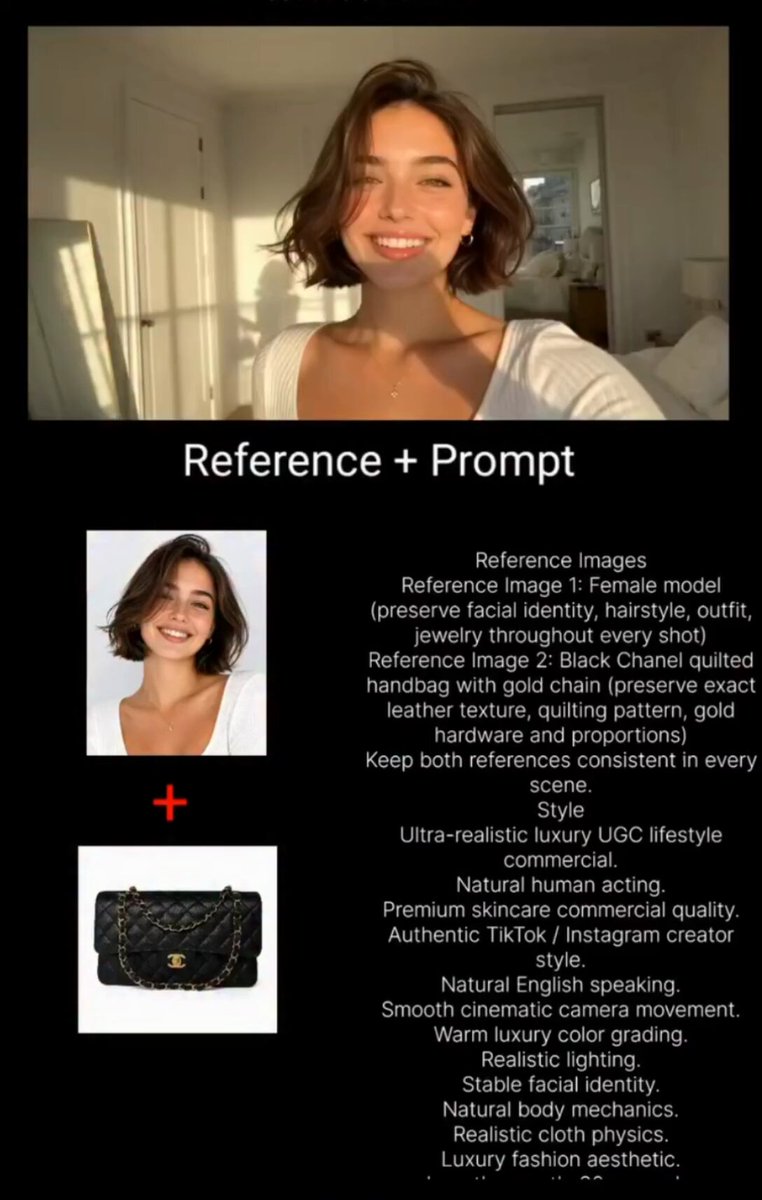
- Multi-image fusion: build a stable identity token from several images of the same character or style, then condition every generation on that token.
- Keyframe control: specify the start and end states of a shot, and sometimes intermediate states, so the environment and the action stay coherent.
These mechanisms are the difference between a collection of random clips and a story. Without them, long-form work is practically impossible.
From Script to Visual Structure
Every video project starts with words. The question is how those words become visuals.
In an integrated workflow, the script is not just a document; it is the input to the next stage. The system analyzes the script to identify scenes, characters, actions, and emotional beats, then proposes a visual structure: a shot list with framing, camera movement, and pacing for each beat.
This is where AI adds the most value to the creative process. It does not replace the writer or the director; it removes the translation step. The creator reviews the proposed structure, adjusts the beats, and moves forward. The shot list becomes the contract that guides every subsequent generation.
Controlling Movement and Time
Once the shot list exists, the hard work begins: making each shot feel intentional. The system must handle:
- Subject motion: what the character or object does.
- Camera motion: how the camera moves through the space.
- Pacing: how long each shot holds and how cuts connect.
- Coherence: whether the action in shot three follows logically from shot two.
Modern models are increasingly good at this, but the system's job is to make it repeatable. Keyframes lock the important states; the model fills the in-between. When a shot fails, the creator can pinpoint the failing element instead of regenerating blind.
The Editorial Interface: Human and Machine
A production system is only useful if the human can direct it. The editorial interface is where the creator reviews drafts, compares takes, marks shots as done, and requests changes.
The best interfaces keep the creative context visible: the script, the shot list, the references, and the current state of each shot in one place. The creator should never have to remember what shot seven was supposed to be; the system should show it, along with the intent and the reference set.
This is collaboration, not automation. The machine generates and proposes; the human judges and directs. Systems that try to remove the human from the loop produce volume without taste.
Building a Production Workflow
Here is a practical workflow that works with any integrated AI video system.
Phase 1: Concept
Write a short script or treatment. Identify the characters, the setting, and the emotional arc. Decide the style before you generate anything: photorealistic, stylized, animated, or hybrid.
Phase 2: Assets
Build the reference library. For each character, collect multiple images from different angles, expressions, and lighting conditions. For the world, collect environment references. For the style, define the color grade and texture. Fuse these into identity and style tokens.
Phase 3: Shot List
Break the script into shots. For each shot, record the action, the framing, the camera movement, and the intent. This is the blueprint; do not skip it, even for short videos.
Phase 4: Generation
Route each shot to the appropriate model. Use the top-tier models for hero shots and faster models for transitions. Generate drafts, review against the shot list, and regenerate selectively.
Phase 5: Assembly
Edit the accepted shots into the sequence. Adjust pacing, add transitions that respect the spatial logic, and check continuity across cuts.
Phase 6: Post-Production
Grade the color, add sound design and music, generate captions or narration, and master the final file. The system should support these steps with the same asset references used in generation, so the final piece feels unified.
Monetization and Community in the Model Economy
A modern production platform is not just software; it is an economy. The most interesting development in the space is the community market, where creators can train, publish, and share models.
For the individual creator, this means:
- Access to specialized models beyond the platform's own library.
- Shared workflows and templates that compress learning time.
- A marketplace where a well-trained model can generate income.
For the platform, the community is a moat. Every model published by a user increases the value of the library for every other user, and the incentives compound. A transparent billing system keeps the economy fair: generation consumes resources, and the cost is clear before you commit.
Choosing a Production System
When evaluating AI video production tools, look beyond the demo clips. Ask about the architecture:
- Does it manage long-running generation tasks reliably?
- Does it expose a library of models, or lock you into one?
- Does it support multi-image fusion and keyframe control for consistency?
- Can you import, manage, and reuse assets across projects?
- Is the editorial interface designed for direction, not just generation?
- How does it handle cost, and are the economics transparent?
The tool that answers these questions well is a production system. The tool that only shows you pretty output is a toy, however impressive the output.
Common Mistakes in AI Video Production
Skipping the Asset Stage
Assets are the foundation of consistency. Projects that skip the reference library spend the whole production fighting drift. Build the assets once and reuse them everywhere.
Generating Before Planning
Without a shot list, generation becomes gambling. The shot list is cheap to write and saves hours of regeneration.
Using the Wrong Model for the Shot
One model cannot do everything. Route hero shots to the best model and transitions to the fastest. The budget follows the scrutiny.
Judging the Pipeline by the First Draft
Every draft is a starting point. The professional result comes from iteration against intent, not from hoping the first output is perfect.
Forgetting the Edit
Generated clips are shots, not a film. The edit is where the story comes together: pacing, sound, color, and continuity. Never skip it.
Managing Cost Without Sacrificing Quality
Production systems are powerful, but that power has a bill. The discipline of modern AI video is spending where the audience looks. A one-minute video might contain twenty shots; only four or five of them are hero shots that the viewer studies. Those get the top-tier models. The rest can come from faster models without anyone noticing. Establish a shot-by-shot budget before generating: assign each shot a quality tier, estimate its cost, and confirm the total before you start. This turns production from a surprise into a plan. It also forces the creative discipline of asking whether a shot earns its tier. A transition that exists only to cover a cut does not need the most expensive render on the platform. When a shot fails, check whether the failure is worth fixing at the current tier or whether the shot itself should change. Cost management is not a finance problem; it is a creative prioritization problem.
FAQ
Do I need a powerful computer to use AI video production tools?
No. The heavy compute happens in the cloud; your machine handles the interface, review, and editing. A modern laptop is usually sufficient.
How long does it take to produce a one-minute AI video?
With an integrated workflow and existing assets, a one-minute video can go from script to rough cut in a few hours. The first project is slower because you build the asset library; subsequent projects reuse it.
Is AI video production cheaper than traditional production?
For most content, yes, dramatically. The cost scales with the number and quality of generations, not with crew size or equipment. The trade-off is that you trade money for direction: the creative decisions are still yours.
Can AI systems produce a complete film?
Not yet end to end without human direction. They produce the shots, and increasingly the structure, but the taste, the pacing, and the final judgment remain human. The best results come from collaboration.
What skills should a creator learn to use these systems?
Story structure, basic cinematography vocabulary, and editing judgment. The tools handle the mechanics; the creative skills determine the quality of the result.
How do I back up and version my assets?
Treat your asset library like source code. Keep the reference images, the identity tokens, the shot list, and the accepted drafts in a versioned folder structure per project. Name files with the project, the character, and the version. When you iterate, never overwrite an accepted shot; save the new attempt alongside it. This discipline means you can always return to a known-good state, and it makes series production dramatically cheaper because the assets carry over. Losing a project to a hard drive failure or a confusing file structure is the most avoidable failure in AI video production.
How do teams collaborate on one project?
The editorial interface matters as much as the generation engine. Look for systems where the script, the shot list, the references, and the current state of every shot live in one place, with roles for director, editor, and reviewer. A clear approval flow prevents the expensive mistake of rendering a full sequence before the creative direction is locked. In practice, the team should agree on the shot list and the references before heavy generation starts, then review shot by shot rather than sequence by sequence.
Final Thoughts
AI is not just making video production faster; it is changing its architecture. The fragmented chain of specialized tools is giving way to integrated systems that carry a project from script to finished film, with consistency and direction built in. The winners will not be the people with the most powerful models, but the people who build strong assets, plan their shots, and direct the machine with intent. The pipeline is becoming invisible; the craft is becoming visible.
