
Why AI Video Production Changes Creative Advertising
Advertising has always been a race between ideas and deadlines. A strong concept could take weeks to move from a mood board to a finished spot, and most of that time went into logistics rather than creativity: casting, locations, permits, weather, reshoots. Generative video tools collapsed a large part of that timeline. Today a small team can produce a polished 15-second spot in a few days, and a solo creator can test five different visual directions before lunch.
The important shift is not that video became cheap to render. It is that video became cheap to revise. In traditional production, changing the wardrobe, the lighting, or the setting after a shoot is expensive and slow. In an AI-assisted pipeline, those changes are prompt edits. That single fact changes how creative teams work: they stop protecting a single precious concept and start exploring many, then narrowing quickly based on what actually performs.
This guide lays out a practical workflow for using AI video generation inside an advertising production studio. It covers planning, shot generation, audio, assembly, quality control, and measurement — with the decision criteria you need to choose between approaches rather than a list of feature names.
Understanding the Current Production Landscape
Before adopting any tool, it helps to understand what problem you are actually solving. Advertising video today splits into four rough categories, and each one has a different tolerance for AI generation.
Performance creative is short, cheap, and fast. Fifteen to thirty seconds, made for paid social, optimized for hook rate and click-through. Volume matters more than polish. AI generation is a natural fit.
Brand storytelling is longer and more curated. Sixty to ninety seconds, emotionally driven, often with a human face and a clear narrative arc. AI can handle environments, transitions, and abstract sequences, but human performance still carries the piece.
Product demonstration is literal. The product must look exactly right — correct label, correct proportions, correct color. This is where AI struggles most and where hybrid approaches (real product footage plus AI-generated surroundings) work best.
Concept and pre-visualization is internal. You need a rough impression of an idea before committing budget. AI video is extraordinarily effective here because nobody expects final quality.
Most studios get into trouble by applying one workflow to all four categories. A performance-creative pipeline that pushes volume will fail on product demonstration. A brand-story pipeline built around careful art direction will be too slow for weekly social testing.
The Core Workflow: From Brief to Final Cut
A reliable AI video workflow has five stages. Skipping any of them costs more time later than it saves now.
Stage 1: Brief Decomposition
Start by rewriting the creative brief as a shot list. Not a treatment — a list. Each line should describe one visual moment, its duration, and the emotional job it does. For a 30-second spot, expect 8 to 14 shots. Anything more and you are overloading the edit.
For every shot, note three things: subject, action, and camera behavior. "Woman in a bakery, lifts a tray, slow push in" is a usable shot. "Warm feeling of morning" is not — it is a direction, not a specification, and no generator can act on it directly.
Stage 2: Style Frames
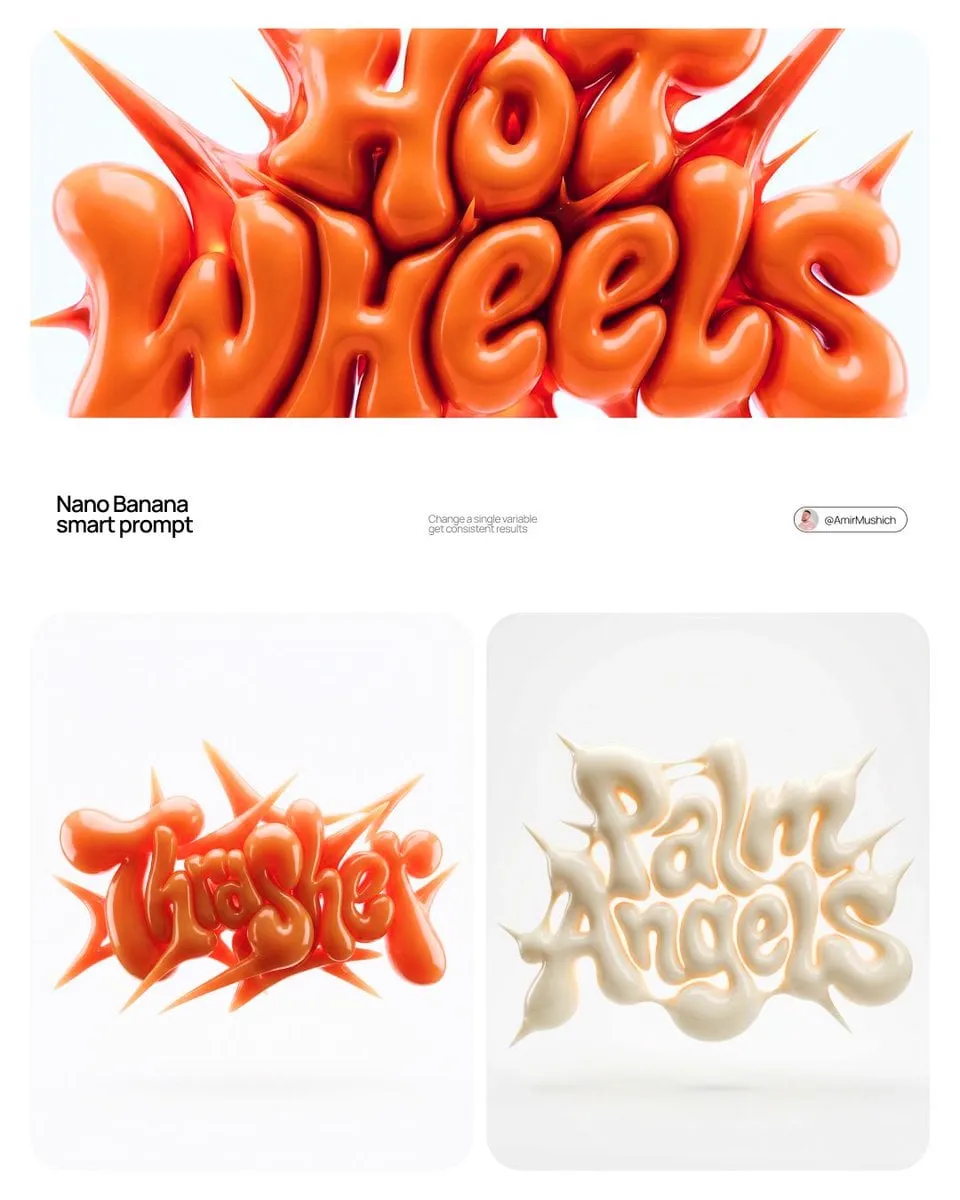
Generate stills first. Stills are fast, cheap to iterate, and easy to compare side by side. Produce three to five style frames for the overall look — lighting, palette, lens character, texture — and get approval on those before generating a single second of motion.
This stage is the biggest time saver in the entire pipeline. A director of photography can review twenty style frames in ten minutes and reject eighteen. Rejecting eighteen generated video clips takes far longer.
Stage 3: Shot Generation
Now generate motion. Work shot by shot rather than trying to build a continuous sequence in one pass. Three to five variations per shot is a reasonable starting point; more than that usually means the prompt is too vague.
Keep the camera language explicit. Generators respond well to concrete cinematography terms: dolly in, handheld, locked-off, low angle, shallow depth of field, 35mm, anamorphic flare. Vague adjectives like "cinematic" produce inconsistent results because they mean different things to different people.
Stage 4: Assembly
The first assembly should be rough and honest. Drop the best take of each shot onto a timeline with no transitions, set to a scratch track, and watch it end to end. Roughly half of the problems you will find are edit problems, not generation problems. A shot that feels wrong in isolation often works perfectly in context — and vice versa.
Stage 5: Finishing
Color, sound, text, and delivery. Apply a consistent grade across all shots, because generated clips rarely match each other perfectly out of the box. Add sound design, which does more for perceived production value than any visual upgrade. Then export platform variants.
Choosing the Right Generation Approach
Not every shot should be generated the same way. Matching the technique to the shot is where experienced teams separate themselves.
Text-to-Video
Best for establishing shots, abstract transitions, environments, and anything where exact composition does not matter. It is the fastest path from idea to motion and the most unpredictable. Use it when you have flexibility.
Image-to-Video
Best when composition matters. You lock the frame as a still — either generated or photographed — then animate it. This gives you precise control over framing, product placement, and lighting, and it dramatically reduces the number of failed generations.
Video-to-Video and Restyling
Best for transforming existing footage. If you already shot something real and want it to look like clay animation, watercolor, or archival film, restyling is far more efficient than generating from scratch. It also preserves real human performance, which is hard to generate convincingly.
Multi-Image Fusion and Reference-Driven Generation
When a shot needs to combine several references — a specific product, a specific location, a specific model look — reference-driven approaches let you supply multiple images and blend their characteristics. This is the technique that makes consistency across a campaign possible. Use it whenever the same character or product must appear in more than two shots.
A Simple Decision Rule
Ask: how exact does this shot need to be?
- Low exactness → text-to-video
- Medium exactness → image-to-video
- High exactness → generated still plus video-to-video restyling, or live footage with AI augmentation
- Consistency across shots → reference-driven generation with a locked character or product sheet
Building a Repeatable Studio Pipeline
Ad hoc generation produces one good video. A pipeline produces ten good videos a month. Three practices make the difference.
Asset Naming and Version Control
Agree on a naming convention on day one: campaign_shot_version_variant. Keep approved stills in one folder, approved clips in another, and rejected takes in an archive you never delete. Six weeks later, when a client asks for "the version where the light was warmer," you will find it in seconds instead of regenerating it.
Prompt and Shot Libraries
Every time a prompt produces something excellent, save it with a note about what worked. Over a few months you build a private library of tested prompts for lighting setups, camera moves, product angles, and emotional tones. This is the single most valuable asset an AI-forward studio owns, and it is invisible to anyone who only counts finished videos.
Quality Gates
Define explicit checkpoints where work stops and gets reviewed. A practical set:
- Style frames approved
- Shot list approved
- Individual shots approved (before assembly)
- Rough cut approved
- Final grade and mix approved
Without gates, revisions compound. One unapproved shot at stage three can force a rebuild of half the timeline at stage five.
Advertising-Specific Creative Tactics
Win the First Two Seconds
On paid social, most viewers decide within two seconds. Your first shot should contain motion, a face, or a bold visual contrast — ideally all three. Do not open with a logo, a slow fade, or an empty environment. Generate three alternate openings for every campaign and test them as separate variants.
Design for Sound-Off Viewing
A large share of feed video is watched muted. Every important message must be legible without audio, which means on-screen text that is short, high-contrast, and timed to the edit. AI generation makes it easy to produce text-free plates, then add typography in the editor where you can control timing precisely.
Aspect Ratios and Variants
Plan for vertical (9:16), square (1:1), and horizontal (16:9) from the start. Generating in one ratio and cropping later loses composition. Instead, generate the master shot in the widest ratio you need and compose vertically within the frame, or generate separate vertical takes for hero moments.
Product Accuracy and Brand Safety
For any shot where the product is the subject, do not rely on pure generation. Either photograph the product and animate it, or generate the environment and composite the real product in. Check every frame for logo distortion, incorrect packaging colors, and unintended text artifacts. Build a short brand checklist and run it before every delivery.
Editing, Assembly, and Post-Production
Post-production is where AI-generated footage stops feeling like a demo reel and starts feeling like advertising.
Color matching. Generated clips from different prompts will have subtly different color temperature, contrast, and grain. Apply a base look across the entire timeline first, then shot-level corrections. Grain and halation overlays unify footage remarkably well.
Cut rhythm. Advertising cuts faster than narrative film. Average shot length of 1.5 to 2.5 seconds for performance creative, 3 to 5 seconds for brand work. Cut to the music, not to a metronome.
Sound design. Add room tone to every shot. Generated video has no ambient sound, and silence makes footage feel synthetic. Footsteps, cloth movement, atmosphere, and a low music bed do more for realism than another round of visual generation.
Voice and narration. AI voice generation is usable for scratch tracks and some final delivery, but check pronunciation of brand names and product terms carefully. For hero campaigns, a human voice actor still reads better.
Motion graphics and typography. Keep overlays simple. Two typefaces maximum. Animate text in from a consistent direction so the whole campaign feels like one system.
Common Mistakes and How to Avoid Them
The same problems appear in almost every studio that adopts AI video. Each has a straightforward fix.
Generating before planning. The most expensive mistake. Every hour spent on the shot list saves several hours of generation. Write the list first, always.
Chasing perfection in a single clip. No amount of re-prompting will fix a shot whose concept is wrong. If three variations fail, the problem is the idea, not the tool.
Ignoring continuity. Characters drift between shots, props change color, and lighting shifts. Lock a character reference sheet and a location reference early, then reuse them.
Over-relying on text-to-video. It is the fastest and least controllable method. Move up the control ladder as soon as precision matters.
Neglecting audio. Silent, music-only edits feel like slideshows. Budget real time for sound design.
No review gates. Combine every stage and you lose the ability to isolate what went wrong.
Treating AI output as final. Generation produces raw material. Editing, grading, and sound turn it into a commercial.
Forgetting platform specs. Export with correct codecs, bitrates, safe areas, and captions from the beginning rather than patching at delivery.
Measuring Performance and Iterating
AI video is most valuable when paired with fast measurement. For paid social, track three metrics: hook rate (three-second views divided by impressions), completion rate, and click-through rate. Different creative failures show up in different metrics — a weak opening collapses hook rate, while a confusing middle lowers completion.
Build a testing rhythm. Generate several variants of the opening shot, keep everything after the two-second mark identical, and run them against each other. Because AI generation makes variants cheap, you can test at a volume that traditional production never allowed.
Also track production cost per finished variant and turnaround time. These two numbers tell you whether your pipeline is improving. If cost per variant is rising while output stays flat, you are over-generating — tighten the shot list and raise the quality bar instead.
Keep a running creative log. Note which hooks, palettes, and pacing patterns performed. After a few campaigns, this becomes the most valuable document in the studio, because it turns taste into a repeatable process.
FAQ
How long does an AI-assisted ad video take to produce?
A 15-second performance creative can go from brief to delivery in two to four days with a settled workflow. A 60-second brand piece with human talent and original sound typically takes two to three weeks, because most of the remaining time is spent in editing, grading, and approval rather than generation.
Can AI video generation replace a real shoot?
For environments, abstract sequences, transitions, and stylized concepts, yes. For human performance, product accuracy, and anything requiring specific talent, it complements a shoot rather than replacing it. The strongest results usually combine real footage with generated elements.
How do I keep a character consistent across shots?
Create a reference sheet with several angles and expressions, then use reference-driven generation rather than pure text prompts. Keep lighting and wardrobe descriptions identical across prompts. Accept that minor drift is normal and correct it in the edit where possible.
Which shots should I never generate?
Any shot where the product label, packaging, or logo must be pixel-accurate. Photograph those and composite. Also avoid generating text directly — typography belongs in the editor where you control spacing and legibility.
How many variations should I generate per shot?
Three to five for most shots. If none of them work, stop and rewrite the prompt or rethink the shot. Generating twenty variations of a weak idea is a sign of a planning problem, not a production one.
Do I need a powerful local machine?
Not necessarily. Most generation happens in the cloud, so a mid-range laptop can run the workflow. Local hardware matters mainly for heavy editing, grading, and any on-premise rendering you choose to do for privacy reasons.
How do I keep brand safety under control?
Create a pre-delivery checklist covering logo integrity, packaging color accuracy, unintended text, cultural sensitivity, and claim accuracy. Run it on every variant, every time. Automation makes it easy to ship dozens of cuts — which also makes it easy to ship a mistake dozens of times.
Where should a team start?
Pick one campaign, one format, and one product. Build the shot list, generate style frames, produce the piece, and document every step. Once that single campaign runs smoothly end to end, scale the pipeline. Studios that try to industrialize before they have one clean success usually end up with a folder of disconnected clips and no finished ads.
