
Why AI Video Changed the Production Pipeline
A few years ago, a thirty-second brand film meant a director, a camera operator, a lighting crew, a location scout, an editor, and a colorist. Today a single creator with a laptop can generate a shot that holds up on a phone screen, a trade-show loop, or a social ad, and iterate on it ten times before lunch. That shift is not only about cheaper tools. It is about a different production logic: instead of capturing one perfect take, you generate many candidate shots and select the strongest.
Generative video models have matured along three axes at once. Resolution and temporal stability improved, so clips no longer melt after two seconds. Control improved, so you can guide motion with a reference image, a depth pass, a pose skeleton, or a start frame and an end frame. Orchestration improved too, so a single interface can route a job to the model best suited for that specific shot instead of forcing everything through one engine.
The practical consequence is that the bottleneck moved. It is no longer "can we afford to shoot this?" It is "can we describe, sequence, and quality-check this fast enough to ship?" Teams that win treat AI video as a production discipline with templates, naming conventions, review checkpoints, and shot lists, not as a slot machine.
That is the frame for everything below: a workflow-first guide to producing visual and video content with AI, from the first script beat to the final delivery file.
The Core Stages of an AI Video Workflow
A repeatable AI video workflow has seven stages. Skipping one almost always shows up as wasted generations later.
1. Brief and format decision
Define the output before the content: aspect ratio, duration, platform, whether captions are burned in, and whether a vertical cut is required. A 16:9 hero film and a 9:16 social cut are different productions even when they share footage.
2. Script and shot list
Write the script as beats, then break each beat into shots. A shot is the smallest unit you generate. Keep shots between three and eight seconds during generation; you can extend or stitch them later in the edit.
3. Look development
Lock a visual language: lens feel, palette, contrast, grain, lighting direction. Generate six to ten stills first. Stills are fast and inexpensive; video is not. Approving a look on stills saves hours.
4. Asset preparation
Prepare reference images, character sheets, location plates, logos, and any product or interface screenshots. Most disappointing AI video is really a case of missing reference material.
5. Generation
Run shots in priority order: hero shots first, connective material last. Always log the prompt, model, seed, and settings next to the output file.
6. Assembly and sound
Edit picture first, then add voice, music, ambience, and effects. Cutting before you commit to a music bed prevents painful re-edits later.
7. Delivery and archiving
Export platform-specific masters, captions, and thumbnails, then archive the project with its prompts. You will reuse the look next quarter, and a documented look is reusable.
Choosing the Right Model for Each Shot
There is no single best model. There is a best model per shot type, and the fastest way to improve output quality is to stop using one engine for everything.
Text-to-video for establishing shots
Use text-to-video when the scene is environmental and no character continuity is required: cityscapes, landscapes, abstract brand visuals, atmospheric transitions. These models excel when the subject is generic and the mood carries the shot.
Image-to-video when control matters
When you already have an approved still, image-to-video lets you animate it with far more predictability. This is the workhorse for product shots, character close-ups, and anything where composition cannot drift.
Motion control and pose-driven generation
When a shot must match a specific performance, such as a dance, a product rotation, or a precise hand gesture, motion transfer models that accept a driving video produce more predictable results than text alone ever will.
Lip sync and talking-head models
For presenter content, pair a generated or recorded voice track with a lip sync model. Tight framing, minimal occlusion, and consistent lighting give the cleanest mouth shapes.
Upscaling and interpolation
Generate at a moderate resolution for speed, then upscale and interpolate. This two-step approach usually beats generating the final resolution directly, and it gives you a review gate before the expensive pass.
Decision criteria checklist
- Does the shot need a specific face? Use image-to-video with a character reference.
- Does it need a specific motion? Use motion transfer with a driving clip.
- Does it need believable physics? Keep it short and prefer models with stronger temporal reasoning.
- Does it need readable text on screen? Generate the plate and add type in post.
- Does it need exact product accuracy? Consider shooting or screen recording instead.
Prompting for Shots That Survive Generation
The shot prompt formula
Subject, action, environment, camera, lighting, style, constraints. For example: "A ceramicist's hands press wet clay on a spinning wheel, close-up, shallow depth of field, warm window light from camera left, slow push-in, natural color, no text." Every element earns its place.
Describe motion, not mood
Models respond to verbs. "She turns toward the window" gives the engine something to animate. "She feels hopeful" gives it nothing. Put emotional intent in the performance notes for your own edit, and put physical action in the prompt.
Constraints reduce chaos
Add negative constraints explicitly: no extra fingers, no text overlays, no camera shake, no watermark, single subject, face visible. Short negative lists work better than long ones; three to five items is usually enough.
Keep prompts short enough to read aloud
Very long prompts dilute attention across too many details. Move specifics into reference images, where they carry more weight and cost less to iterate on.
Version every prompt
Copy the winning prompt into a log with its seed and model name. Reproducibility is the difference between a hobby and a pipeline. When a client asks for one more shot in the same look, your log answers instantly.
Reusable prompt patterns
- "Static tripod shot, no camera movement" for maximum stability.
- "Locked-off wide, subject enters frame left" for clean blocking.
- "Overhead top-down, hands only" for tutorials and food content.
- "Slow dolly left, medium shot" for interview-adjacent coverage.
- "Macro detail, shallow focus, no background movement" for inserts.
Consistency: Characters, Style, and Lighting Across Shots
Consistency is where amateur AI video falls apart, and it is almost entirely a systems problem rather than a model problem.
Character consistency
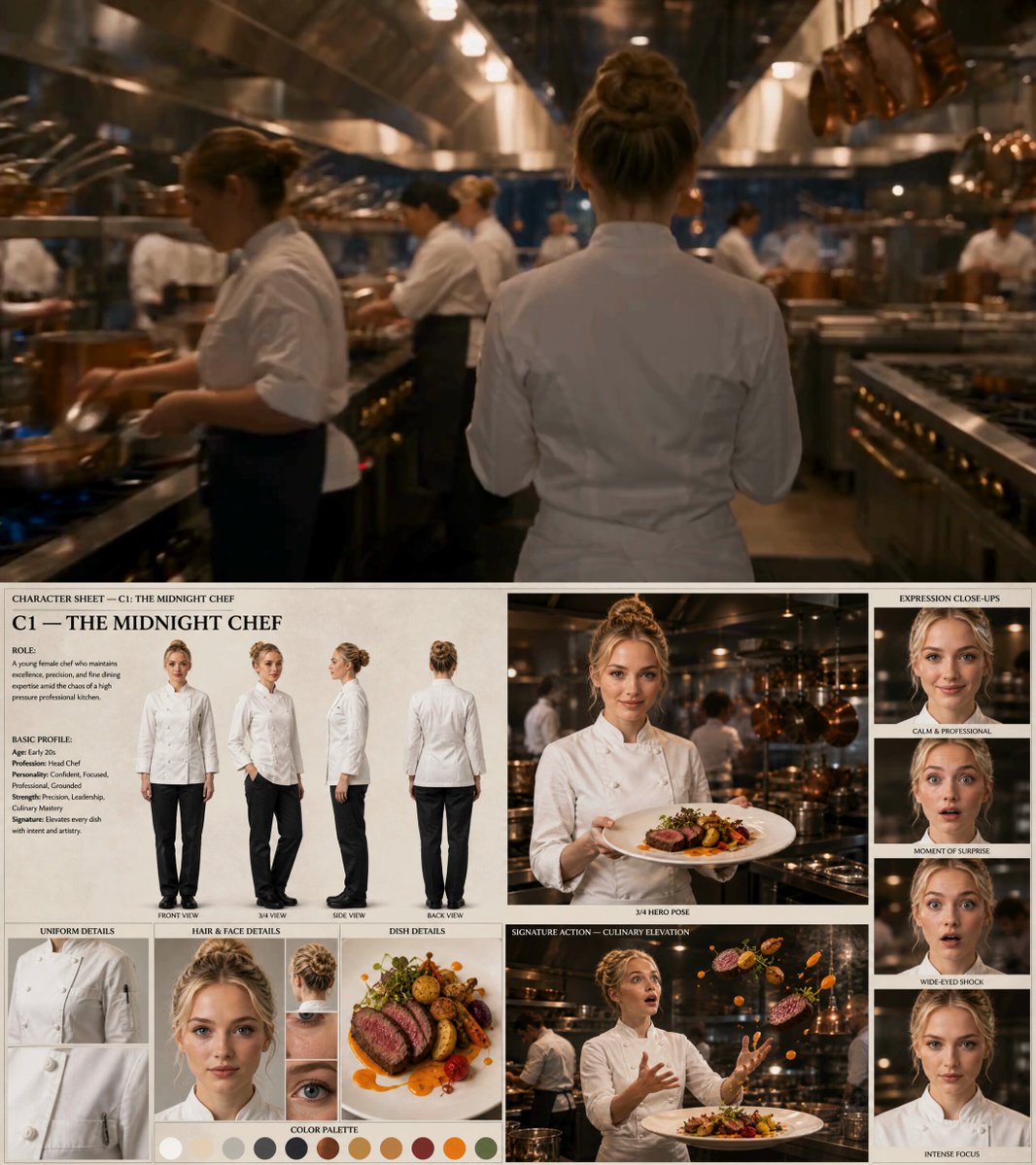
You have three options. Reuse a character reference image in every shot. Train or attach a character adapter if your toolchain supports it. Or apply wardrobe and framing discipline, keeping the same jacket, the same angle family, and the same distance from camera. Most productions combine the first and third.
Style consistency
Build a look bible with three approved frames, a color palette, and one reference film. Attach the same style reference to every generation so the engine has no excuse to drift.
Lighting and time-of-day continuity
Track light direction per scene in writing: "sun from camera right, late afternoon, long shadows." When shots are generated out of order, the note is what keeps a sequence readable.
Location continuity
Reuse one approved establishing plate across many shots instead of regenerating the location each time. Regeneration introduces subtle differences your audience will feel even if they cannot name them.
A continuity table that actually works
Keep a simple table with these columns: shot ID, scene, character reference, style reference, light direction, lens, duration, model, status. It takes ten minutes to set up and saves entire days of rework.
Motion Control, Camera Language, and Physics
Camera moves that AI handles well
Slow push-ins, slow pull-outs, lateral trucks, gentle orbits, and handheld drift all work reliably. Fast whips, complex crane moves, and mid-shot rack focus remain risky because the model has to invent too much between frames.
Start-frame and end-frame control
When you can specify both the first and last frame, the model fills the gap and the result is far more deliberate. This is the single most powerful technique for shots that must land on a specific composition.
Where physics breaks
Liquid, cloth, hair, hands, and crowds are the classic failure points. Keep hands out of frame or hold them still, shoot around pouring liquids, and avoid shots where many people move independently.
The shot-length sweet spot
Three to five seconds gives you the best ratio of stability to usable material. Anything beyond eight seconds invites drift, and drift is expensive to fix in post.
Faking it in the edit
Parallax on a still, a speed ramp, or a push-in applied in the editor can replace a generated camera move entirely. If a shot exists only to create movement, you may not need to generate it at all.
Audio, Voice, and Lip Sync
Voice generation and performance
Pick a voice, then record a scratch read of your own to establish pacing. Generate the final voice from the refined script. Listener attention follows rhythm more than timbre, so pacing is the variable worth obsessing over.
Lip sync that survives scrutiny
Use tight head-and-shoulders framing, avoid heavy occlusion such as hands over the mouth, and keep the spoken language aligned with the model's strengths. Cut away before the audience studies the mouth too closely.
Music, ambience, and room tone
Music sets energy, ambience sets place, and room tone hides cuts. A consistent ambience bed across a scene makes generated shots feel like they were captured in the same room, even when they were generated days apart.
Mixing for platforms
Aim for dialogue that stays clearly above music, with a gentle limiter on the master. Social platforms re-encode aggressively, so check your mix on a phone speaker before you call it finished.
Sound as a continuity tool
When picture continuity is imperfect, sound carries the illusion. A footstep, a door close, or a fabric rustle over a cut tells the audience the space is continuous even when the visuals disagree.
Assembly, Quality Control, and Delivery
The editing pass
Cut for rhythm first, then for logic. Remove any shot that breaks the illusion, even if it took a long time to generate. Sunk effort is not a reason to keep a bad frame.
A quality control checklist
- Flicker or brightness pulsing between frames.
- Morphing faces, limbs, or background objects.
- Warped or unreadable text.
- Wardrobe, hair, or prop changes between shots.
- Audio drift against picture.
- Caption timing and safe-area placement.
- Colour and contrast continuity across scenes.
Delivery specifications
Export a master plus platform variants, burn in captions only where required, and generate thumbnails from approved frames rather than frames of convenience. Use a naming convention that encodes project, scene, shot, and version.
Archiving for reuse
Store prompts, seeds, model names, and reference images alongside the project. The next production starts from your archive instead of from scratch, which is where most of the compounding advantage comes from.
Scaling: Budget, Time, and Team Decisions
Where the spend actually goes
Iteration, not final renders, consumes most of your budget. Ten attempts at a three-second shot costs more than one polished eight-second shot. Reduce attempts by improving references before you generate.
When to generate and when to shoot
Generate when the scene is atmospheric, expensive, or impossible. Shoot or screen-record when accuracy is legally or commercially critical: real faces, real products, real interfaces, real statements. A hybrid pipeline is normal and sensible.
Roles in an AI-first studio
A lean team needs a creative director who owns the look, an asset and prompt lead who owns consistency, an editor who owns rhythm, a sound person who owns continuity, and a reviewer who owns quality control. One person can wear several hats, but the responsibilities should still be named.
Batching and review cadence
Generate in batches grouped by scene, and review once per batch rather than shot by shot. Daily reviews keep decisions fresh and prevent a small inconsistency from being replicated twenty times.
Adopt before you build
Use established tools for generation, editing, and upscaling. Build only the orchestration layer you genuinely need, such as a shot database or an automated naming system. Custom infrastructure is a tax you pay forever.
Common Mistakes and FAQ
Mistakes worth avoiding
- Generating video before the stills are approved.
- Keeping no shot log, then failing to reproduce a great result.
- Putting multiple subjects and multiple actions in one prompt.
- Regenerating a shot when a simple edit would fix it.
- Treating sound as an afterthought.
- Asking the model to render readable text.
- Chasing one perfect model instead of routing shots intelligently.
- Extending shot length past the point where stability holds.
Frequently asked questions
How long should an AI-generated shot be?
Three to five seconds for generation, assembled into longer sequences in the edit. Generate short and stitch rather than generating long and repairing.
Do I need expensive hardware?
Usually not. Most generation happens in hosted tools, so a mid-range laptop and a stable connection are enough. Local generation is an option when privacy or volume demands it.
How many attempts does a good shot take?
With approved references, two to four. Without them, ten or more. The references do more work than the prompt.
How do I keep a character consistent across many shots?
Combine a fixed character reference image with wardrobe discipline and a consistent angle family. Log which reference was used for each shot so future additions match.
What resolution should I generate at?
Generate at a moderate resolution for speed, then upscale the selects. This keeps iteration cheap while preserving final quality.
Can I use AI video for client work?
Often yes, but check the licence terms of every model you use, keep a record of your prompts and sources, and disclose AI involvement where your client or platform requires it.
Is AI video good enough for broadcast or cinema?
For inserts, backgrounds, and stylised sequences, frequently yes. For dialogue-driven drama with sustained close-ups, a hybrid approach still produces the most convincing results.
What is the fastest way to improve output quality?
Approve stills first, attach references to every generation, keep shots short, and add sound early. Those four habits outperform any model upgrade.
