

Why AI Video Favors Process Over Hype
Every few months a new generation model arrives with better motion, sharper faces, and longer clip lengths. The tooling cycle is fast enough that anyone who builds their identity around a single model will be rebuilding that identity constantly. What survives the churn is process: a documented pipeline that tells you what to do at each stage, which decisions belong to a human, and which decisions can be safely delegated to a model.
Creators who struggle with AI video usually do not struggle because their prompts are bad. They struggle because they generate shots before they have a shot list, they edit before they have coverage, and they discover continuity problems after the visual style is locked. The cost of a mistake grows at every stage, so the goal of a good workflow is simple: make errors cheap and early, and make expensive steps deliberate.
This guide lays out a full production pipeline for AI-assisted video, from concept to export. It assumes you are working solo or in a small team, that you need consistent output rather than one-off experiments, and that you want a workflow you can hand to a collaborator without a three-hour explanation. Nothing here depends on a single vendor. The steps are written so you can swap models, tools, and platforms as the landscape shifts.
Map the Pipeline Before You Generate a Single Shot
Pre-production: the cheapest place to fix mistakes
Pre-production in AI video looks almost identical to pre-production in traditional film, minus the location scouting. You need a logline, a beat sheet, a shot list, and a look reference. The shot list is the single most valuable artifact you will produce, because it forces you to answer questions that models cannot answer for you: how many distinct environments does this story need, how many characters speak, and which shots are essential versus decorative?
A practical shot list for a 60-second AI video usually contains 12 to 20 shots. Anything under eight shots tends to feel static; anything over thirty usually means you are compensating for weak shots rather than telling a better story.
Generation: batch by similarity, not by story order
Once the shot list exists, group shots by similarity: same character, same location, same lighting, same camera energy. Generate those groups together. Models drift slightly between sessions, and batching reduces visible drift. It also makes it easier to spot a bad seed early, before you have built half the timeline around it.
Assembly: timeline discipline
Build a rough cut with placeholder audio before you polish any single clip. A rough cut tells you whether the pacing works. Polishing individual shots before the rough cut exists is the most common way creators burn days of effort on footage that gets cut.
Delivery: version the output
Export at least two versions: a master at the highest practical resolution and a compressed delivery version tuned to your target platform. Keep the project file and the prompt log together so a revision six months later takes minutes rather than days.
Choosing a Model for Each Shot Type
Not every shot deserves the most expensive or most capable model. Matching the model to the shot type is where experienced creators save the most time.
Photoreal environments and product shots
For static or slowly moving photoreal shots, prioritize models with strong texture fidelity and stable lighting. These shots often need only a short clip, so generation time is less of a constraint than accuracy. Look for outputs where highlights do not bloom unnaturally, and where reflections behave consistently across frames.
Stylized and animated sequences
Stylized work rewards models with strong stylistic coherence rather than raw realism. Anime, painterly, and graphic-novel looks tend to break when a model tries to add unnecessary detail. Test a short clip first and inspect the edges: stylized models that introduce photoreal texture into line work will look inconsistent next to hand-drawn elements.
Motion-heavy action and camera moves
Action shots are where temporal consistency matters most. Watch for limb warping, background tearing, and camera moves that stutter mid-shot. If a model cannot hold a whip pan or a tracking shot for four seconds, break the shot into two shorter clips and cut on motion.
Dialogue and performance-driven scenes
Performance shots are the hardest category. Prioritize facial stability and mouth shape accuracy over everything else. If a model produces beautiful skin texture but a drifting jaw line, it is the wrong tool for a close-up. Use wider framing for weaker performers and reserve close-ups for your most reliable setup.
Prompt Architecture: Templates That Survive Reuse
The six-slot prompt frame
Write prompts as a structured frame rather than free prose. A reliable frame has six slots: subject, action, environment, lighting, camera, and style. Filling all six every time forces you to be specific, and specificity is what reduces variance between generations.
A filled example: a baker in a flour-dusted apron (subject) lifting a tray of bread from an oven (action) inside a narrow neighborhood bakery at dawn (environment) with warm window light and soft shadows (lighting) shot at eye level with a slow push-in (camera) in a muted documentary style (style).
Negative constraints and guardrails
Negative constraints are just as important as positive ones. List what must not appear: text overlays, watermarks, extra fingers, distorted hands, abrupt cuts, or lens flare. Keep the list short and stable across a project. A long, constantly changing negative list makes it impossible to tell which change caused a difference in output.
Version your prompts like code
Store every prompt in a plain text file with a version number and the date it produced a usable clip. When a shot needs revision, you want to know exactly which prompt produced the version the director approved, not a vague memory of having changed the lighting once.
Consistency: The Hardest Problem in AI Video
Build a character bible
A character bible is a single reference document containing the character's age range, build, wardrobe palette, hair, distinguishing features, and typical expressions. Include three to five approved reference images. Every prompt for that character should quote the bible language verbatim rather than paraphrasing. Paraphrasing is how identical characters become subtly different between scenes.
Use references and seeds deliberately
Reference images anchor identity; fixed seeds anchor composition. Use references when identity matters and seeds when framing matters. Combining both aggressively often produces rigid, lifeless shots, so decide which variable you actually need to control for each scene.
Lock style across scenes
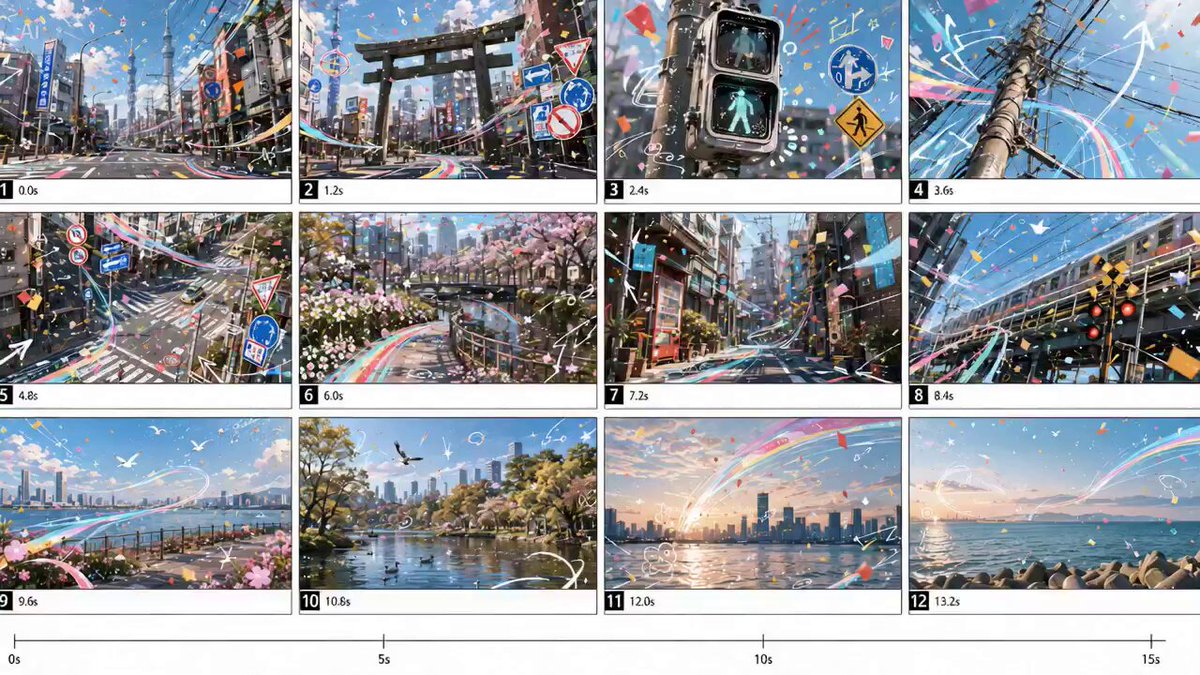
Style drift is subtler than character drift and often more damaging. A film that shifts from warm amber interiors to cool blue exteriors between scenes reads as two different projects. Define a global style rule — palette, contrast, grain, aspect ratio — and append it to every prompt in the project, then verify it visually in a contact sheet before you commit to a full render.
A contact sheet is simply a grid of one frame from every shot, laid out in script order. Reviewing all frames side by side takes five minutes and catches inconsistencies that are invisible when you watch shots individually on a timeline.
Audio, Voice, and Lip Sync
Audio carries more perceived production value than most creators expect. A visually stunning clip with hollow sound reads as amateur; a modest clip with clean sound reads as professional.
Start with a scratch voice track and a rough music bed before you generate final visuals. Timing your shots to real audio is far easier than animating audio to match finished visuals. For narration, record a real human voice whenever possible, even if it is imperfect; synthetic narration works best as a fallback or for internal review passes.
For lip sync, work in short segments. Two to four seconds per line of dialogue is far more reliable than long monologues. Match the framing to the fidelity you can achieve: close-ups demand accurate mouth shapes, while medium shots tolerate more approximation. Always check sync at quarter speed before exporting, because small offsets are easy to miss at full speed and painfully obvious to viewers.
Music deserves its own pass. Set the bed at a consistent level, cut your timeline to musical phrasing where it helps, and avoid stacking sound effects in the same frequency range as dialogue. If the final mix sounds crowded, remove an element rather than lowering everything.
Editing: Where AI Should Stop
AI is excellent at generating raw material and mediocre at deciding what matters. Editing is a judgment discipline, and judgment is where a human should stay firmly in control.
Keep editing decisions explicit. Ask three questions of every shot: does it advance the story, does it match the surrounding tone, and does it earn its duration? If a shot fails one of those tests, cut it. Generated footage is seductive because it looks expensive, but expensive-looking footage that slows momentum is still a liability.
Transitions deserve restraint. A hard cut is almost always more professional than an elaborate generated transition. Use dissolves only to signal time passing, and use motion-matched cuts when two shots share a similar camera movement. If your cut feels wrong, the problem is usually the shots on either side, not the transition between them.
Color grading is where you unify mismatched generations. Apply a consistent grade across the whole timeline and resist the urge to grade each shot individually. A global look with small per-shot corrections will read as one piece of work; heavy per-shot grading tends to reveal how the shots were made.
A Quality-Control Checklist Before You Export
Run the same checklist every time. Consistency in review catches inconsistency in output.
- Continuity: wardrobe, props, hair, and environment match across scenes.
- Identity: faces remain stable across every appearance of a character.
- Motion: no warping, tearing, or stuttering in camera moves or limbs.
- Anatomy: hands, teeth, ears, and eyes are structurally correct.
- Text: no accidental on-screen lettering, logos, or watermarks.
- Framing: no clipped heads, awkward eye lines, or accidental jump cuts.
- Audio: dialogue intelligible, sync accurate, music not masking speech.
- Aspect ratios: correct for every target platform.
- Pacing: no shot lingers past its usefulness.
- Accessibility: captions present, contrast sufficient, audio not reliant on a single channel.
Watch the finished piece once with sound, once without, and once at double speed. The silent pass reveals visual problems, and the fast pass reveals pacing problems.
Common Mistakes That Cost the Most Time
Generating before planning. Without a shot list, you generate broadly and hope editing will find a story. It rarely does.
Chasing a single perfect clip. When one shot refuses to work after many attempts, the shot is usually the problem, not the prompt. Rewrite the shot, change the framing, or cut it.
Changing multiple variables at once. If you alter the prompt, the seed, and the model in the same iteration, you learn nothing about what fixed the issue.
Ignoring reference frames. Reviewing every generation individually instead of as a contact sheet hides drift until it is expensive to fix.
Over-relying on automated assembly. Automatic cutting to a beat can produce a rhythm, but it cannot produce meaning. Treat it as a first pass, never a final one.
Neglecting the archive. Projects that lack a prompt log and organized media folder become impossible to revise, which quietly kills the value of everything you learned while making them.
FAQ
How long should an AI-generated clip be?
Most models hold quality best in four to eight second clips. Longer shots are achievable but often require stitching, and stitched shots tend to show seams in fast motion. Plan your shot list around short clips and cut between them.
Should I use one model for the entire project?
Not necessarily. Consistency matters more than loyalty. Use a primary model for most shots and a specialist model only where the primary one demonstrably fails, keeping the style rules identical across both.
How many attempts does a shot usually take?
With a structured prompt frame and an approved reference, three to six attempts per shot is typical. If a shot regularly exceeds ten attempts, the problem is usually conceptual rather than technical.
Do I need to learn traditional editing?
Basic editing literacy is essential. You do not need to be a colorist, but you do need to understand pacing, coverage, and continuity, because those are the skills models cannot supply.
What is the fastest way to improve quality?
Improve your input discipline: tighter shot lists, verbatim character bibles, and a stable negative constraint list. Most quality gains come from reducing variance, not from switching tools.
How do I handle revisions after delivery?
Keep the project file, prompt log, source clips, and audio stems together in one archive. With those four artifacts, a revision request becomes an afternoon rather than a full rebuild.
Make It Repeatable: Turning a Workflow Into a Studio Habit
The difference between a creator who occasionally produces a good AI video and one who produces reliably is not talent or access to model libraries. It is repetition. A documented workflow turns luck into a baseline.
Start by writing your pipeline down in one page: stages, owners, and the artifact each stage produces. Then build three templates — a shot list, a prompt frame, and a review checklist — and use them on your next three projects without exception. After three runs, you will know which steps are load-bearing and which can be trimmed.
Finally, treat tool changes as routine rather than disruptive. When a new model appears, test it against a specific shot from a recent project and compare it to your current baseline on the same criteria: identity stability, motion quality, texture fidelity, and generation time. If it wins on a shot type you use often, adopt it there. If it does not, note it and move on.
That is the real advantage of a strong workflow: it makes every new tool an evaluation, not a crisis. The creators who last are the ones who can swap the engine without rebuilding the car.
