

Why prompt quality decides output quality
Most people blame the model when a generated shot looks wrong. In practice, the model usually delivered exactly what the prompt described — the prompt just described something vague. "A woman walking through a city at night" is not a shot. It is a mood board caption. The model has to invent the lens, the framing, the lighting, the wardrobe, the palette, and the motion, and it will invent them differently every single run.
Prompt engineering is the practice of removing that guesswork. Instead of hoping the model lands on something usable, you specify the decisions that matter and leave the model free only where variation is welcome. This is the difference between a random generator and a controllable creative tool.
The practical payoff is measurable in three ways:
- Hit rate. A structured prompt turns usable results from one in ten into three or four in ten, because the model is no longer guessing at intent.
- Iteration speed. When a shot fails, you know which clause to change instead of rewriting everything and hoping.
- Consistency. Once your descriptive vocabulary is stable, you can reproduce a character, a location, or a lighting setup across dozens of shots.
None of this requires code. It requires learning a small grammar: subject, action, setting, camera, light, style, and constraints. Once that grammar is internal, you can move between image models and video models without starting over.
The anatomy of a production-ready prompt
A strong prompt reads like a shot brief handed to a camera crew. It has layers, and the order of those layers matters because most models weight early tokens more heavily and lose attention toward the end.
A reliable ordering looks like this:
- Subject and wardrobe
- Action or pose
- Setting and time of day
- Camera, lens, and framing
- Lighting and atmosphere
- Color and texture
- Style or medium reference
- Technical constraints (aspect ratio, motion, quality)
You do not need every layer in every prompt, but you should know which layers you are omitting and why.
Subject, action, and setting
Be specific about identity, not just category. "A streetwear model" is a category. "A woman in her late twenties wearing an oversized olive bomber jacket and silver hoop earrings" is a subject. Details like age range, hair texture, fabric, and accessories give the model strong anchors and reduce face and body drift across generations.
Action should be a single, readable moment. "Dancing" is ambiguous. "Mid-step, turning to look over her shoulder" tells the model what frame to freeze or which beat to animate. For video, one clear action per shot beats three overlapping ones, because the model budgets temporal coherence across the clip.
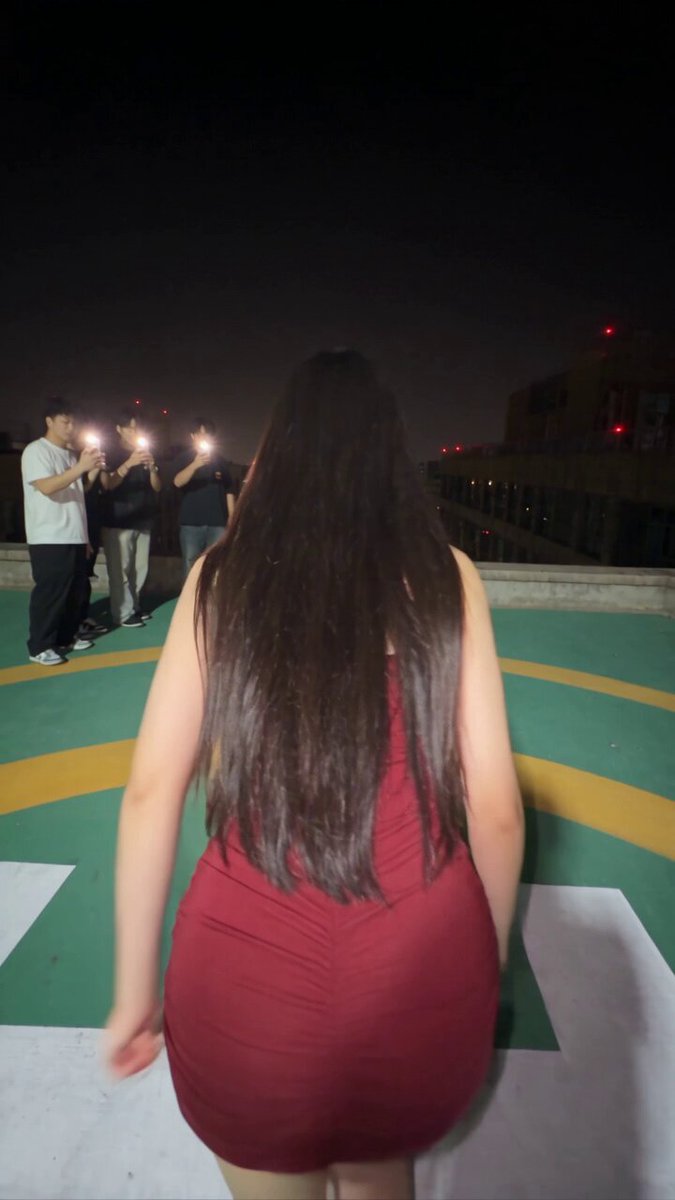
Setting does more work than people expect. "Rooftop at golden hour overlooking a dense skyline" gives both place and light. "City" gives neither, and the model will pick a generic skyline with flat midday light.
Camera and lens language
Camera vocabulary is the highest-leverage addition you can make to any prompt. It tells the model where the viewer is standing.
Useful terms include:
- Framing: extreme close-up, close-up, medium, medium-wide, wide, extreme wide
- Angle: eye level, low angle, high angle, dutch tilt, over-the-shoulder
- Lens feel: 24mm wide, 35mm reportage, 50mm natural, 85mm portrait, 135mm compression
- Depth: shallow depth of field, deep focus, foreground bokeh, layered depth
- Movement (video): slow push in, pull back, handheld follow, orbit, crane up, static locked-off tripod
Two camera instructions are usually enough. Piling on five creates contradictions — "wide shot, 85mm portrait, extreme close-up" cannot all be true, and the model will average them into mush.
Light, color, and texture
Lighting describes the source and the shape of the light, not just brightness. "Warm rim light from a low sun, soft fill from a bounced reflector, deep shadows on the left side of the face" is a lighting plan. "Good lighting" is a wish.
Color should be named as a relationship, not a single hue. "Teal shadows against warm amber highlights" produces a coherent grade. "Colorful" produces chaos.
Texture is the underrated layer. Words like matte, glossy, brushed metal, raw denim, foggy haze, film grain, and condensation change how a render feels and often do more for realism than extra detail words in the subject clause.
Style, medium, and reference anchors
Style language should describe a visual tradition, not a living artist's name. "Editorial fashion photography, high-contrast studio lighting, muted earth palette" is safe, reusable, and consistent. Naming a specific photographer may produce a closer match once, but it is inconsistent across runs and creates legal ambiguity if the output is used commercially.
Medium words matter for animation: 2D cel animation, stop-motion, claymation, watercolor, ink wash, 3D stylized, clay render, anime key visual. Pick one and commit. Mixing "photorealistic" with "anime" gives you a strange hybrid that satisfies neither.
Negative prompts and technical parameters
Negative prompts describe what must not appear. They are most useful for fixing recurring failures rather than pre-emptively banning a long list of nouns.
Start with a short, targeted set and grow it only when you see a repeated problem:
- Anatomy issues: extra fingers, deformed hands, fused limbs, asymmetric eyes
- Composition issues: cluttered background, overlapping text, cropped head, watermark, logo
- Style issues: oversaturated, plastic skin, heavy HDR, low resolution, blurry, jpeg artifacts
- Motion issues (video): warping faces, morphing background, flickering light, duplicate limbs, sudden camera jerk
A negative prompt of forty terms tends to backfire. It dilutes attention, occasionally contradicts the positive prompt, and makes diagnosis harder when something still goes wrong.
Technical parameters are the other half of control. Aspect ratio determines composition more than any adjective: a 9:16 vertical frame wants a centered subject and a tall environment, while 21:9 wants horizontal negative space. Frame rate and duration shape motion — short clips favor a single clear movement, longer clips can support an entrance, an action, and a settle. Seeds matter when you are refining; lock a seed, change one variable, and compare.
Still images and moving shots need different prompts
Image and video prompts share vocabulary but not priorities.
For stills, the model is optimizing a single frame. You can spend tokens on fine detail: fabric weave, skin texture, lens flare shape, dust motes. Descriptions of a frozen instant work well because there is no temporal budget to spend.
For video, temporal coherence is the scarce resource. Every additional element — a second character, a busy background, a costume change — competes for the same attention and increases the chance of warping. Practical adjustments:
- Simplify the subject list to one primary subject.
- Describe one continuous motion rather than a sequence of events.
- Favor slower camera moves; fast whips and hard cuts expose model limits.
- Keep the background stable to reduce morphing.
- Describe the start and end state if the shot has a clear arc.
A useful habit is to write the image prompt first, generate a still you love, then convert that still into a video prompt by adding motion language and removing detail that will not survive animation. The still becomes your visual anchor and, in many workflows, your first frame.
Adapting one idea across different model families
The same creative concept behaves differently depending on the model's strengths. Rather than writing separate ideas for each tool, keep the idea fixed and translate the emphasis.
Photorealistic and cinematic models respond well to lens, light, and film-stock vocabulary. They reward specifics about skin, material, and atmosphere, and they punish contradictions like contradictory lighting directions. Keep prompts dense but internally consistent.
Motion and consistency-focused video models reward clean, physical descriptions of movement and camera behavior. They care about what changes between frame one and the last frame. Trim stylistic flourishes and lead with the motion verb.
Stylized and animation models reward strong style anchors and bold shapes. They tolerate more abstraction in background detail and often look better with simplified lighting than with complex multi-source setups. Flat color and strong silhouettes are your friends.
Character-driven and dialogue models care about performance: expression, eyeline, micro-movement, and timing. Write the beat, not the look.
A practical translation exercise: take one sentence of intent and rewrite it three times, once per model family, emphasizing light, motion, or style respectively. Doing this for ten concepts builds the intuition faster than reading any guide.
Consistency across shots: characters, wardrobe, locations
Consistency is where amateur AI work falls apart. A six-shot sequence with six slightly different faces reads as a mistake, not a style.
Three tactics help:
- Build a locked descriptor block. Write one paragraph describing your character and reuse it verbatim in every prompt. Do not paraphrase between shots. Rephrasing changes the output.
- Anchor with references. When a workflow supports image references, keep the same reference image for the character and a separate one for the location. Separate anchors prevent the model from blending the two.
- Lock the environment separately. Describe the room, the street, or the landscape in its own block so lighting and geometry stay stable while the character moves through it.
For wardrobe continuity, list garments in a fixed order every time: outer layer, inner layer, bottoms, shoes, accessories. Order stability helps more than adjective richness.
Finally, keep a simple shot log: prompt, seed, reference images, and a one-line note on what changed. After twenty shots you will have a personal rulebook that no generic guide can replace.
A repeatable workflow from idea to final cut
Prompts are one step in a longer pipeline. A disciplined loop looks like this:
Step 1 — Write the beat sheet. Before any prompt, list the shots you need in plain language. Two or three sentences per shot. This is your intent document.
Step 2 — Translate one shot into a full prompt. Use the layered structure: subject, action, setting, camera, light, color, style, constraints. Do not translate all shots at once; you will repeat mistakes eight times.
Step 3 — Generate a small batch. Three to six variations with the seed unlocked to explore, or one variation with a locked seed to test a single clause.
Step 4 — Diagnose, then edit one clause. If the framing is wrong, change the camera clause only. If the mood is flat, change light and color only. Multi-clause edits make it impossible to learn what worked.
Step 5 — Lock the winner. Save the prompt, seed, and settings. This becomes the template for that shot's siblings.
Step 6 — Repeat per shot with the shared descriptor block and reference images. Reuse the character and location anchors unchanged.
Step 7 — Assemble and grade. Cut the clips together, then apply a single color treatment across the sequence. Uniform grading hides small inconsistencies in generation far better than leaving each clip with its own look.
This loop costs more discipline than raw generation but far less total time, because you stop generating fifty clips to find one that works.
Common mistakes and how to fix them
Here is the shortlist of problems that account for most weak output.
The kitchen-sink prompt. Twenty adjectives, five subjects, three styles. The model averages everything. Fix: cut to one subject, one style, and the three most important attributes.
Contradictory instructions. "Wide cinematic shot" plus "extreme close-up detail" plus "shallow depth of field." Fix: pick the framing that serves the story and delete the rest.
Vague quality words. "High quality, 8k, masterpiece, best" add almost nothing on modern models. Fix: replace them with concrete visual information — lens, light, texture.
Ignoring aspect ratio. A composition designed for widescreen collapses in vertical. Fix: decide the delivery format before writing the prompt.
Overloading video prompts. Asking a clip to contain a costume change, a location change, and two characters talking. Fix: split into multiple shots, which is also what real productions do.
Editing everything at once. Changing five clauses and re-rolling teaches nothing. Fix: one variable per test.
Skipping the negative prompt. Recurring hand and text artifacts are usually solved with three or four targeted negatives. Fix: add only the negatives that match your actual failures.
Never saving prompts. Rebuilding a look you liked last month is wasted effort. Fix: keep a simple text file organized by project and shot type.
Practice drills that build real skill
The fastest way to improve is deliberate repetition on constrained problems.
- The one-clause drill. Take a prompt that works and rewrite only the lighting clause five times. Compare. You will learn more about lighting language in twenty minutes than in a week of random generation.
- The compression drill. Take a 60-word prompt and reduce it to 20 words without losing the core image. This teaches you which words actually carry weight.
- The translation drill. Write the same shot for a photoreal model, a motion-focused video model, and a stylized animation model.
- The continuity drill. Build a three-shot sequence with one character and one location, reusing the exact same descriptor block. Aim for the audience to read it as the same person without explanation.
- The failure log. Keep a running list of what went wrong and which clause fixed it. Patterns emerge within a week.
Build a small personal library too: five lighting setups, five camera setups, five style anchors, five negative-prompt presets. Most professional-looking output comes from recombining a modest library with intent, not from inventing new vocabulary every session.
FAQ
How long should a prompt be?
Long enough to be unambiguous, short enough to stay consistent. For stills, 40–90 words is a comfortable range. For video, 25–60 words usually works better because motion needs clarity over detail. If cutting a clause does not change the output, it was filler.
Do quality booster words still help?
Barely. Terms like "masterpiece" and "ultra detailed" were useful on older models. Modern models respond far more to concrete visual description than to praise.
Should I name specific artists or films?
It is safer to describe a visual tradition: "1970s documentary photography, available light, grainy 16mm feel." That gives you the same result with more consistency and fewer commercial complications.
Why does the same prompt give different results each run?
Random seeds. Lock the seed when refining a shot, and unlock it when you want to explore variations. Treat the seed as a control knob, not a detail.
How do I fix hands, faces, and text artifacts?
Add targeted negatives, simplify the composition so hands are not in ambiguous poses, and avoid asking the model to render small text. If a shot needs a sign or a logo, add it in post-production.
How often should I change models?
Less often than you think. Learn one image model and one video model deeply before adding more. Vocabulary transfers, but instincts do not — each model has its own tolerances for prompt length and detail.
Can I reuse prompts across projects?
Yes, and you should. A good lighting clause or camera clause is a reusable asset. Keep them in a text file, mix them into new prompts, and refine them over time.
The takeaway
Prompt writing is not a talent, it is a skill with a learnable grammar: subject, action, setting, camera, light, color, style, constraints. Master that order, learn to change one clause at a time, and lock in descriptors for characters and locations. The models will keep improving, but the person who can describe a shot precisely will always get more out of them than the person who types a wish and hopes.
