
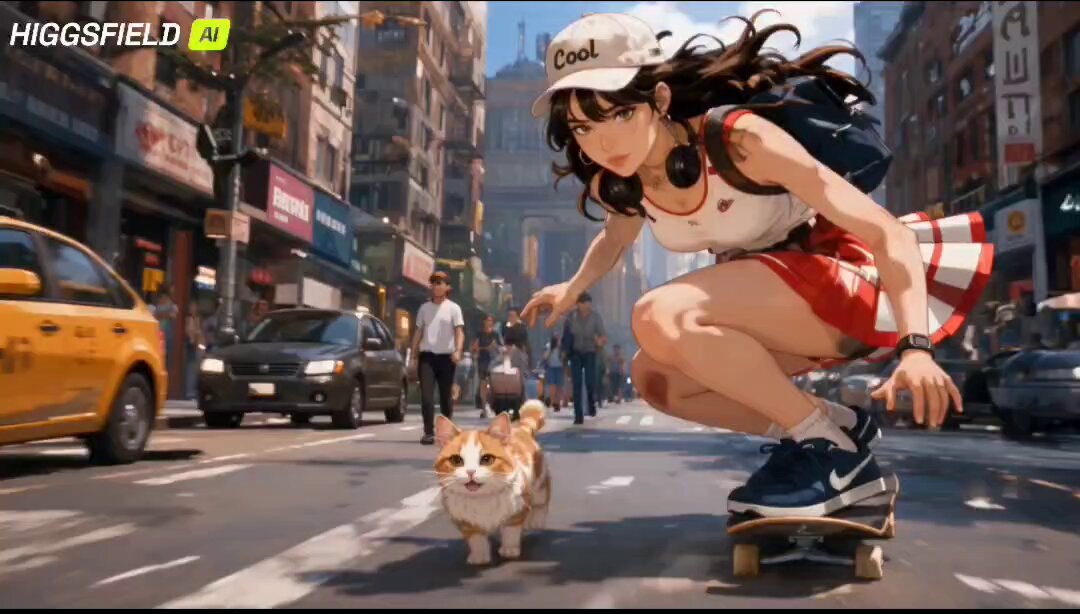

In 2025, the difference between an average AI video and a cinematic one is rarely the model. It is the prompt. Modern generative video models are extremely capable, but they are literal: they turn your words into images and motion, and the quality of the output depends almost entirely on the quality of the input.
This guide explains how to optimize prompts for the best video output: how model architectures differ, how to structure cinematic prompts, how to control character consistency and camera movement, and how to choose the right model for the job without wasting time or budget.
Why prompt optimization matters now
Video generation models have evolved quickly. Models based on diffusion architectures respond to dense visual descriptions. Models with strong narrative understanding, like parts of the OpenAI Sora family, respond to structure and temporal sequencing. This means the same prompt produces very different results on different models, and a prompt that worked last year may be too weak for today's tools.
At the same time, the cost of iteration has real consequences. Powerful models are expensive to run, and every failed generation costs time and money. Prompt optimization is not a stylistic preference; it is the most direct lever for improving output quality and controlling production costs.
Understanding model architectures and how they affect prompts
Different architectures understand language differently, and your prompt should match the model you are using.
Diffusion-based models
Diffusion models build images by gradually denoising random noise toward the described scene. They excel when the prompt contains rich visual detail: lighting, texture, composition, lens, and style. A diffusion model will happily generate "a red car" but it will generate a much better car if you describe the paint finish, the environment, the time of day, and the camera angle.
Narrative-understanding models
Models trained with stronger narrative capabilities interpret the scene as a whole: who is doing what, in what order, and with what physical consequences. These models reward structured sentences and clear temporal sequencing. Instead of a pile of adjectives, they want a sentence that describes action and continuity: "A woman in a yellow coat walks through a rainy market, looks at the camera, and smiles."
Practical implication: study the model's documentation and examples, then adapt your prompt structure to its strengths. There is no universal prompt that works everywhere.
Structuring cinematic prompts
A cinematic prompt contains more than a description. It contains direction. Use a consistent structure so the model always receives complete information.
The core components
- Subject: who or what is in the frame, with enough detail to be specific.
- Action: what is happening, including movement and sequence.
- Environment: where the scene takes place, with atmospheric details.
- Lighting: time of day, light source, mood.
- Camera: angle, distance, and movement.
- Style: visual language, color grade, level of realism.
- Duration and pacing: how long the clip is and how fast the action unfolds.
From description to direction
A weak prompt describes: "A city street at night."
A strong prompt directs: "Low-angle tracking shot following a cyclist through a neon-lit city street at night, rain-slicked asphalt reflecting red and blue lights, shallow depth of field, cinematic color grade, 5 seconds, medium pace."
The second version gives the model everything it needs to make creative decisions in the right direction. This becomes especially important when you use AI director agents that interpret the prompt and break it down into scene composition and shot planning.
Keyword weighting and token control
Many advanced video models support explicit or implicit weighting of words in a prompt. Weighting lets you emphasize the relative importance of different parts of your instruction.
Common techniques:
- Put the most important element early in the prompt.
- Use emphasis syntax where the model supports it to strengthen key concepts.
- Keep the prompt focused: too many competing details dilute the model's attention.
Weighting is a control mechanism, not a magic trick. It works best when the prompt is already well structured and the weights reflect a real priority order: the subject matters more than the background, the action matters more than the texture, and so on.
Advanced strategies for visual and character consistency
Consistency is the hardest problem in AI video. When you generate a series of clips, characters change appearance, environments shift, and lighting drifts. Prompt optimization alone cannot fully solve this; you need the model's reference features.
Character consistency with multi-reference features
Multi-image fusion lets you provide several reference images, and the model blends their traits into a stable visual identity. This is the most reliable way to keep the same character across scenes. Instead of describing the character's face in words, you show the model what the face looks like.
Controlling camera movement and scene dynamics
Camera direction should be explicit in the prompt: dolly, pan, tilt, zoom, handheld, or locked-off. Models respond to precise camera language, and the same scene described with different camera movements produces completely different emotional results.
Start-end frame control
When the model supports it, define the first and last frame of the clip. This anchors the generation and creates seamless transitions between clips. It is the foundation of building longer sequences from individual generations.
Using specialized models and multimodal input
Not every task needs a frontier model. Specialized models exist for specific styles and use cases, and choosing the right one is part of prompt optimization.
- For photorealistic product shots, models in the Flux family offer stable style and high fidelity.
- For dynamic motion and transformations, Kling models handle complex instructions well.
- For natural faces and fluid movement, MiniMax Hailuo is a strong option.
- For narrative and physical realism, Sora models reward structured storytelling prompts.
- For granular camera control, Runway's tooling remains useful.
Multimodal input extends the prompt beyond text. Reference images, audio, and even rough storyboard frames can be combined with text instructions. The prompt is no longer a single paragraph; it is a package of inputs that together define the desired output.
Working with AI director agents
AI director agents act as an intermediate layer between your idea and the model. They interpret your prompt, propose scene composition, structure the narrative, and translate creative intent into model-ready instructions. Using them effectively still requires prompt skill: the clearer your brief, the better the agent's direction.
Think of the agent as an experienced assistant who understands film grammar. Your job is to communicate the creative vision precisely; the agent's job is to convert it into the technical language the model understands.
Managing cost and processing time
Prompt optimization directly affects budget. A clear, well-structured prompt produces usable results in fewer iterations. Fewer iterations mean less compute and lower cost.
Practical strategies:
- Start with a cheaper model to test prompt structure, then run the final version on a premium model.
- Generate small variations first; expand only the promising directions.
- Keep a library of proven prompt templates for recurring content types.
- Measure which prompt patterns produce the highest acceptance rate and standardize them.
Before-and-after example
Weak prompt: "A robot in a garden."
Optimized prompt: "Close-up shot of a weathered bronze robot kneeling in a misty overgrown garden at dawn, dew on its metal shoulders, soft golden light through the trees, camera slowly pushing in, photorealistic, cinematic color grade, 6 seconds."
The difference is visible in the first generation: the optimized version gives the model a clear subject, environment, light, camera movement, style, and duration. It reduces the need for iteration and increases the chance of a usable result.
A prompt template you can copy
Use this template as a starting point for any video prompt. Fill in each field and delete what does not apply.
- Subject: [who or what appears, with distinctive details]
- Action: [what happens, including sequence and pace]
- Environment: [where the scene takes place, with atmosphere]
- Lighting: [light source, time of day, mood]
- Camera: [angle, distance, movement]
- Style: [visual language, color grade, realism level]
- Duration: [length of the clip]
Example filled in: "A weathered bronze robot kneeling in a misty garden at dawn. It slowly raises its head and looks at the camera. Soft golden light through trees, dew on metal. Camera pushes in slowly from a low angle. Photorealistic, cinematic color grade. 6 seconds."
Keep the template in a file with your best-performing variations. Over time it becomes a personal prompt library that makes every new project faster.
Common prompt mistakes and how to fix them
- Too many subjects. A prompt that tries to do everything produces a video that does nothing well. Focus on one main subject and one clear action.
- Missing camera instructions. Without camera language, the model chooses a default that rarely matches your intent. Always state the camera.
- Vague style words. "Beautiful" and "amazing" carry no information. Use concrete terms: photorealistic, film grain, high contrast, pastel palette, shallow depth of field.
- Copy-pasting prompts across models. What works on one model may fail on another. Adapt the structure to the model's strengths.
- Not iterating on failures. A failed generation is data. Look at what went wrong, change one variable, and retry. Changing everything at once teaches you nothing.
Measuring prompt quality
Prompt quality is measurable. Track the acceptance rate: the share of generations that are usable without major edits. If the rate is low, the prompt is the problem, not the model. Also track how many iterations a given prompt type requires before it is accepted. Standardize the prompt patterns with the highest acceptance rate and the lowest iteration count.
FAQ
What is the most important part of a video prompt?
The subject and the action, stated clearly and early. Everything else supports those two elements.
Do I need to use weights and special syntax?
No. Start with clear language and a structured format. Weights are useful once you understand how a specific model responds.
Why does the same prompt give different results on different models?
Because models are trained differently. Diffusion models favor visual detail; narrative models favor structure and sequence. Adapt the prompt to the model.
How do I keep a character consistent across clips?
Use reference images and multi-image fusion instead of describing the character in words. Words cannot lock identity; images can.
How can I reduce generation costs?
Test prompts on cheaper models, iterate in small steps, keep reusable templates, and only use premium models for the final version of important clips.
What is the best way to learn prompt optimization?
Build a small dataset of your own: write prompts, generate, record what works, and refine. The fastest progress comes from measuring your own acceptance rate rather than copying examples from others.
Should I use the same prompt for every model?
No. Different models have different strengths and language preferences. Keep the core structure, but adjust the level of visual detail, the sentence structure, and the weighting for each model.
How long should a video prompt be?
Long enough to cover the core components, short enough to stay focused. Most strong prompts are two to six sentences. If you need more detail, put it in reference images instead of a wall of text.
Building a personal prompt library
Treat prompt optimization as an asset, not a one-time skill. Create a folder for prompt templates organized by content type: product shots, character scenes, transitions, camera moves, styles. For each template, record the model it was written for, the acceptance rate, and the number of iterations needed. After a few projects, this library becomes the fastest path to high-quality output, because every new prompt starts from a proven foundation instead of a blank page.
Conclusion
Prompt optimization is the core skill of modern AI video production. It combines an understanding of model architecture, structured cinematic writing, reference-based consistency, and cost-aware iteration. The models will keep improving, but the skill of translating creative intent into precise instructions will only become more valuable.
Start by building a prompt template with all the core components: subject, action, environment, lighting, camera, style, and duration. Then test it across models, refine it with references and weighting, and standardize what works. The result is not just better videos; it is a repeatable production system.
