
Why Short-Form Video Rewards Prompt Discipline
A short-form feed is a series of tiny auditions. A viewer gives you a fraction of a second to justify the next three, and the algorithm reads every hesitation as a signal. That compression changes what a good prompt looks like. In long-form production you can afford vague direction because a human crew fills the gaps. When a generative model is doing the rendering, vagueness becomes randomness, and randomness becomes scroll-past content.
Prompt discipline is not about writing poetry for a machine. It is about translating a creative intention into constraints precise enough that the model cannot wander far from it. A prompt that names a subject, an action, a camera position, a lighting condition, a motion speed, and a duration is not more complicated than a vague prompt. It is simply more specific in the places that matter.
The practical payoff shows up in three areas. First, generation becomes more predictable, so fewer outputs get thrown away. Second, editing gets faster because clips already share a visual language. Third, and most importantly, hooks land harder because you can control the first frame deliberately instead of hoping for a lucky render.
The Five Building Blocks of a Prompt That Works
Almost every reliable short-form prompt can be assembled from five blocks. You do not need all five in every prompt, but when a generation disappoints, the missing block is usually the reason.
Subject and Action
State who or what is on screen and what they are doing in one active sentence. "A street food vendor flips a sizzling pancake" beats "cooking scene." Keep the action to a single beat per generation. Two actions in one prompt usually produce a muddled middle where neither reads clearly.
Setting and Context
Location shapes lighting, sound design, and color. A rain-slicked alley at night and a sunlit kitchen produce completely different edits. Be specific about time of day, weather, and environment density. "Crowded night market with neon signage" tells the model far more than "city."
Camera and Lens Language
This is where most creators under-deliver. Naming a shot type changes the emotional read of the same scene. A slow push-in creates anticipation. A handheld wide creates immediacy. A locked-off medium shot creates comedic deadpan. Useful vocabulary includes close-up, medium shot, wide establishing shot, over-the-shoulder, top-down flat lay, dolly in, orbit, whip pan, and drone pull-back. You can also borrow lens language: shallow depth of field, 24mm wide, 85mm portrait compression, anamorphic flare.
Lighting and Color
Lighting determines whether an AI clip looks premium or plastic. Describe the source and the quality: soft window light, hard midday sun, practical neon, warm tungsten interior, cool overcast daylight, rim light from behind, volumetric haze. Pair it with a short color note such as "muted teal and amber," "high-contrast monochrome," or "pastel pastel palette with film grain." Avoid stacking four color notes; one dominant direction reads better than a committee.
Motion, Pacing, and Duration
Short-form video lives on motion. Say whether the camera moves or stays still, and how fast the subject moves. Then attach a duration target: three seconds, five seconds, eight seconds. Duration is a creative constraint, not a technical footnote. A three-second clip forces a single idea, which is exactly what a hook needs.
Negative Constraints
Models respond well to exclusions. Add a short line such as "no text overlays, no extra fingers, no watermark, no sudden camera cuts, no morphing faces." Keep exclusions focused on problems you have actually seen. A giant list of negatives dilutes the positive direction.
Four Prompt Templates You Can Adapt Today
Templates are starting points, not straitjackets. Swap the bracketed values for your own subject matter and keep the sentence rhythm intact.
Template A: Cinematic Product Reveal
"[Product] on a [surface], macro close-up, slow dolly in from left, hard rim light from behind, soft bounce fill, dark background with subtle volumetric haze, shallow depth of field, [color note], smooth 24fps motion, 5 seconds, no text, no hands, no reflections of a camera crew." This structure works for unboxings, cosmetic shots, tech close-ups, and food hero shots. The rim light separates the product from a dark background, which is what makes a thumbnail frame pop in a crowded feed.
Template B: Fast-Cut Animated Explainer
"Flat vector illustration of [concept], two-tone palette of [color] and off-white, bold geometric shapes, snappy 12fps animation feel, elements sliding in from the right, minimal background grid, no characters with detailed faces, 4 seconds, seamless loop." Motion-graphics explainers benefit from a flat, consistent style because the human eye can track shape changes faster than it can track realistic detail. Keep the palette to two colors and the motion to one direction.
Template C: Character-Led Mini Story
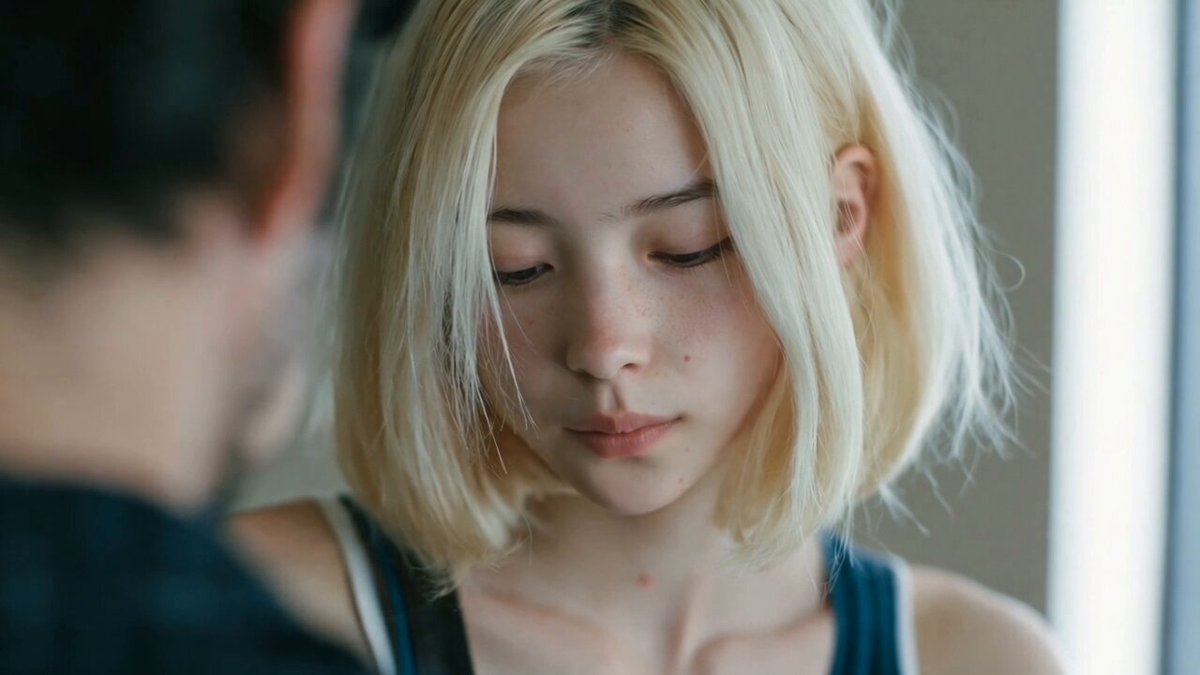
"[Character description with three fixed traits], medium shot, in [location], expressive but subtle reaction, natural handheld camera with slight drift, warm practical lighting, [specific emotion] building across the clip, 6 seconds, consistent wardrobe and hairstyle." The three fixed traits matter. Hair, silhouette, and one distinctive accessory give you enough anchors to keep the character recognizable across separate generations.
Template D: Loop-Ready Visual Gag
"[Subject] performs [action], camera locked off, symmetrical framing, deadpan delivery, single continuous take, action completes and returns to the starting position, 4 seconds." The return-to-start beat is what makes a loop feel seamless instead of jarring. Locked-off framing hides small inconsistencies between the first and last frame.
A Six-Step Workflow You Can Run Every Week
Good shorts are rarely one lucky generation. They come from a loop that looks boring on paper and produces consistent output.
Step 1: Write the Hook Before the Prompt
Describe the opening image in one sentence and say why someone would stop scrolling. If you cannot explain the stop in a sentence, the clip will not earn attention no matter how polished the render is. Common hook shapes include an unusual visual, a contradiction, an unfinished action, and a dramatic reveal in progress.
Step 2: Build a Shot List of Three to Six Beats
Short-form stories usually break into a hook, one or two development beats, a payoff, and optionally a loop-back frame. Write each beat as a single line with the action and shot type. This shot list becomes your prompt checklist, and it is where you decide which beats are even worth generating.
Step 3: Generate in Batches, Then Triage Fast
Generate several variations per beat rather than one perfect attempt. Triage brutally: keep the clips where the subject reads clearly in the first frame, motion stays on-model, and nothing distracting enters the background. A clip that is technically impressive but confusing at a glance is a discard.
Step 4: Edit for Rhythm, Not for Beauty
Cut on motion. Place your hardest visual moment in the first second and let the following shots accelerate into the payoff. Trim the first and last few frames of every AI clip; model output tends to be soft at the very start and end while motion is ramping up.
Step 5: Add Sound and Captions Deliberately
Sound is half the retention curve. Lay a bed of trending-style audio or a clean musical loop, then punctuate with a couple of well-placed sound effects. Add captions in the safe zone, keep them large, and avoid covering the subject's face. If the video works muted, the sound design will make it feel extraordinary.
Step 6: Publish, Record, Repeat
Post consistently, then log three numbers per video: where viewers dropped off, whether the hook held to the three-second mark, and which clip got replayed. Replays are the clearest signal that a shot deserves to become a recurring template.
Matching the Model Type to the Shot
Different generation approaches suit different shots, and mixing them inside one video is normal. Realistic text-to-video models handle human motion, natural environments, and cinematic camera moves well, but they struggle with precise text and repetitive fine detail. Image-to-video workflows give you far more control because you approve the first frame before motion is generated, which is the single biggest reliability upgrade for character work. Animated and stylized models are excellent for explainers, mascots, and abstract transitions, and they tolerate fast pacing better than photorealistic models, which tend to smear during rapid movement.
A practical rule: if the shot depends on a recognizable face or product, start from a still image. If the shot depends on a mood or environment, text-to-video is faster. If the shot depends on speed and clarity, choose a stylized approach and lean into graphic shapes.
Keeping Characters and Style Consistent Across Clips
Consistency is the hardest part of AI short-form production and the easiest place to lose an audience. A viewer will forgive an odd finger, but they will not forgive a character who changes face between shots.
Build a character sheet before you generate anything. Write down four to six fixed attributes: age range, hair, build, one signature garment, one accessory, and a personality adjective. Reuse that exact wording in every prompt. When a model drifts, the drift usually starts with a paraphrased description.
For style consistency, define a small style block and paste it into every prompt unchanged: palette, lighting quality, film grain level, and lens feel. Then vary only the action and camera. You will get visual variety without visual chaos.
Quality Control: The Pre-Publish Checklist
Before export, run the same short list every time. Does the first frame read clearly at thumbnail size? Is the subject recognizable and on-model across every cut? Does motion stay smooth without warping at the edges of the frame? Are there stray hands, duplicated limbs, or floating objects? Is there any accidental on-screen text, watermark, or logo?
Then check the edit layer. Does the payoff arrive before attention runs out? Do captions sit inside the safe zone on every aspect ratio you plan to publish? Does the audio peak well below clipping? Is the loop point clean if you are posting a looping clip? Ten minutes of checks here saves a week of confused analytics.
Mistakes That Quietly Kill AI Shorts
Overwriting prompts is the most common failure. Long prompts that describe a whole story in one generation produce averaged, indecisive visuals. One beat per generation beats one paragraph per generation.
Ignoring the first frame is the second. Many creators judge a clip by its middle, where motion is most interesting, and publish it with a soft, ambiguous opening frame. The first frame is the whole negotiation in a scrolling feed.
Chasing realism for everything is the third. Stylized animation often performs better on mobile because shape and color read faster than fine texture. Realism is a tool, not a default.
Finally, treating generation as the finish line. Generation is asset creation. Editing, sound, captions, and pacing are what turn assets into a video someone watches to the end.
One Clip, Three Platforms: Small Edits That Matter
TikTok, Shorts, and Reels reward the same core qualities, but the safe zones and interface overlays differ. Keep critical text and the subject's face away from the bottom band and the right edge, then export a version for each platform rather than uploading one compromise file. Vertical 9:16 remains the safest baseline. Test alternate crops only after a concept proves itself in the primary format.
Also respect the pacing habits of each audience. Some platforms tolerate a slightly slower build, others reward an immediate visual punch. Rendering three hook variants from the same assets costs little and teaches you a lot about where your audience actually lives.
Reading the Numbers and Iterating on Prompts
Treat analytics as prompt feedback, not just marketing feedback. A steep early drop-off usually means the hook frame was weak, which is a prompt problem. A strong three-second hold with weak completion suggests the middle beat was confusing, which is a shot-list problem. High replays on one specific clip suggest your loop construction worked, so document that prompt and reuse its structure.
Keep a prompt journal with the prompt, the output quality, and the retention outcome. After a few weeks you will have a personal library of structures that consistently produce usable footage, and that library is worth more than any generic prompt list.
Frequently Asked Questions
How long should an AI video prompt be?
Long enough to specify subject, action, camera, lighting, and duration, and no longer. For most short-form shots that lands between 25 and 60 words. If you need more, you are usually trying to fit two shots into one generation.
Can I generate a full short video from a single prompt?
You can generate a single clip, but a compelling short needs multiple beats, cuts, and audio. Build a shot list, generate each beat separately, and assemble in an editor. That structure also gives you far more control over pacing.
Why do my AI clips look fine alone but wrong in sequence?
Because each prompt implied a different visual world. Fix it with a shared style block: identical palette, lighting quality, and lens description across every prompt, varying only the action and camera.
How do I stop characters from changing between shots?
Use image-to-video for shots where the face matters, keep a fixed character description you copy verbatim, and avoid heavy camera moves that push the model into reinterpreting the subject mid-clip.
Do trending audio and AI visuals work together?
They work best when the visuals already have rhythm. Cut on the beat, keep shots aligned to the musical phrasing, and add sound effects to emphasize motion. Audio can rescue a decent edit, but it cannot rescue a confusing one.
What is the fastest way to improve output quality?
Improve the first frame. Approve a strong still image, then animate it. Most perceived quality problems in AI short-form trace back to a weak or ambiguous opening image, not to the motion model.
Should I label AI-generated content?
Follow the rules of each platform and the expectations of your audience. Disclosing synthetic media is increasingly standard practice, and audiences tend to reward transparency more than they punish it.
How many variations should I generate per beat?
Three to six is a comfortable range. Fewer leaves you choosing between weak options, and more creates decision fatigue without improving the final edit.
