
Why AI Video Storytelling Needs a Director, Not Just a Prompt
The first wave of AI video tools sold a simple promise: type a sentence, get a clip. That works for a five-second visual gag. It falls apart the moment you want a story — three characters, a location that stays consistent, an emotional arc that lands in ninety seconds.
The reason is structural. A generation model optimizes each clip in isolation. Storytelling requires continuity across clips: the same jacket, the same lighting direction, the same emotional temperature from shot to shot. Someone has to hold that thread. In traditional production, that person is the director. In AI production, the role does not disappear — it moves into planning documents, prompt templates, and edit decisions.
This guide treats AI video as a directing discipline rather than a slot machine. You will get a stage-by-stage pipeline, decision criteria for choosing a generation approach per shot, a consistency system that survives twenty or more clips, and an editing workflow that keeps story ahead of spectacle.
How the Modern AI Video Pipeline Actually Works
Most failed AI videos skip steps rather than tools. The technology is rarely the bottleneck; the missing discipline is. A reliable pipeline has four stages, and each one produces an artifact you can review, revise, and hand off.
Stage 1: Pre-Production — From Idea to Beat Sheet
Start with a one-line premise and a target runtime. A thirty-second social spot supports roughly one idea; a three-minute brand film supports a premise plus a turn. Write a beat sheet of six to twelve beats, each one sentence long and each one describing a change — a decision, a reveal, a reversal.
If a beat can be removed without the ending changing, remove it. AI generation is expensive in time and attention, so a tight beat sheet protects you from generating footage you will never use.
Stage 2: Shot Planning and Continuity
Convert each beat into one to three shots and record four attributes per shot: subject, action, framing, and duration. Add a fifth — the emotional note. This is where most AI projects quietly succeed or fail, because the shot list doubles as your prompt scaffold later.
Stage 3: Generation and Shot Selection
Generate in small batches, three to five variations per shot, and evaluate immediately against the shot list rather than against your memory of what you wanted. Rate each take pass, maybe, or no, and log the reason. The log becomes your debugging tool when continuity breaks three shots later.
Stage 4: Assembly, Sound, and Finishing
Edit before you polish. A rough assembly reveals whether the story reads without music, effects, or color. Only after the cut locks should you invest in sound design, voiceover timing, and a unified grade.
Writing Scripts That AI Can Actually Execute
Scripts written for human crews assume a human crew. Scripts written for AI should assume that anything visually ambiguous will be resolved arbitrarily by the model.
Beat-Driven Scripts Beat Prose Scripts
Prose writes atmosphere: "the city feels lonely." A generation model cannot film a feeling. A beat-driven script converts feeling into observable behavior: "she waits under the awning, checks her phone, puts it away without looking at it."
Use a three-column layout: beat, observable action, intended emotion. When you generate, you prompt the middle column and judge the result against the third. This separation is the single biggest time-saver in AI production, because it tells you instantly whether a miss is a prompting problem or a story problem.
Dialogue, Voiceover, and Narration
Generating believable lip-synced dialogue remains the hardest part of the format. Three practical options, in order of reliability:
- Narration-only. A voiceover carries meaning while the image carries mood. Easiest to control, easiest to revise.
- Dialogue as texture. Characters speak in wide or over-the-shoulder shots where lip detail is not resolvable. Sound carries the words; the frame carries presence.
- Full dialogue scenes. Reserved for tight close-ups and short lines. Expect several attempts per usable take.
For voiceover, write for the ear: short sentences, concrete nouns, one idea per line. Record a scratch read yourself before generating a synthetic voice — the timing of a real read tells you which lines are too long, which is information no model will give you.
Shot Planning: The Storyboard as a Control Surface
A storyboard for AI production is not a drawing exercise. It is a control surface. Each panel encodes the parameters you will later translate into prompts and edit decisions.
A Practical Shot Vocabulary
You do not need professional film grammar, but you need a consistent vocabulary:
- Wide: establishes place, shows isolation or scale. Reliable to generate, weak at emotion.
- Medium: the workhorse. Shows action and relationship.
- Close-up: carries emotion, but punishes inconsistency in faces and wardrobe.
- Insert: details — hands, screens, objects — that carry plot. Cheapest shots to generate and often the most useful.
Alternate shot sizes deliberately. Three consecutive close-ups flatten a sequence; a wide after two mediums gives the audience a breath. In AI work, this rhythm also hides generation seams, because the eye never gets a clean comparison between two similar frames.
Building a Continuity Bible
Before generating anything, write a one-page continuity bible for each recurring element:
- Character: age range, hair, wardrobe with exact colors, distinguishing feature, posture
- Location: time of day, weather, light direction, three fixed background landmarks
- Look: lens feel, color temperature, grain, aspect ratio, movement style
Then reuse the exact same wording for each element in every prompt. Copy-paste is not laziness here; it is version control. When a shot drifts, one glance at the bible shows which attribute you paraphrased and accidentally changed.
Choosing the Right Generation Approach for Each Shot
Different tools excel at different shot types. The professional instinct is not loyalty to one model but matching the shot to the engine.
Realistic Live-Action vs. Stylized Animation
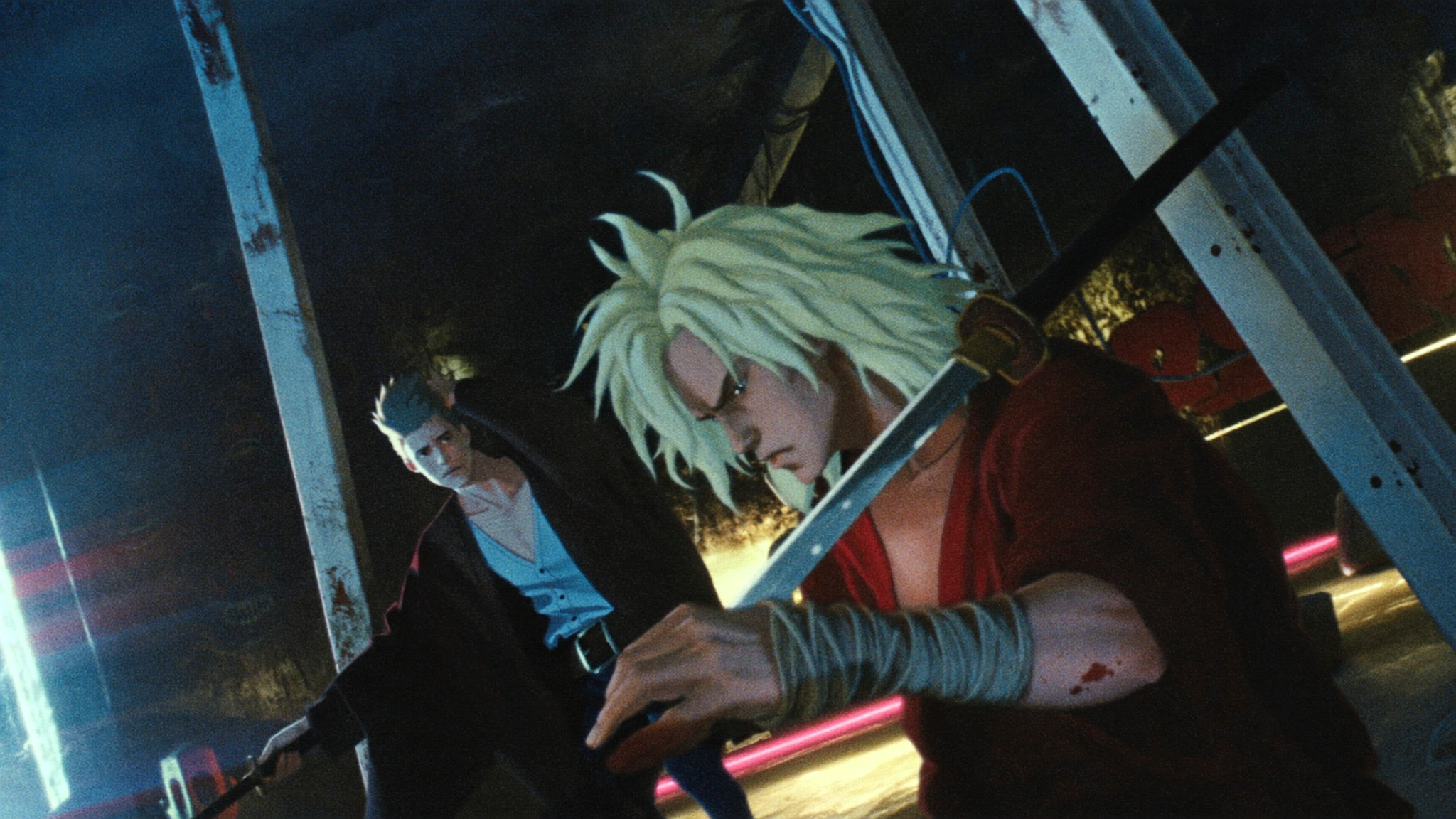
Cinematic realism handles present-day locations, natural light, and human-scale drama well. Stylized animation — illustrated, 3D-rendered, graphic-novel — handles fantasy, abstract ideas, and anything requiring exaggerated physics far more forgivingly. If a realistic shot fails repeatedly, the fastest fix is often to change the visual register rather than the prompt.
Camera Movement and Physics
Short, simple moves generate reliably: slow push-in, gentle pan, static frame with subject motion. Complex choreography — a character walking through a crowd while the camera orbits — multiplies failure modes. For those moments, generate the elements separately and combine them in the edit, or use motion graphics and compositing instead of forcing a single generation pass.
When to Combine Multiple Tools
A practical hybrid workflow uses one tool for establishing shots, another for character close-ups, a third for stylized inserts, and a dedicated upscaler or interpolator for finishing. The risk is visual inconsistency; the mitigation is a shared color grade and consistent aspect ratio applied at the end. Test the combination on two shots before committing a whole project to it.
Prompting for Consistency Across Shots
Think of prompts as two layers: a fixed layer that never changes and a variable layer that changes every shot.
Fixed layer: subject description, wardrobe, location, lighting, lens, film stock, aspect ratio, overall mood.
Variable layer: framing, action, camera movement, duration.
Write each prompt as fixed block plus variable block, in that order. Keeping the fixed block byte-identical across shots measurably reduces drift, and it makes troubleshooting trivial — if a shot drifts, only the variable block could be responsible.
Three additional habits pay off:
- Negative constraints matter. Name what you do not want: no text overlays, no warped hands, no extra characters, no lens flare.
- Describe light, not adjectives. "Warm window light from the left, soft shadows" beats "beautiful lighting."
- Lock aspect ratio and duration early. Changing them mid-project forces re-generation and breaks your edit rhythm.
Editing: Turning Clips Into a Story
Generation produces footage. Editing produces meaning. Treat the assembly as the creative center of the project, not cleanup.
The Rough Cut Comes First
Drop every usable take onto the timeline in script order, then cut with sound off. If the story does not read silently, no music will save it. Delete takes that only look good — beauty without narrative function is the most common waste in AI video.
Aim for the shortest cut that preserves every beat. AI footage tends to run long because each clip is impressive in isolation; trimming two seconds per shot typically improves pacing more than generating new material.
Sound, Music, and Color
Sound does three jobs simultaneously: it covers generation artifacts, it creates continuity across visually mismatched shots, and it carries emotion when faces cannot. Layer ambience under every scene, place hard effects on specific actions, and enter music only where the story turns.
For color, apply one unified grade across the whole timeline before addressing individual shots. A neutral grade with consistent contrast unifies mismatched sources better than shot-by-shot correction, and it protects you from endless tinkering.
Common Mistakes and How to Fix Them
Chasing perfection per shot. You polish shot four for an hour while the story structure is still broken. Fix: complete a full rough cut at low fidelity before refining any single shot.
No continuity bible. Wardrobe, hair, and background shift every few seconds. Fix: written element sheet, copy-pasted into every prompt.
Overloaded prompts. Five subjects, two camera moves, and a lighting change in one clip produces mush. Fix: one action, one camera behavior, one light condition per shot.
Ignoring runtime. Twenty striking clips do not make a two-minute film. Fix: write target durations in the shot list and enforce them in the edit.
Skipping the silent watch. Music masks structural problems. Fix: review the cut muted, then again with sound.
No versioning. You cannot remember which prompt produced the good take. Fix: number every batch and keep a simple log of prompt, tool, and rating.
Quality Control Checklist Before You Export
Run this pass in order, and stop at the first failure rather than continuing:
- Does the story make sense without sound?
- Is the same character recognizable in every appearance?
- Does light direction stay consistent within a scene?
- Are there any obvious generation artifacts in the first three seconds of each shot?
- Is the total runtime within ten percent of target?
- Do the first three seconds and the last three seconds earn attention?
- Is the aspect ratio and loudness consistent across the whole export?
If the project is a client deliverable, add a second viewing on a phone screen with the volume at half. That is how most of the audience will actually watch it.
FAQ
How long should an AI-generated video be?
Match the platform and the idea. Fifteen to thirty seconds for feeds, sixty to ninety seconds for narrative shorts, and three minutes or more only when the story genuinely needs it. Length is a cost, not a virtue.
Do I need editing experience?
You need story sense more than software skill. Basic cuts, sound layering, and a single grade will carry a project. The judgment about what to remove is the actual skill.
How many takes should I generate per shot?
Three to five is a practical starting range. If you need fifteen, the prompt or the shot concept is unclear — rewrite it rather than generating more.
Can AI handle full dialogue scenes?
Short lines in close-ups, yes, with patience. Long exchanges, not reliably. Write around the limitation with narration, off-screen dialogue, or shots that do not resolve lip detail.
What is the biggest time sink?
Chasing continuity after the edit is assembled. Solving it during pre-production with a written continuity bible typically saves more time than any tool upgrade.
Should I use one tool or several?
Start with one to learn the craft, then add a second for the shot types the first handles poorly. Every added tool increases the consistency work required at the finish.
How do I keep an AI video from feeling generic?
Specificity. A particular location, a particular object, a particular gesture. Generic prompts produce generic footage, and no amount of color grading fixes an unspecific idea.
