

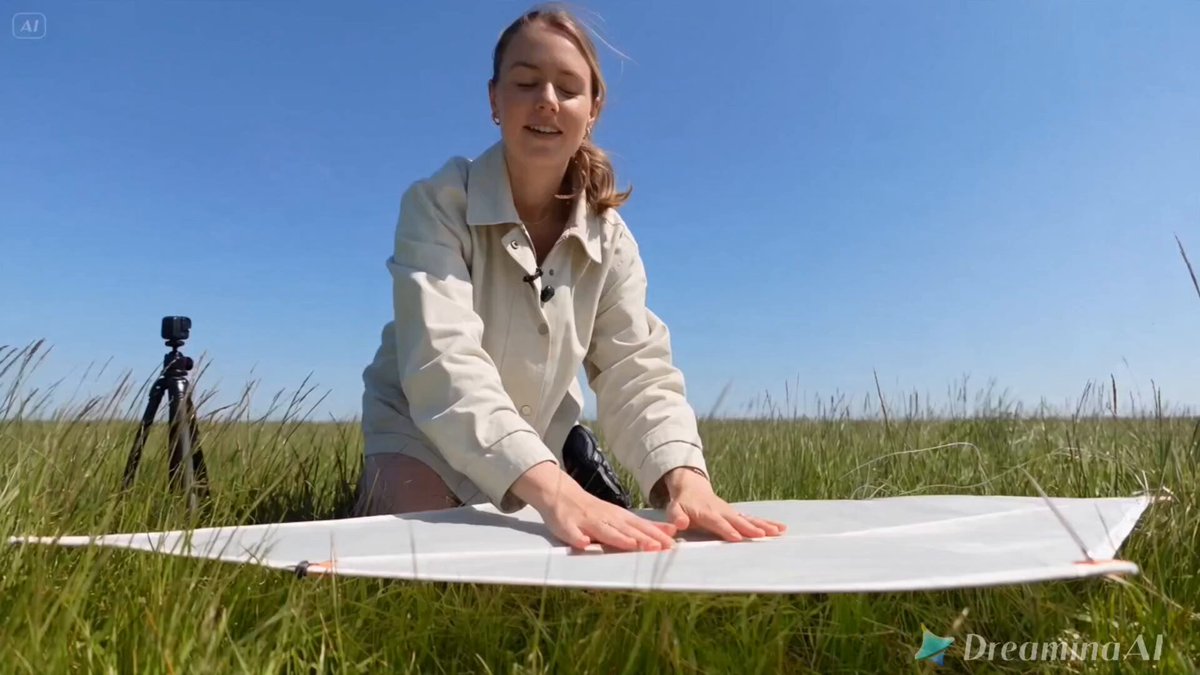
Why AI Reordered the Video Marketing Workflow
For most of the last decade, video was the most expensive asset in the marketing budget and the slowest to produce. A single product spot could consume six weeks, a five-figure invoice, and the patience of everyone involved. The economics forced teams into conservative choices: one hero video per quarter, heavily rehearsed, reused everywhere. AI generation tools broke that constraint, but not in the way most teams expected. The bottleneck did not disappear — it moved.
When generating footage becomes cheap, the scarce resource becomes judgment. Deciding which frames are worth making, which message deserves a test, and which performance signal should change the next brief is now the real work of a video marketer. Teams that understood this early built workflows around taste and measurement. Teams that treated AI as a vending machine for content ended up with a large library of mediocre clips and no idea which ones worked.
Three shifts matter most:
- The cost curve flattened. Concept exploration, b-roll, localized variants, and simple explainer footage no longer require a shoot day. That means more concepts can be tested before the expensive shoot is approved, not instead of it.
- Iteration speed replaced production polish as an advantage. Being able to cut a new hook from existing generated footage in twenty minutes changes how often you can learn.
- Analytics expectations rose. If you can produce ten variants, stakeholders want to know which of the ten won and why. Measurement moved from monthly reporting to a weekly operating rhythm.
The practical takeaway: an AI video program is not a tool purchase. It is a workflow design problem with three moving parts — generation, assembly, and measurement — wired into a feedback loop.
The Four Layers of an AI Video Marketing Stack
Most teams over-invest in one layer and improvise the rest, which is why early pilots stall. Think in four layers, each with a clear job and a clear owner.
Layer 1: Generation
This is where raw footage, stills, and motion clips come from. Text-to-video models handle concept exploration and abstract ideas. Image-to-video models are better for product shots, characters, and anything that must match a reference. Motion or performance transfer tools map a real person's movement onto a generated or stylized subject, which is useful for demos and personality-driven content. Upscaling and frame interpolation sit at the end of this layer, cleaning up output for delivery.
Layer 2: Assembly and Editing
The generation layer rarely produces a finished edit. Timeline editors with AI assistance handle transcription-based rough cuts, silence removal, auto-reframing for vertical and square formats, and text-based editing. The goal is to keep the human editor focused on rhythm and story rather than conform and sync work.
Layer 3: Audio and Voice
Sound design is the most commonly skipped layer, and it is the fastest way to make AI footage feel amateur. A working audio stack includes a voice track or licensed narration, a music bed with documented usage rights, ambience, and discrete sound effects. Voice cloning and synthesis should be used only with explicit consent from the person whose voice is being modeled.
Layer 4: Measurement
The layer most teams bolt on last. You need playback analytics from each platform, a way to join video engagement to downstream actions, and a tagging taxonomy that lets you compare variants by hook type, length, format, and message. Without this layer, the whole system generates content without generating knowledge.
Writing the Brief Before Generating a Single Frame
The single highest-leverage habit in AI video marketing is writing a shot-level brief before opening any generation tool. Prompts written on the fly produce clips that look fine in isolation and cannot be assembled into a coherent story.
A brief that survives contact with a generation model includes:
- Objective: one sentence. Awareness, consideration, activation, or retention. Pick one.
- Audience and platform: the first three seconds are designed for a specific feed, not for video in general.
- Single message: if you cannot state it in one line, the clip is not ready to be made.
- Format list: aspect ratios, maximum duration, safe areas for on-screen text, and caption placement.
- Tone references: two or three existing videos that capture the intended pacing and mood, plus a sentence on what you like about each.
- Mandatory elements: logo treatment, product angle, required legal line, brand palette, typography.
- Prohibited elements: claims you cannot substantiate, competitor-adjacent imagery, anything that reads as a before-and-after medical claim.
- Success metric: the one number that decides whether this asset earned a sequel.
A Shot-Level Template That Works
Write each shot as a short paragraph with five fields: subject, action, environment, camera behavior, and duration. "Subject: barista's hands. Action: tamping espresso. Environment: morning light through a window, shallow depth of field. Camera: slow push-in, handheld micro-movement. Duration: two seconds." This is more useful to a generation model than any pile of adjectives, and it doubles as your edit plan.
Why Brevity Beats Detail
Long prompts feel productive but often reduce control. Models weight the beginning of a prompt heavily, and contradictory instructions cancel each other out. Start with the subject and action, add camera behavior, then environment, then style. If two shots in a sequence must match, keep their descriptive language nearly identical and change only what moves.
Choosing the Right Generation Model for Each Shot
There is no single best video model, and treating the choice as a brand loyalty question costs you quality. Match the model archetype to the shot type instead.
| Shot type | Best-fit approach | Why |
|---|---|---|
| Concept mood board | Fast text-to-video | Speed matters more than fidelity at this stage |
| Product hero shot | Image-to-video from a controlled still | Preserves packaging, label, and color accuracy |
| Talent or presenter | Motion transfer or avatar pipeline with consent | Keeps delivery consistent across dozens of clips |
| Environment b-roll | Text-to-video with locked style keywords | Cheap coverage that cuts between scripted segments |
| Stylized transitions | Short-duration generative clips | Two-to-four seconds is where these shine |
| Localization variants | Same base plate, re-generated text and voice | Keeps visual identity while changing language |
Decision criteria that hold up in practice:
- Controllability. Can you reproduce a shot with a small change? If not, the model is a novelty, not a production tool.
- Motion coherence. Watch for limbs, hands, and text rendering. These are the failure points that make a clip unusable.
- Duration and resolution limits. Know the ceiling before you plan a ten-second unbroken take.
- Rights and licensing. Confirm commercial usage terms for the tier you are on and keep records of the dates terms applied.
- Iteration cost. If a re-roll takes twenty minutes, you will only make one version. If it takes two, you will make six and find a better answer.
Maintaining Visual Consistency Across a Campaign
AI footage is easy to spot when a campaign drifts. One clip is warmly lit and cinematic, the next is flat and sterile, and the brand reads as a collage of unrelated ideas. Consistency comes from constraints you set once and enforce everywhere.
- A locked style guide. Write down lens language, color palette, contrast, grain, and lighting direction in plain words you can paste into prompts.
- Reference sheets. Build a small set of approved stills for characters, products, and environments. Start every generation from these rather than from text alone.
- A single palette. Limit the campaign to three or four dominant colors. Generated footage tends to over-saturate if left unchecked.
- Shared camera grammar. Decide whether the campaign lives on tripod-smooth moves or handheld energy. Mixing both in one sequence reads as an error.
- Continuity notes. Keep a running document of which model, seed, and reference produced each approved shot. When a stakeholder asks for "one more like that," you will be able to answer.
Handling Text, Logos, and Hands
Generated text and logos are the fastest way to break brand trust. Generate clean plates and composite real typography and packaging in the edit. Hands are the second most common failure point: prefer framing that crops hands out, uses them as background, or shows them at rest rather than in complex manipulation.
When to Bring in Real Footage
If a shot must show an actual product in an actual hand, shoot it. The credibility of your hero product is worth a one-hour session with a phone and a window. Use AI for the surrounding coverage, the variations, and the formats you would never have had budget to shoot.
Cinematography, Pacing, and Sound: Directing With AI
Generation models produce shots, not sequences. Directing is still a human job, and it is where generic AI output is separated from footage that actually holds attention.
Shot Lists and Coverage
Plan coverage the way a director would: a wide to establish, a medium to explain, a close-up to emote, and an insert to prove. A thirty-second video typically needs eight to fourteen distinct shots. Generate two or three options per slot so the edit has choices.
Pacing Rhythm
Attention decays in predictable ways. Front-load the most visually distinct moment in the first second. Change something — angle, subject, scale, or sound — every two to three seconds for short-form, and every four to six seconds for longer explainers. Silence and held frames are legitimate pacing tools; constant motion is exhausting.
Editing AI Footage Without Fighting It
Generated clips sometimes have inconsistent motion at the boundaries. Cut on movement rather than on stillness, overlap two short clips with a brief dissolve when a single continuous move is impossible, and use sound to bridge the seam. A well-placed whoosh hides more continuity sins than any plugin.
Sound Design Layers
Build audio in four layers: narration, music, ambience, and effects. Most weak AI videos have narration and music only, which is why they feel synthetic. A room tone under a talking-head section does more for realism than a higher-resolution render.
Voice and Performance
If you synthesize a voice, disclose it where audiences expect honesty and never clone a voice without written permission. For performance-driven content, a real presenter plus AI b-roll and AI-assisted editing often beats a fully synthetic presenter, because trust is a function of the person, not the pixels.
The Analytics Layer: Metrics That Actually Inform Decisions
Video analytics is crowded with vanity numbers. Choose a small set of metrics tied to specific decisions, and ignore the rest.
- Hook retention (first three seconds). The clearest signal of whether the opening frame and first line worked. If this is weak, nothing downstream matters.
- Average watch time and completion rate. Completion tells you whether the payoff arrived before attention ran out. Track it at 25, 50, 75, and 100 percent to find where viewers leave.
- Hold rate at the drop-off point. Identify the timestamp with the steepest decline and inspect what happens there. It is usually a transition, a slow build, or a message that feels like a pitch.
- Click-through and view-through. Platform-reported CTR for video is directionally useful but noisy; treat it as a comparative signal between your own variants, not as an absolute truth.
- Assisted conversions. Look at whether viewers of the video converted later through another channel. Video rarely closes on the last click.
- Cost per completed view or per qualified session. The efficiency measure that lets you compare a polished shoot against a batch of generated variants.
Attribution Without Overclaiming
Multi-touch attribution for video is genuinely hard. Use a tiered approach: platform metrics for creative decisions, incrementality tests or holdouts for budget decisions, and self-reported attribution on the final conversion step for directional color. Never let a platform's claimed conversion count be your only evidence.
Instrumenting the Stack
Tag every asset at export with a unique identifier covering hook type, length, format, message, and generation method. Capture that identifier in your analytics and ad platforms, and store it alongside the creative file. Six months later, this taxonomy is the difference between "video works for us" and "this specific hook type wins on this platform for this audience."
Closing the Loop: Turning Performance Data Into the Next Brief
Analytics only pays off when it changes the next round of production. Build a weekly cadence with four artifacts.
- A winners and losers log. One line per asset: what it was, what it measured, and the hypothesis it confirms or rejects.
- A hypothesis backlog. Every insight becomes a testable statement: "Opening on the product before the person increases three-second retention in this placement."
- A brief revision. Update the standing brief with what you learned about pacing, tone, and structure. Prompts and shot lists should improve over time, not reset.
- A retirement list. Kill formats that consistently underperform instead of productionizing them out of habit.
A Sample Cycle
A team publishes eight generated variants of a fifteen-second product clip across two placements. Three-second retention is strong on the first three variants and collapses on the rest. The difference is the opening frame: the winners show the product in use, the losers show a logo animation. The next brief requires an in-use opening frame, and the following week's batch tests three different in-use openings against two different durations. That is a functioning loop: cheap variants, clear signal, updated instructions.
Experiment Design, Governance, and Brand Safety
AI video makes it easy to produce a lot and learn nothing. Discipline comes from a few rules.
- Change one variable at a time. Hook, duration, format, and voice are separate tests. Bundling them wastes the whole batch.
- Require adequate sample before declaring a winner. Early differences shrink. Set a minimum spend or view threshold in advance and honor it.
- Hold out a control. Keep a portion of the audience on baseline creative so you can measure lift rather than raw performance.
- Document model versions. Output quality shifts between model updates. Record what you used so a result is reproducible.
- Respect disclosure rules. Platform policies and regional regulations increasingly require labeling synthetic or altered media. Assume disclosure is required unless you have verified otherwise.
- Protect likeness and voice rights. Written consent, defined scope, and an expiration date. This is not a legal nicety; it is a reputational issue.
- Plan for accessibility. Captions, contrast, and audio descriptions expand reach and are frequently required.
Where Governance Should Sit
Someone must own the review step between generation and publication. In practice, that means a lightweight checklist: brand elements present, claims substantiated, rights documented, disclosure applied, captions burned or uploaded. Ten minutes of review prevents the kind of incident that sets an AI program back a year.
Common Mistakes and FAQ
Mistakes That Slow Teams Down
- Generating before briefing. Produces attractive clips with no editing logic.
- Mixing five models in one campaign. Visual drift that audiences read as low quality.
- Skipping sound design. The single biggest perceived-quality gap.
- Measuring everything. Dashboards with forty metrics get ignored; three metrics with owners get acted on.
- Scaling a winner without understanding it. If you cannot explain why a variant won, you cannot repeat it.
- Ignoring licensing and disclosure. The cost of a correction always exceeds the cost of compliance.
- Treating AI as a replacement for the shoot. AI expands coverage; it rarely replaces the one shot that needs to be real.
Frequently Asked Questions
How many variants should a team test at once? Eight to twelve per cycle is a workable ceiling for most teams, covering three or four hypotheses with two to three executions each. More than that and the analysis becomes guesswork.
Do AI-generated videos perform worse than filmed ones? Not inherently. Audiences respond to clarity, relevance, and pacing. Generated footage tends to underperform when it is generic or when audio is thin, both of which are workflow problems rather than model problems.
What is the minimum team setup? One person who owns creative judgment, one who owns the edit, and one who owns measurement. The measurement role is the one teams skip and later regret.
How do I keep output consistent when the model updates? Freeze a reference set of approved shots, document prompts and settings, and re-run a small regression test after any significant update before publishing at scale.
Should AI video live inside the brand team or the performance team? Both, with a shared brief. Brand owns the style guide and the review checklist; performance owns the testing cadence and the hypothesis backlog. When the two operate separately, you get polished assets nobody optimizes or optimized assets that damage the brand.
What is the fastest way to improve results? Fix the first three seconds. Rewrite openings, regenerate them in bulk, and test them against each other before touching anything else in the edit.
The teams that get the most from AI video marketing are rarely the ones with the longest tool list. They are the ones who wired generation, editing, audio, and analytics into a loop, wrote briefs before prompts, and let performance data rewrite the next batch. That loop, not any single model, is the advantage.
