

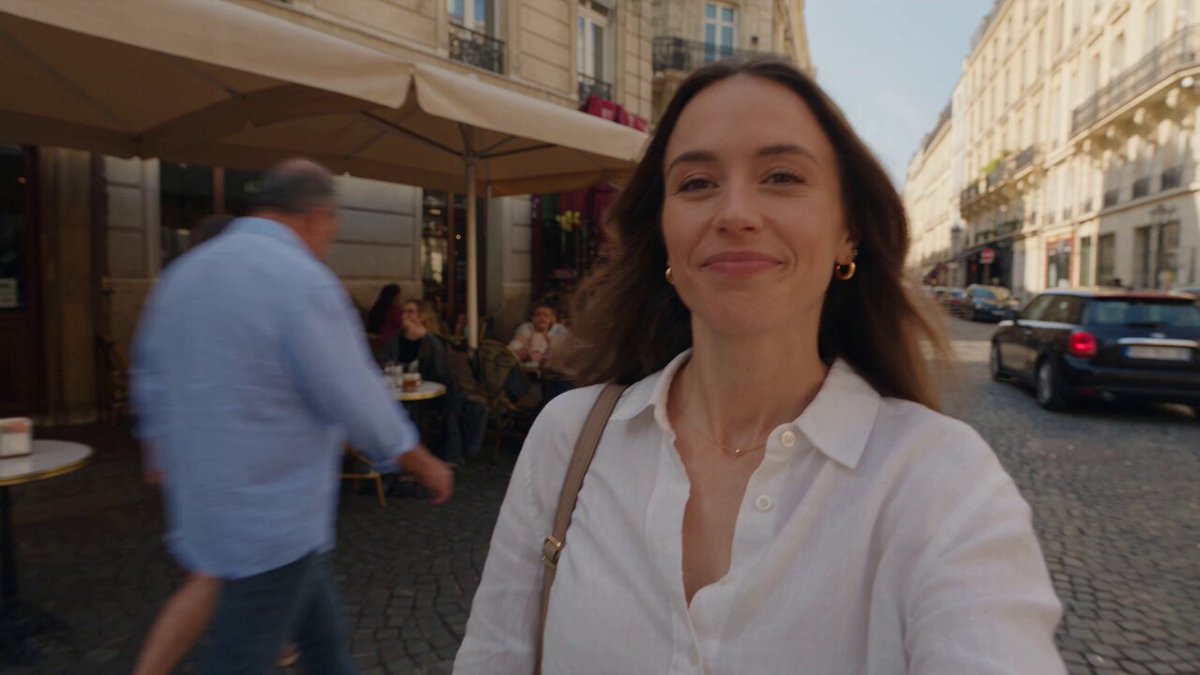
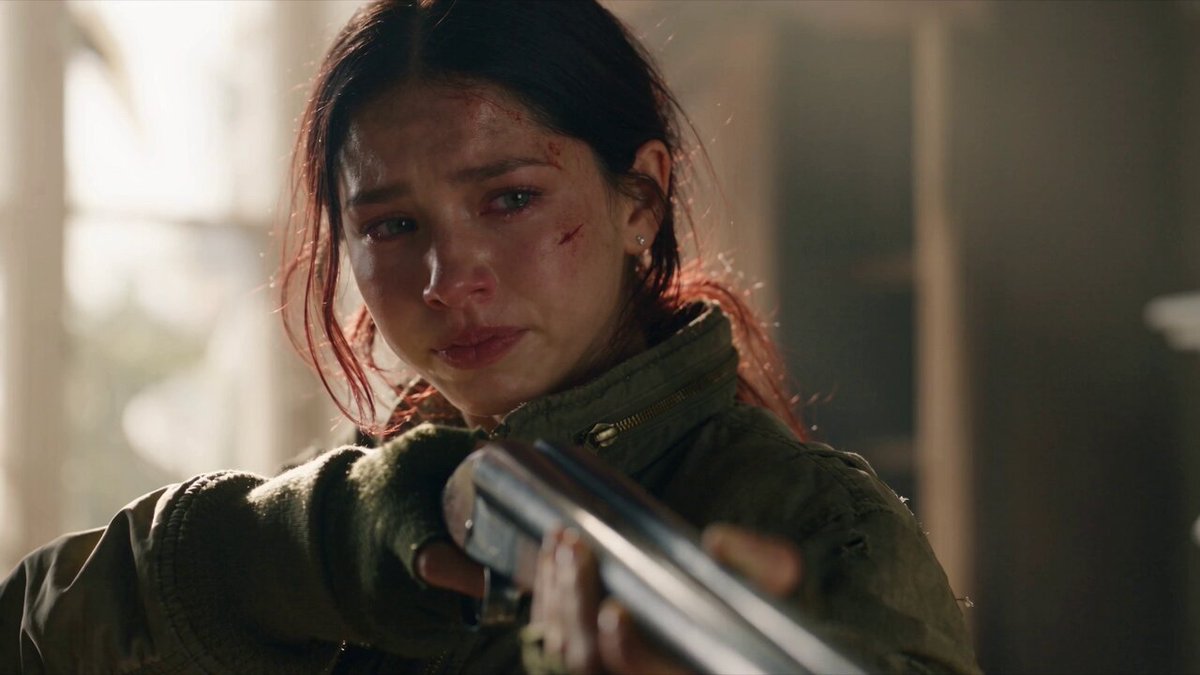
Short films and trailers have always been the calling card of filmmakers who cannot yet afford a feature. A three-minute proof of concept used to mean permits, crew, gear, insurance, and a schedule that could collapse because of one rainy afternoon. That barrier has not vanished, but it has moved. A small team — sometimes one person with a laptop — can now assemble a convincing trailer or a ten-minute narrative short using a script, a look bible, and a stack of generative video tools that improve every few months.
The shift does not remove craft. It relocates it. Instead of managing a camera crew, you manage prompts, model behaviour, continuity, and edit rhythm. The bottleneck is no longer access to a camera. It is taste, structure, and iteration discipline. Filmmakers who treat generation as a pipeline rather than a slot machine finish projects. Everyone else accumulates beautiful clips that never become a film.
This guide lays out a working method for AI-assisted trailers and short films: how to choose tools, how to prompt for specific shots, how to hold continuity across a sequence, how to budget your time honestly, and how to deliver something that holds up on a phone screen and on a projector.
Why AI video changed short films and trailers
The economics of a proof of concept
A trailer is the cheapest way to demonstrate that you can tell a story. It needs a mood, a protagonist, a conflict, and a hook — nothing more. In a traditional production, the cost was concentrated in logistics: locations, crew days, equipment rental, transport. In an AI-assisted production, the cost is concentrated in time and iteration. You are no longer paying for access; you are paying in attention.
That changes what is rational to attempt. A shot that would have demanded a helicopter becomes a ten-minute prompt experiment. A crowd scene that once required forty background performers becomes a batching problem. Sequences that were cut from scripts for budget reasons become possible again, which means scripts get more ambitious — and structure matters more, not less.
What did not change
Audiences still respond to clarity, rhythm, and emotion. A trailer with spectacular imagery and no shape reads as a demo reel. A short film with flawless frames and flat performances reads as a screensaver. The tools have moved the production ceiling, but they have not moved the storytelling floor. If your beat sheet is weak, better rendering will only make the weakness more visible.
Where generation still struggles
It is worth naming the trouble spots early, because planning around them saves entire weekends. Hands interacting with small objects, reflections in mirrors, crowds where individual faces must stay distinct, long unbroken dialogue takes, and physical interactions with weight — pushing, lifting, catching, fighting — remain unreliable. Sensible directors write around these limits the way previous generations wrote around weather and budget.
The three-phase pipeline that keeps projects finished
Pre-production: the one-page look bible
Pre-production is where you lock everything that is expensive to change later. At minimum you need a script or a beat sheet, a shot list with intent for each shot, and a look bible. A practical look bible fits on a single page: three reference images, six adjectives describing the visual identity, a list of banned visual elements, and notes on aspect ratio and frame rate. Keep it open while you write prompts. When a generated clip feels off, you can usually trace the problem to a line in that page.
Shot intent matters more than shot description. Instead of writing "city street," write "establish that the city is hostile before we meet the protagonist." Intent tells you what to accept and reject once twenty variations exist.
Generation: controlled iteration
Generation is the middle phase and the one where most time is lost. Treat it like a shoot day. You have a shot list, you generate coverage, you review takes against the shot list, and you move on. Two or three variations per shot is usually enough when the prompt is specific and references are locked. Twenty variations means the prompt is vague, the reference is wrong, or the shot idea is not yet clear in your head.
Set a hard limit per shot before you start and keep a tally. Limits are not about discipline for its own sake; they force you to diagnose rather than gamble.
Assembly: where the piece is actually won
Assembly covers editing, sound design, colour, and titles. It deserves at least as much attention as generation. Clean sound design and confident cutting can make average generated footage feel like a real trailer, while lazy editing exposes every artifact in otherwise strong shots. If you have eight hours to spend on a project, spend five on assembly and three on generation — a ratio that surprises people who assume generation is the whole job.
Choosing a video model: criteria and tool families
Style fidelity and texture
Some models excel at painterly, stylised imagery and preserving a reference aesthetic across shots. Others chase photographic realism. Test candidates with the same reference image and the same three prompts, then compare texture, edge quality, and how faithfully the palette survives. If your project depends on a consistent illustrated look, this test is more informative than any feature list.
Continuity and reference control
Continuity is the hardest problem in AI filmmaking. Faces drift, costumes change, and locations morph between shots. Models and workflows that support image conditioning, reference locking, or first-and-last-frame control make continuity manageable. A tool that accepts only text will cost you more hours in post than it saves in generation. Prioritise reference control over raw visual quality.
Camera vocabulary and motion physics
Prompts such as "slow dolly in," "handheld follow," or "locked-off wide" should produce visibly different results. If every clip drifts in the same smooth, weightless way, the model lacks camera vocabulary and will flatten your trailer's pacing. Look for believable cloth movement, believable weight when someone sits or turns, and camera moves that obey the instruction rather than approximating it.
Clip length, resolution, and upscale headroom
Longer native clips mean fewer seams to hide. Higher native resolution means more room to reframe and stabilise. Check how the tool handles fast motion and how much detail survives when you push to delivery resolution. A model producing gorgeous four-second clips may be perfect for a trailer and inadequate for dialogue-driven narrative work.
Predictability and repeatability
Save seeds when the model exposes them. Record settings. A tool that gives you reproducible output you can nudge is more useful than a tool with a slightly higher ceiling that behaves differently on every run.
Tool families worth testing
General text-to-video and image-to-video platforms cover most production needs. Runway's ecosystem is strong for iterating on a single shot with fine control and for stylised transitions. Kling has built a reputation for smooth human motion and clean facial detail in medium shots. Luma's tools are friendly for quick image-to-video passes and natural camera movement. Pika is useful for fast experimentation, and Google's Veo line pushes narrative coherence and prompt adherence. OpenAI's video work set expectations for instruction following.
Open-weight and self-hosted options, including the Wan family and Stable Video Diffusion derivatives, matter when you need volume, privacy, or repeatability on your own hardware. They demand more setup and a real GPU, but they remove the unpredictability of a hosted queue and let you build a reusable pipeline.
Specialist tools fill the gaps: character-consistency utilities for holding a face across shots, lip-sync engines for dialogue, matting and rotoscoping tools for compositing, upscalers and frame interpolators for finishing, and audio tools for ambience, foley, and score. A finished AI short film is usually assembled from four or five tools, not one.
A repeatable trailer workflow, step by step
Step 1: write the beat sheet before any prompt
A ninety-second trailer typically has six to nine beats: cold open, world establishment, character introduction, escalation, turn, montage, title card, and stinger. Write each beat as a sentence. Each beat becomes two to four shots. The beat sheet is the contract between your intention and your shot list.
Step 2: lock the look with three hero shots
Generate three shots that represent the visual identity of the piece and iterate until they feel right. Everything afterwards inherits their palette, lens language, and grain. This single step prevents the patchwork look that plagues amateur AI trailers, where every shot appears to come from a different film.
Step 3: generate in blocks of five to ten shots
Work through the shot list in blocks with the same reference images loaded. Batching keeps the model's interpretation consistent and reduces context switching. Generating one shot, then a different scene, then returning is the fastest way to lose visual coherence.
Step 4: cut to music, not to clips
Lay down a temporary music bed and cut to its rhythm. AI footage often has slightly ambiguous timing — a beat of hesitation at the start, an unclear resolution. A strong music edit hides those seams while giving the piece momentum. Choose the track before you generate if you can; it changes what you need.
Step 5: build the sound design layer
Add impacts, risers, ambience, and transitions. Sound is roughly half of perceived production value, and it is the cheapest quality upgrade available. A dull shot with a sharp whoosh and a low rumble reads as intentional; the same shot in silence reads as unfinished.
Step 6: grade, title, and test
Apply a consistent grade so shots sit in the same world. Titles should be simple and legible at thumbnail size. Then watch the cut on a phone at half brightness with the sound off. If the story still reads, you have a trailer.
Prompting like a director
The shot sentence formula
Describe the shot the way a director briefs a cinematographer: subject, action, environment, lighting, lens, movement, and mood. "Wide establishing shot of a rain-slicked harbour at dawn, anamorphic lens, slow crane down, heavy mist, cold blue palette" gives a model far more to work with than "beautiful harbour scene." Keep the order consistent in every prompt so you can spot which element changed.
Negative constraints that actually help
List what you do not want: text overlays, distorted hands, warped faces, extra limbs, camera shake, oversaturation, watermark artifacts. Negative constraints work best when short and specific. A long list of prohibitions often produces the very thing it forbids, because the model still processes the concept.
Keep a prompt log
Record every prompt, seed, reference image, and setting that produced a usable shot. When you need a matching shot three days later, the log saves hours. This habit, more than any tool choice, separates people who finish from people who restart.
Change one variable at a time
If a shot is wrong, change one thing — the camera move, the lighting, the wardrobe descriptor — and regenerate. Changing five variables teaches you nothing about which one mattered, and you will repeat the same mistake for the rest of the project.
Continuity systems for people, props, and places
Reference locking
Lock a character reference image and reuse it in every prompt that includes that character. Keep wardrobe and lighting descriptors identical word for word. Generate the character's shots back to back rather than scattered across sessions, because consistency degrades as the model is asked to hold more context at once.
Wardrobe, hair, and lighting bibles
Write exact phrases for each costume and lighting setup and copy them verbatim. "Charcoal wool coat, collar up, wet hair, sodium streetlight from the left" will reproduce far better than a paraphrase. Treat these phrases as assets, not prose.
Session batching and shot adjacency
When two shots must cut together, generate them in the same session with identical references and settings. Adjacency is where continuity errors become obvious, because the audience sees both frames in immediate succession.
When to hide the problem with a cutaway
Sometimes the model simply cannot deliver a shot. Rather than fighting it for hours, redesign: cut to a reaction, a detail, a shadow on a wall, or hands in the foreground. Restriction has always been part of film grammar, and a smart cutaway often plays better than the shot you originally wanted.
Budgeting time, storage, and attention
Plan a footage ratio
For a trailer, expect to generate roughly five times the footage you use. For narrative work with tight continuity, plan for more. That ratio is not waste; it is coverage, and it is the same logic that made shooting ratios normal on film sets.
The hard shots list
Identify the shots most likely to fight back — hands, crowds, reflections, dialogue close-ups, physical interaction — and generate them first. If a shot cannot be produced, you want to discover that while the structure is still flexible, not the night before delivery.
Naming conventions and project hygiene
Store everything in one project folder with a naming convention that includes scene, shot number, version, and tool. When you are eight hours deep, you will not remember which file was take three. Back up the folder, keep the prompt log inside it, and archive project files even after export — trailers get recut months later for different audiences.
Quality control, delivery, and distribution
The clip checklist
Run every clip through the same list before it reaches the timeline:
- Faces and hands: no morphing, no extra fingers, stable eyes.
- Continuity: costume, hair, props, and time of day match adjacent shots.
- Motion: no rubbery limbs, no physics that breaks the illusion.
- Texture: grain and sharpness consistent across the cut.
- Framing: nothing important sitting on the edges of the frame.
Fix or cut anything that fails. A shorter trailer with clean shots always outperforms a longer one with visible errors.
The sound pass
Check for clipping, uneven dialogue levels, and ambience that matches the environment. Duck music under dialogue. If a shot's ambience reveals that it was generated separately, which is common, hide the seam with a transition sound or a music swell.
One master, many cuts
Deliver a master at the highest resolution you can manage, then create platform-specific cuts. Vertical versions need reframing and often different shot selection, because wide establishing shots lose their impact in a tall frame. Keep the first two seconds visually loud — that is where attention is won or lost — and add captions for sound-off viewing.
Titles, captions, and safe areas
Keep text away from the edges, keep it readable at small sizes, and keep the typeface consistent with the trailer's mood. Export a clean version without text for future reuse.
Common mistakes and how to avoid them
Generating before writing. Without a beat sheet you accumulate clips instead of building a film.
Chasing photorealism in every shot. Stylised looks age better and hide artifacts more gracefully.
Cutting on every beat. Trailers need breathing room; constant motion reads as noise.
Ignoring sound. Half of perceived production value is audio, and it is the cheapest thing to fix.
Over-relying on one model. Different shots need different strengths; a two-tool workflow usually beats forcing everything through a single engine.
Skipping the log. Reproducibility is a competitive advantage, not paperwork.
Refusing to redesign. When a shot will not work, changing the shot is faster than changing the model.
FAQ
How long does an AI short film take to produce?
A one-minute trailer with a solid beat sheet can come together in a focused weekend. A ten-minute narrative short with dialogue, strict continuity, and layered sound design typically takes several weeks of part-time work. The variable is not rendering speed but the number of decisions you make per minute of finished footage.
Do I need a powerful computer?
Not for hosted platforms; a mid-range laptop and reliable internet are enough. If you run open-weight models locally, a modern GPU with substantial video memory makes a meaningful difference, and storage becomes a real consideration once you keep every generated take.
Can AI handle dialogue scenes?
Yes, with a layered approach. Generate the performance with clear framing, apply a dedicated lip-sync tool, then treat the audio like any post-production dialogue track. Keep dialogue shots short, cut away often, and never rely on a single long take.
How do I keep a character consistent across shots?
Lock a reference image, reuse it in every prompt, keep wardrobe and lighting phrases identical, and generate that character's shots consecutively. If drift persists, cut around it with reaction shots and details rather than regenerating endlessly.
Is AI footage acceptable for festivals?
Many festivals accept it, though policies vary and some categories require disclosure. Check submission rules and be transparent about your process. Audiences respond to strong storytelling regardless of how the frames were made.
What is the single most useful skill to develop?
Editing. Generation gets easier every quarter, but knowing where to cut, when to hold, and what to remove is what makes a short film land. Study trailers you admire with the sound off and count the cuts.
The tools will keep changing. The pipeline — pre-production, controlled generation, disciplined assembly — will not. Build that muscle and you can swap engines freely without losing your voice.
