
Generative video tools went from party trick to production reality faster than most crews expected. What changed is not only image quality. It is that these systems now slot into recognizable stages of a pipeline: development, previsualization, coverage, editorial, localization, and delivery. The teams getting real value are not the ones chasing every new model release. They are the ones who built a repeatable workflow around a small set of tools and learned exactly where each tool fails.
This guide walks through that workflow end to end. It covers how to pick a model for a specific shot, how to prompt for motion rather than still frames, how to hold a character together across a sequence, where sound generation fits, and which mistakes quietly burn entire days of work. It is written for directors, editors, motion designers, and solo creators who want a process they can run again next month without re-inventing it.
How AI Moved From Novelty to Pipeline Tool
For a while, AI video was judged on single clips. A five-second shot of a cat surfing, a photoreal close-up, a weird morph. That framing is obsolete. The interesting question now is not "what can it generate?" but "where in the schedule does it save time, and what does it cost me downstream?"
Three shifts made that possible.
First, temporal stability improved. Early models flickered, melted faces, and rewrote geometry between frames. Modern systems hold a face, a jacket, and a room's lighting for several seconds at a time, which is the minimum bar for anything that will sit in an edit.
Second, control surfaces matured. Image-to-video, video-to-video, depth and pose conditioning, camera motion keywords, and masked regions let a director specify intent instead of rolling dice. Control is what turns a generator into a camera.
Third, the surrounding tooling caught up. Upscaling, frame interpolation, rotoscoping assistance, voice synthesis, and dialogue cleanup now exist as separate specialized steps. A production is no longer one model doing everything. It is a chain of narrow tools, each doing one job well.
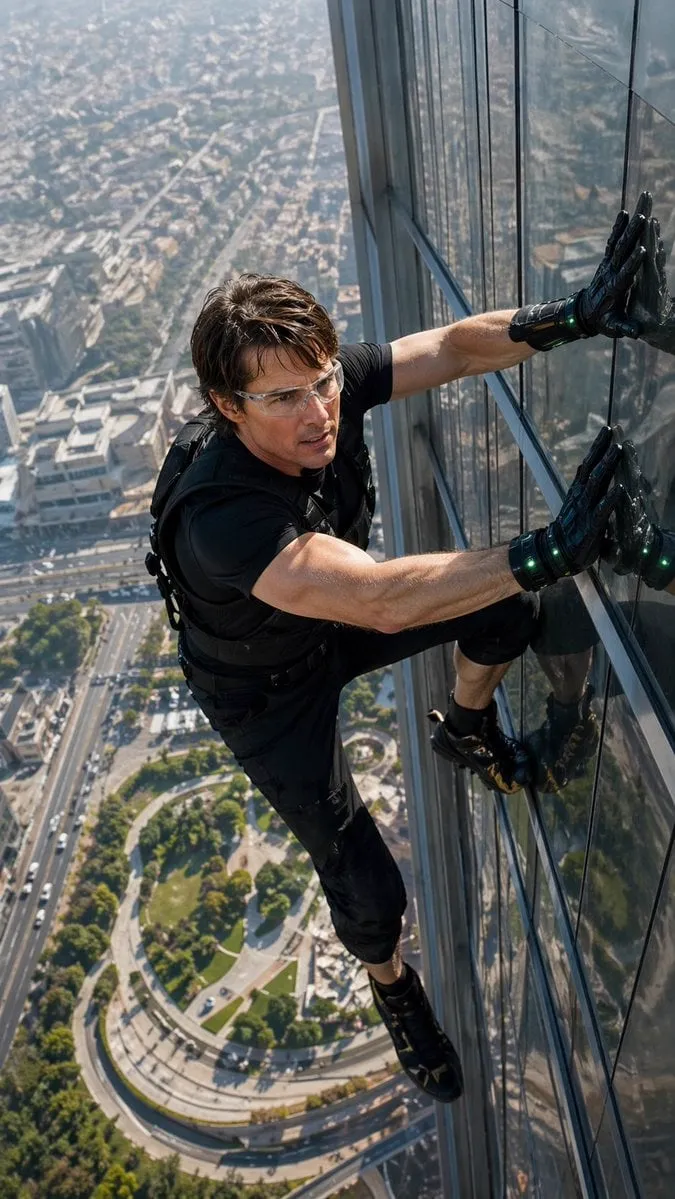
The practical consequence: AI video is most useful as a component, not as a replacement. It excels at shots that would be expensive, dangerous, or impossible to photograph, and at iteration speed during development. It struggles with continuity across a long scene, precise actor performance, and anything requiring legal clarity about likeness.
What Generative Video Changes at Each Stage of Production
Rather than treating AI as a single intervention, map it onto the stages you already have. Each stage has a different tolerance for imperfection.
Development and previsualization
This is where the return is highest and the risk lowest. You can generate mood boards that move, test a lighting direction, and cut a rough animatic in an afternoon. Nobody needs these frames to be final. They need to communicate tone to a client, a producer, or a collaborator who cannot read a script and imagine the result.
A useful habit: generate three versions of every key scene at low resolution. One literal, one stylized, one deliberately wrong. The wrong one often reveals what the scene is actually about.
Principal photography alternatives
Here the bar jumps. A generated shot in the final cut must match lens character, grain, color science, and motion blur of the photographed footage around it. Shots with no human faces, wide establishing views, weather, crowds, and insert detail are the safest candidates. Shots with sustained dialogue and emotional close-ups remain difficult, and audiences are unforgiving about eyes and mouth movement.
Editorial
Editors benefit in ways that rarely make headlines. Generative tools produce coverage fillers: a reverse angle, a cutaway, a background replacement for a blown-out window. They can extend a shot by a beat when a cut lands awkwardly. They can remove an object and reconstruct what was behind it. None of this is glamorous, and all of it saves hours.
Delivery and versioning
Localization is the quiet winner. Automated dubbing with voice matching, subtitle generation, and aspect-ratio reframing for vertical platforms turn a single master into a dozen deliverables. For a marketing team pushing the same spot to five regions, this stage alone can justify the tooling cost.
Choosing a Video Model for a Specific Shot
Model choice is a shot-level decision, not a project-level one. Different engines have different strengths, and forcing one model to do everything produces mediocre results everywhere.
Use these criteria when comparing options:
- Motion fidelity. Does the model understand physical cause and effect? Test with a simple action: a hand pushing a glass, a door swinging. Watch whether weight and inertia look plausible.
- Prompt adherence. Give a deliberately specific prompt with three constraints — subject, action, camera move — and see how many survive.
- Reference conditioning. Can it accept a character image, a style board, or a depth map? This determines whether you can match an existing look.
- Shot length before drift. Find the point where identity or geometry starts to slide. Most models have a reliable window; plan your cuts around it.
- Resolution and aspect ratio support. If you need anamorphic or vertical, check natively rather than cropping later.
- Determinism. Seeded, repeatable outputs matter enormously for iteration. If you cannot reproduce a good result, you cannot refine it.
- Cost profile per usable second. The headline price is irrelevant. What matters is how many attempts it takes to get one shot you would actually use.
A practical pattern is to keep two engines: a fast, cheap one for exploration and a high-fidelity one for finals. Blend them in the same sequence. Audiences do not know or care which model produced which shot.
Prompting for Shots, Not Just Still Frames
Most disappointing AI video comes from prompts written like image prompts. Images describe a moment. Video describes a change over time. If your prompt has no verb of motion, the model will invent a gentle drift and call it done.
A shot prompt works better as a small storyboard sentence with four blocks:
- Subject and wardrobe — specific, physical detail. Not "a woman" but "a woman in a faded olive raincoat, hair pinned back."
- Action with a clear start and end state — "she lifts the letter, reads two lines, folds it in half."
- Camera behavior — "slow push in from waist height, shallow depth of field, handheld."
- Environment and light — "late afternoon through dirty windows, dust in the air, warm practicals behind her."
Keep camera language to one instruction. Stacking "dolly, crane, and orbit" produces mush. If you need a complex move, generate it as two shots and cut between them.
Also useful: negative constraints. Naming what you do not want — text overlays, distorted hands, lens flare, slow motion — meaningfully reduces cleanup.
Working with image-to-video
When continuity matters, start from a still you control. Generate or photograph a keyframe, then let the model animate it. This gives you approval power before spending generation time, and it usually produces a more consistent result than pure text-to-video. It also fits existing production habits: a storyboard frame becomes a moving shot.
Character and Location Consistency Across a Sequence
Consistency is where amateur AI sequences fall apart. A face shifts between cuts, a jacket changes color, a room rearranges itself. Fixing this is a discipline, not a feature.
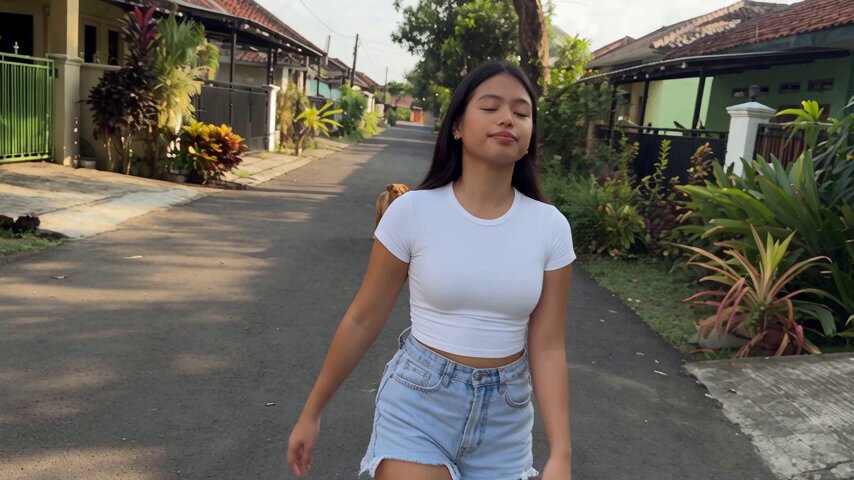
Build a character sheet first. Create a reference set with the same person in the same wardrobe from four angles plus one three-quarter close-up. Reuse those references in every shot involving that character. Do not describe the character anew each time; attach the reference.
Lock locations with a hero frame. Generate one wide shot of a set that you like, then use it as an image reference for every other angle in that scene. This keeps wall color, window placement, and practical lights stable.
Control wardrobe explicitly. Costume changes are a common continuity error in generated footage. If a scene spans a time jump, decide where the change happens and note it in your shot list.
Accept the close-up rule. Identical faces survive wide and medium shots far better than tight close-ups. Place your most demanding close-ups where the story can tolerate a slight difference, or handle them practically.
Keep a continuity log. A simple table with columns for scene, shot, character, wardrobe, and reference file will save you more time than any prompt trick.
Sound, Dialogue, and Performance
Video without sound is a test render. Sound is half the illusion, and generated audio has its own rules.
Ambience first. Lay in room tone and environmental beds before you judge a generated shot. A soft, believable ambience covers small visual imperfections and makes cuts feel intentional rather than abrupt.
Voice synthesis with restraint. Synthetic voices work well for narration, documentary voiceover, temp dialogue, and localization. They are weaker at emotionally complex performance, where breath, hesitation, and micro-timing carry meaning. If a line has to land, record it with a human or leave room in the edit for a real take.
Foley is underrated. Footsteps, cloth movement, and object handling anchor a generated image in physical reality. Even a rough Foley pass will make an AI shot feel twenty percent more finished.
Music sets the cut rhythm. Because generated shots often have ambiguous timing, cutting to music solves pacing problems that would otherwise require regeneration. Choose the track earlier than you normally would.
A Repeatable End-to-End Workflow
Here is a workflow that scales from a solo creator to a small team.
Step one: script breakdown. Create a shot list with duration, character, location, and difficulty rating. Mark every shot that genuinely requires photography or live action.
Step two: keyframe pass. Generate or source one approved still per shot. Do not animate anything until the stills are approved. This single rule prevents most wasted compute.
Step three: motion pass. Animate keyframes at low resolution. Expect a two-to-one failure rate on complex shots. Keep the winners, label them with seed and prompt.
Step four: continuity pass. Assemble the low-resolution sequence in the timeline. Watch it at speed, without effects. This exposes identity drift and pacing problems while they are still cheap to fix.
Step five: high-fidelity pass. Re-render only the shots that earned their place, at final resolution, with upscaling and interpolation where needed.
Step six: sound and grade. Build ambience, Foley, music, and dialogue. Then grade. Generated shots from different engines rarely share a color response, so a unifying grade is mandatory, not optional.
Step seven: archive. Store prompts, seeds, references, and model versions with the project. Six weeks later, when a client asks for a revision, you will need them.
Quality Control: Mistakes That Cost Whole Days
A short list of failure modes, and how to catch each one early.
- Judging shots in isolation. A shot that looks great alone can break a sequence. Always review in context, in a timeline, at normal speed.
- Ignoring motion blur and grain mismatch. Generated footage is often too clean. Adding grain and matching blur to surrounding photographed shots does more for believability than a higher resolution render.
- Over-relying on one long take. Long generated shots accumulate drift. Cutting more often is a legitimate solution, not a compromise.
- Skipping the temp mix. Editors who add rough sound early make better decisions about which shots survive.
- Not versioning prompts. Without a record of what changed, iteration becomes guessing.
- Trusting faces at small scale. Check close-ups on a large screen. Problems invisible on a laptop become glaring in a cinema or on a television.
- Forgetting aspect ratio early. Vertical reframing is much easier when you planned for it during framing.
Rights, Disclosure, and Working With a Team
Technical questions are easier than the human ones.
Likeness and consent. Never generate a recognizable real person without documented permission. For fictional characters, keep a record of how the reference imagery was created, especially if a real actor's likeness informed it.
Training and output policies. Different tools have different rules about commercial use and about what you may upload. Check before you build them into a client deliverable, and keep notes in the project file.
Disclosure. Decide in advance how and whether you disclose synthetic footage. Some broadcasters and platforms require labeling. In documentary and journalism contexts, transparency is not optional.
Team roles. AI changes job boundaries. Someone needs to own prompting, someone needs to own continuity, and someone needs to own final quality control. Without named owners, generated shots slip into the edit unchecked, and the whole sequence suffers.
Client communication. Show early, show rough, and explain what is placeholder versus final. Clients forgive an unfinished render. They do not forgive a surprise.
FAQ
Do I need a dedicated AI pipeline for every project?
No. Use it where it earns its place: previz, impossible shots, inserts, backgrounds, localization. Live action remains the backbone for performance-driven scenes.
How long does a usable AI shot take to produce?
Simple inserts can take minutes. A dialogue-heavy shot with strict continuity can take hours of iteration. Budget by complexity, not by count.
Can I match generated footage to footage from a real camera?
Yes, with work. Match lens character, add grain, match motion blur, and apply a unifying grade across the sequence. The grade is what sells it.
What is the biggest beginner mistake?
Animating before the stills are approved. Fixing a keyframe is cheap. Fixing a sequence built on the wrong keyframe is expensive.
Should I use one model or several?
Several, chosen per shot. Keep one fast engine for exploration and one high-fidelity engine for finals, and do not be sentimental about either.
How do I keep quality stable as the project grows?
Standardize references, keep a continuity log, and review the full sequence regularly rather than shot by shot.
What will matter most in a year?
Not raw generation quality, which keeps improving on its own. The differentiator will be workflow discipline: reference management, continuity tracking, sound design, and the judgment to know when a shot should simply be photographed.
The craft has not changed. Story, pacing, and performance still decide whether an audience stays. What has changed is the number of paths to a finished frame, and the value of knowing which path to take before you spend a day walking down the wrong one.
