

Most creator-led brands do not lose attention because their ideas are weak. They lose because the distance between a promising idea and a publishable cut is too long. By the time a script is approved, a shoot is booked, and an edit is delivered, the trend that inspired it has already cooled.
AI collapses that distance, but only when it is wired into a workflow instead of sprinkled on top. The creators producing consistently strong results treat AI as production infrastructure: trend research, shot planning, visual consistency, draft assembly, and iteration. This guide walks through that system end to end, including the decision points where AI helps, the places where it hurts, and the quality checks that keep a fast pipeline from turning into a fast embarrassment.
Why Influencer-Style Video Still Outperforms Polished Advertising
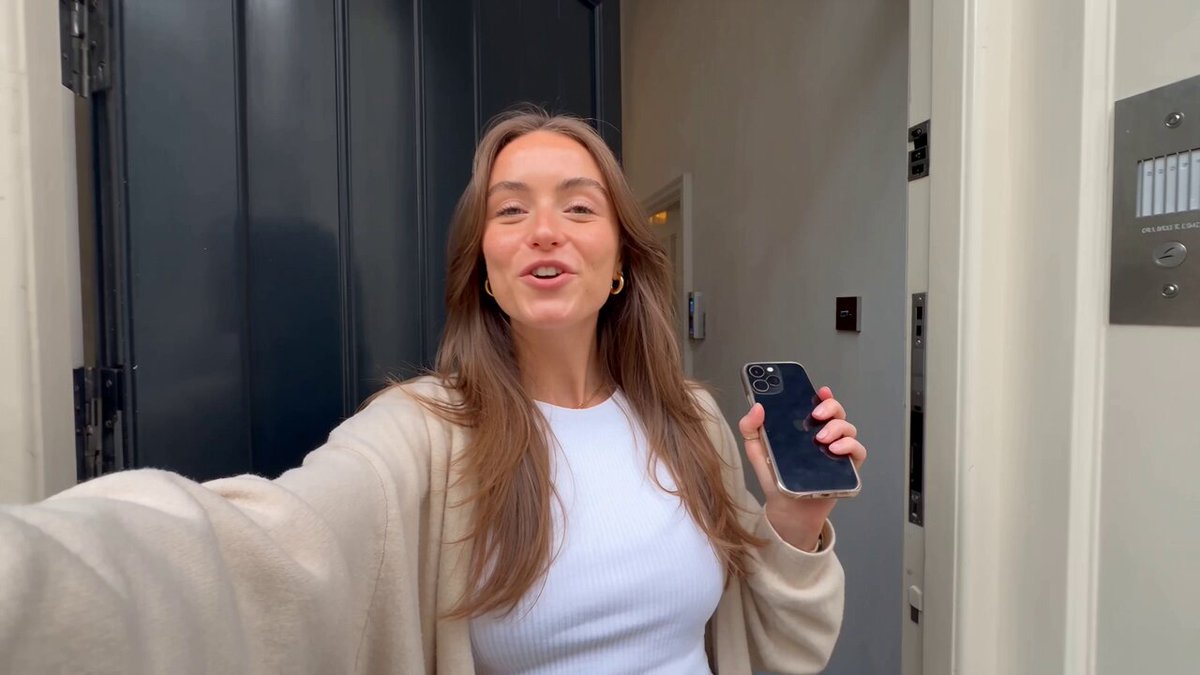
Audiences have spent years learning to ignore anything that looks like an advertisement. A face, a room, a handheld camera, and a slightly unpolished delivery still read as someone telling me something, which is exactly why creator-style content carries so much weight in feeds.
The mechanics behind that advantage are not mysterious:
- Face-forward framing. Human faces pull gaze before logos, text, or product shots. Creator content front-loads the face.
- Native texture. Slight motion blur, imperfect lighting, and real rooms signal authenticity faster than any caption claiming it.
- Hook density. Strong creator videos re-hook every few seconds instead of relying on a single opening.
- Conversational delivery. Direct address — "you", "here's what happened" — keeps retention higher than third-person narration.
AI does not replace any of those qualities. It removes the friction that prevents small teams from producing them at volume. A two-person marketing team cannot shoot forty variations of a hook in a week. With a structured AI pipeline, they can plan, generate, and assemble that many without a studio, and then spend their human hours on the parts that actually need taste: story, tone, and the final twenty percent of polish.
The Four Content Jobs Every AI Workflow Must Cover
One of the most common mistakes is treating "AI video" as a single activity. In practice, a healthy content engine runs four distinct jobs, each with different quality bars and different tolerance for automation.
| Content job | Typical length | Automation fit | Human input needed |
|---|---|---|---|
| Hook clip | 3–8 seconds | High | Hook idea, tone check |
| Story segment | 20–60 seconds | Medium | Narrative structure, pacing |
| Product demo | 15–45 seconds | Medium | Accuracy review, claims check |
| Evergreen library piece | 60–180 seconds | Low–medium | Positioning, messaging |
Hook clips are where AI shines brightest. They are short, visually driven, and easy to regenerate. A hook is essentially a visual hypothesis — something you test and discard quickly. Story segments need a human-shaped arc, so use AI for coverage and b-roll rather than for the emotional spine. Product demos require strict accuracy: every claim, feature, and price shown on screen should survive a compliance read. Evergreen library content should be produced more slowly and deliberately, because it compounds and will be watched long after the trend cycle that inspired it has passed.
Mapping your calendar against these four jobs prevents the classic failure mode where a team automates everything and ends up with a feed of hollow, interchangeable clips.
Trend Scanning: Turning Raw Signals Into Shot Lists
Trend research is not about chasing whatever is loudest. It is about finding formats you can execute credibly within your niche. A trend you cannot authentically perform will underperform no matter how well it is produced.
Where the signals live
Build a scan across several layers rather than one platform's trending page:
- Platform trend surfaces for raw format momentum — audio, transitions, pacing patterns.
- Comment sections on high-performing competitor posts. Complaints and questions are the most underrated brief generator available.
- Search suggestions and autocomplete for durable demand rather than momentary spikes.
- Community threads in the niches adjacent to yours, where vocabulary and objections surface before they reach mainstream feeds.
- Your own retention graphs, which tell you which format you personally execute well — the only trend data that is truly proprietary to you.
Scoring a trend before you commit
Run every candidate through a short scoring pass. Ideas that fail two or more questions get parked, not produced:
- Fit — can this format carry your actual message, or would it be costume?
- Longevity — is it a format that will still work in three months, or a one-week sound?
- Production cost — how many hours and how much generation spend does one variation require?
- Differentiation — are you entering the trend tenth, or are you bringing a genuine angle?
- Downside — if it flops publicly, what does that cost you?
Once a trend passes, convert it into a shot list immediately. Abstract trend notes rot fast; a concrete list of eight shots with durations and framing survives. This is also where AI-assisted planning earns its place: use a language model to expand a one-line concept into shot variations, alternate hooks, and caption angles, then edit that output down to what you would actually film or generate. The model is a volume generator, not an editor.
Building a Visual Identity That Survives Volume
The fastest way to make AI content look cheap is inconsistency. Every clip with a different lighting temperature, a different lens feel, and a different lead character reads as a collection of unrelated experiments rather than a brand.
Create a reference pack
Assemble a small, locked set of reference assets before generating anything:
- Character references — consistent face, wardrobe palette, and styling for recurring presenters.
- Environment references — two or three recognizable locations that recur across episodes.
- Lens and framing notes — focal length feel, camera height, typical shot sizes.
- Grade references — a small palette of color treatments, with one designated as default.
Treat this pack as the single source of truth. Every generation run should be prompted against it, and every draft that drifts stylistically should be rejected early rather than fixed later.
Lock color, lighting, and motion
The most common drift points are subtle: skin tone shifts between generated clips, background elements change shape, motion cadence changes from clip to clip. Two habits prevent most of it. First, generate a short stylistic anchor clip and use it as the comparison standard for every subsequent generation in that series. Second, keep a fixed motion vocabulary — if your series uses slow push-ins and gentle handheld drift, do not suddenly introduce whip pans because one clip looked static.
Consistency is not a limitation on creativity; it is what makes a recognizable series possible. Viewers should recognize your content within half a second, before they read a single word.
Synthetic Presenters, AI Co-Creation, and the Trust Question
Synthetic presenters have moved from novelty to practical option, and the choice between a real human, a synthetic presenter, and a hybrid setup is one of the most consequential decisions in a modern content operation.
When a synthetic presenter is the right call
- Volume with continuity. You need consistent output across many platforms and time zones without scheduling a human for every take.
- Localization. The same presenter can deliver the same script in multiple languages with matching delivery and framing.
- Sensitive or controlled messaging. Regulated categories often prefer a fully scripted, fully reviewable delivery.
- Concept testing. Rapidly testing a persona and tone before investing in a real on-camera creator.
When it is the wrong call
- Community-building content. Audiences build relationships with people, and synthetic delivery rarely creates the same attachment.
- Crisis or high-empathy moments. A generated face delivering an apology reads as evasion.
- Anything requiring genuine improvisation. Real reactions, unscripted humor, and live commentary are still human territory.
Disclosure and trust
Be straightforward about how content is produced. Audiences are generally tolerant of AI assistance when it is disclosed casually and confidently, and considerably less tolerant when they feel deceived. A simple line in the caption or a consistent on-screen convention is enough in most contexts. Regulatory expectations vary by market, so check the applicable rules for your category and region rather than assuming one approach travels everywhere.
A hybrid model often produces the best results: a real human provides the on-camera presence and personality, while AI handles b-roll, alternate language versions, background variations, thumbnail concepts, and the dozens of small edits that make up a publishing week.
The Production Pipeline, Step by Step
A reliable pipeline moves in one direction, with clear gates so nothing advances on hope.
1. Brief. One page: audience, single message, format, target length, success metric. If the brief cannot state the single message in one sentence, the video is not ready to be made.
2. Script and shot list. Write for spoken delivery, not for reading. Mark the hook, the turn, and the payoff. Keep total spoken length under the target runtime — delivery always expands.
3. Visual plan. Assign every shot a source: live footage, generated clip, screen capture, or graphic. This mapping is what keeps a shoot day from becoming a scavenger hunt.
4. Generation. Produce coverage in batches against the reference pack. Generate more than you need; selection is where quality comes from.
5. Assembly. Cut for pacing first, polish second. A rough cut that holds attention beats a beautiful cut that does not.
6. Sound pass. Levels, music bed, and any voice treatment. Bad audio makes good footage feel amateur faster than bad footage does.
7. Review gate. Accuracy, brand, legal, and platform-format review. This is a hard gate, not a suggestion.
8. Export and schedule. Produce the required aspect ratios and captions from a single master, then schedule with space between posts so you can read performance data before publishing the next variation.
Each gate should have one owner. Pipelines that stall usually stall because three people share approval and nobody owns the decision.
Quality Control: The Review Pass That Saves Campaigns
AI generation is fast enough that a single unverified claim or an odd visual artifact can go from draft to published in under an hour. Build a fixed checklist and run it every time.
- Claims check. Every product claim, statistic, and comparison verified against source material.
- Artifact scan. Watch at full size, then watch on a phone. Hands, teeth, text, reflections, and background signage are common failure points.
- Continuity check. Wardrobe, props, location, and lighting consistent across cuts within a series.
- Caption accuracy. Auto-captions mishear brand names, product names, and numbers constantly.
- Accessibility. Contrast of on-screen text, caption legibility, and no meaning carried by color alone.
- Format check. Safe zones respected for each platform's interface elements.
- Disclosure check. AI involvement and any sponsored relationships clearly indicated.
Assign one reviewer who is not the creator. Creators are the worst judges of their own artifacts because they know what the shot was supposed to be.
Packaging, Testing, and Iteration Loops
Production is only half the system. Distribution decisions determine whether the work compounds.
Test one variable at a time. Hook variations first, because the hook determines whether anything else matters. Then thumbnail or cover frame, then caption angle, then runtime. Changing three things at once teaches you nothing.
Build a simple performance log with columns for hook type, format, length, publish time, and retention at three key timestamps — roughly the first three seconds, the midpoint, and the final few seconds. Patterns emerge within a few dozen entries: which hooks hold, where viewers drop, and which formats consistently underperform for your specific audience.
Feed those findings back into the brief stage. The loop only works if research, production, and results live in the same document rather than in three separate tools nobody reconciles.
For evergreen library content, review and refresh quarterly. Update examples, re-record outdated lines, and re-export with current formatting standards. A refreshed library asset often outperforms a brand-new post because it already has history behind it.
Common Mistakes That Undermine AI Content Engines
- Automating taste. Generating endlessly without a point of view produces volume, not identity.
- No reference discipline. Every clip looks slightly different, so nothing feels like a series.
- Chasing every trend. Subscribing to all formats means mastering none.
- Skipping the review gate. Speed without verification is how brands end up issuing corrections.
- Treating AI output as final. The last pass — pacing, sound, timing — is still human work.
- Ignoring audio. Viewers forgive imperfect visuals; they do not forgive bad sound.
- Publishing everything at once. You lose the ability to learn from results.
- No measurement habit. Without a log, you are guessing every single week.
Most of these are process failures rather than tool failures. That is good news: process problems are cheaper to fix than talent problems.
FAQ
Do I need a real person on camera at all?
Not necessarily, but audience trust usually builds faster with one. If you go fully synthetic, invest extra effort in consistent personality, voice, and point of view so the presenter reads as a character rather than a template.
How many variations should I generate per concept?
Three to five hook variations per finished piece is a practical starting range. More than that and selection becomes slower than generation, which defeats the purpose.
How do I keep generated clips consistent?
Lock a reference pack, generate an anchor clip, and compare every new generation against it before accepting it. Reject drift immediately rather than hoping the editor can hide it.
What should I automate first?
Hook variations and b-roll. Both are low-risk, high-volume, and easy to evaluate. Keep narrative structure and final polish human for longer.
How do I handle disclosure?
State AI involvement plainly and consistently. Check the rules that apply to your market and category, and apply the strictest relevant standard across all your channels rather than varying by platform.
Is creator-style content worth it for B2B?
Yes. Business audiences respond to the same trust signals as consumer audiences. A credible face explaining a real problem outperforms a product montage in nearly every category.
What if a generated clip is almost right?
Regenerate rather than repair, unless the fix is purely editorial. Patching artifacts with masking tooling usually takes longer than running the generation again.
A Practical Starting Point
Pick one format, one presenter approach, and one publishing cadence, then run that combination for a month before expanding. Build the reference pack in week one, the scoring checklist in week two, and the performance log the moment your first piece goes live. Consistency in the system matters more than sophistication in any single tool — a modest pipeline run every week will outproduce an elaborate one that runs occasionally.
The teams winning this space are not the ones with the most advanced generation models. They are the ones who can move from trend signal to published cut quickly, keep the output unmistakably theirs, and learn something measurable from every post. Build that loop, and the tools become interchangeable.
