

Why a Multi-Model Workflow Beats a Single Tool
Most creators start with one AI video generator and try to push every shot through it. That approach works for a few weeks, then stalls. The engine that renders a convincing talking head produces muddy wide shots, and the one with beautiful cinematography cannot hold a face steady from cut to cut. The mental shift that unlocks real output quality is treating models as a crew rather than a single camera operator. Each engine has a bias — toward motion, toward photorealism, toward stylised rendering, toward short clips — and casting the right one per shot matters far more than hunting for a mythical best model.
A staged, multi-model pipeline also protects you from churn. Engines change tiers, get rate-limited, tighten content policies, or quietly regress after an update. If your entire production depends on one endpoint, a single policy change halts everything. If your pipeline is a set of stages with swappable engines, you replace one node and keep shipping. That resilience is worth more than any individual quality win.
Finally, a multi-model approach changes how you think about the edit. When you know you can regenerate any single shot in isolation, you stop trying to get the whole sequence perfect in one pass. You storyboard, generate, review, replace, and assemble — exactly like a traditional production, just compressed into hours instead of weeks.
This guide walks through how to build that pipeline: how to classify models by job, how to plan shots, how to prompt across different engines, how to keep characters consistent, how to handle sound, and where the real time and money go.
What Each Class of AI Video Model Does Best
Not all video models are interchangeable, and treating them as such is the most common source of disappointment. Group them by the job they perform and pick per job.
Text-to-video engines
These take a written prompt and return a clip. They are best for establishing shots, abstract transitions, B-roll, environmental atmosphere, and any moment where you do not need a specific person or product to look exactly right. Their weakness is control: ask for a precise hand gesture or a brand-accurate label and you will spend a lot of attempts fixing small details.
Image-to-video and animation engines
These take a still frame and add motion. This is where serious narrative work happens, because you control the composition, casting, wardrobe, and lighting in the still, then let the model animate it. If you can generate a good image, you can generate a good shot. The failure mode is over-animation: asking for too much movement produces warping, melting faces, and drifting backgrounds. Keep motion instructions modest and grounded.
Camera and motion-control engines
Some models expose explicit controls for dolly, pan, crane, orbit, or handheld shake. Others accept reference footage and transfer motion onto a new subject. These are the tools you reach for when the shot's meaning depends on the move — a slow push-in during a reveal, a whip pan into a title card. Use them sparingly; a film where every shot moves is exhausting.
Specialty utilities
A complete toolkit includes unglamorous helpers: face-swap and identity-lock tools, lip-sync and dubbing engines, background removal, upscalers that turn a 720p draft into a clean 1080p master, frame interpolation for slow motion, and cleanup models that erase artefacts. These rarely get attention, but they are the difference between a demo and a deliverable.
Style and look engines
Some models are tuned for specific aesthetics — anime, archival film, claymation, three-dimensional product renders. If your project has one dominant look, choosing a style-tuned engine for the majority of shots and reserving a generalist for outliers saves enormous time on prompt engineering.
Designing the Pipeline, Stage by Stage
A reliable AI video pipeline has five stages. Skipping any of them costs more time later than it saves now.
Stage 1: Script and shot compression
Write the script, then compress it. AI video is expensive per second and weak at long continuous takes, so cut ruthlessly. Aim for shots of two to five seconds, and let the edit carry meaning rather than the model. Mark which lines are dialogue, which are voiceover over B-roll, and which are purely visual. Marking this early tells you which model class you need before you generate anything.
Stage 2: Look development
Before producing dozens of clips, generate three to five key stills that define the visual language: colour palette, lens character, lighting direction, wardrobe, and set dressing. Lock these as reference images. Every later stage inherits from them. This is the single highest-leverage hour in the whole process, because a consistent look hides a lot of small inconsistencies elsewhere.
Stage 3: Shot generation
Generate the stills for each shot first, review them as a contact sheet, then animate the approved frames. Reviewing twenty stills takes two minutes; reviewing twenty clips takes twenty. Do not animate anything you have not approved as a still.
Stage 4: Assembly and pacing
Bring clips into an editor, cut to a scratch track, and find out what is missing. You will almost always discover that you need fewer beautiful shots and more connective tissue — a hand opening a door, a footstep, a light switching on.
Stage 5: Sound, finish, and delivery
Sound design carries more perceived quality than resolution. Add room tone, footstep foley, whooshes on transitions, and a music bed. Then upscale, colour-match, and grain-match the final cut so all models' outputs sit in the same world.
Prompt Craft Across Different Engines
The temptation is to write one mega-prompt describing everything. Resist it. Each engine responds to a different prompt grammar, and the fastest way to learn a new one is to test a control variable at a time.
A useful prompt skeleton for image generation covers six slots in order: subject, action, environment, lighting, lens and camera, and mood. Write them as short comma-separated phrases rather than flowing sentences.
For video, the skeleton changes. Motion prompts should describe one primary movement and one secondary movement at most: "slow dolly in, slight head turn to the left." Anything more and the model improvises, usually badly. Avoid negation — many engines effectively ignore "no" and render the object anyway. Instead of "no people in the background," describe the empty street directly.
Keep a prompt log. Every time a shot works, record the exact prompt, engine, seed, and settings. After a week you will have a personal style guide that outperforms any generic prompt library, because it is tuned to your look and your gear.
Finally, learn each engine's comfortable clip length and aspect ratio. Forcing a model to work well beyond them produces drift, warping, and cropped compositions that cost more to fix than to regenerate.
Keeping Characters and Sets Consistent
Consistency is the hardest problem in AI video, and the solution is layered rather than singular.
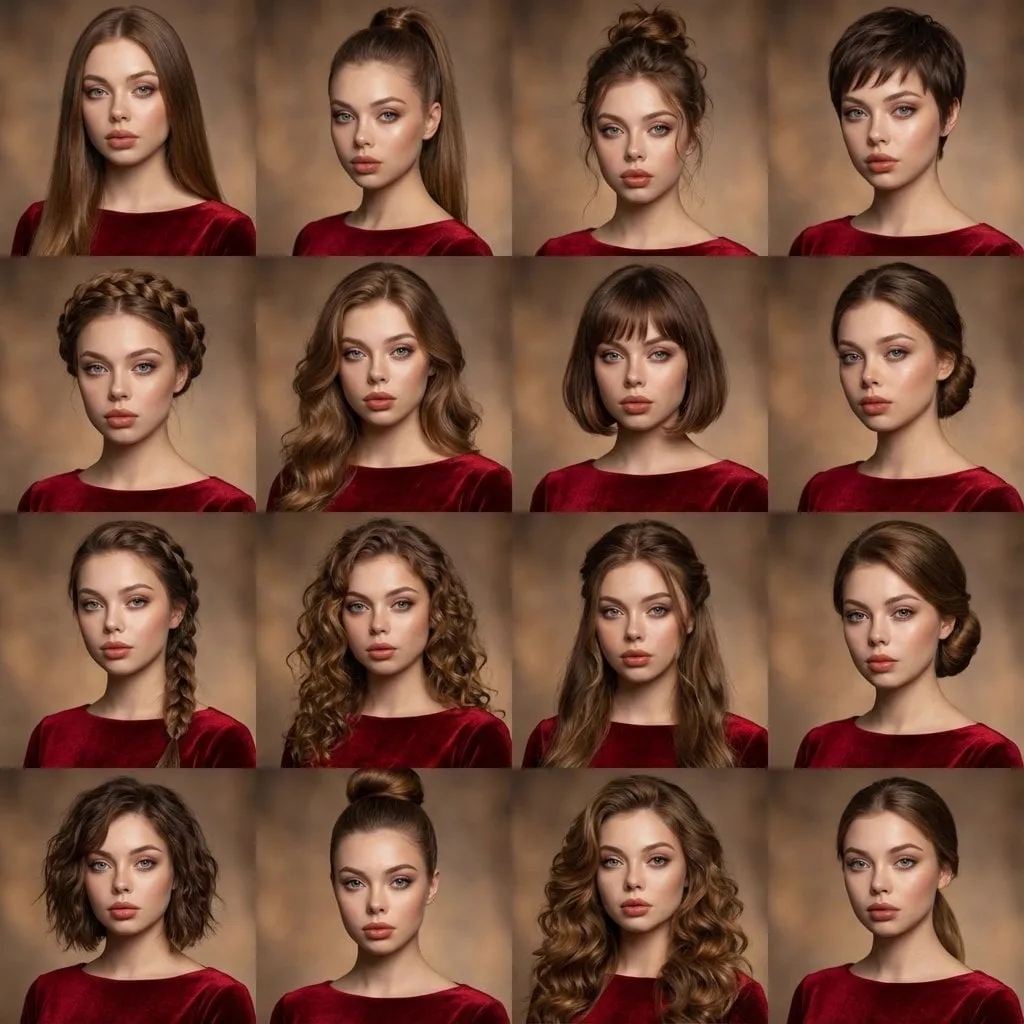
Start with a locked character sheet: one front-facing still, one three-quarter still, and one profile, all generated before production begins. Use reference-image features, character training, or identity-lock tools if your engine supports them. When you animate, always animate from an approved still rather than from text, because text-to-video will re-invent the face every time.
For environments, build a small reference set per location — wide, medium, and detail — and reuse them. Reusing the same still with different camera moves is a legitimate and highly efficient technique that also guarantees a location looks identical across shots.
Wardrobe continuity deserves its own note. Describe clothing in the same words in every prompt, in the same order. Small wording changes produce different garments. If a project spans many episodes, copy the wardrobe paragraph verbatim into every prompt instead of retyping it.
When inconsistency still slips through, fix it in post rather than regenerating. A face-lock pass, a colour match, or a small reframe solves most drift for a fraction of the generation cost.
Budget, Speed, and Quality: Decision Criteria
Any model choice trades three things: time, cost, and fidelity. Make the trade explicit instead of defaulting to the most expensive option.
Use fast, cheap engines for: animatics, motion tests, timing experiments, temporary B-roll, and anything you will replace. These let you validate a cut before committing.
Use high-fidelity engines for: hero shots, faces in close-up, product beauty shots, and anything appearing in the first five seconds. Front-load spend where attention is highest, and economise everywhere else.
Use specialist tools for: problems a general model cannot solve — a locked-off product angle, precise lip sync, a clean background plate. Paying for a narrow tool is often cheaper than burning many attempts on a generalist.
A simple decision rule: if a shot appears longer than one second or features a face, quality-tier it. If it flashes past in a transition, draft-tier it. Applied consistently, this rule cuts generation spend dramatically without a visible drop in perceived quality.
Also factor in human time. A slow engine that returns one good result is usually cheaper overall than a fast one requiring twenty retries, because retries consume review attention, not just compute.
Common Mistakes and How to Avoid Them
Generating before designing. Producing clips without a locked look almost always means regenerating everything after the palette shifts.
Over-directing motion. Two or three simultaneous movements in one prompt produce chaos. One primary move per shot.
Neglecting audio. Viewers forgive soft detail; they do not forgive hollow sound. Budget time for foley and music before you polish pixels.
Ignoring aspect ratio. Generating 16:9 footage for a vertical deliverable wastes the best part of every frame. Set the format first.
Never tightening the cut. AI clips tend to feel a beat too slow. Cutting two frames off each shot frequently increases energy more than regenerating at higher quality.
Chasing one perfect take. Diminishing returns arrive fast. Accept a good take, move on, and fix small flaws in post.
Skipping version control. Name files by shot, version, and engine. A folder of untitled clips becomes unusable within a day.
A Worked Example: A Thirty-Second Product Film
Suppose you need a thirty-second film for a small device, delivered in both horizontal and vertical formats.
Write eight shots: an opening texture, a wide of the workspace, a hand placing the device, a close-up of the surface, a mid-shot of the user interacting, a detail of the gesture, a wide pull-back, and a closing logo beat. Compress to roughly three seconds each.
Generate a look pack: three stills establishing warm morning light, a shallow depth of field, and a consistent desk surface. Approve them.
Build a still for each of the eight shots from the look pack, using image-to-video throughout so the device design never drifts. Animate with one motion each — a slow push, a tilt, a gentle handheld sway. Reserve your highest-fidelity engine for shots three and six, where hands and product detail dominate attention.
Assemble to a scratch music track, cut two frames from each transition, then add room tone, a fabric rustle on the placement shot, and a soft whoosh into the logo. Upscale, colour-match, and reframe the vertical version by re-generating the two compositions that crop badly rather than panning and scanning everything.
Total: eight to twelve approved stills, roughly twelve to eighteen animation attempts, one sound pass, and a finish. That is a realistic shape for a short commercial piece built with a multi-model pipeline.
FAQ
Do I really need more than one model?
For anything longer than a single shot, yes. Different shots demand different strengths, and one engine's weakness becomes your bottleneck. Two or three engines plus one specialist tool covers most projects.
How do I stop characters from changing between shots?
Always animate from an approved still, never from text alone. Keep a three-angle character sheet, reuse the same wardrobe wording verbatim, and fix residual drift with an identity-lock pass in post.
How long should an AI-generated shot be?
Two to five seconds is the sweet spot. Longer clips drift, and shorter ones feel frantic. Let the edit, not the model, create rhythm.
What matters more, resolution or sound?
Sound, by a wide margin. A well-designed 1080p cut reads as more professional than a silent 4K one with hollow audio.
How do I keep costs predictable?
Draft-tier every transitional shot, quality-tier every face and hero shot, and validate timing with animatics before generating finals. Reviewing stills is dramatically cheaper than reviewing clips.
Can I mix aesthetic styles across one video?
You can, deliberately, as a device — for example, switching to a different look during a flashback. Unintentional mixing is the problem, and a locked look pack prevents it.
Where to Start This Week
Pick one short project — fifteen to thirty seconds — and run the full pipeline once, end to end, even if the result is imperfect. Choose two general video engines and one specialist utility. Lock a look pack of three stills. Build a shot list of eight to twelve beats. Generate stills before animation, review them as a contact sheet, then animate only what you approve. Cut to music, add sound design, and finish.
The goal of the first run is not a masterpiece; it is to discover where your pipeline leaks time. Most creators find that their bottleneck is not generation speed but decision speed — too many options, no approved references, no prompt log. Fixing those three habits typically doubles output without touching a single model setting. Once the loop feels routine, expand: add a vertical variant, add a second language dub, add a longer narrative piece. The tooling will keep changing, but a staged, multi-model workflow stays useful regardless of which engine is trending next month.
