
Why AI Video Became a Personal Productivity Problem
Generative video stopped being a novelty the moment it started fitting inside an ordinary working day. A solo creator can now sketch a concept in the morning and have a rough cut by the afternoon. A two-person marketing team can produce a product explainer without booking a studio. A teacher can turn a lesson outline into a narrated visual walkthrough between classes.
The catch is that most people adopt AI video tools the same way they adopt any new software: they open the tool, type something, wait, and hope. The output is often impressive for thirty seconds and unusable for thirty minutes. The bottleneck is almost never the model. It is the workflow around the model.
This guide is about that workflow. Not which button to press, but how to structure planning, prompt design, continuity, assembly, review, and publishing so that AI video actually reduces the time you spend instead of adding a new category of busywork.
The core principle is simple: treat generative video as a production stage, not as a magic box. Every production stage has inputs, quality gates, and outputs. When you define those, the tool becomes predictable.
Mapping Your Video Workflow Before Touching a Tool
Before choosing a generator, write down what actually happens between "we need a video" and "the video is live." Most creators discover they have four or five distinct stages, and that they have been collapsing all of them into one vague session of "working on the video."
A useful map looks like this:
- Intent — What is this video for, who watches it, and what should they do afterward?
- Script and structure — The narrative spine, even if it is only eight bullet points.
- Visual plan — Shot list, style references, character or product notes, aspect ratios.
- Generation — Producing raw shots, images, voice, and music.
- Assembly — Cutting, sequencing, pacing, captions, sound balance.
- Review — Feedback, revisions, approvals.
- Delivery — Export settings, thumbnails, descriptions, distribution.
Once you can see those stages, you can measure them. Time each one for a single project. Nearly everyone finds the same pattern: generation feels fast, but assembly and review eat the day because the raw material was never planned for editing.
Decision criteria for where to apply AI first
Not every stage benefits equally. Apply AI where the work is repetitive, high-volume, or low-stakes-but-time-consuming. Keep humans on judgment-heavy steps.
| Stage | Good AI fit | Poor AI fit |
|---|---|---|
| Script outlines | First drafts, variations, translations | Final brand voice, legal claims |
| Visuals | B-roll, concept frames, stylized shots | Hero product footage requiring exact fidelity |
| Voice | Scratch narration, templated explainers | Sensitive testimonials |
| Assembly | Rough cuts, caption alignment, silence removal | Final pacing on emotional pieces |
| Delivery | Format variations, thumbnails, metadata | Relationship-driven outreach |
That table alone resolves most tool-choice anxiety. You are not looking for one AI that does everything. You are looking for a workflow where each stage has a clear owner, human or machine.
The Planning Layer: Briefs, Scripts, and Storyboards
The single highest-leverage habit in AI video is writing a one-page brief before generating anything. It takes ten minutes and routinely saves two hours.
A working brief contains:
- Objective — one sentence, action-oriented.
- Audience — who they are and what they already know.
- Length and format — runtime, aspect ratio, platform.
- Tone references — two or three existing videos that feel right.
- Must-include elements — product name, disclaimer, logo placement.
- Constraints — budget of time, no live actors, no licensed music, and so on.
- Definition of done — what "finished" looks like.
From the brief, write the script in beats rather than paragraphs. A thirty-second video usually needs five to seven beats. Each beat becomes a shot or a small cluster of shots. This is where generative workflows either get fast or get chaotic: if your script has twelve beats for a thirty-second video, you have already designed an assembly problem.
Storyboards without drawing
You do not need to sketch. Use text frames. For each beat, write three lines:
- Frame description — what the viewer sees.
- Motion or change — what moves, or what shifts between frames.
- Audio note — narration line, sound effect, or music cue.
Example for a software demo:
Frame: a cluttered desk at dawn, a laptop glowing.
Motion: camera pushes slowly toward the screen; clutter blurs out.
Audio: "Most teams lose the first hour of the day to setup."
This text storyboard is the input format for everything downstream. It also becomes your shot list, which becomes your checklist for generation and assembly. When a producer asks where a shot came from, you have an answer.
Prompt Design That Produces Usable Footage
Prompt quality is not about length. It is about specificity in the dimensions that matter and silence on the dimensions that do not.
The dimensions that matter most for video:
- Subject — who or what, described physically.
- Action — what is happening across the shot, not just in frame one.
- Environment — location, time of day, weather, background density.
- Camera — shot size, angle, movement, lens feel.
- Light — source, direction, quality, contrast.
- Style — reference to medium, palette, texture.
- Continuity anchors — details that must persist across shots.
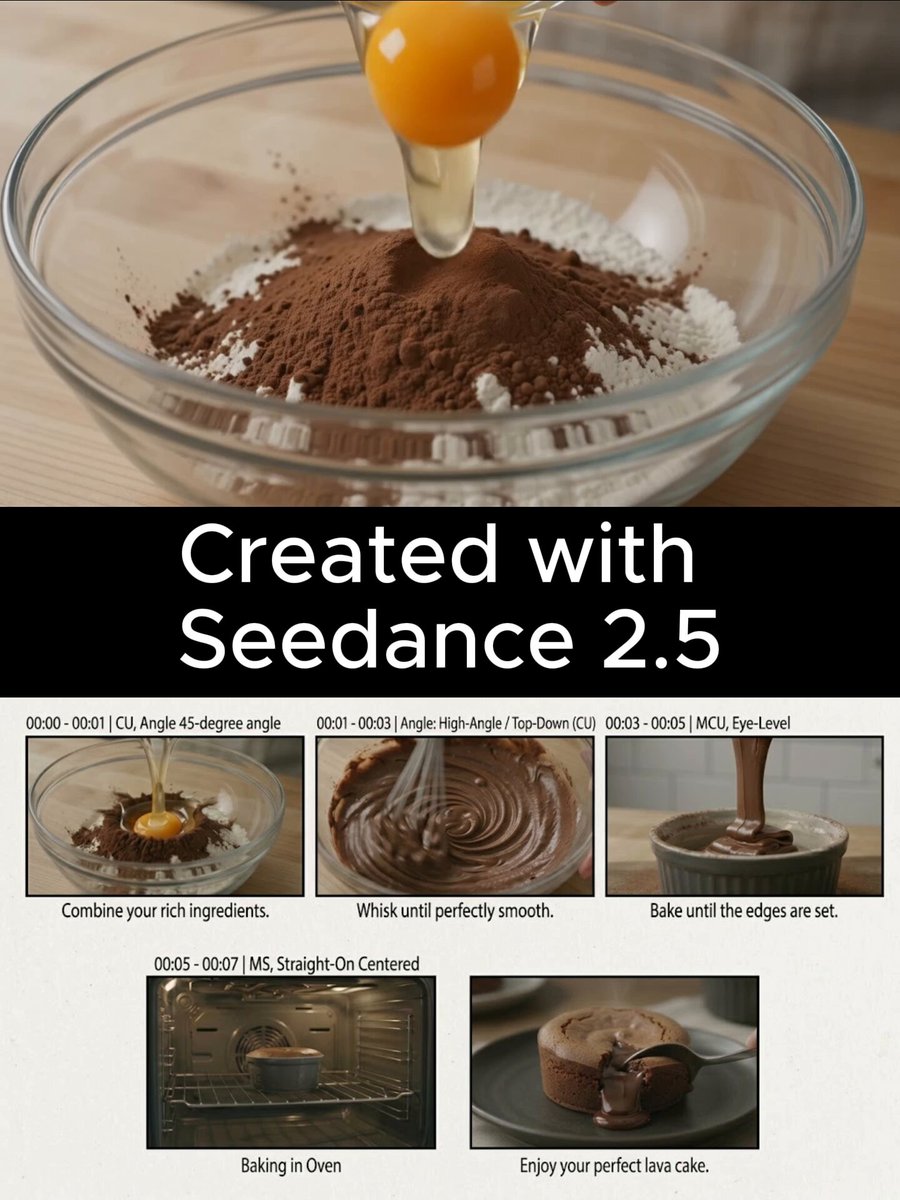
A prompt template that works well in practice:
[Shot size] of [subject with 2-3 physical details], [action across the shot],
[environment], [lighting], [camera movement], [style reference],
[continuity anchors], aspect ratio [x:y]
Iterate one variable at a time
New users change six things between attempts and cannot tell which change helped. Change one variable per generation cycle. If the lighting is wrong, fix the lighting and leave the rest untouched. Keep a simple log with three columns: prompt version, what changed, what improved. After ten projects this log becomes your personal prompt library, and your first attempt success rate climbs sharply.
Negative constraints and safety rails
List what you do not want — text overlays, watermarks, distorted hands, extra limbs, logos, specific colors. Also decide your review gate: who looks at raw generations before they enter the assembly timeline. Unreviewed generated footage has a way of ending up in a final cut with a floating artifact nobody noticed at 2x speed.
Scene Consistency and Continuity at Scale
Consistency is where most AI video projects visibly break. A character's jacket changes color, a product label flips, a room's lighting shifts between shots that are supposed to be seconds apart.
Three approaches, in increasing order of effort:
- Locked reference frame — generate one strong image, then reuse its description verbatim in every subsequent prompt. Cheap and surprisingly effective for short pieces.
- Character sheet — write a short document describing each recurring subject: age range, hair, wardrobe, distinguishing features, and a stable reference image. Paste the relevant lines into each prompt.
- Trained or fine-tuned style — when a project needs dozens of shots in a very specific look, training a small custom visual style pays off. It is worth it for series work, not for one-off videos.
Practical continuity checklist
- Wardrobe and props described identically across prompts
- Same time of day and weather for shots in the same sequence
- Same lens language — do not mix wide and telephoto randomly
- Same color treatment, or a deliberate transition between acts
- Same aspect ratio and framing rules unless there is a narrative reason
Run this checklist after generation and before assembly. Fixing continuity by regenerating three shots takes minutes. Fixing it after a rough cut is assembled takes an hour, and fixing it after a client review takes a day.
The Editing and Assembly Loop
AI compresses generation time; editing is where the remaining hours hide. Two rules keep assembly fast.
Rule one: generate to the edit, not past it. If a shot will occupy one second in a fast montage, do not spend twenty minutes perfecting it. Match effort to screen time.
Rule two: assemble in passes.
- Pass 1 — Story: place clips in order with no transitions. Does the sequence make sense muted?
- Pass 2 — Pacing: trim heads and tails, adjust clip durations so beats land.
- Pass 3 — Audio: narration, music bed, sound effects, level balance.
- Pass 4 — Text: captions, titles, lower thirds, on-screen callouts.
- Pass 5 — Polish: color, subtle motion, transitions, final audio pass.
Do not do pass five work during pass one. This is the most common self-inflicted delay in AI video.
Where automation genuinely helps
- Silence and filler-word removal in talking-head footage
- Automatic caption generation and alignment
- Beat detection for music-synced montages
- Batch export in multiple aspect ratios
- Rough color matching across generated clips
Where automation still needs a human: pacing decisions, emotional timing, comedic rhythm, and anything requiring an opinion about the audience. Use AI for mechanical work, keep judgment manual.
A realistic time budget
For a two-minute explainer with twenty generated shots and a narrated script, a practiced solo creator can work like this:
| Stage | Time |
|---|---|
| Brief and script | 45 min |
| Text storyboard and shot list | 30 min |
| Generation and selection | 60–90 min |
| Assembly to rough cut | 45 min |
| Audio, captions, polish | 45 min |
| Export and metadata | 20 min |
Total: roughly four to five hours. The same piece with no planning structure typically takes a full day or more, mostly in rework.
Review, Feedback, and Approval Habits
Feedback is where projects die quietly. Loose comments like "make it pop" or "this section feels long" create revision cycles with no end condition. Fix this with structure.
- Ask for notes at the right resolution. Send a rough cut with a clear note: "Comment on story and order only. Timing and color come next."
- Timecode every note. "At 00:14 the second shot feels disconnected" is actionable. "Feels off" is not.
- Batch feedback into one round where possible, and set a deadline for notes.
- Separate must-fix from nice-to-have. Label them. Must-fix blocks approval; nice-to-have goes to a backlog.
- Version your exports with a simple naming pattern:
project_v03_roughcut. Never overwrite.
If you work alone, still do a formal review pass. Watch once muted, once with audio only, and once at normal speed on a phone. Each mode surfaces different problems — a muted watch catches visual logic gaps, an audio-only listen catches script padding, and the phone check catches anything too small to read.
Publishing, Repurposing, and Asset Hygiene
A finished video is raw material for five more. Build a repurposing step into every delivery so it does not become a separate project later.
- Cut a vertical excerpt for short-form platforms
- Pull two quote frames as stills
- Export a captioned square version for feed posts
- Save the narration audio as a standalone clip
- Write the description once, then adapt the hook for each channel
File and asset hygiene
Generative projects accumulate enormous numbers of files. A flat folder with 300 unlabeled renders is a productivity tax that compounds monthly. Use a predictable structure:
/project-name
  /brief
  /script
  /storyboard
  /prompts
  /raw-generations
  /audio
  /exports
  /publish
Name generated files with the beat number and version, such as beat-04_v2.mp4. When you return to a project three weeks later, this structure saves you from re-generating work you already own.
Export settings that avoid re-uploads
Match the platform's recommended resolution, frame rate, and bitrate. Uploading a 4K master to a platform that re-encodes aggressively can look worse than a clean 1080p export. Keep a high-quality master archived and produce platform-specific exports from it rather than re-exporting from the timeline each time.
Common Mistakes That Slow AI Video Work Down
These show up in nearly every struggling workflow:
- Skipping the brief. Generates indecision later, which is far more expensive.
- Generating before scripting. You end up with beautiful clips that do not form a story.
- Chasing perfection on disposable shots. Effort should track screen time.
- Changing many prompt variables at once. You learn nothing and repeat mistakes.
- No continuity anchors. Forces regeneration and breaks the illusion.
- Editing in one giant pass. Mixing story, pacing, audio, and polish makes every change ripple.
- Unstructured feedback. Produces revision loops with no exit.
- No naming convention. Turns every return visit into an archaeology project.
- Treating AI as the author. The tool has no opinion about your audience; you do.
- Ignoring audio until the end. Bad audio sinks good visuals faster than bad visuals sink good audio.
The through-line: AI removes production friction, so planning friction becomes the dominant cost. Fix planning and the whole pipeline speeds up.
FAQ: AI Video Workflow Questions
How long does it take to learn an AI video workflow?
Expect one to two weeks of deliberate practice to internalize the brief-script-storyboard-generation-assembly sequence. The tool is learned in hours; the workflow takes repetition. Pick one small project per week for a month and refine the process each time.
Should I generate video first or write the script first?
Script first, always. Even a five-line script gives the generation stage a target. Generating first feels faster and almost always produces footage that gets discarded.
How do I keep characters consistent across many shots?
Write a character sheet with fixed physical details and reuse those exact phrases in every prompt. Add one strong reference image. For series work with dozens of shots, a trained custom style is the more reliable option.
Do I need a powerful computer?
For browser-based generation, no. For local upscaling, batch rendering, and heavy editing, a machine with a modern GPU and generous fast storage saves considerable waiting time. If you edit daily, hardware is a legitimate productivity purchase.
What is the best way to handle revisions?
Collect notes with timecodes, split them into must-fix and optional, and complete one consolidated revision pass. Send a new version number every time so nobody reviews a stale cut.
How do I measure whether my workflow is improving?
Track four numbers per project: hours from brief to final export, number of generation attempts per accepted shot, number of revision rounds, and percentage of generated footage used in the final cut. Rising utilization and falling revision rounds mean the workflow is working.
Can AI video replace a production crew?
For some formats, largely yes — explainers, social clips, concept pieces, and internal training. For others — documentary, live events, and anything where a real person's presence is the point — AI supplements rather than replaces. Choose the format that matches the tool, not the other way around.
Building a Workflow That Survives Real Deadlines
The future of personal productivity is not a better model release. It is a repeatable process that keeps working when you are tired, rushed, and juggling three projects at once.
Start with the brief. Convert it into beats. Convert beats into a text storyboard and a shot list. Write prompts that isolate one variable at a time. Lock continuity anchors before generation, not after. Assemble in passes, review with structure, and archive with names a stranger could understand.
Do that for five projects and the pattern becomes automatic. Generation time stays roughly constant, but rework collapses — and rework is where the hours actually go. The creators who look effortless with AI video are not using secret prompts. They simply built the scaffolding first, so the tools had somewhere useful to land.
