
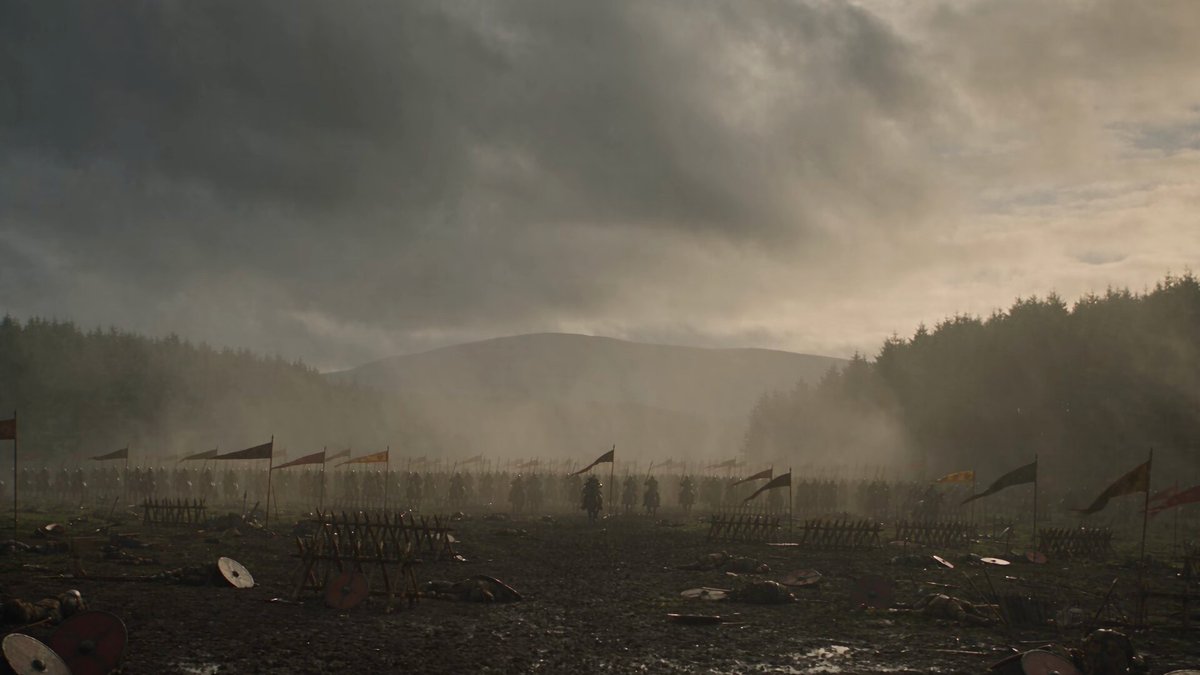

Why AI video production needs a workflow, not a prompt
Text-to-video models have reached the point where a single sentence can produce a shot that looks like it came from a real camera. That is exactly why so many projects stall halfway. The first clip is thrilling, the second is inconsistent, the third has a warped hand, and by the fifth the creator is sitting on a folder of beautiful fragments with no film inside it.
The reason is structural rather than technical. Generative video models do not understand intent; they predict plausible pixels. Every variable you leave undefined — camera height, lens feel, time of day, wardrobe, pacing, background population — gets filled in by the model's own statistical preference. Two clips generated ten minutes apart can look like they were shot in different countries by different crews.
A workflow fixes this by turning creative decisions into explicit, repeatable inputs. Instead of asking a model to invent a scene, you describe a scene precisely enough that the model only has to render it. Instead of hoping two shots match, you anchor them with the same reference frame, the same lighting language, and the same lens vocabulary. Instead of judging a clip on vibes, you check it against a written shot specification.
The practical payoff is unglamorous but decisive: predictable shot counts, fewer regeneration cycles, faster review rounds, and a final cut that feels intentional rather than accidental. Treat generation as one stage inside a pipeline — pre-production, generation, assembly, finishing — and the tooling stops feeling magical and starts feeling like a camera you can actually operate on a deadline.
This guide walks through that pipeline in the order you will actually use it, with decision criteria, sample prompts, checklists, and the mistakes that cost the most time.
Model selection: matching the engine to the shot
No single engine wins every category. The most common beginner error is choosing one model for an entire project because it produced one impressive demo clip. Professional pipelines mix engines the way a production mixes lenses.
Text-to-video for establishing shots and atmosphere
Cinematic text-to-video engines excel at wide shots, environmental storytelling, weather, crowds, and camera moves that are hard to shoot practically. They are strongest when the frame is dominated by light, landscape, architecture, or motion blur. They are weakest when a specific human face must stay recognizable or when precise hand interaction is visible. Use them for openings, transitions, B-roll, and any shot where mood matters more than identity.
Image-to-video for controlled subjects and products
When a shot must contain a specific person, product, or logo shape, start from a still image: a generated character sheet, a photographed product, a rendered 3D frame, or a storyboard panel. Image-to-video engines treat that frame as reality and animate forward from it, which dramatically reduces drift in facial features, packaging geometry, and color. This is the single most reliable technique for brand work and serialized content.
Performance transfer for dialogue and expression
Shots with speaking characters need a different class of tool: performance transfer, where a driving video or audio track supplies timing and mouth shapes while the target image supplies identity. Use these only for close and medium shots where the mouth is clearly visible. Wide dialogue shots can usually be generated normally, because lip sync errors disappear at that scale.
Fast draft engines for previsualization
Before committing heavy generation time to a hero shot, block the whole sequence with a fast, cheap engine at low resolution. Timing problems, missing coverage, and confusing geography are much easier to spot in a rough cut than in twenty separate polished clips. Previz is not wasted effort; it is the cheapest insurance in the pipeline.
Decision criteria that actually matter
Score each candidate engine on: maximum clip duration per generation, motion coherence under fast action, realism of skin and fabric, text rendering accuracy, supported aspect ratios, output resolution, average queue time, commercial usage terms, and how strongly the output responds to negative constraints. Keep a short internal note per engine — three or four lines is enough — and update it whenever a new version ships, because capabilities shift quickly.
Pre-production: shot lists, lookbooks, continuity bibles
AI projects fail in pre-production far more often than in generation. Three documents prevent nearly all of it.
The shot list
Build a table with one row per shot and these columns: shot number, target duration, framing, subject and action, camera movement, lighting, audio intent, assigned engine, reference frame path, and approval status. A thirty-second piece usually needs eight to fourteen shots once you include inserts and transitions. Writing them down first prevents the classic trap of generating clips that are individually attractive but edit together into chaos.
The lookbook
Collect ten to twenty reference images that define palette, contrast, texture, and lens character. These can be photographs, film stills, or previous AI output you liked. The lookbook is not decoration — it is the shared language you translate into prompt wording. If the lookbook says cool overcast exteriors with warm practical highlights, every exterior prompt should contain that exact phrase.
The continuity bible
This is the document that separates hobby clips from serialized content. For each recurring element, write one canonical description and reuse it verbatim, character for character:
- Character A: a woman in her early thirties, shoulder-length dark hair, charcoal wool coat, silver ring on the right hand, calm expression.
- Location A: a narrow stone street with wet cobbles, low iron railings, and warm shop windows on the left side.
- Vehicle A: a matte green compact van with a roof rack and no visible branding.
Paraphrasing between shots is the number one cause of visual drift. Copy and paste. Yes, it feels mechanical. It works.
Prompt architecture: the five layers of a reliable prompt
A production prompt is not poetry. It is a specification with five layers, written in a consistent order so you can debug it later by changing one layer at a time.
- Subject: who or what, with the canonical description from the continuity bible.
- Action: one primary action, stated in the present tense, with a clear beginning and end.
- Camera: shot size, height, movement, and lens feel.
- Light and color: time of day, source direction, contrast, palette.
- Format and texture: frame rate feel, grain, grade, realism target, plus explicit exclusions.
Here is a full example combining the layers:
A woman in her early thirties, shoulder-length dark hair, charcoal wool coat, walks along a narrow stone street with wet cobbles at dusk, holding a paper cup; she glances toward a shop window and keeps walking. Camera tracks beside her at chest height, thirty-five millimeter lens, shallow depth of field, gentle handheld sway. Overcast blue-hour light with warm shop-window highlights on her left. Muted teal and amber grade, subtle film grain, twenty-four frame-per-second cinematic realism. No on-screen text, no watermarks, no additional people in the foreground.
One action per shot
Prompts that chain three actions into a single generation produce mush: the model distributes its attention across all of them and finishes none. Cut the action into separate shots and assemble them in the edit. This is not a limitation to work around; it is normal coverage.
Keep a reusable block library
Save your camera block, light block, and format block as snippets. A new shot then becomes a subject line plus an action line plus three pasted blocks. Consistency improves, writing time drops, and reviewing a bad clip becomes easy — you can see immediately whether the camera block or the action line caused the problem.
Negative constraints are pull requests, not laws
Exclusions such as no visible text, no extra fingers, no lens flare, no crowd in the foreground usually help, but they are suggestions the model weighs rather than rules it obeys. When a specific artifact keeps appearing, change the positive description instead: if the model keeps adding a crowd, describe the street as empty and quiet rather than only excluding people.
Generation settings and batching strategy
Once prompts are stable, settings determine how much of your day disappears into queues.
Aspect ratio and framing first
Decide the delivery format before generating anything: vertical for short-form feeds, sixteen by nine for landscape web and presentation, square or four by five for certain social placements. Generating in one ratio and cropping later destroys composition and wastes renders. If you need multiple ratios for the same campaign, generate each version natively and accept that the framing will differ slightly.
Duration: short generations, longer edit
Most engines are far more coherent at five seconds than at fifteen. Favor short generations with clean motion, then build rhythm in the edit. Attempting a single thirty-second continuous take is the fastest route to morphing faces and geometry that melts.
Seeds, variants, and the generation log
Generate three to four variants per shot with different seeds, review them at normal speed, and pick one. Then lock the seed and settings and record them. A simple spreadsheet with columns for shot number, engine and version, prompt hash, seed, settings, output filename, and verdict will save you hours when a client asks for one small change three weeks later.
Review at playback speed, not frame by frame
Watch every candidate once at full speed with sound off, then once more with sound on. Frame-by-frame inspection is for technical failures, not creative selection. A clip that looks flawless in stills but stumbles in motion is not a usable take.
Budget time, not just tokens
Plan your day around queue latency. Start your longest, most important generations first thing, work on lower-priority inserts while they render, and keep a fast draft engine available for last-minute blocking changes. Pipelines that batch everything at the end of a session always miss deadlines.
Consistency across shots: faces, wardrobe, locations
Consistency is the difference between a montage and a story. Four techniques do most of the work.
Chain frames forward
When a shot is approved, export a clean still from its final frame and use it as the starting image for the next shot in the same scene. This creates a visual relay: each clip inherits the previous clip's lighting, wardrobe state, and screen direction. It is the closest thing to continuity you get in generative work.
Lock one engine per scene
Different engines have different defaults for contrast, skin tones, and motion cadence. Switching mid-scene is visible even to untrained viewers. Choose one engine for a scene and only swap if it genuinely cannot deliver a specific shot type — a wide drone-style move, for instance — then match it in the grade.
Freeze the details that should not change
Hair length, coat color, ring hand, watch, bag, vehicle trim. Write them once, reuse exactly, and never improvise during a late-night session. Wardrobe drift is subtle and cumulative: shot one has a charcoal coat, shot six has a grey one, and the audience registers that something is off without knowing what.
Match geometry across a scene
Screen direction, horizon height, and the position of major background elements should be consistent within a scene. If a character walks left to right in one shot, keep that direction until a deliberate turn. If a building is framed on the right edge, keep it there. Generative engines have no memory, so this is your job, not theirs.
From clips to film: audio, editing, grading, finishing
Clips are raw material. The film appears during assembly.
Sound design before polish
Lay in dialogue first, then ambience, then foley, then music. Room tone under every scene prevents the jarring silence that makes AI footage feel synthetic. Dialogue generated with speech synthesis should be paced against picture, not the other way around; if a line runs long, trim it rather than slowing the shot. Small ambient details — distant traffic, footsteps on wet stone, a door latch — do more for believability than any amount of resolution.
Editing rhythm
Cut on motion. If a subject raises an arm, cut during the raise rather than after it settles. Keep average shot length between four and eight seconds for narrative pieces and two to three seconds for high-energy social cuts. Use J and L cuts: let the next scene's audio begin before its picture, or let the previous scene's ambience linger. These tiny overlaps hide generation seams better than any transition effect.
Grading across mismatched engines
Even inside one engine, output varies. Build a base grade — contrast curve, white balance, saturation target — and apply it to every clip, then correct individual shots against a reference frame. A light grain overlay and consistent sharpening unify clips generated at different resolutions. Avoid heavy stylization: strong grades make inconsistency more visible, not less.
Finishing specifications
Deliver at the highest practical resolution, but finish at your target frame rate to avoid judder. If source clips are twenty-four frames per second and delivery is thirty, use a proper frame interpolation pass rather than simply conforming the timeline. Loudness normalization, subtitle files, and a clean title card complete the package.
Quality control: a review checklist and common mistakes
Run the same checklist over every approved shot. Consistency in review is what stops small defects from surviving into the final cut.
- Anatomy: hands, fingers, ears, teeth, eye symmetry.
- Face stability: no melting, morphing, or identity swaps mid-shot.
- Text and logos: no garbled lettering on signs, packaging, or clothing.
- Background integrity: no objects appearing, vanishing, or changing shape.
- Physics: weight, cloth movement, liquid behavior, foot contact with ground.
- Cadence: no stutter, no unnatural speed ramps, no freeze frames.
- Continuity: wardrobe, hair, props, screen direction, lighting direction.
- Audio: sync drift, clipped dialogue, abrupt ambience changes at cuts.
- Format: resolution, aspect ratio, frame rate, color space.
The mistakes that cost the most time
Overloading one prompt with multiple actions. Switching engines between shots in the same scene. Chasing final resolution before composition is approved. Generating without a shot list and discovering a coverage gap during the edit. Fixing a bad generation in post instead of regenerating it — a two-minute regeneration beats a two-hour repair, every time. Losing seeds and settings, which makes revisions guesswork. Ignoring usage terms for a given engine until the project is finished. Skipping previz and discovering that the whole sequence runs long.
Worked example: a thirty-second product film end to end
Here is how the pipeline looks on a realistic brief: a thirty-second film for a small consumer product, one person on the project, three days of work.
Day one — pre-production. Write six shots: an empty environment establishing the mood, a hand placing the product on a surface, a close-up of the product detail, a person using it, a reaction shot, and a closing product beauty shot. Collect twelve reference images. Write the continuity bible entry for the product: matte white ceramic body, rounded corners, thin brushed metal band, no visible branding. Block every shot with a fast draft engine at low resolution and assemble a rough cut with temporary music. The rough cut reveals that the close-up and the beauty shot are redundant, so one is cut.
Day two — generation. Generate four variants of each of the five remaining shots using image-to-video for the product shots and text-to-video for the environment. Lock the seed of each approved variant and chain the final frame of shot one into the first frame of shot two. Record everything in the generation log. Two shots need a second pass because the metal band changes shape; a more explicit positive description fixes both.
Day three — finishing. Lay in ambience, footsteps, and a subtle mechanical click for the product interaction. Add narration trimmed to the picture. Grade all five clips against the first approved frame, add light grain, mix audio to a consistent loudness, and export in the two required aspect ratios. Total generated clips: twenty-six. Clips used: five.
That ratio — roughly five candidates for every shot used — is a realistic planning assumption. Budget for it instead of resenting it, and your schedules will hold.
FAQ
How many generation attempts should I plan per finished shot?
Three to five is typical for straightforward shots, and up to eight for shots with visible hands, text, or fast motion. If you consistently need more than ten attempts, the problem is usually the prompt or the engine choice, not bad luck.
Can I use one engine for an entire project?
Often yes, especially for short pieces with a unified look. For scenes that mix dialogue close-ups with wide environmental shots, a two-engine setup — one optimized for faces and one for atmosphere — with a shared grade usually produces better results than forcing a single tool.
Why do my characters change between shots even with the same prompt?
Because the model re-rolls identity every generation unless you supply a fixed reference. Use an image-to-video approach with a character sheet, or chain frames forward from an approved shot. Reusing the exact same words matters too; paraphrasing introduces new variables.
Is it better to generate long clips or short ones?
Short clips with clean motion almost always assemble better. Long generations accumulate errors, and the edit needs cut points anyway. Reserve longer durations for slow, atmospheric shots where little changes.
How do I handle text in AI video?
Mostly by avoiding it. Generate a clean plate and add type in the editor, or shoot the sign or package as a physical element and composite it. Engines that render text well still produce spelling errors and inconsistent fonts across shots.
What does a realistic timeline look like for a sixty-second film?
For a single operator using this pipeline, expect two days of pre-production, three to four days of generation with review cycles, and one to two days of editing, sound, and finishing. Fragmented schedules cost more than long ones because context switching breaks prompt continuity.
Can I fix a bad clip in post-production?
Small things, yes: a grade correction, a crop, a speed adjustment, an object removal on a static background. Anything involving anatomy, identity, or physics should be regenerated. Post-production reveals problems; it rarely solves them.
How do I keep quality stable as a project grows?
The generation log, the continuity bible, and the shot list do the heavy lifting. Add a version number to each approved clip and keep a single approved reference frame per scene. When a new shot has to match an older one, compare it against that reference frame side by side rather than from memory.
Building a workflow you can repeat
The temptation with AI video is to treat each generation as a fresh creative experiment. That produces occasional brilliance and chronic unpredictability. The counterintuitive move is to make the process boring: fixed document templates, fixed prompt layers, fixed review checklists, fixed export settings. Boring inputs are what make stunning outputs repeatable.
Start small. Pick one fifteen-second scene, write a five-shot list, build a four-line continuity bible, and run the full pipeline from previz to graded export. Note where you lost the most time. In most first attempts it is not rendering — it is decision-making during generation, when every prompt feels like a last chance. The workflow removes that pressure by making every shot one of several planned attempts inside a structure you control, which is exactly where creative work gets better rather than merely faster.
