
Why AI video stopped being a novelty and became a pipeline
A few years ago, generating a watchable clip from a text prompt felt like a magic trick. You got six seconds of drifting faces and melting hands, and everyone clapped politely. That era is over. Modern generative video models can hold a camera angle, follow a subject through a room, match a style across multiple shots, and deliver footage that survives a pause-and-inspect test on a phone screen. The interesting question is no longer whether AI can make video. It is how you fold AI into a production pipeline that reliably ships content week after week.
That shift matters because iteration speed, not raw capability, is what separates creators who win attention from those who burn out. When a single shot costs you twenty minutes instead of two days of scheduling, lighting, and travel, you can test five different openings before lunch. You can reshoot a client note without rebuilding a set. You can localize a campaign into four languages without booking four voice actors. The economics of trying things changed, and the workflow has to change with it.
This guide takes a workflow-first approach. Instead of a breathless list of viral formats, it walks through which content types are actually converting, which model families suit each job, how to structure a seven-stage pipeline, where prompt craft earns its keep, and which mistakes quietly sink projects. Everything here is tool-agnostic on purpose, so you can swap vendors as the market moves without rewriting your process.
The formats driving real demand right now
Not every trending format deserves your time. The ones below share a common trait: they create repeatable demand, meaning clients or audiences want more of them next month, not just once.
Hyper-realistic product and e-commerce spots
Product video is the highest-value entry point for most teams because the output maps directly to revenue. The bar is realism: reflections on glass, fabric that behaves like fabric, liquid that pours with the right viscosity, and lighting that shifts naturally as the camera arcs around an object. These shots lean on image-to-video and video-to-video workflows where you supply a clean hero render or photograph and let the model add motion, parallax, and environmental context. Generate a turntable, a texture macro, a lifestyle insert, and a slow push-in, then cut them together. Keep the product silhouette locked across shots by reusing the same reference frame, and never let the model invent label text, because typography is where generative output shows its seams.
Short-form social hooks built for vertical
Vertical video rewards the first 1.5 seconds and punishes everything after. The workflow here is volume with structure: one narrative idea, five different openings, three pacing variants. Generate b-roll in vertical aspect ratio from the start rather than cropping later, since cropping destroys composition. Use fast text-to-video generation for background motion and abstract transitions, and reserve higher-fidelity passes for the hero moment you want people to remember. Templates help: a reusable caption layout, a consistent transition, and a fixed color treatment make a series feel like a series.
Anime and illustrated content with style consistency
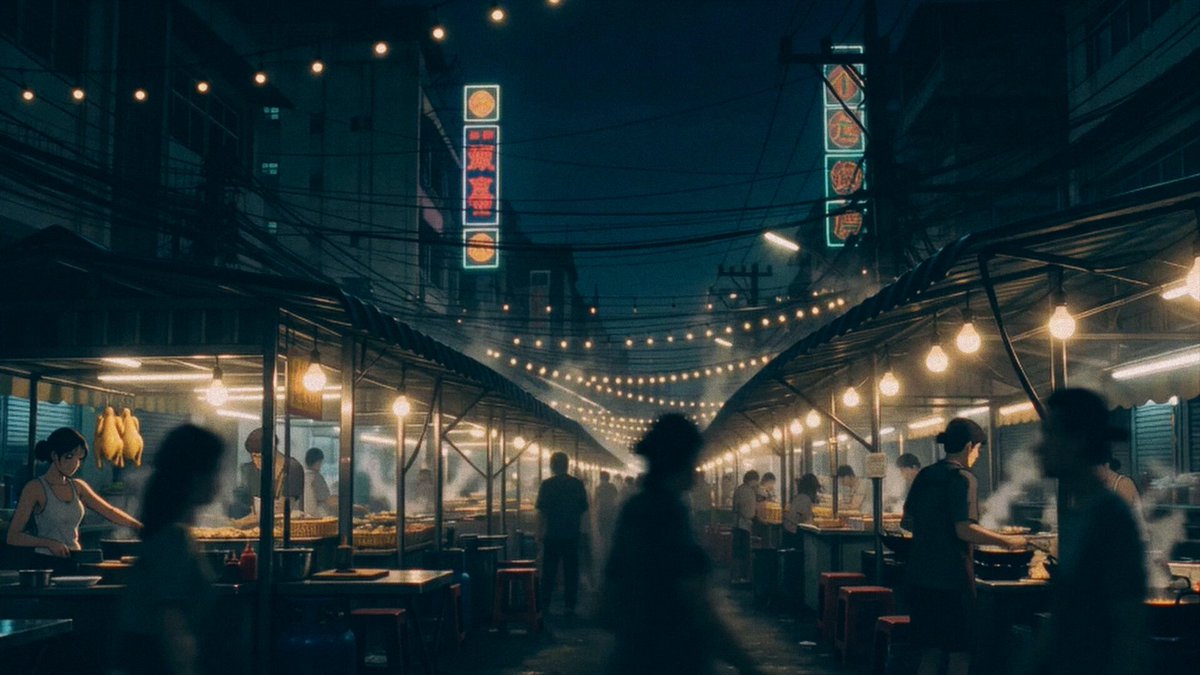
The hardest technical problem in AI video is consistency over time. Anime, comics, and stylized illustration make this visible immediately, because audiences notice when a character's eyes change shape between shots. Solve it with a reference-driven pipeline: lock a character sheet, lock the palette, lock the line weight, then generate image-to-video from approved stills rather than prompting from scratch. Build a small library of canonical poses and expressions. When a new shot is needed, composite from that library first. You will spend more time in pre-production and far less time regenerating.
Cinematic narrative and branded mini-films
Brands increasingly want a two-minute story, not a thirty-second ad. Cinematic work needs shot lists, coverage logic, and continuity of light direction. Generative models handle individual shots well; they do not handle dramaturgy. So treat the model as a camera department and yourself as the director: define the scene function of each shot, the eye line, the direction of movement, and the emotional beat. Generate coverage, then cut for rhythm.
Educational explainers and complex visualizations
Explainer content benefits enormously from AI because it is expensive to shoot and cheap to animate. Molecules, cross-sections, timelines, scale comparisons, historical reconstructions, and process animations all fall into this bucket. Accuracy is the tradeoff: any diagram you generate must be fact-checked, and any text overlay should be added in your editor rather than rendered by the model. Pair a voiceover script with generated visual inserts and you have a full explainer with a fraction of the usual production cost.
Talking avatars and localization
Avatar video has quietly become the workhorse of corporate communication. Training modules, internal updates, product walkthroughs, and multi-language versions of the same message can all be produced from a script and a single source performance. The workflow combines a generated or filmed presenter with voice cloning or synthetic narration and lip sync. The practical rule: keep avatars on screen for short, information-dense segments, and cut away to b-roll or screen recordings every few seconds, because sustained synthetic faces trigger discomfort faster than synthetic scenery.
Matching models to jobs instead of chasing leaderboards
Every week brings a new model that tops somebody's benchmark. Benchmarks are useful for researchers and nearly useless for production, because they measure average quality on generic prompts rather than reliability on your specific shot. A better mental model is to categorize tools by the job they perform.
Text-to-video, image-to-video, and video-to-video
Text-to-video is for ideas you cannot draw: abstract motion, environment plates, mood pieces. Image-to-video is for anything that must match a look or a character, and it is the backbone of commercial work. Video-to-video is for restyling existing footage, changing weather or time of day, or upgrading a rough previz render. Most professional pipelines use image-to-video for hero shots and text-to-video for support material.
What to test before you commit
Run the same three shots through every candidate: a human face turning toward camera, a hand interacting with an object, and a camera move through a cluttered environment. Those three expose the failure modes that matter, namely facial drift, object permanence, and spatial coherence. Add a text rendering test if your content includes on-screen words. Score each model on reliability rather than peak quality, and note how often you need a second or third generation to get a usable take. A model that succeeds eighty percent of the time on the first attempt beats a model that produces one spectacular shot in six tries.
Reference images and character locking
Reference conditioning is the single most valuable feature in a production context. Use it aggressively. Build a reference kit for every recurring element: characters, products, locations, props, and even lighting setups. Include at least one wide, one medium, and one close-up reference per subject. When continuity breaks, add a reference rather than adding adjectives to your prompt.
A seven-stage production workflow you can repeat
Stage one: the one-sentence brief and beat sheet
Write the entire video as a single sentence. If you cannot, the concept is not ready. Then expand it into a beat sheet of five to nine beats, each with a function: hook, context, proof, objection handling, payoff, call to action. Beats are not shots; they are jobs the video must do.
Stage two: reference board
Collect visual references before generating anything. Screenshots, photographs, film stills, color swatches, typography samples. This board becomes your reference kit and your defense when a stakeholder says the result feels off. Shared references turn subjective notes into concrete direction.
Stage three: look development with stills
Generate still images until the look is right. Stills are fast, cheap, and easy to revise. Approve the visual language here, with all its color, texture, and composition decisions, before you spend time on motion. Teams that skip this stage end up regenerating video shots to fix problems that a still would have revealed in ten seconds.
Stage four: shot generation
Now generate motion from approved stills. Work shot by shot, keep versions labeled, and save your prompts alongside each take. Generate a few alternates for hero shots and only one for transitions. If a shot fails three times, the problem is the shot design, not the prompt. Simplify the action, narrow the camera move, or split it into two shots.
Stage five: assembly and pacing
Bring everything into an editor and cut for rhythm before you polish anything. AI-generated footage often looks better when trimmed aggressively. Add sound design early, because audio changes perceived pacing dramatically. Watch the cut at 1x, muted, and on a phone. If the story does not survive those conditions, no amount of visual fidelity will save it.
Stage six: voice, music, and sync
Record or generate narration against the locked cut, then rebuild timing around it. Synthetic voices work best when you write for speech rather than for reading: short sentences, active verbs, no subordinate clauses stacked three deep. Music should be licensed or fully synthetic, and you should check cue points against the beat sheet so the score supports the structure instead of wallpapering it.
Stage seven: finishing and delivery specs
Color consistency across shots is where AI video most often looks amateurish. Apply a light grade, a unified grain or texture pass, and consistent sharpening. Handle captions as burned-in or as a sidecar file depending on platform. Export per destination: aspect ratios, bitrates, safe areas, and duration limits differ enough that a single master will underperform somewhere.
Prompt craft that survives iteration
Good prompts are closer to camera notes than to creative writing. Describe subject, action, camera, lens feel, lighting, environment, and mood in that order. Specify one primary action per shot; models struggle when a subject must do three things sequentially. Use concrete nouns over atmospheric adjectives, and replace words like cinematic with the specific thing you mean, such as shallow depth of field, warm practical lights, or 35mm framing.
Negative instructions deserve caution. Many models handle them inconsistently, so it is usually more reliable to describe what you do want. If artifacts persist, change the reference image, shorten the prompt, or reduce motion complexity. Keep a prompt log with the settings that produced each approved take. Six weeks later, that log is the difference between a two-minute fix and an afternoon of guessing.
Quality control before anything ships
Run the same checklist every time. Watch for temporal flicker on flat surfaces such as walls and skies. Inspect hands, teeth, eyes, and jewelry at full resolution and at half speed. Confirm that text, logos, and signage are either accurate or removed. Check that light direction and shadow consistency hold across consecutive shots. Verify that no background element appears or disappears between cuts. Confirm aspect ratios and loudness targets. Finally, watch the entire piece once without pausing on a device you do not normally use.
Planning time, compute, and budget realistically
Generative video work is iterative, and iteration consumes render time. A practical starting assumption is that roughly a quarter of your generations produce usable material, and that hero shots take three to five attempts. Budget accordingly, and track two numbers per project: minutes of finished video and total generations consumed. Over a few projects you will know your true production rate, which lets you quote fixed prices with confidence rather than padding estimates defensively.
Time allocation usually settles around forty percent look development, thirty percent shot generation, and thirty percent editorial and finishing. Teams that invert those proportions, racing to generate shots before the look is locked, spend most of their time redoing work.
Mistakes that quietly kill AI video projects
Skipping look development is the most expensive one. Treating prompts as one-shot magic instead of an iterative craft is another. Ignoring audio until the end guarantees that pacing feels wrong. Overloading single shots with complex action produces mush. Forgetting continuity between shots destroys the illusion even when each frame is beautiful on its own. And relying on generative output for small text, logos, or legal disclaimers will eventually embarrass you.
The subtler mistake is chasing every new model release. Each swap resets your prompt log, your reference kits, and your team's muscle memory. Adopt a new tool when it solves a specific, recurring failure in your current pipeline, not because it appeared at the top of a feed.
FAQ
Do I need multiple AI video tools, or can one handle everything?
Most finished commercial work uses two or three: one for image generation and references, one for motion, and a dedicated tool for voice or lip sync. A single tool can carry a simple project, but professional pipelines benefit from specializing, because each generation type has different strengths. Keep a primary stack and one alternate for problem shots.
How long should an AI-generated clip be?
Generate short and cut often. Individual generations between three and eight seconds are easier to control and blend, and most platforms reward faster pacing anyway. Long continuous shots are the hardest thing to get right, so use them deliberately as a signature moment rather than as a default.
How do I keep a character consistent across many shots?
Lock a reference kit first. Use the same approved stills as conditioning input for every shot, keep wardrobe and palette identical, and avoid prompts that describe the character differently from one take to the next. When drift appears, add a reference rather than more descriptive words.
Can AI video handle text overlays and brand logos?
Not reliably. Set all of that in your editor or motion graphics tool. Treat generative video as photography and design the typography layer separately. This also makes revisions far easier when legal or marketing wants a wording change.
What is the fastest way to learn this workflow?
Pick one narrow format, such as a fifteen-second product spot, and produce five complete versions end to end. You will learn more about references, prompt control, pacing, and finishing from five finished pieces than from fifty tutorials. Then expand to a second format once your first pipeline feels boring.
How should I handle client revisions?
Lock the look with stills and get written approval before generating motion. After that, revisions are mostly editorial, which is cheap. If a client wants a different visual direction late in the process, treat it as a new project phase rather than a tweak, because regenerating approved footage is the most expensive kind of change.
Is synthetic voice good enough for published work?
For internal content, explainers, and many social formats, yes, especially when narration is short and the script is written for speech. For brand-defining campaigns, a human voice still carries more nuance. A hybrid approach works well: use synthetic narration for drafts and localization, and a human read for the hero version.
Where to take this next
The practical takeaway is simple. Formats change, models change, and platform algorithms change, but a production pipeline built around references, stills-first look development, short controlled generations, deliberate audio, and disciplined quality control survives all of it. Start by choosing one format from the list above, build your reference kit, generate stills until the look is undeniable, then generate motion shot by shot. Ship something small and complete this week. Complete beats ambitious, and complete is the only version anyone can actually watch.
