
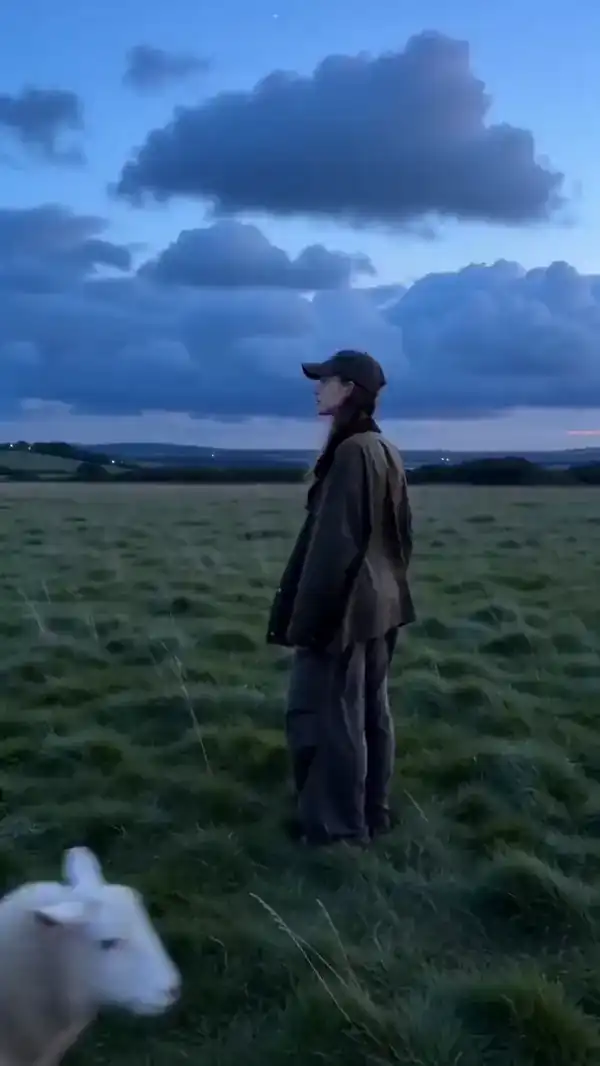
Vertical video is the most competitive creative format online, and also one of the most forgiving — as long as there is a system underneath it. Marketers who treat TikTok as a series of disconnected experiments usually burn out fast: every post starts from a blank page, every edit eats an afternoon, and nothing compounds. Teams that treat short-form as a production line keep shipping, because the brief, the shot list, the generation step, and the edit template stay stable while only the idea changes.
AI video tools have made that production line accessible to very small teams. What they have not done is make strategy optional. A generative model can hand you a hundred clips; it cannot decide which hook earns a second of attention, which frame is legible on a six-inch screen, or which visual language your audience will recognize as yours. This guide walks through a complete AI-assisted workflow for short-form marketing video — tool selection, generation, editing, sound, testing, and the mistakes that quietly waste the most time.
Why Short-Form Rewards a System Instead of a Single Good Video
Platforms rank short-form video primarily on how long people watch and what they do next: replays, shares, saves, comments, profile visits. None of those signals are attached to 'quality' in the abstract. They are attached to whether the first second created a question, and whether the clip answered it before attention drifted.
That has three practical consequences.
First, volume matters more than perfection. A single polished clip per month cannot generate enough signal to tell you which of your ideas works. Fifteen rough but deliberate clips can. The goal of each post is not virality; it is data.
Second, cadence beats budget. An account that publishes four times a week with modest production will out-learn an account that publishes twice a month with cinematic production, because testing speed is the real advantage. Cadence also compounds: each post feeds the next one's audience.
Third, consistency is a retention asset. When your framing, caption style, pacing, and color palette stay recognizable, returning viewers orient themselves faster. Faster orientation means longer watch time, and longer watch time means more distribution.
This is exactly where AI generation fits. It collapses the cost of the middle of the funnel — storyboards, b-roll, background plates, product inserts, alternate hooks — so human time goes into the two things machines still do poorly: taste and narrative.
What Actually Makes a Vertical Video Work
Before choosing tools, define the output. Most underperforming marketing clips fail on one of three things: the opening beat, the framing, or the pacing.
The three-beat structure: hook, proof, payoff
Every effective short-form clip can be described in three beats.
Hook (0-2 seconds). A visual or verbal pattern interruption. It can be a bold claim ('this took eleven minutes to make'), an unexpected image, or a question the viewer cannot answer instantly. The hook's job is not to explain; it is to create an open loop.
Proof (2-15 seconds). The middle section delivers on the hook with specifics: a demonstration, a before-and-after, a process clip, an extreme close-up. This is where generated footage shines, because you can show things a phone camera cannot easily capture.
Payoff (final 3-6 seconds). Resolution plus a reason to act — follow, save, comment, or click. Keep the payoff visually simple. Overlaying a strong call to action on busy footage wastes both.
Framing, safe zones, and legibility
Vertical is not horizontal with the sides removed. A few rules carry most of the weight:
- Keep the subject's eyes in the upper third, but leave the top 15% and bottom 20% of the frame relatively clear for platform interface elements and caption overlays.
- Generate in a native 9:16 frame. Cropping widescreen footage pushes the subject to the center and flattens any sense of depth.
- Assume sound-off viewing for the first pass. If the story does not read from captions and framing alone, the edit is not finished.
- Test text size on an actual phone, not a desktop preview window. Anything below roughly 40 pixels on a 1080-wide canvas is decoration, not communication.
Pacing and cut rhythm
Short-form pacing is not 'fast cuts everywhere.' It is variation. A useful default for marketing clips: a cut every 1.5 to 3 seconds during the proof section, with one deliberate hold of 3 to 4 seconds for the payoff shot. Constant rapid cutting flattens attention; one held shot after movement creates emphasis.
Match the cut to the beat. If you use trending audio, cut on the downbeat. If you use original sound, cut on the stress of a spoken sentence. Viewers do not consciously notice this, but they feel immediately when it is wrong.
Choosing AI Video Tools: Decision Criteria That Matter
The tool market changes monthly, so judge tools by capability class rather than by brand. Six criteria predict whether a tool will fit a short-form marketing workflow.
- Consistency — can it hold a face, outfit, and set across multiple clips?
- Control — can you specify camera movement, lens feel, and composition?
- Iteration speed — how long from prompt to a usable take?
- Predictable cost at volume — cadence is the strategy, so unpredictable pricing breaks the plan.
- Native vertical output — 9:16 generation, or a crop that preserves composition.
- Audio capability — voice generation, lip sync, or clean isolated stems for dubbing and remixing.
Text-to-video: the fastest path from idea to clip
Text-to-video is best for atmosphere, backgrounds, abstract transitions, and quick concept validation. Write prompts that describe subject, action, camera, lighting, and framing — in that order. A prompt like 'ceramic mug on a wooden desk, steam rising, slow push-in, warm morning light, 9:16 vertical' produces far more usable output than 'cozy coffee scene.'
Image-to-video and reference conditioning: control and consistency
If your content depends on a repeatable character or a specific product, start from images. Generate or photograph a clean reference in the exact wardrobe, palette, and setting you want, then animate from it. Multi-reference conditioning — supplying several angles of the same subject — is the most reliable way to keep identity stable across a series.
Editing, voice, and caption layers
Generation is only one stage. A working stack usually has three more layers: an editor with vertical templates and automatic captions, a voice tool for narration or localization, and a lightweight asset library for music and sound effects. Keep these separate from the generator so you can swap models without rebuilding your pipeline.
A comparison framework
| Criterion | What to verify | Why it matters |
|---|---|---|
| Consistency | Holds identity across five or more clips | A character whose face drifts reads as amateur |
| Control | Camera, lens, and framing parameters | Framing errors are the top cause of an artificial look |
| Speed | Prompt to usable take | You need several options per shot |
| Cost at volume | Predictable pricing tiers | Cadence depends on volume |
| Aspect ratio | Native 9:16 output | Cropped footage rarely feels native |
| Audio | Voice, lip sync, clean stems | Sound drives retention as much as visuals |
The Production Workflow, Step by Step
Write the hook before you generate anything
Draft five hooks for the same idea and pick the one that creates the strongest open loop. Write them as spoken lines, not concepts, because you will hear them in the edit. Keep each under twelve words. If a hook needs explanation to land, it is not a hook yet.
Build a shot list and a reference pack
Convert the three-beat structure into shots: three to five for the hook and proof, one or two for the payoff. For each shot, note framing, movement, and duration. Then assemble a reference pack — product photos, palette swatches, a mood frame, and one character sheet if you use a recurring persona. This pack is what you feed the model, and it is also what keeps your account visually coherent over months.
Generate in batches and select ruthlessly
Generate three to five variations per shot rather than iterating endlessly on a single take. Evaluate each variation against three questions: does it read at thumbnail size, does the subject stay identifiable, and does the motion serve the story? If two of the three answers are no, discard it immediately. Sorting good takes from bad should take seconds, not minutes.
Edit for rhythm, not for beauty
Assemble in the order the viewer experiences it, then adjust timing. Trim the first fraction of a second of every generated clip — the ramp-up rarely looks natural. Where a transition feels abrupt, add a whip pan, a match cut on movement, or a quick zoom rather than a slow dissolve. Dissolves signal 'advertisement'; hard movement signals 'content.'
Finish with sound and captions
Lay in music first, then narration or dialogue, then sound effects. Duck the music under any spoken line by several decibels. Add captions that are large, high-contrast, and positioned above the bottom interface zone. Finally, watch the whole clip once with the sound off and once with your eyes closed. If either pass fails to communicate the idea, fix it before publishing.
Keeping Characters and Brand Style Consistent
Consistency is the difference between a channel and a collection of clips. Four lightweight practices do most of the work.
- Lock a character sheet. One front-facing portrait, one three-quarter view, one full-body shot, all in the same wardrobe and lighting.
- Lock a palette. Define three brand colors and describe them in prompts ('deep navy background, warm amber highlight') so separate generated shots cut together cleanly.
- Reuse seeds and settings. When a generation looks right, save the prompt, seed, and settings. Reproducing a successful look is far faster than describing it again from memory.
- Standardize the caption and intro frame. A consistent opening frame and caption style does more for recognition than a logo overlay ever will.
Sound, Captions, and the Accessibility Layer
Sound design is where AI-assisted videos most often underdeliver, because teams treat it as an afterthought. Three rules keep it on track.
- Choose audio by function, not by trend. Trending audio can help distribution, but if it fights your narration, use it only in the hook or as a low underlay.
- Cut on beats. Align visual transitions to musical hits or to sentence stress.
- Caption everything. Hard-coded captions improve completion rates in sound-off environments and make localization dramatically easier later.
For localization, generate narration in the target language and keep music and effects on separate tracks so a single mix can be reused across language versions. This one decision can turn a single production day into a multi-market campaign.
A Testing Framework You Can Run Every Week
Treat each post as a hypothesis. Change one variable at a time: hook style, opening frame, length, caption placement, or voice. Then track:
- Three-second retention to judge the hook
- Fifty percent retention to judge the middle
- Completion and replays to judge the payoff
- Shares and saves as intent signals
- Profile visits and follows as account-level outcomes
Review weekly, not daily. Daily fluctuations are noise; weekly patterns are signal. When a format wins twice, turn it into a template and produce three variants of it before exploring something new.
Common Mistakes That Kill AI-Made Videos
- Generic prompts. 'Beautiful cinematic scene' produces stock-looking footage. Name subject, action, camera, light, and ratio.
- No reference images. Text-only generation drifts. Anchoring with one image stabilizes everything downstream.
- Over-long hooks. If the hook needs eight seconds, it is not a hook, it is an introduction.
- Uniform clip length. Varying shot duration creates rhythm; identical shots create monotony.
- Ignoring the first frame. The first frame is the thumbnail. Design it deliberately.
- Loud music, quiet voice. Mix for intelligibility on a phone speaker at half volume.
- Publishing without captions. You lose a large share of sound-off viewers instantly.
- Chasing virality per post. Chasing a repeatable format outperforms chasing a single hit every time.
Turning One Idea Into a Week of Content
The fastest way to scale is to stop generating ideas and start generating variations. Take a single concept — for example, 'three ways to use our product in a small kitchen' — and produce:
- A twenty-second overview
- Three ten-second single-tip clips
- One behind-the-scenes clip showing the AI workflow itself
- One before-and-after comparison
- One comment-reply clip answering the most common question
That is six posts from one idea, each testing a different hook while reusing the same reference pack and edit template. Repeat across four themes per month and you have a schedule that is both sustainable and measurable, with enough data to make real decisions.
FAQ
Do I need a paid AI video tool to start?
No. Free tiers are enough to learn prompt structure and framing discipline. Upgrade when generation speed, not features, becomes your bottleneck.
How long should a marketing clip be?
Most marketing clips work best between 12 and 30 seconds. Choose the shortest length that still completes the three-beat structure.
Can AI-generated footage perform as well as filmed footage?
For concept, atmosphere, and demonstration shots, yes. For trust-building content — faces, unboxings, testimonials — filmed footage usually wins.
How many variations should I generate per shot?
Three to five. Fewer increases the chance you settle for a mediocre take; more wastes time without improving the outcome.
How do I avoid a repetitive look across posts?
Change one dimension at a time: lighting, camera movement, or setting. Keep the palette and caption style fixed so the account still feels unified.
What should I measure first?
Three-second retention. If that number is weak, no edit, caption, or audio improvement will rescue the clip.
Can one workflow serve multiple languages?
Yes. Keep narration and captions as separate layers, then re-render voice and subtitles per language while reusing the same visuals and music.
The teams that win on short-form are rarely the ones with the biggest budgets. They are the ones with the tightest loop between idea, generation, edit, and measurement — a loop they can run several times a week without exhausting the people inside it. Start with one theme, one reference pack, and one edit template. Ship for two weeks, read the retention graphs, and only then add complexity. The workflow will tell you what to fix next far more accurately than any opinion about what 'should' go viral.
