
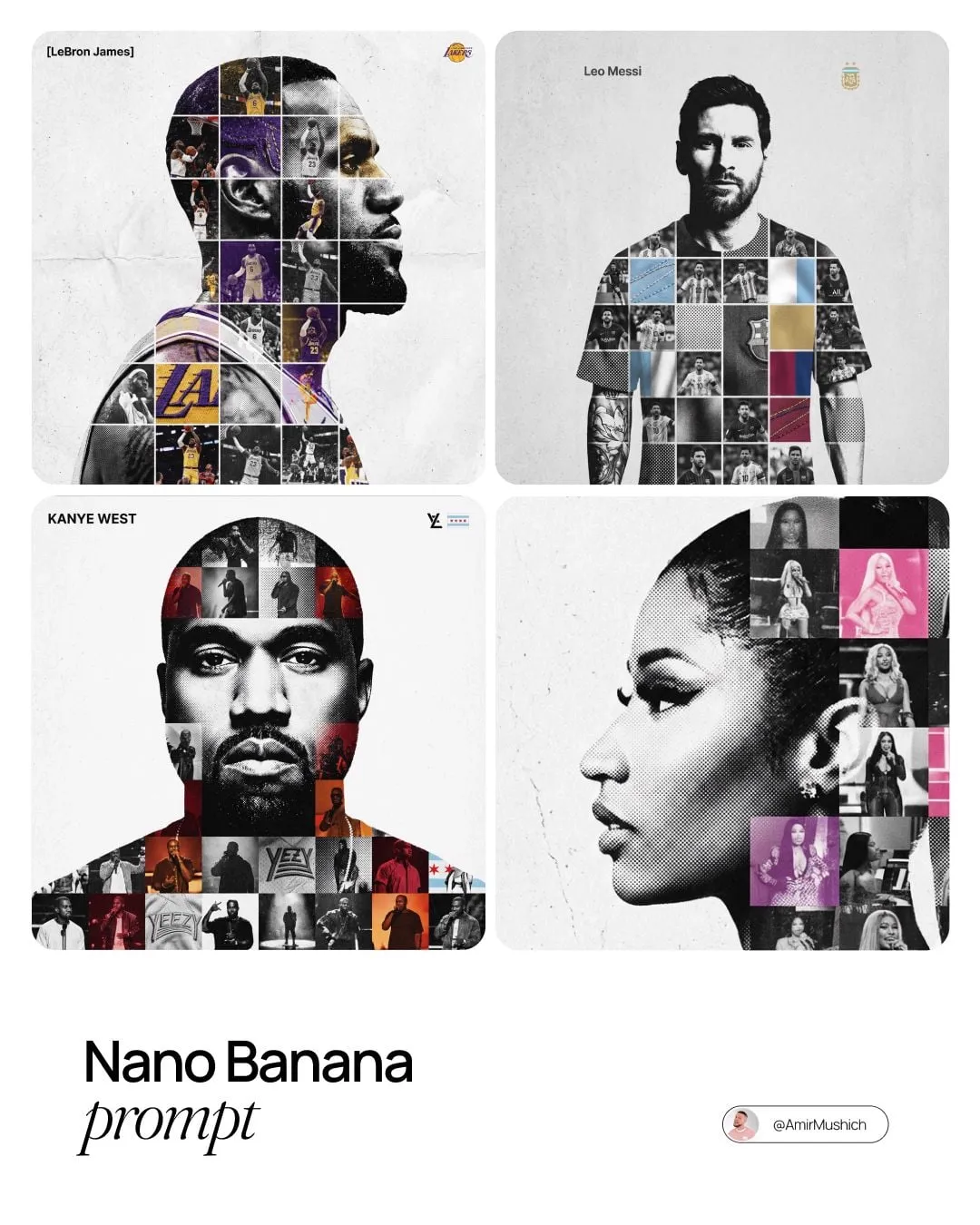
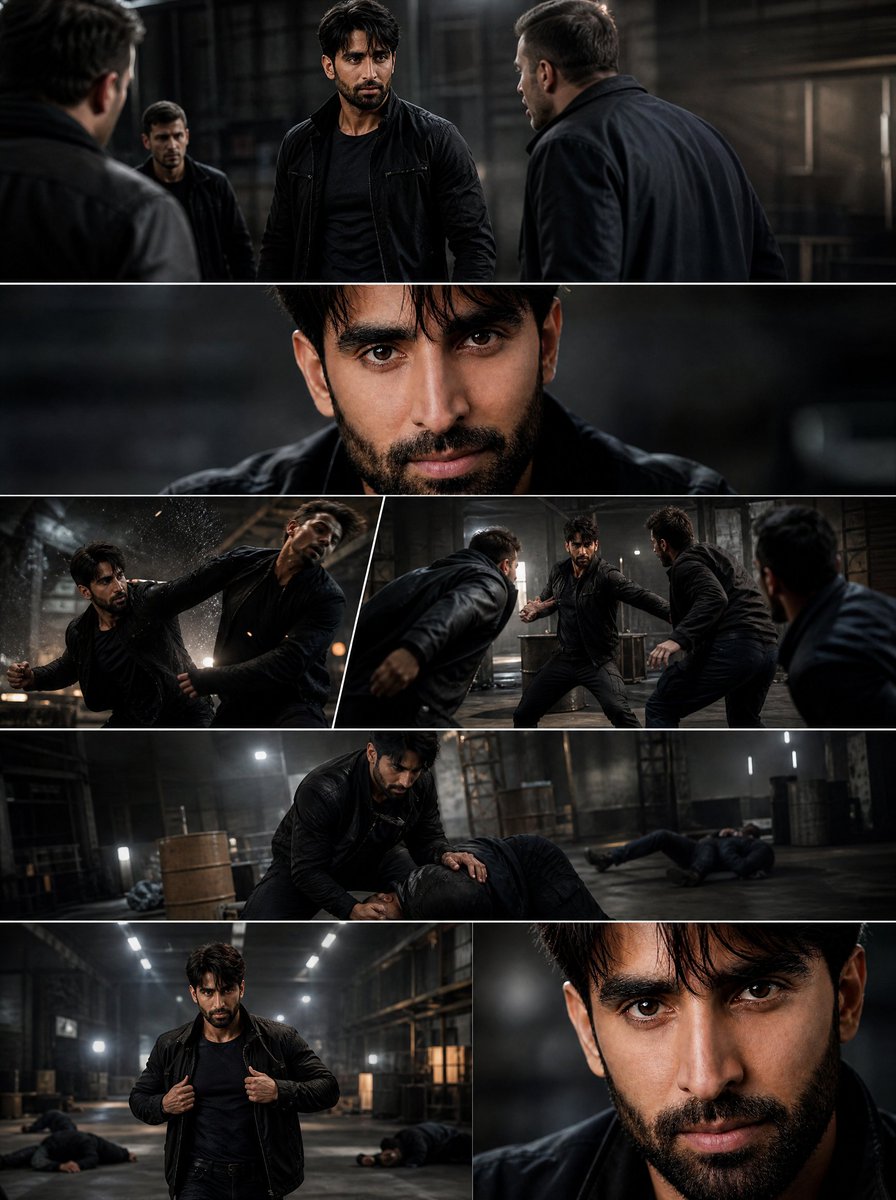

Making a video that people actually finish watching has never been harder, and never been more rewarding. The barrier used to be equipment: a camera, lights, a decent microphone, a quiet room. Today the barrier is judgment — deciding what to say, what to show, and how to keep a viewer from swiping away in the first eight seconds. AI video tools have removed a huge amount of the mechanical friction, but they have not removed the need for taste. This guide walks through a complete, repeatable workflow for beginners who want to publish better YouTube videos using AI assistance at every stage, from the first idea to the final upload.
Why the Production Bottleneck Moved
Ten years ago, a solo creator could not realistically publish three times a week. Editing alone consumed entire evenings. The introduction of template-driven editors helped, then stock libraries helped more, and now generative tools have collapsed the cost of producing a first draft of almost anything: a script outline, a voice track, a set of background illustrations, a short animated clip, a thumbnail concept.
The result is a strange new landscape. Production capacity is no longer scarce — attention is. Viewers now have an effectively unlimited supply of polished-looking content, which means looking polished is no longer a competitive advantage. It is the entry fee. What separates channels that grow from channels that stall is structure: a clear promise, consistent delivery, and a format viewers can predict and therefore trust.
That is actually good news for beginners. If you can learn structure, you can compete. AI tools give you the speed to iterate on structure many times in the space of a month instead of a year.
What a Modern AI Video Stack Actually Does
Before choosing anything, it helps to understand the four jobs an AI-assisted pipeline performs. Different products bundle these differently, but the underlying functions are stable.
Idea and script assistance
Language models are strongest at breadth. Ask for twenty angles on a topic and you will get twenty usable starting points in seconds, including several you would never have considered. They are weaker at judgment — knowing which angle will resonate with your specific audience. Treat script tools as a way to expand your option set, not to make the final call.
Visual asset generation
Image generation is now good enough for backgrounds, stylized explainers, thumbnails, and B-roll substitutes. Video generation has improved dramatically for short, controlled shots: a slow camera move, a looping environmental element, a stylized transition. Long, character-driven narrative sequences remain difficult, so design around short clips rather than fighting the limitation.
Voice, music, and sound design
Synthetic narration has crossed the uncanny threshold for many use cases, particularly for tutorial and documentary styles where a neutral, steady read is appropriate. Library music generation can also solve the licensing headache that trips up new channels, though you should always verify the commercial terms of whatever you use.
Assembly and post-production
Auto-captioning, silence detection, scene detection, noise reduction, and rough-cut generation are the least glamorous features in the stack and the ones that save the most hours. A tool that trims dead air and produces accurate captions in one pass is worth more to a beginner than a tool that generates one spectacular ten-second clip.
A Step-by-Step Workflow for Your First AI-Assisted Video
The workflow below assumes a single creator with limited time. It is designed so that every stage produces something you can review in under ten minutes.
Step 1: Define the promise in one sentence
Write a single sentence that finishes this thought: "After watching this, the viewer will be able to ___." If you cannot finish it, the video is not ready. This sentence becomes your title candidate, your thumbnail copy, your hook, and your retention test. Everything else is decoration.
A weak promise sounds like "AI video tools are interesting." A strong promise sounds like "You will be able to produce a five-minute explainer video alone, in one evening, using three tools." Specificity creates expectation, and expectation creates the tension that keeps people watching.
Step 2: Outline in beats, not paragraphs
Generate a rough outline with an AI assistant, then rewrite it as a sequence of beats — each beat being one idea and one visual. Aim for roughly one beat per 20 to 30 seconds of finished video. A five-minute video therefore has 10 to 15 beats. This number is small enough to keep in your head and large enough to feel substantial.
Beats also make editing simpler. Each beat is a self-contained block you can cut, reorder, or extend without disrupting the rest of the video.
Step 3: Write the script for the ear, then cut it by a fifth
Read every line out loud. Anything you stumble over gets rewritten, not rehearsed. After the script reads cleanly, cut about twenty percent. Beginner scripts are almost always too long, and the extra words dilute the parts that matter.
For the hook — the first fifteen seconds — write at least three versions. One that states the problem, one that shows a surprising result, one that opens mid-action. Pick the one that best matches your thumbnail, because the thumbnail is a promise and the hook is the delivery of that promise.
Step 4: Build a shot list before generating anything
This is the step beginners skip, and it is the single biggest cause of wasted effort. A shot list is a table with four columns: beat number, what the viewer should see, which tool will make it, and how long it should appear.
With a shot list in hand you can generate assets in batches rather than one at a time. Batch generation is faster because you stay in a single mental mode, and it produces more consistent results because you are applying the same style description repeatedly instead of improvising.
Step 5: Generate assets in styled batches
Fix a short style string and reuse it for every generation in a video. Something like "soft daylight, shallow depth of field, muted teal and warm amber palette, documentary photography" does more for visual coherence than any individual prompt refinement. Consistency beats novelty when a viewer is scanning a sequence.
Generate two or three variations per shot and keep the best. Do not chase perfection on the first attempt; a slightly imperfect shot that arrives on time is worth more than a flawless shot you find after an hour of rerolling.
Step 6: Record or synthesize the voice track
If you narrate yourself, record in a small, soft room with a blanket behind the microphone and accept that your voice is an acquired taste that audiences acquire quickly. If you use synthesis, generate the entire script in one session so the tone stays even, then adjust pacing per sentence rather than regenerating whole paragraphs.
Step 7: Assemble, then subtract
Lay the voice track down first. Everything else serves it. Place visuals to support each sentence, add captions, and then do the most valuable edit of all: remove anything that does not advance the promise. Long intros, throat-clearing, and repeated explanations are the three most common retention killers.
Aim for the video to feel slightly too fast on your first watch. On a viewer's first watch, with unfamiliar material and no investment, it will feel right.
Step 8: Watch it once with sound off
This is the test almost nobody runs and everyone should. Mute the video and watch it. If the story still makes sense, your visuals are doing real work. If you cannot follow it at all, you have made a podcast with decoration rather than a video, and you should add on-screen text or stronger visual beats.
Prompting for Consistency Instead of Beauty
The temptation with generative tools is to write prompts that produce stunning single frames. That instinct works against you in a video context, where the goal is a sequence that feels like it belongs together.
Three habits help:
- Lock a style paragraph. Write one five-line description of your visual world — palette, lighting, lens, texture, mood — and paste it into every prompt.
- Describe function, not emotion. "Wide shot of an empty desk in morning light" outperforms "a feeling of lonely ambition." Generative systems respond well to concrete nouns and camera language.
- Iterate one variable at a time. If a shot is wrong, change the framing or the lighting, not both. Otherwise you learn nothing about what caused the improvement.
Keep a plain text file of prompts that worked. Over a few weeks this becomes the most valuable asset in your production system, more valuable than any single tool subscription.
Choosing Tools Without Getting Trapped
Every few weeks a new tool appears with a striking demo. The risk for a beginner is not choosing badly; it is choosing constantly. Tool-hopping produces a folder full of unfinished experiments and no published videos.
A simple decision framework helps:
| Job | What to prioritize | What to ignore |
|---|---|---|
| Script and outline | Speed, tone control, ability to give feedback | Huge template libraries you will never browse |
| Image generation | Style consistency, resolution, commercial terms | The absolute newest model |
| Video clips | Short-shot quality, motion control | Long-narrative claims |
| Voice | Even pacing, pronunciation editing | Celebrity voice impersonations |
| Editing | Captions, silence removal, export speed | Dozens of transitions |
Pick one tool per row. Commit to it for at least ten published videos before you reconsider. The compounding effect of repetition will outperform the marginal gain of switching.
A Pre-Publish Quality Checklist
Run this list every time, even when you are in a hurry. It takes four minutes and catches most of the mistakes that cost views.
- Hook check. Does the first sentence match the thumbnail promise?
- Audio check. Listen at low volume on a phone speaker. If dialogue disappears, remix.
- Caption check. Read the auto-captions for the first sixty seconds. Fix names and technical terms.
- Visual check. Does any shot repeat within thirty seconds without a reason?
- Pacing check. Are there any stretches longer than four seconds with no change of visual, text, or audio?
- Ending check. Does the last ten seconds point to a specific next video rather than a generic sign-off?
- Title and description check. Would a stranger understand the video from the title alone?
Common Beginner Mistakes
Over-producing the opening. A cinematic thirty-second intro feels impressive to the creator and tedious to the viewer. Start with the substance.
Letting the tool decide the format. Generative tools produce what they are good at. If you let them, every video becomes a montage of disconnected beautiful clips. Format should come from your audience, not your software.
Ignoring audio quality. Viewers forgive soft focus. They do not forgive muddy narration or clipping.
Publishing inconsistently. Three videos in one week followed by a month of silence trains the audience to stop expecting anything. A sustainable weekly rhythm beats an unsustainable daily one.
Chasing style over structure. A distinctive look attracts a first click. Structure earns the second video.
Skipping the thumbnail until the end. The thumbnail is a design problem, not an afterthought. Decide the visual concept before you finish editing so you can shoot or generate matching material.
Building a Repeatable Production System
Once you have published five or six videos, patterns emerge. Some formats take three hours; others take twelve. Some topics generate comments; others generate silence. This is where a system starts to pay off.
Create a project folder structure that never changes: script, assets, audio, captions, exports. Create a checklist document that grows every time you discover a mistake you do not want to repeat. Create a content calendar with at least four ideas in reserve, because the week you run out of ideas is the week you skip publishing.
Measure three numbers only for the first few months: average view duration, click-through rate, and returning viewers. Duration tells you whether the content delivered. Click-through tells you whether the packaging worked. Returning viewers tell you whether you are building an audience rather than collecting one-time traffic.
If duration is low, the problem is usually in the first thirty seconds or in a mid-video slump where you explained something twice. If click-through is low, the problem is the thumbnail or the title. If returning viewers are flat, the problem is format consistency — your videos may be good individually but not recognizably part of the same channel.
Where AI Still Needs You
It is worth being honest about the division of labor. Generative tools are excellent at volume, speed, and variation. They are poor at knowing what matters to a specific person on a specific Tuesday.
They cannot tell you that your audience is tired of listicles. They cannot feel the moment a sentence becomes condescending. They cannot decide that a beloved segment should be cut. Those judgments come from watching your own comments, reading your own retention graphs, and being willing to discard work that no longer serves the video.
The creators who get the most from these tools are not the ones with the most sophisticated prompts. They are the ones who use the speed to publish more often, watch their own analytics more carefully, and iterate faster than everyone else. The tool accelerates the loop; the loop is what teaches you.
Frequently Asked Questions
Do I need to disclose that I used AI tools?
Requirements vary by platform and region, and they change. The safe habit is to disclose synthetic voice, synthetic likeness, and heavily generated visuals, and to check your platform's current policy before publishing. Transparency rarely costs you viewers and frequently protects you.
Can AI-generated videos rank in search?
Yes, if they answer a query better than the alternatives. Search rewards clarity and usefulness, not production method. What gets penalized is low-effort, repetitive content regardless of how it was made.
How long should my first video be?
Short enough that you can finish it well. A tightly edited four-minute video teaches you more than an abandoned twenty-minute one. Increase length only when you can hold attention at the shorter length.
Should I use a synthetic voice or my own?
Use your own if you plan to build a personality-driven channel. Use synthesis if your value is information density, if you publish in multiple languages, or if recording is the step that stops you from publishing at all.
How many videos before I see results?
Think in terms of iterations rather than a fixed number. Most creators need dozens of attempts to find a format that works, and the ones who succeed are usually the ones who treated early videos as experiments rather than statements.
What if a tool generates something visually wrong?
Treat it as a shot list problem rather than a tool problem. Simplify the description, reduce the number of subjects, and specify camera distance. Most failures come from prompts that ask a system to render an abstract idea.
Key Takeaways
- Define the promise of the video in one sentence before touching any tool.
- Outline in beats, one idea per beat, roughly one beat every 20 to 30 seconds.
- Build a shot list so you can generate assets in consistent batches.
- Lock a style paragraph and reuse it; consistency reads as quality.
- Cut twenty percent of your script, then cut the first thirty seconds again.
- Watch your video muted to confirm the visuals carry the story.
- Standardize on one tool per job and commit for at least ten videos.
- Track duration, click-through, and returning viewers — not vanity counts.
- Let AI handle volume and variation; keep the judgment calls for yourself.
The gap between a beginner and a competent creator is not equipment, and it is no longer editing skill. It is the willingness to publish, measure, and adjust in a tight loop. AI tools shrink the time between those steps from weeks to hours, which means you can run the loop twenty times while someone else is still choosing software. Pick a promise, build the beats, generate the assets, run the checklist, and publish. Then do it again next week.
