

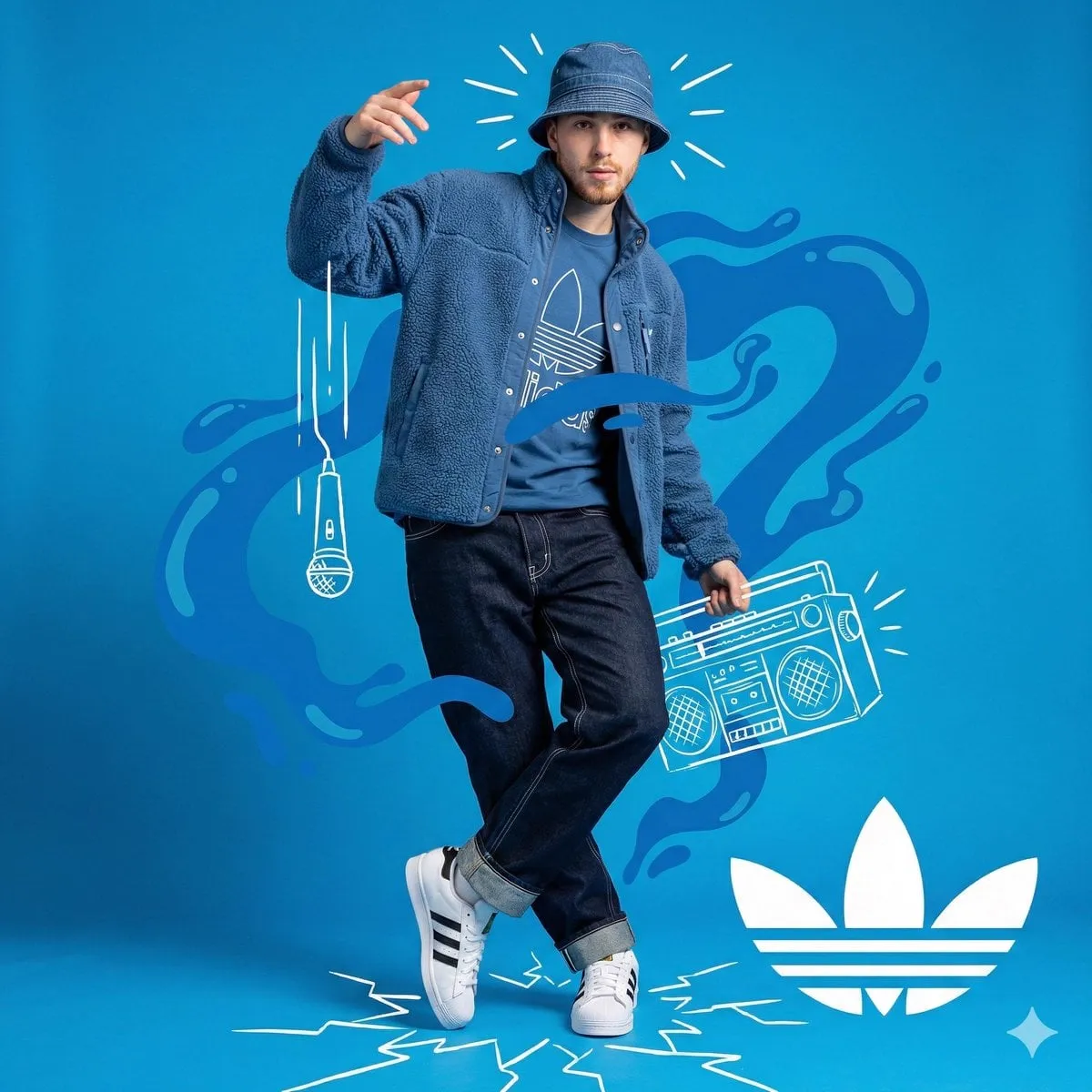
Why animated logos and memes became the fastest branding format
A three-second animated logo does something a static image cannot: it teaches viewers who made the video before they consciously notice. In vertical feeds, where most viewers decide within two seconds whether to keep watching, motion identity acts as a familiar signal. Memes work in the opposite direction. They borrow a visual language people already recognize, then swap in a new caption, character, or detail. Their value comes from speed — the faster you can produce a relevant variation, the more likely one of them lands.
Both formats share the same underlying traits: they are short, repeatable, and cheap to iterate. That makes them a natural fit for generative video tools, which are good at producing many variations quickly but less good at holding a specific identity without guidance.
The real production question is not whether an AI model can generate something visually interesting. It almost always can. The question is whether you can control it tightly enough that fifty clips look like they came from the same brand, and whether a meme can be published while the moment is still relevant.
This guide lays out a practical system for both lanes: a repeatable prompt structure for animated logos, a fast reaction workflow for memes, export checklists, and the quality-control checks that catch the most common artifacts before they reach your audience.
Two production lanes: motion branding and reactive memes
Treating animated logos and memes as one task is the first mistake. They have different goals, different review criteria, and different tolerances for imperfection.
Lane one: the animated logo
An animated logo, sometimes called a motion identity or a stinger, is a short branded sequence that appears at the start or end of a video. Typical length is two to four seconds. Success criteria are strict: the mark must be legible, the motion must feel intentional, and the same result should be reproducible next month without a designer rebuilding it from scratch.
Deliverables usually include a full-resolution master, a vertical crop, a square crop, and a silent version. You also want a still frame pulled from the animation for thumbnails.
Lane two: the reactive meme
A meme clip is disposable by design. It rarely needs to be perfect; it needs to be timely, legible on a phone, and shareable without context. A meme that takes six hours to produce usually loses to a rougher version published in thirty minutes.
Because memes are disposable, your review bar shifts. You check that the subject is recognizable, the caption is readable, and the clip does not accidentally misrepresent a real person or a sensitive event. Everything else is optional.
Keep the two lanes in separate folders with separate naming rules. Mixing polished identity assets with throwaway clips is how a brand accidentally publishes an unapproved logo variant.
Choosing the right generation approach for each job
Modern AI video tools offer several entry points. Picking the wrong one wastes the most time.
Text-to-video
Best when you need something new and conceptual: an abstract shape that morphs, a liquid-metal reveal, particles assembling into a letterform. Text-to-video gives the most creative freedom and the least control. Expect to generate several candidates.
Image-to-video
Best when the brand mark must stay exact. Start from a vector-rendered still of the logo on a clean background, then describe only the motion. The model animates what it sees instead of inventing a new mark. This is the most reliable approach for identity work.
Reference-driven and multi-image approaches
Some tools accept a style reference alongside a subject image, letting you apply a motion style from one clip to a different logo. This is powerful for building a family of animations across sub-brands, but it requires a clean reference clip. Choose a reference that shows the motion clearly and has no text, because text in a reference often bleeds into the output.
A quick decision rule
If the mark must be pixel-accurate, use image-to-video. If the concept is abstract, use text-to-video. If you are matching an existing motion language, use a reference. If you need a caption-driven reaction clip, generate a clean plate and add text in an editor rather than asking the model to render type.
Anatomy of a strong animated logo prompt
Logo animation prompts fail for one reason more than any other: they describe a picture when they should describe a movement.
Describe motion, not just appearance
Instead of "a blue geometric logo," write "a blue geometric mark that assembles from thin horizontal lines, settling into place with a soft overshoot." Motion verbs — assemble, sweep, condense, unfold, pulse once, snap — do most of the work.
Specify timing in plain terms. "Two seconds, with the reveal completing by the one-second mark" gives the model a target. If the tool supports duration settings, keep them short; long generations drift.
Lock the end frame
The final frame matters more than any other. Specify it explicitly: "ends on a static, centered, fully legible mark on a solid dark background." Without this instruction, models tend to leave the logo mid-transformation, slightly rotated, or partially cropped — all of which break a brand.
If your tool supports a start-and-end frame workflow, provide the exact logo still as the final frame. This single change removes most cleanup work.
Control the background deliberately
Transparent output is rare in generative video. Plan for a solid background that matches your edit timeline, or a background you can key out later. Avoid gradients behind thin letterforms; compression destroys them.
Common logo animation mistakes
- Describing colors in detail but not motion.
- Asking for text to be generated inside the model when a typographic overlay would be sharper.
- Using long, cinematic camera moves for a two-second element.
- Forgetting vertical and square crops until after approval.
- Approving a clip without watching it once at phone size.
Building a meme workflow that reacts within hours
Meme production is a logistics problem more than a creative one. The creative idea is usually obvious; the bottleneck is getting a usable clip fast enough.
Start from a template library
Maintain a folder of reusable setups: a talking-head plate, a reaction framing, a two-panel comparison layout, a zoom-in on a static object. Each template should have a documented prompt that reproduces it. When a trend appears, you modify one variable instead of building from zero.
Keep the caption out of the model
Let the model generate the visual. Add the caption in an editor with a real font. Generated text is the most common source of unusable output: letters melt, kerning drifts, and languages other than English are often mangled. Overlaying type takes seconds and looks correct.
Respect safe zones
Vertical platforms place interface elements over the top and bottom of the frame. Keep captions in the middle third, roughly between the upper and lower quarter marks, and check the result in the actual app rather than a desktop preview.
Rights, likeness, and accuracy
Two rules keep meme output safe. First, do not generate a recognizable real person saying or doing something they did not do. Second, do not use third-party characters or footage you have no right to use. Beyond legal exposure, audiences punish brands for misattributing quotes, and the correction costs more attention than the meme earned.
A repeatable pipeline from brief to publish
The following sequence keeps quality stable when volume increases.
Step 1: prepare clean source assets
Export your logo as a high-resolution PNG with a transparent background, plus versions on each background color you plan to use. Name files by mark version so you can trace any output back to its source. Store fonts separately and never rely on a model to recreate them.
Step 2: write a prompt card, then reuse it
A prompt card contains the subject description, motion description, timing, camera behavior, background, end-frame instruction, and duration. Save it as text next to the asset. When you need a new variant, edit one line rather than rewriting the whole prompt. Consistent prompts produce a consistent identity.
Step 3: generate in batches
Generate four to eight candidates per prompt instead of one. Batch generation costs time upfront and saves far more later. Label outputs immediately with the prompt version so you can compare fairly.
Step 4: review against fixed criteria
For logos: legibility, motion smoothness, end-frame correctness, background keying, and crop safety. For memes: subject recognizability, caption space, vertical framing, and tonal fit. Reject quickly and note the reason; patterns in rejections tell you which part of the prompt to fix.
Step 5: finish and version
Assemble the approved clip, add captions or sound design, then export the platform variants. Increment a version number for every approved asset, and keep the source prompt alongside it. Six months later, this record is the difference between a five-minute update and an afternoon of guesswork.
Export specifications and platform checks
Different destinations need different files, and generating once for every aspect ratio is usually cheaper than cropping in post.
- Vertical 9:16 for short-form feeds, 1080 by 1920.
- Square 1:1 for feed posts and profile placements.
- Landscape 16:9 for long-form video and presentations.
- A silent version of every logo animation, because many placements autoplay muted.
- A still frame for thumbnails, captured from the moment the mark is fully legible.
Before publishing, confirm frame rate consistency (a 24 fps render inside a 30 fps timeline stutters), check that the first frame is not a half-rendered artifact, and verify loudness if the clip includes audio. For logo stings, keep audio short and avoid sharp transients that clip on phone speakers.
Quality control and troubleshooting
Letters wobble or melt
This almost always means the model is rendering type. Replace the generated type with an overlay or animate a rasterized still through image-to-video. If type must be generated, raise resolution, shorten the duration, and slow the motion.
Flicker or texture crawling
Flicker comes from models trying to add detail frame by frame. Reduce the requested detail, use a flatter background, and avoid high-frequency patterns. Rendering at a higher resolution and downscaling also helps.
The logo drifts or rotates unexpectedly
Add explicit constraints to the prompt: centered, no rotation, no zoom, static camera. If your tool supports locked camera presets, use them.
Motion looks weightless
Real motion has acceleration and settle. Ask for an overshoot with a small correction, an ease-out, or a slight secondary movement. Even a one-frame settle makes a difference.
The clip looks fine on desktop but not on a phone
Watch everything at phone size, at phone distance, with sound off. Small letterforms and low-contrast captions fail there first.
Output no longer matches earlier clips
This is a version drift problem. Return to the archived prompt card, regenerate from the same source still, and compare the end frames before assuming the tool changed behavior.
Reuse, versioning, and team handoff
Fast content production depends on reuse, and reuse depends on documentation. Keep a single index of approved assets with four fields: asset name, source file, prompt version, and approval date. Anyone on the team can then reproduce or extend an asset without hunting through chat threads.
Build a small library of motion patterns — assemble, sweep, pulse, wipe — and reuse them across campaigns. Audiences read consistent motion as brand identity. A logo that appears differently every week reads as unfinished rather than creative.
For memes, the reuse model is different: keep templates, discard executions. Archive the prompt cards but expect almost none of the actual clips to be reused. That asymmetry is normal and worth planning for.
Handoff notes should include the rejected candidates as well as the approved one, with a one-line reason for each rejection. Rejections prevent the next person from repeating the same mistake.
Frequently asked questions
How long should an animated logo be?
Two to four seconds for a stinger. Anything longer tests patience in a short-form feed, where the first three seconds carry the most weight.
Can AI generate a transparent-background logo animation?
Rarely, and not reliably. Generate on a solid or keyable background and remove it in an editor.
Why does generated text always look wrong?
Video models render images, not typesetting. Keep type outside the model and overlay it in post.
Do I need a different prompt for each aspect ratio?
Not necessarily. Generate once in the widest useful ratio and reframe, but generate a dedicated vertical version when the composition depends on framing.
How many candidates should I generate per logo?
Four to eight. Fewer than four rarely gives you a usable option; more than eight mainly adds review time.
Is it worth building a template library for memes?
Yes, if you publish more than a few clips a week. Templates cut reaction time from hours to minutes.
What is the biggest quality killer?
Weak prompt specificity about motion and end frames. Most artifacts trace back to a prompt that described appearance instead of movement, or that never stated what the final frame should look like.
Bringing it together
Animated logos and reactive memes sit at opposite ends of the same production system. The logo demands reproducibility, precision, and restraint. The meme demands speed and a low perfection threshold. Both benefit from the same habits: clean source assets, prompt cards you can reuse, batch generation, fixed review criteria, and an archive that lets anyone reproduce the result later.
Start with one lane. Build the logo workflow first, because it forces you to define your visual rules. Then apply those rules to the faster, looser meme pipeline. Within a few weeks, the time you spend per clip drops sharply — not because the models got better, but because your process stopped improvising.
