

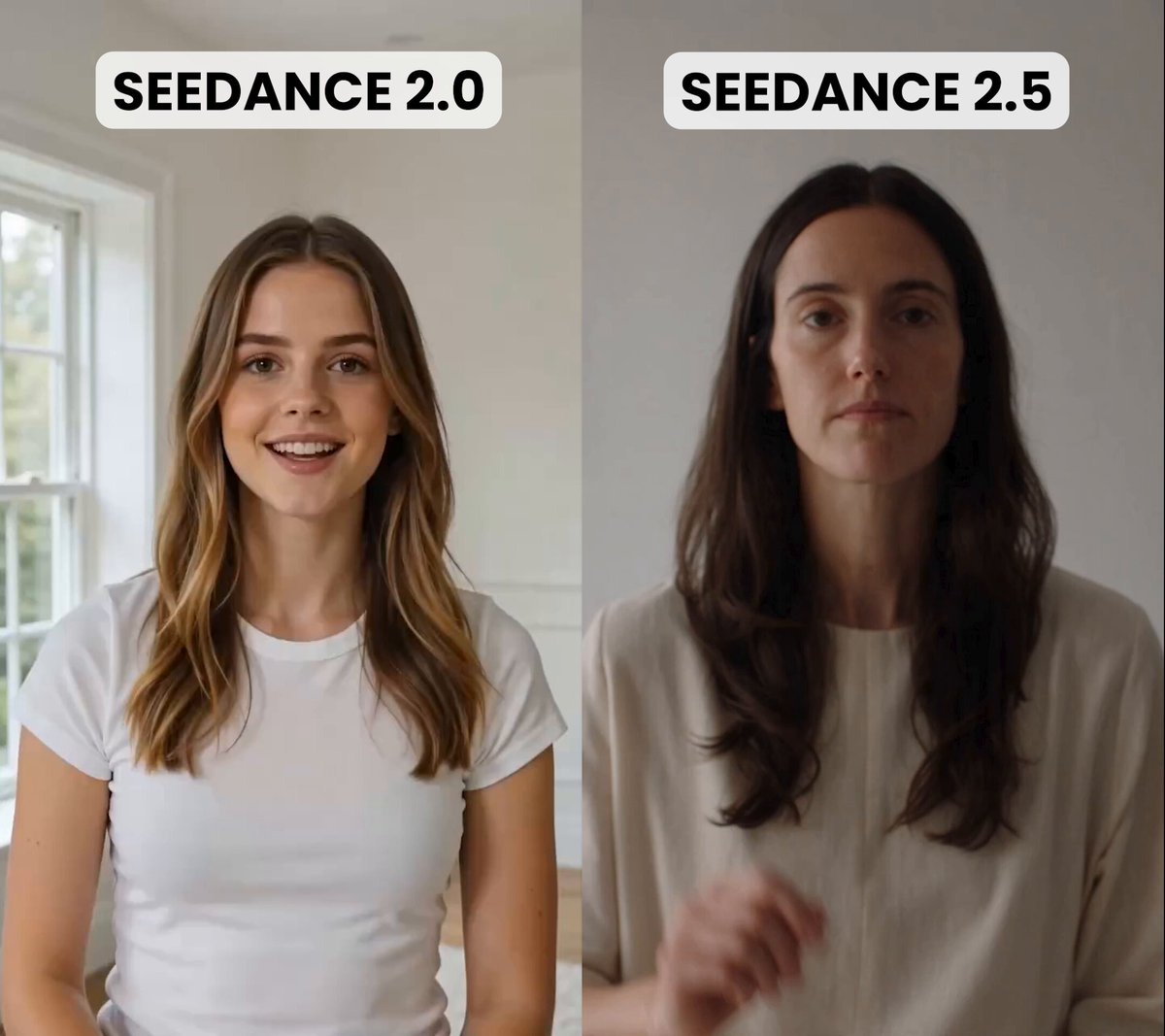
The Wall Every Video Generator Hits
Generative video models have improved at a staggering pace. In just a few years, text-to-video went from blurry abstract loops to footage that can pass for professionally shot material in a single take. Yet anyone who has tried to produce a multi-scene narrative has run into the same wall: the model can generate one great shot, but it cannot remember the character in the next one.
This is the consistency problem, and it is the difference between AI video as a toy and AI video as a production tool. A brand film, a short series, an episodic story — all of them depend on the audience believing that the person on screen is the same person scene after scene. When the face shifts between cuts, the illusion dies, and the content becomes unusable.
Multi-image fusion is the most effective answer to that problem. Instead of asking the model to hold a character's identity in a text description, it feeds the model a set of reference images that define the character in pixels. This article explains how the technique works under the hood, how to integrate it into a real production pipeline, and why it beats the alternatives.
Why Text Prompts Fail at Identity
Understanding the fix requires understanding the failure. When you describe a character with text — "a young woman with shoulder-length brown hair and green eyes" — the model does not look up a person and render them. It samples from the statistical distribution of everything that text has ever been associated with. Every render is a fresh sample, so every render produces a slightly different woman.
The drift is not a defect in one model; it is structural. Language is lossy. It cannot encode the exact geometry of a jawline, the precise texture of a jacket, or the specific shade of a character's eyes with enough fidelity to reconstruct them identically. The more scenes you generate, the more the character accumulates small mutations, until by scene ten they look like a distant relative of the original.
This is why single-image reference helps but does not fully solve the problem. One image captures one angle, one expression, one moment of light. As soon as the scene demands a different angle or mood, the model must extrapolate, and extrapolation reintroduces drift. A single anchor is a starting point; a set of anchors is a definition.
What Multi-Image Fusion Is Under the Hood
Multi-image fusion is not averaging pixels. It is a convergence of two ideas: latent space conditioning and keyframe interpolation.
The first step is establishing a character anchor. A set of reference images — ideally five to ten, covering multiple angles, expressions, and lighting conditions — is encoded into a high-dimensional feature space. The system extracts the features that define the character: face shape, eye color, hair structure, skin texture, distinctive marks, clothing silhouettes. These features become the anchor, a stable target that every subsequent generation is conditioned against.
The second step is conditioning. When a new scene is generated, the model does not work from text alone. It receives the anchor as an additional input, constraining the output to stay near the character's feature vector. This is fundamentally different from describing the character in the prompt: the model is not being told who the character is, it is being shown, in the same representational space it uses internally.
The third step is dynamic weighting. Different scenes need different aspects of the anchor. A close-up needs the facial features emphasized. A wide action shot needs the full-body silhouette and costume. A scene in rain needs the environment features adjusted without touching the identity features. The fusion mechanism weights the anchor's components according to the scene's requirements, keeping identity stable while allowing environmental flexibility.
Keyframes: The Skeleton of Continuity
Character anchors solve identity across scenes, but continuity also lives in time. This is where keyframe control comes in.
In a multi-scene production, you do not need — or want — every frame locked to the reference set. Locking everything produces stiff, lifeless footage. Instead, lock the key moments: the establishing shot, the emotional turns, the scene transitions, the final image. Between keyframes, the model has freedom to generate motion, and the anchored features keep the character recognizable throughout.
Keyframes also serve as bridges between scenes. If scene two begins exactly where scene one ended — same character state, same environment — the audience reads the sequence as continuous. Generating each scene with the previous scene's final frame as a starting reference is the simplest and most reliable continuity technique, and it works regardless of the underlying model.
The practical discipline is to plan your keyframes before generating. Mark the moments that must be visually locked, then let everything between them breathe. This balance of constraint and freedom is what separates natural-looking consistent video from video that looks like a slideshow of the same character.
Fitting Fusion to Different Model Architectures
No single model handles multi-image fusion the same way, and a production pipeline should exploit the differences rather than fight them.
Some models natively accept multiple reference images. These are the easiest to work with: you place the character image in the primary reference slot and use auxiliary slots for pose, lighting, or environmental references. The native multi-reference support means the model has been trained to respect the hierarchy you specify.
Other models accept only a single reference image. With these, you compress the anchor set into one composite or select the single most representative image, then rely on keyframe chaining to carry consistency across scenes. It is more manual, but it works.
A third category of models excels at specific capabilities — motion control, stylization, physical realism — without strong reference support. The right move is not to force fusion onto them, but to use them for what they are good at within a pipeline where the anchor is established by a reference-friendly model.
The general principle: keep one canonical character anchor, and route each scene to whichever model serves it best. The anchor stays constant; the models rotate around it.
Building the Pipeline: From Prompt to Final Render
A consistent character production pipeline has five stages.
The character definition stage. Build the anchor: a curated set of reference images, verified for internal consistency. This is the foundation; if the references contradict each other, nothing downstream will work reliably. Also define the character's "canon" — the details that must never change, such as hair, scars, signature clothing.
The planning stage. Break the script into scenes, mark the keyframes, and decide which model serves each scene. Assign each keyframe its reference requirements: which angle, which lighting, which emotional state.
The generation stage. Produce each scene against the anchor, starting from the previous scene's final frame where continuity demands it. Generate rough versions first to verify identity, then refine.
The review stage. Check each render against three criteria: identity (is this the same character?), motion (does it move naturally?), and scene fit (does the environment match?). Reject scenes that fail identity immediately; do not attempt to fix identity problems in post.
The archive stage. Feed the best verified frames back into the character's reference set. These "proven frames" often outperform the original source photos because they already match the target style and rendering. Over time, the anchor improves with every project.
Identity Storage: Managing Characters as Assets
If you produce multiple projects or a continuing series, characters should be managed as reusable assets, not as one-off file collections.
Maintain a character asset library with a consistent structure: the canonical reference set, the verified frames, the model compatibility notes, and the prompt fragments that work. Version the library. When a character evolves — new hairstyle, new wardrobe, new era of the story — create a new version rather than overwriting the old one, so older projects remain reproducible.
Store the library in a location that survives across sessions and tools. Because the anchor is what makes consistency possible, losing it means starting from zero. Treat it with the same care as source code: named, versioned, and backed up.
The asset library also becomes the shared vocabulary for a team. When multiple people generate scenes for the same character, they all draw from the same anchor, which prevents the drift that appears when two people interpret a text description differently.
Beyond the Base Prompt: Fine-Tuning Character Parameters
A common mistake is treating the reference set as fixed and everything else as prompt tweaking. The anchor itself is tunable.
If the model reproduces the character faithfully but the mood is wrong, adjust the weighting between identity features and scene features. If the character's face is right but the costume keeps drifting, add costume-specific references to the anchor. If the character looks too static, reduce the anchor's weight on pose and let motion references take over.
Fine-tuning is an iterative loop: generate, evaluate, adjust the anchor or its weighting, regenerate. The most efficient teams keep a log of what worked — which anchor composition, which weights, which model — so that every project starts from a better baseline than the last.
This is also where feedback from the community or from client reviews becomes valuable. Fresh eyes catch identity drift that the creator has become blind to after hours of looking at the same character.
Fusion vs. Single-Prompt Inpainting: The Honest Comparison
The most common alternative to multi-image fusion is single-prompt inpainting: generate a scene, then use an image editor to paste and blend the character into it. It is worth being honest about where each approach wins.
Inpainting wins on flexibility. You can place a character into an existing image with precise control over position and scale, and you are not constrained by what a video model can generate. For stills, hero images, and compositing work, it is often the right tool.
Fusion wins on coherence and scale. A character generated directly by the video model is embedded in the scene's lighting, motion, and physics. Inpainted characters often look pasted — different lighting, different grain, slightly wrong perspective — and the tell is visible the moment the character moves. For video, where every frame must agree, fusion's native embedding is a decisive advantage.
The hybrid approach is worth considering for complex shots: use fusion for the base generation, then inpaint small fixes — a prop, a costume detail, a background element. The character itself stays native to the scene; the inpainting handles only what fusion cannot.
A Decision Checklist for Consistent Video
Before you start a multi-scene project, work through this checklist:
- The character anchor has five or more consistent reference images.
- The reference images cover the angles and lighting the story needs.
- The script is broken into scenes with keyframes marked.
- Each scene has a model assigned, chosen for what the scene demands.
- Continuity-critical scenes will chain from the previous scene's final frame.
- The character asset library is versioned and backed up.
- The review stage includes an explicit identity check per scene.
- Proven frames will be fed back into the anchor after each project.
FAQ
How many reference images does multi-image fusion need?
Five is the practical floor; ten or more is better for characters with distinctive features or costumes. Beyond roughly fifteen, contradictory information starts to hurt, so curate rather than accumulate.
Can multi-image fusion work with any video model?
Not natively with all of them, but the technique adapts. Models with multi-reference support are easiest; models with single-reference support can be combined with keyframe chaining; models with no reference support can still participate in a pipeline where a reference-friendly model establishes the anchor.
Why does my consistent character look stiff?
You are over-constraining. Lock identity at keyframes, not every frame, and give motion room to breathe. Reduce the anchor's weight on pose and let the model generate natural movement between keyframes.
Is multi-image fusion only for characters?
No. It works for any recurring visual subject: locations, props, vehicles, brand assets, creatures. Anything that must stay recognizable across scenes benefits from the same anchor technique.
What is the biggest mistake teams make?
Inconsistent references. If the anchor set contradicts itself — different hair, different costume, different proportions — the model cannot satisfy all constraints and will drift. Curate the anchor before you generate anything.
The New Production Standard
Character consistency was the last major obstacle between AI video and professional production. Multi-image fusion does not eliminate every challenge — motion, performance, and storytelling still demand craft — but it removes the failure mode that made multi-scene AI work impossible at scale. The technique is not magic. It is a disciplined combination of good references, keyframe planning, and model routing. Build the discipline into your pipeline, and the wall that stopped so many projects becomes a routine part of the process.
