

Somewhere between the first excitement about AI and the thousandth generic AI video, a lot of creators lost sight of the actual point. The point was never to produce more content. The point was to produce content that could not have been made before, or could not have been made without a team and a budget. AI video editing is at its best when it removes the friction between an idea and a finished piece, so that the creator's judgment, taste, and voice can come through more clearly. When it is used as a shortcut to fill a feed, it produces the bland sameness that audiences have learned to scroll past.
This article is a practical guide to the best AI video editing workflows with creativity as the goal. It covers the core capabilities of modern AI editors, how to choose tools, how to build a workflow that protects your voice, and how to avoid the traps that make AI content feel lifeless.
What AI Video Editing Actually Does
Modern AI video editing covers far more than generating footage. It includes automatic scene detection and cutting, smart captioning in multiple languages, background removal and replacement, generative fill for removing unwanted objects, style transfer for consistent looks, motion interpolation for smoother playback, voice synthesis for narration, and music generation that matches mood and pacing. The best tools combine several of these into one environment, so that the distance from raw footage to published video is measured in minutes.
The creativity opportunity is not in any single feature. It is in the removal of drudgery. Every task the tool handles, the tedious cuts, the caption timing, the background cleanup, is time and attention returned to the creator. That attention is what makes the difference between content that is technically fine and content that is genuinely interesting.
The Trap of the Generic AI Look
There is a recognizable aesthetic to careless AI video: over-saturated colors, floating eyes and hands, logos that rearrange themselves, characters who change identity between shots, and an overall feeling that the video was made by nobody in particular. Audiences have become surprisingly good at detecting it, and platforms are not far behind. The generic look is not a limitation of the technology; it is a limitation of the workflow. It happens when creators skip the creative decisions and let the default settings decide.
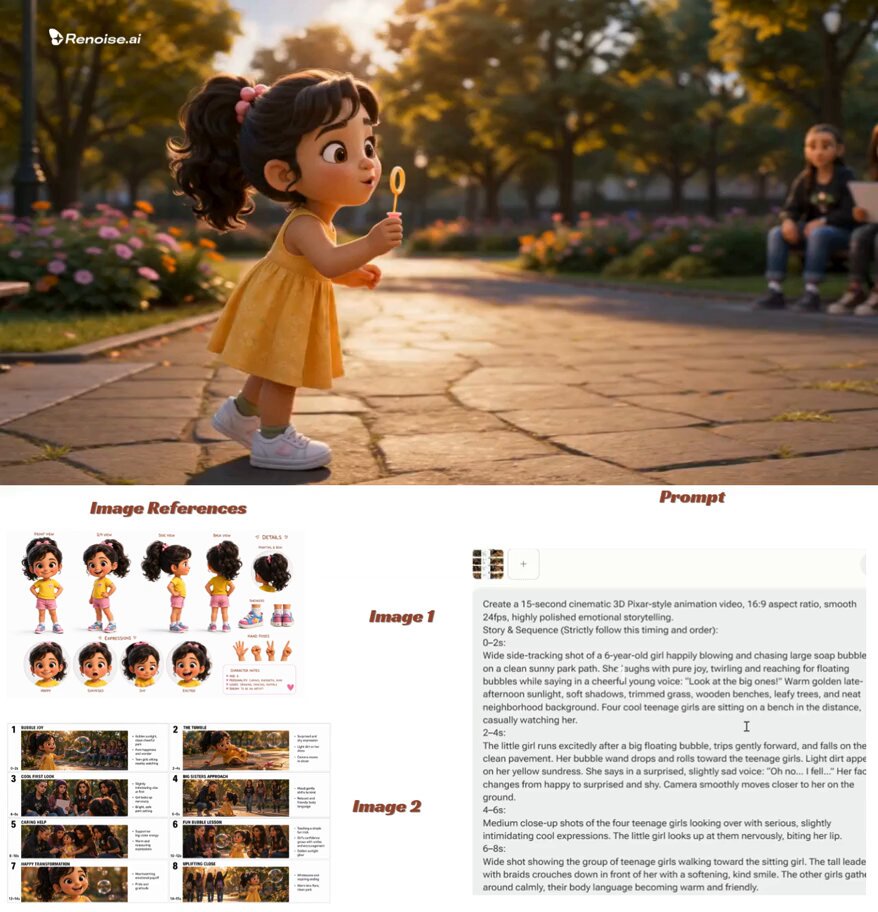
The fix is to make deliberate choices at every step. Choose a visual style before generating. Lock the character and brand references. Grade the output. Design the sound. Edit with intention. The difference between an AI video and a generic AI video is the same as the difference between a photograph and a snapshot: the person behind it made decisions.
Building a Creative AI Editing Workflow
Step 1: Start With a Point of View
Before you open any tool, answer three questions: what am I trying to say, who is this for, and how should it feel? Write the answers down. This is the creative brief, and it is the antidote to generic output. Every subsequent decision, model choice, prompt, and cut, should be traceable to this brief.
Step 2: Curate Your Inputs
The raw material matters. Use your own footage where you have it, because authenticity is a competitive advantage. Use AI generation for what you cannot shoot: impossible environments, stylized sequences, concept visualization. Feed the tools the best references you have, and treat the input stage as part of the creative process, not a chore.
Step 3: Make the Key Creative Decisions Yourself
AI can generate a thousand options, but it cannot know which one is right. Decide the look, the pacing, the music, and the voice. Use AI to execute and iterate, not to decide. This division of labor is the core of creative AI work: the human owns the direction, the machine owns the labor.
Step 4: Iterate With Intent
Generate variations deliberately. Change one variable at a time, the camera move, the lighting, the pacing, and compare the results against your brief. Keep notes on what worked. This turns generation from gambling into research, and it is how creators build a personal style even with tools everyone else uses.
Step 5: Finish Everything
The finishing steps, captions, sound design, color grade, and export quality, separate amateurs from professionals. A well-finished simple video outperforms a technically complex unfinished one every time. Budget real time for the finish; it is where the polish happens.
Choosing Tools That Serve Your Voice
The right tool depends on the type of work you make. For documentary-style content built from real footage, an editor with strong automatic cutting, transcription, and captioning saves the most time. For stylized and animated work, generation models with strong character control matter most, and models like Flux for photographic stills, Runway Gen-4 and Sora for narrative continuity, and Kling, MiniMax Hailuo, and Vidu for expressive characters and regional strength are all worth testing. For quick social content, fast volume models with built-in templates, captions, and music get you to publishable fast.
The key is to test tools against your real work, not against demos. Keep a small toolkit and learn it deeply. Deep knowledge of three tools beats shallow familiarity with ten, especially when the goal is a distinctive voice. A simple test helps: take three pieces of your real work, recreate them in a candidate tool, and compare time, quality, and feel. If it does not win on at least one of those dimensions, it is not for you, no matter how impressive the demo looks.
Protecting Your Creative Voice
Your voice is the combination of choices that only you would make. AI tools will happily erase it if you let them. Here is how to protect it:
- Write your own scripts and briefs. Do not hand the idea to the tool and accept whatever comes back.
- Develop a signature look: a color grade, a caption style, a sound treatment, or a recurring format. Apply it consistently.
- Use AI for what you cannot do, not for what you can. If you can shoot it, shoot it. If you can write it, write it.
- Reject more than you accept. The discipline of saying no is what makes output distinctive.
- Keep a style guide for your own work and update it as you evolve.
Common Mistakes That Kill Creativity
- Letting the tool choose the style. Default settings are the enemy of voice.
- Publishing unedited generations. Raw output is a draft, not a piece.
- Ignoring sound. Sound is half of the emotional experience.
- Following trends instead of your brief. Trends produce sameness.
- Measuring success only by volume. Attention and retention are better signals.
A Deep Dive Into the Core Capabilities
Understanding what your editor can do is the first step to using it creatively. Five capabilities deserve your attention.
Automatic scene detection and cutting saves hours on long footage: the tool finds the cuts, trims the dead air, and produces a rough assembly you refine. Smart captions generate timing-accurate subtitles in multiple languages, and styling them as a design element turns captions into part of the visual identity. Background removal and replacement lets you move a subject into any environment, which is gold for talking-head content and product shots. Generative fill removes unwanted objects, wires, and microphone booms from otherwise perfect shots. Style transfer applies a consistent look, from film emulation to anime, across all your clips, which is the fastest way to build a recognizable aesthetic.
None of these features is magical on its own. Together, they compress a multi-day post-production workflow into an afternoon, which is exactly the leverage a solo creator needs.
Three Creative Workflows to Steal
Concrete workflows teach faster than abstract advice. Here are three that use the same tools in different ways.
Workflow one: the repurposing machine. You have one hour of talking-head footage. Run scene detection, cut the best moments, generate captions, extract vertical clips for short-form platforms, and publish three distinct pieces from a single source. The creative work is choosing which moments matter and how to frame them for each platform.
Workflow two: the hybrid documentary. You have real footage of a location and a voiceover script. Fill the gaps with AI-generated establishing shots that match the grade, add generative fill to remove distractions, and use sound design to stitch everything together. The result reads as one coherent film even though half of it was generated.
Workflow three: the stylized series. You want a recognizable visual identity across a series of videos. Generate keyframes with an image model, animate them with a video model, apply the same style transfer and grade to every episode, and keep the same music bed. Consistency across episodes is what builds an audience for the series.
Building Your Personal Style Guide
Every creator who wants to be recognized needs a style guide, even a one-page version. Write down your color grade, your caption style, your music preferences, your format rules, and your red lines: the things you never do. Update it after every project. The style guide is what makes your output recognizable, and it is the single best defense against the generic AI look.
The Ethics and Craft of AI Video
Using AI does not remove the creator's responsibility; it concentrates it. You are still responsible for what the video claims, whether the footage misleads, and whether you have the rights to the assets. In documentary and journalism contexts, disclose clearly when footage is generated rather than recorded. In fiction and entertainment, disclosure is often expected by platforms. The craft questions matter too: does this video inform, entertain, or deceive? Answering those questions honestly is the difference between a creator who uses AI as a tool and one who is used by it.
FAQ
Can AI video editing really make my work more creative?
Only if you use the time it saves to make better decisions. The tools remove labor; the creativity still comes from you.
What is the best AI editor for a beginner?
Start with one tool that combines editing, captions, and generation, and learn it completely. Adding tools later is easier than mastering many at once.
How do I avoid the generic AI look?
Make deliberate creative choices, lock references, grade the output, and finish everything with sound and captions. Genericity is a workflow problem, not a technology problem.
Do I need to learn traditional editing first?
Understanding pacing, story, and structure helps enormously, but the software skills are easier now because much of the mechanics are automated.
Will audiences care that I used AI?
Audiences care whether the result is good. Disclose what you must, but focus on making work that earns attention on its own terms.
What is the best way to learn AI video editing?
Pick one tool, follow its tutorials, then make three complete videos with a clear brief. The videos are the lesson; tutorials only prepare you for them.
Can I use AI video editing for client work?
Yes, with clear disclosure and licensing. Clients hire you for judgment and taste; the tools are part of your production capacity. Just make sure the assets and models you use are licensed for commercial work.
How much time does AI editing actually save?
For repetitive tasks, hours per project. For creative work, it changes where you spend time rather than simply reducing it: less cutting and captioning, more direction, sound, and refinement.
Conclusion
The best AI video editing does not replace creativity; it returns it. By removing the drudgery of production, AI gives creators back the time and attention that the craft used to consume, and it is what you do with that attention that determines the quality of your work. Build a workflow with a clear brief, deliberate decisions, deep tool knowledge, and real finishing, and the result will not look like generic AI content. It will look like you, only faster and more ambitious than before.
