
The question stopped being "which model is best"
A year or two ago, comparing AI video tools was simple. One or two names dominated, everyone tested the same handful of prompts, and the winner was whoever produced the fewest melted faces. That era is over. Today there are dozens of capable generators, each with a different personality: some excel at photoreal humans, some at stylized motion, some at long takes, some at precise camera control, and some at doing all of it cheaply enough to iterate twenty times before lunch.
So the useful question is no longer "which AI video editor wins?" It is "which combination of tools gets a specific kind of shot finished, on schedule, without the edit falling apart in post?" That reframing matters because most disappointing AI video projects fail for workflow reasons, not model reasons. People generate beautiful isolated clips and then discover the clips cannot be cut together.
This guide walks through the criteria that actually predict success, the strengths of the main tools people reach for, and a repeatable production workflow you can apply whether you are making a product ad, a short film, a social campaign, or an internal training video.
What "best" should mean: criteria that survive contact with a deadline
Before comparing anything by name, define what you are optimizing for. Six criteria cover almost every real production decision.
Shot consistency and character identity
Can the tool hold a face, a costume, a hairstyle, or a product silhouette across multiple shots? Consistency is the single biggest differentiator between a demo reel and a usable sequence. Models that nail one stunning shot but drift on the fifth are expensive in editing time, because every drift costs you either a re-render or a cutaway you did not plan for.
Control surfaces
Look at what you can steer: camera moves, keyframes at specific timestamps, motion masks, depth cues, motion strength, and the ability to say "hold steady here, then push in at the four-second mark." More control means fewer lucky accidents and more repeatable results.
Prompt adherence versus creative latitude
Some models follow instructions literally and produce exactly what you typed, even when what you typed was a bad idea. Others interpret generously and give you something more cinematic than you asked for, but drift from the brief. Neither is wrong. Corporate and product work usually wants adherence. Narrative and mood work often wants latitude.
Iteration speed
How long between typing a prompt and watching a result? If a tool takes ten minutes per generation, you will explore three ideas. If it takes forty seconds, you will explore thirty. Exploration volume correlates more strongly with final quality than any single benchmark score, so treat latency as a creative feature.
Native audio and lip sync
If your deliverable needs dialogue, narration, or sound effects baked into the generation, audio capability moves from convenience to requirement. If you plan to score and mix in a traditional editor anyway, native audio becomes a nice-to-have and should not drive your choice.
Integration with the rest of your pipeline
Does the output export in a format your editor handles without transcoding pain? Can you keep a project organized across hundreds of clips, or does your desktop become a graveyard of final_v3_really.mp4? Asset management is unglamorous and decisive.
Where the major tools actually differ
No tool wins everywhere. Here is the honest shape of it.
Runway
The most mature generalist. Runway's strength is the breadth of its control toolkit: motion brushes, camera controls, style references, video-to-video restyling, inpainting-style object removal, and a set of editing utilities that go well beyond raw generation. If your project involves cleaning up footage, extending shots, or iterating on existing material rather than generating from nothing, Runway tends to be the most forgiving environment. Its trade-off is that photoreal human faces can still wobble under aggressive motion, and long continuous takes often need to be assembled from shorter segments.
OpenAI Sora
Sora made its reputation on physical plausibility and long, coherent scenes with believable camera behavior. It is excellent when you need a shot that reads as if it was filmed: walking through a space, a complex interaction, a scene with several subjects moving independently. Its weakness for production work is predictability. Cinematic interpretation is a feature when you are exploring and a bug when a client has approved a storyboard. Teams often use it for hero shots and look development rather than for a full sequence with strict continuity demands.
Kling
Kling became a favorite for human motion and image-to-video fidelity. Start from a strong still and it tends to preserve identity, wardrobe, and lighting convincingly, which makes it a workhorse for character-driven sequences and product beauty shots. Motion is graceful, and the model handles natural gestures well. It benefits enormously from good source imagery, so teams that invest in still generation first get noticeably better results.
Hailuo and other fast Chinese models
Speed-focused models like Hailuo are strong at expressive, camera-aware short clips and stylized motion. They are great for social content, transitions, and quick concept tests where turnaround matters more than absolute polish.
Hunyuan and the open-weight family
Open-weight video models, including Hunyuan and similar releases, matter for a different reason: they can run locally or on rented infrastructure, which means no per-render metering, no content policy surprises mid-campaign, and full control over fine-tuning. The trade-off is real. You need GPU capacity, patience, and someone comfortable with environment setup. For studios with steady volume, that math often works. For a two-person marketing team, it usually does not.
Veo and Luma
Veo is frequently chosen for realistic lighting and native audio integration, and Luma's Dream Machine remains popular for fast, fluid motion and approachable interfaces. Both are worth testing against your specific subject matter rather than trusting a general ranking.
Flux and image models in the loop
Strictly speaking, Flux-style image models are not video editors, but they belong in this conversation. The single highest-leverage habit in AI video production is generating still frames first, locking the look, then animating. Text-to-video directly often produces mediocre composition that no amount of motion quality rescues.
The shift from brute force to controlled generation
The generational change in these tools is not raw pixel quality. It is the arrival of control mechanisms that let you direct instead of gamble.
Multi-image fusion and style transfer
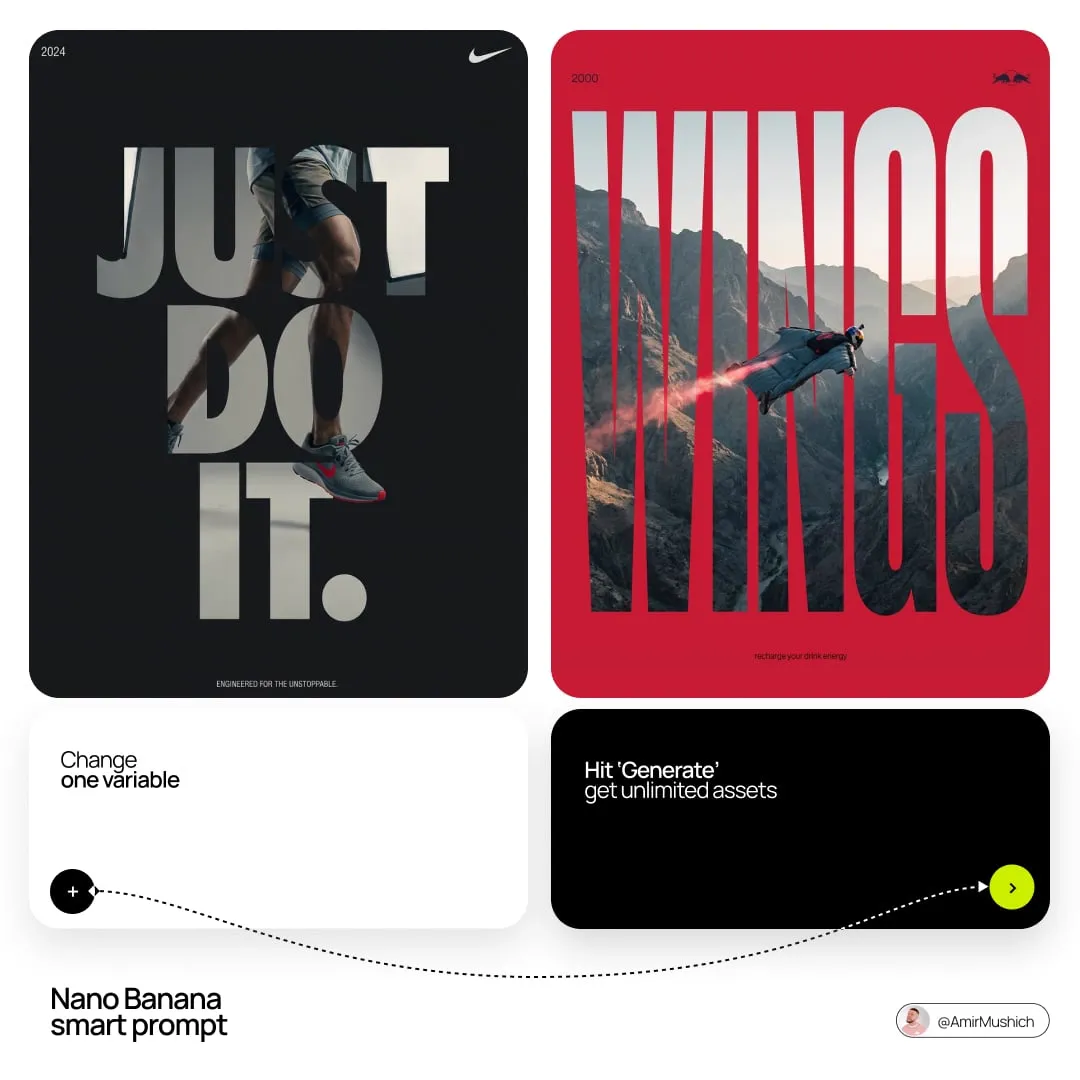
Multi-image fusion lets you combine a character reference, a background reference, and a style reference into one coherent shot. Style transfer lets you take a filmed plate and repaint it while preserving motion and structure. Together these two capabilities are what convert AI generation from a novelty into a production technique, because they let you maintain visual continuity across a sequence in a way prompt text alone never managed.
Agent-style direction
A newer pattern is to describe intent rather than instructions: "a slow, lonely dolly through an empty diner at dawn, ending on the coffee cup." Systems built around agent-style direction break that into camera, lighting, subject, and pacing decisions internally, which raises the floor for people who are strong storytellers but weak prompt engineers. The trade-off is reduced fine-grained control. When something is off, you fix it by describing differently rather than by adjusting a slider.
Consistency as the real benchmark
If you only run one test before committing to a tool, make it the consistency test. Generate the same character in six different shots, same wardrobe, same lighting direction. Watch which model drifts. That test predicts your editing pain more accurately than any single-shot beauty demo.
Building a repeatable AI video workflow
The following sequence works across most tools and most budgets. Adjust the specifics, keep the order.
Step 1: Write a look bible before you generate anything
Create a one-page document: palette, lens character, lighting direction, film stock or render style, and a short paragraph describing the emotional register. Include three to five reference images. Every prompt you write afterward should be traceable to this document. Without it, you will chase whatever looks impressive in the moment and end up with six clips that feel like they came from six different projects.
Step 2: Generate stills before motion
Use an image model to produce candidate frames for each shot. Evaluate composition, wardrobe, and lighting at zero motion cost. Approve stills with the same rigor you would apply to a storyboard. Once approved, those stills become the seed frames for image-to-video generation, which dramatically improves identity retention and gives you a reusable asset library.
Step 3: Turn the shot list into structured prompts
A prompt template keeps you honest:
- Subject and wardrobe
- Action with a specific verb and timing
- Camera: shot size, angle, movement, and speed
- Lighting and time of day
- Environment and background detail
- Film or render style
- Negative constraints: what must not appear
Example: "Medium close-up, woman in a charcoal wool coat, mid-thirties, walking toward camera at a steady pace; slow handheld follow with slight drift; overcast late-afternoon light, soft shadows; wet cobblestone street, blurred storefronts behind; muted teal-and-amber film look; no text, no logos, no extra people in frame."
Step 4: Batch generate and select ruthlessly
Generate four to eight variations per shot, not one. Watch them muted and at small size first. If a clip does not read at thumbnail scale, no amount of resolution will save it. Keep only clips that pass three checks: composition holds, motion reads clearly, and the subject stays on model. Name files with a shot numbering scheme immediately.
Step 5: Run continuity passes
This is the stage most people skip. Upscale approved clips, apply frame interpolation if the motion feels stuttery, and stabilize anything handheld that drifts too much. Then do a color pass that maps every clip to the same palette, because different models output different contrast curves and color science that will clash in a timeline.
Step 6: Choose the right segment lengths
Long generations are tempting but fragile. In practice, two-to-four second segments that you cut together give you more control, more usable material, and easier fixes. Reserve longer takes for shots where continuity of motion is the entire point.
Step 7: Assemble in your editor of choice
Bring clips into a traditional NLE. AI generation handles acquisition; editing still handles rhythm, pacing, sound design, and the small trims that make a sequence feel intentional. Add music and effects after picture lock to avoid cutting to a track that later changes.
Step 8: Version and archive deliberately
Keep three tiers: raw generations, approved selects, and final graded clips. Archive raw generations for at least the length of the campaign. Clients change their minds, and re-generating an approved shot is far more expensive than retrieving it.
A quick stack recommendation by project type
| Project type | Primary tool shape | Why |
|---|---|---|
| Product ad with strict brand control | Image model plus an image-to-video specialist | Best identity and packaging fidelity |
| Narrative short with recurring characters | Character reference workflow with multi-image fusion | Continuity across shots |
| Social content at high volume | Fast, low-latency generator | Exploration volume matters more than polish |
| Restyling existing footage | Video-to-video with style transfer | Preserves real motion and structure |
| Dialogue-driven scene | Generator with native audio and lip sync | Avoids manual sync work |
| High-volume studio with GPU capacity | Open-weight models on owned hardware | Full control and predictable scaling |
Mistakes that quietly destroy AI video projects
Generating before designing. Starting with prompts instead of a look bible guarantees inconsistency that no editor can repair.
Judging clips with sound on. Audio masks weak composition. Review muted first.
Assuming the new model will fix the old problem. Switching tools mid-project usually resets your consistency baseline rather than improving it.
Skipping the color pass. Mixed contrast curves between models is the most common reason AI sequences feel amateurish even when every individual shot is strong.
Ignoring file discipline. Without naming conventions and versioning, a 60-shot project becomes unnavigable within a week.
Over-trusting motion prompts. If the base image is weak, motion amplifies the weakness. Fix the still, then animate.
Forgetting rights and likeness. Confirm you have permission for any real person's likeness and check the commercial terms of every tool you use before delivery.
Post-production: where human editors still win
AI generation has compressed acquisition dramatically, but post-production remains stubbornly human. An editor decides that a shot is 4 frames too long, that the cut needs to land on the beat before the beat, that the second-best take is actually the right one because the eyeline matches. Those judgments are rhythm and context, not pixels.
What has changed is the ratio. A team that once spent 80 percent of its time shooting and logging now spends 80 percent generating, selecting, and grading. The skill set shifts toward taste, curation, and system design. The best AI video editors in any practical sense are the people who can look at forty mediocre clips and assemble eight that feel like one continuous piece of film.
Frequently asked questions
Do I need more than one AI video tool?
For anything beyond a single shot, yes. Most professional workflows use one image model, one image-to-video specialist, and one generalist for cleanup and restyling. Redundancy also protects you when a service changes policies or has an outage.
Which tool is best for realistic human faces?
Image-to-video workflows with strong identity preservation consistently outperform pure text-to-video. Lock the face in a still, then animate that still.
How long should individual AI video clips be?
Two to four seconds for most narrative and commercial work. Longer clips look impressive in isolation but limit your editing flexibility and increase the chance of mid-shot drift.
Can I use AI video commercially?
Often yes, but terms vary significantly by provider and by plan tier. Read the current terms for each tool you use, keep records of your generated assets, and be conservative with real people's likenesses and trademarked material.
Is open-weight video generation worth the setup effort?
If you produce steadily and have GPU access, yes. If you produce occasionally, hosted tools will save you far more time than they cost.
What is the fastest way to improve output quality?
Generate stills first, batch four to eight variations per shot, review muted, and apply a consistent color pass. These four habits improve results more than switching models.
Should I edit inside the AI platform or export?
Export. Platform editors are convenient for assembling drafts, but a traditional NLE gives you sound design, multi-track control, and color management that AI-native editors still handle awkwardly.
Building a toolkit that survives the next model release
Every few months a new model will arrive and briefly look like it makes everything else obsolete. Some of them will be genuinely good. The teams that adapt quickly are not the ones who chase each release; they are the ones who built a workflow around stable principles: design before generation, stills before motion, batches before selections, consistency before spectacle, and post-production discipline at the end.
Those principles do not expire when a model does. Pick tools that fit the kind of shots you actually make, keep one alternative in reserve for each critical capability, and spend your energy on the look bible and the shot list rather than on leaderboard debates. The result is a pipeline where a new model release is an upgrade you can slot in, not a disruption that resets your entire process.
