
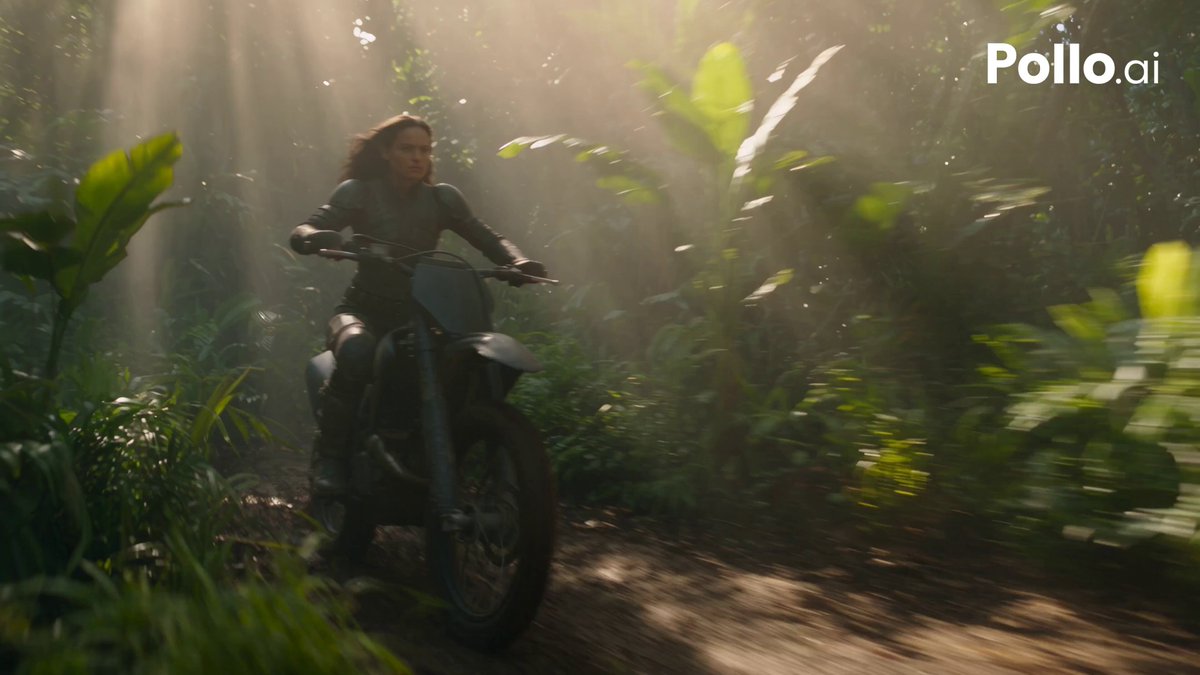

Typing a sentence and watching a video take shape on screen is still surprising on the hundredth use. Text-to-video has moved from impressive demo to a legitimate production asset, but the gap between the hype and the practical reality can be wide. This guide cuts through it: how the tools actually work, where the best of them shine, where they still fall short, and a concrete framework for choosing one that fits the work you actually do, so you stop chasing model names and start getting usable footage.
How Text-to-Video Generators Work
Modern text-to-video models build on a foundation of image-generation techniques extended through time. Rather than creating a single still, the model produces a sequence of frames that must remain consistent with one another while honoring the motion implied by the prompt. That temporal consistency is the hard problem, and it is why results can swing between cinematic and confusing.
The prompt feeds a series of internal decisions: composition, subject, lighting, and the dynamics of movement. Models trained on vast amounts of video learn general expectations about how water flows, how people walk, how objects fall, and how cameras behave, then project those expectations onto your description. The quality of the output tracks both the model's internal knowledge and how precisely your prompt maps onto it, which is why prompt craft matters so much.
Because these models generate rather than record, they are always negotiating between what you asked for and what they believe reality looks like. That negotiation explains both their strengths—a deep understanding of common visual physics—and their weaknesses—a disconnect when you ask for something rare, precise, or physically unusual.
What the Leading Tools Do Well
The current leaders differ mostly in priorities. Some chase prompt adherence—how faithfully the output matches your literal description, right down to the subjects and objects you named. Others chase kinematic coherence—how smoothly and physically the motion reads, even when that requires interpreting your prompt loosely. A tool can be excellent at one and merely adequate at the other, so "best" is genuinely contextual.
Several of the strongest models deliver impressive photorealism and dynamic, physically plausible movement on well-scripted prompts. They are particularly good for shots where the camera is doing something interesting, because camera motion is where their training tends to be deep. A slow dolly through a forest or a sweeping orbit around a subject often comes out strikingly well. Where they still stumble is in very long scenes and in maintaining a single character's exact identity across many divergent shots.
There is also variation by cultural fit. Models trained on data that skews toward one region may represent faces, clothing, architecture, or environments from that region most naturally. If your project is localized, a model aligned with your audience's visual expectations can save a lot of corrective effort downstream and produce content that feels native rather than generic.
Where Text-to-Video Still Falls Short
It is worth being honest about the pain points so you do not set false expectations. Physics remains fragile for complex interactions—spilling liquids, intricate hand movements, and crowds doing coordinated actions can break realism. Text rendering inside scenes is often imperfect, with garbled signage and misspelled labels. And factual accuracy is not a core strength: if you need a genuine product, a real location, or an actual person filmed, text-to-video is the wrong tool entirely.
Consistency is the other recurring headache. Asking a model to show the same character in twenty distinct shots usually drifts in face, wardrobe, or lighting unless you use reference-based features. Plan to keep anchors, regenerate selectively, and treat output as raw material rather than finished footage. Most professional workflows assume several passes and a human editor between generation and publication.
Choosing a Tool for Your Project
Start with the deliverable, not the model name. What are you producing: a rough visual concept, a social clip, a mood board sequence, or a nearly final asset? Match the tool's strengths to that stage, because a tool that is great for quick discovery is often not the one you want for a finalized hero shot.
If you need discovery and speed, a broad, prompt-flexible tool is fine. If you need character stability across many shots, prioritize models with reference or multi-image fusion support. If cost and iteration volume are your bounds, pick the tool you can afford to run many quick tests with, because iteration quality usually beats single-shot perfection. You will almost certainly iterate more than you expect.
Run controlled trials before committing. Take the same prompt and source references, run them through two or three candidates, and judge on subject integrity, motion quality, and consistency across related shots. Keep a shortlist you know well rather than a long list you do not, and become fluent in how each retains model prefers to be prompted.
Writing Prompts That Get Results
The difference between a mediocre clip and a good one is often the prompt. Describe the subject, the setting, the lighting, and the camera behavior explicitly, then state the motion in one clear idea. Avoid vague instructions such as "make it cinematic" on their own; instead, name what cinematic means to you—slow push-in, shallow depth of field, warm golden light, gentle film grain.
Give the model constraints it can act on. Length, framing, aspect ratio, and mood belong in the prompt as much as subject matter. Describe how the camera relates to the subject so the physics make sense. And keep each generation focused on one idea; if you need several movements, split them into separate passes and edit, because a jam-packed prompt produces muddled motion.
Building a Solid Workflow
Text-to-video sits best inside a broader pipeline, not as the whole process. Draft your script and shot list first, then generate passes to visualize and refine, then composite the surviving clips in an editor alongside sound, text, and grade. Decide what role each clip plays in the sequence before generating, so you are not fishing for footage that fits after the fact.
Reuse a style sheet and reference set across a project so every clip starts from the same visual vocabulary. Prototype at low resolution for cheap iteration, and invest in the final high-quality pass only for the takes that earn it. Log what works so the next project starts ahead instead of from scratch—the prompts, the settings, and the footnotes about what each model did well.
Evaluating Output Like a Reviewer
Adopting a reviewer's eye will save you more than any single trick. Judge every clip on consistency first: does the subject stay recognizable, does the scene's lighting hold, do the colors belong together? Then judge motion: is it physically plausible, does it support the mood, does it repeat in an awkward loop? Work through these categories in order rather than reacting to overall "vibe," because vague feedback produces vague fixes.
Watch for the classic tells of a weak generation: warped hands and faces in close-ups, water and fabric that move unnaturally, characters that change identity between cuts, and text that arrives misspelled. When you can name the failure precisely, you know whether to fix the prompt, change the reference, switch the model, or do the fix in post. Most of the time the cheapest fix is a better prompt, then a better reference, then a different model, in that order.
Adapting to Real Project Types
Text-to-video is not one skill; it is several, and the variations matter. For a product teaser, you want controlled, almost tangible camera movement around an object and zero physical weirdness. For an abstract brand film, you can give the model more freedom in service of mood, comforted that semirealism is fine. For a narrative short, you need hard consistency, deliberate pacing, and careful control of the story beats. And for a social media loop, you often want a satisfying cycle that can repeat, which many models produce surprisingly well when you describe the loop explicitly.
Matching the model's looseness to the project's need keeps expectations realistic. Holding an abstract piece to the standard of a physics simulation is a recipe for disappointment; giving a product teaser too much freedom invites unusable artifacts. Define the delivery bar before you generate, and evaluate against that bar rather than against the tool's marketing reel.
When Generation Is Not the Right Tool
It is just as useful to know when not to use text-to-video at all. If you need to feature a real person, a genuine location, or an actual product with verifiable detail, generation will fight you the whole way; recording footage or using approved photography is simpler and defensible. If you need legally precise text in scene, generation is fragile and review will be painful. And if you need instant turnaround with near-zero retakes, a deterministic production path often beats generation for that specific deliverable.
Text-to-video is a creative and previsualization engine. It is brilliant at low-cost iteration, mood exploration, and turning a paragraph into a rough cut. It is not, yet, a reliable substitute for reality when reality is the point. Framing it this way prevents the greatest source of frustration—expecting generation to do the job of a camera and being disappointed when it will not.
Building Your Own Comparison Shortlist
Rather than keeping a vague mental list of good models, build yourself a compact comparison table that records what each tool on your shortlist does well and poorly. Columns worth tracking include prompt-fidelity, motion quality, character consistency, regional fit, and effective cost per accepted clip. Fill it in as you run tests and projects, and it will become a living reference that answers "which tool for this?" faster than any online comparison article.
Keep that shortlist deliberate. Most projects are best served by three or four models you understand deeply, not a dozen you use shallowly. When a new model appears, resist the urge to adopt it immediately; run the same controlled test, add its row to your table, and only promote it to the shortlist if it genuinely beats something you already rely on. Discipline in your toolkit is a real advantage.
A Note on Rights and Responsibility
As generation becomes routine, the legal and practical responsibilities around it grow alongside. Know what a tool's terms allow you to do with output, especially for commercial use, and keep records of the prompts and settings behind every asset you ship. If you create likeness or style inspired by a real person, proceed carefully and with consent where the law or good sense demands it. A clean, documented workflow protects both your work and your reputation, and it lets you scale with confidence rather than with anxiety about where a clip came from.
The Bottom Line
The "best" text-to-video platform does not exist in the abstract. It exists relative to your subject, your need for consistency, your audience, and your budget. Learn the craft of writing precise, motion-aware prompts, build a repeatable production loop, review output like an editor, and keep a small shortlist of tools whose behaviors you understand. Do that, and you will get results far beyond what any model can deliver on raw prompts alone.
The models improve steadily, but the fundamentals do not change: a clear intent, a well-structured prompt, disciplined iteration, and honest evaluation. Practiced well, these make the tool nearly invisible and keep the attention where it belongs—on the story your footage is telling. Give yourself a quiet test: write a single paragraph describing a clip you want, then try it across your shortlist on identical conditions. The tool that turns that paragraph into something you would actually use is the one worth keeping, regardless of which name appears on a trend chart. Let real work, not marketing, be the arbiter of what you adopt.
Quick Decision Guide
- Rough concept, fast: flexible broad tool, cheap iteration.
- Character identity across many shots: model with reference or multi-image support.
- Physical realism for complex motion: lean toward kinematic-strong models.
- Localized content: prefer a model aligned with your audience's region.
- Nearly final asset: verify and plan multiple controlled passes.
- Learn one or two models deeply before branching out.
- Review in categories (consistency, then motion) before deciding on a fix.
- Know when generation is not the right tool: real people, real places, real products.
- Keep a comparison table that records each shortlist model's real behavior.
- Understand rights, terms, and consent before shipping generated assets.
