
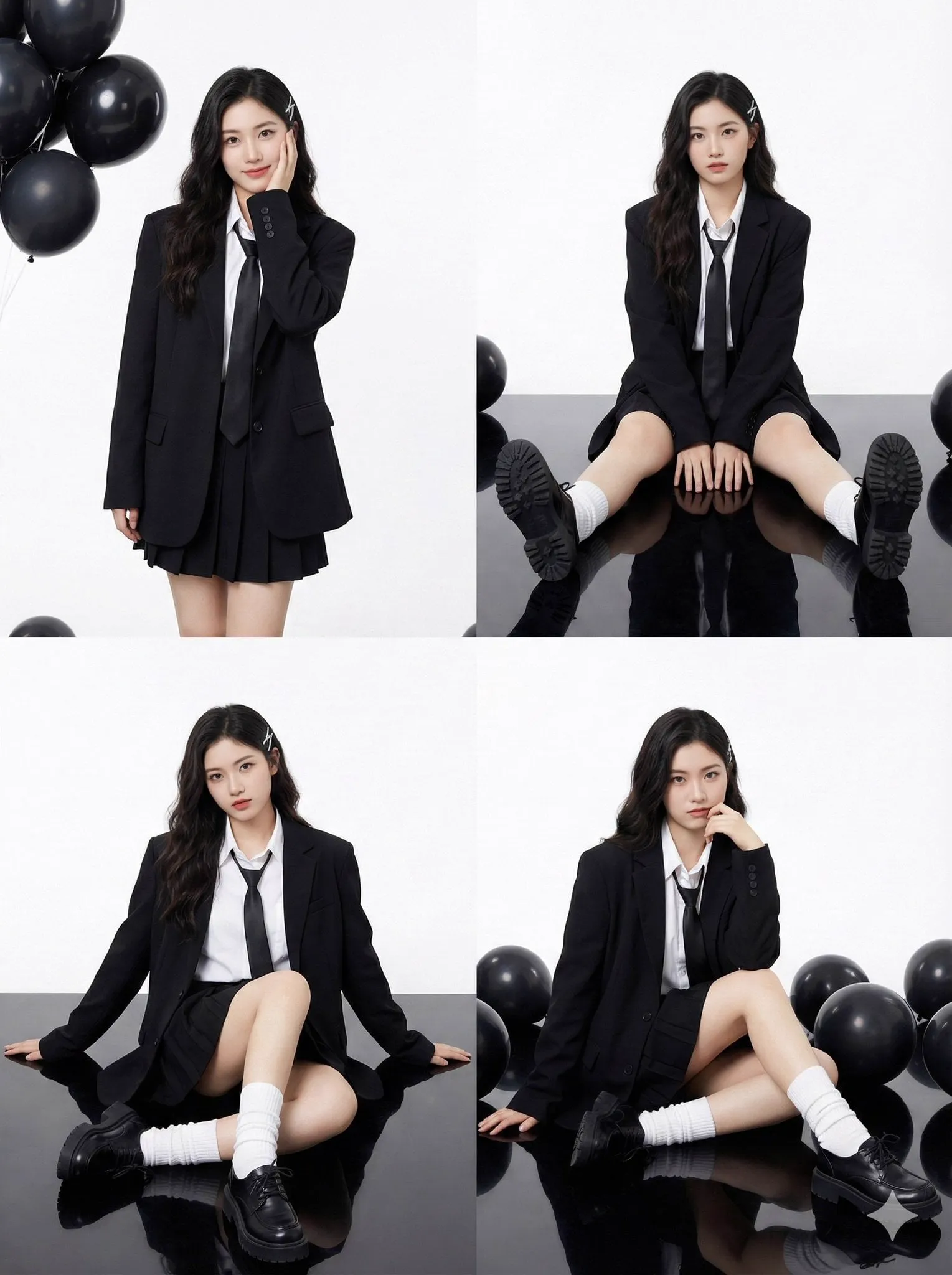

Why Character Consistency Is the Hardest Problem in AI Video
Ask anyone who has shipped a generated video project and they will tell you the same thing: the technology is not the bottleneck, the face is. A model can produce a gorgeous 8-second shot of a person walking through rain-soaked neon. Ask it to produce the same person walking through a different street in the next shot and the illusion collapses. The jawline softens, the eyes change color, the hairline moves, and suddenly your audience is watching a continuity error instead of a story.
This is not a cosmetic issue. Character drift breaks the contract that visual storytelling depends on. In a 30-second brand spot, the viewer needs to believe they are watching one spokesperson across four shots. In an episodic series, they need to believe the lead is a single human being across twenty scenes. In a product demo, they need to believe the presenter did not swap bodies between lines.
The practical answer that has emerged in production workflows is multi-image fusion: instead of describing a character with words or handing the model a single portrait, you supply a curated set of references and let the system build a fused identity representation that travels with the character through every generation.
This guide covers why drift happens, how fusion addresses it, how to assemble references that actually work, a step-by-step production workflow, tooling criteria, prompting technique, and the mistakes that quietly ruin otherwise good projects.
How Character Drift Actually Happens
Drift is not random. It usually comes from one of three layers, and diagnosing the layer matters because the fix is different for each.
Architecture-Level Causes
Video generation models sample from a probability distribution conditioned on text, reference frames, and noise. When the conditioning signal is thin — a short text prompt, one reference image, no identity anchor — the model fills the gaps with whatever the training data suggests is plausible. Two shots generated from slightly different prompts land in slightly different regions of that distribution. Same description, different person.
Temporal models add a second problem: they maintain coherence across frames within a shot far better than across shots. Once the shot ends, the internal state that held the face together is discarded. The next generation starts fresh.
Prompt-Level Causes
Vague identity language is the most common self-inflicted wound. "A woman in her thirties with dark hair" describes a category, not a person. Add a camera change, a new lighting condition, or a change in wardrobe, and the model reinterprets the category from scratch. Prompt drift compounds across a sequence: each shot is subtly different, and by shot six the character is a distant cousin of the original.
Workflow-Level Causes
Finally, plenty of drift is organizational. Different shots get generated in different sessions with different reference images. Someone re-rolls a take and forgets to carry the approved plate forward. A teammate approves an image that is "close enough" and it becomes the new anchor. Without a locked identity asset, consistency depends on human memory, and human memory is unreliable at scale.
What Multi-Image Fusion Does Differently
Single-reference conditioning asks the model to guess which features matter. Multi-image fusion asks it to measure them.
From Single Reference to a Fused Identity
When you provide multiple images of the same character, the pipeline extracts features from each one — facial geometry, skin tone, hair structure, eye shape, typical expression range — and resolves them into a single identity embedding. Where references agree, the signal is strong. Where they disagree, the system can be guided by weighting or by excluding the outlier.
The important shift is conceptual: identity stops being a sentence in a prompt and becomes a reusable asset. You build it once, validate it, and then reference it in every shot.
Why Multiple Images Beat One Better Image
A single portrait, no matter how sharp, contains only one lighting condition, one angle, and one expression. The model has to extrapolate everything else, and extrapolation is where drift lives. Ten varied images — different angles, expressions, and lighting — constrain the solution space dramatically, because the model can triangulate rather than invent.
Where Fusion Helps Most
Fusion pays off most in:
- Series content with a recurring host or character who must remain recognizable across episodes
- Multi-shot brand campaigns where a single spokesperson appears in several environments
- Narrative shorts with dialogue, reaction shots, and coverage that demands shot-reverse-shot continuity
- Localized versions of the same video where only the language or on-screen text changes
Building a Reference Set That Actually Works
This is where most projects are won or lost. A weak reference set produces a weak identity, and no amount of prompt tuning rescues it.
Angle and Lighting Coverage
Aim for a spread that covers the range of shots you plan to generate. A practical baseline:
- A neutral front-facing portrait under even light
- A three-quarter view, ideally lit from the opposite side
- A profile or near-profile shot
- A slight high angle and a slight low angle
- One shot in the actual production lighting style of your scene
- One wider shot showing hair length and silhouette
If your video includes night exteriors, include a nighttime reference. If it includes warm interior light, include that too. Models reproduce the lighting they were shown.
Expression and Wardrobe
Include at least two or three expressions: neutral, a genuine smile, and something mid-range. Avoid extreme expressions for the core set — a wide-open laugh or a shout introduces facial distortion that can leak into the embedding. If your character has a signature wardrobe, keep it consistent across references unless costume changes are part of the story.
What to Exclude
- Heavy filters and beauty retouching that differ between images
- Hats, sunglasses, or scarves covering identity-defining features, unless they are permanent
- Motion blur or compression artifacts from screenshots of video
- Backgrounds that dominate the frame or contain conflicting subjects
- Inconsistent skin tone caused by color grading differences between source images
A useful test: show the reference set to a colleague for three seconds and ask them to describe the person. If their description matches your character bible, the set is coherent.
A Step-by-Step Multi-Image Fusion Workflow
Here is a production-ready sequence you can adapt to almost any project size.
Step 1: Write a Character Bible
Before generating anything, document the character in text: age range, build, hair color and texture, eye color, distinguishing marks, wardrobe, and personality. This document becomes your arbitration tool when two generations disagree. If the identity asset and the bible conflict, fix the asset, not the bible.
Step 2: Curate and Normalize References
Select your six to twelve images, then normalize them: consistent crop around the head and shoulders, similar color temperature, no watermarks, high enough resolution that details survive downscaling. Remove duplicates — five near-identical frames add nothing and can bias the fusion toward one angle.
Step 3: Build and Validate the Identity
Run the fusion step to produce the identity asset. Then validate it immediately with a stress test: generate the character in three conditions you did not use as references — a new angle, a new lighting setup, and a new expression. If the face holds in all three, the asset is production-ready. If it collapses in one, add references that cover that condition and rebuild.
Step 4: Keyframe-First Shot Planning
Generate still keyframes for every shot in your sequence before animating anything. Stills are cheap and fast to review; video is not. Lay the keyframes out in order and check identity, wardrobe, and lighting continuity across the whole sequence. Fix problems here, not after animation.
Step 5: Animate with Continuity Anchors
When generating motion, carry two things into every shot: the identity asset and the approved keyframe from that shot. Where your tool supports motion or pose references, reuse the same anchor clips across related shots so body language stays consistent too. Keep camera movement modest in dialogue shots — large parallax moves give the model more opportunities to reinterpret the face.
Step 6: Review, Repair, and Deliver
Review each clip at normal speed first for the overall impression, then frame-by-frame around cuts. For minor drift, a targeted repair pass on a short segment is usually faster than regenerating the whole shot. Export at a consistent resolution and color pipeline so the seams disappear.
Prompting and Shot Planning for Continuity
Even with a strong identity asset, prompts still shape the result. Treat them as environment instructions, not identity instructions.
Separate Identity from Scene
Write prompts that describe only what changes: light, location, action, camera, mood. Let the identity asset handle the face. Prompts that re-describe the character tend to compete with the reference and pull the generation in an unintended direction.
Keep Descriptors Stable
If a descriptor matters — a specific hair length, a jacket color — repeat it identically in every shot. Paraphrasing ("dark green jacket" one shot, "forest-colored coat" the next) invites the model to change the garment between cuts.
Plan Coverage Like an Editor
Series work benefits from a coverage plan: establish the master shot, then move into medium and close coverage. Close-ups are the most demanding for identity, so generate them after the wider shots are approved and use an approved wider frame as a secondary reference. Shot-reverse-shot sequences should be generated from the same identity asset in the same session where possible.
Budget Your Review Time
Allocate review time proportional to visibility. A two-second background cameo needs a glance; a five-second close-up with dialogue needs frame-level attention. Most teams under-review close-ups and over-review wides.
Choosing Tools: Decision Criteria
Feature lists are noisy. Judge a tool on the things that affect your delivery schedule.
- Reference capacity and weighting: How many images can you supply, and can you weight or exclude individual references?
- Identity reuse: Can you save an identity asset and apply it across projects without rebuilding?
- Keyframe-to-video control: Does the platform let you drive motion from an approved still rather than a text prompt alone?
- Resolution and aspect-ratio coverage: Vertical, square, and widescreen without quality loss.
- Editability: Can you repair a three-second segment instead of regenerating a whole clip?
- Determinism: Do similar inputs produce similar outputs, or is every run a lottery?
- Export and pipeline fit: Codec, color space, and file naming that slot into your editor without manual rework.
Run the same test project through two or three candidates before committing. A ten-shot character test reveals more than any comparison chart.
Common Mistakes, Fixes, and a QC Checklist
Mistake: Using Screenshots from Generated Video
Frames pulled from compressed video carry artifacts that pollute the embedding. Use stills from your keyframe stage or high-quality photographic sources instead.
Mistake: Changing the Reference Set Mid-Project
Swapping references between shots effectively creates a new character. Freeze the set at the start of production and log any change with a version number.
Mistake: Over-Relying on Extreme Angles
Dutch angles, extreme close-ups, and heavy distortion stress the identity representation. Use them sparingly and review them hardest.
Mistake: Ignoring Wardrobe and Lighting Continuity
Identity can be perfect while the jacket changes color between shots. Continuity is a full-frame problem, not just a face problem.
Mistake: Chasing a Single "Perfect" Take
Endless re-rolls waste time and tempt you to accept subtle drift. Set a quality bar, hit it, and move on.
Quality Control Checklist
Before approving any shot, confirm: face matches the bible; hair silhouette consistent; wardrobe color and cut unchanged; lighting direction matches adjacent shots; skin tone consistent across the cut; no warping at the jaw, ears, or hairline; motion at the cut point continuous; overall impression holds at normal playback speed.
FAQ
How many reference images do I actually need?
Six to twelve well-chosen images cover most productions. Below six, the model extrapolates too much. Above twelve, duplicate angles add noise without adding information.
Can multi-image fusion handle different outfits and hairstyles?
Yes, but treat each costume as a variant of the same identity rather than a new character. Build the identity from face-focused references, then specify wardrobe in the prompt per shot, keeping the wording identical across the sequence.
Why does my character look right in stills but wrong in video?
Motion generation adds temporal interpretation. Solutions: reduce camera movement, increase the weight of the approved keyframe, keep clips shorter (four to six seconds), and generate related shots in the same session.
Is this workflow viable for a solo creator?
Yes. A solo creator can manage a locked reference set and a keyframe-first process; the discipline matters more than team size. The overhead is a few hours of setup that pays back across every shot.
How do I keep characters consistent across a long series?
Create a versioned identity asset, document it in a character bible, and re-validate it every few episodes with a three-condition stress test. Archive approved keyframes so returning to a location later does not require re-invention.
What if two generations both look plausible but different?
That is exactly what the character bible is for. Compare both against the documented traits, choose the closer match, and discard the other. Ambiguity resolved early prevents drift from compounding later in the sequence.
