
The One Problem That Kills Every AI Video
You spend hours perfecting a character design. You generate the first shot — it looks incredible. You move to the second shot — and your character has a different nose, different jawline, different eye color. Sound familiar?
Character consistency is the single biggest obstacle between amateur AI videos and professional-looking output. Until recently, fixing it meant hours of manual post-production. Now, multi-image fusion technology changes the game entirely.
Why Characters Keep Changing
AI video generators are stochastic by nature. Each frame is a fresh roll of the dice. Even when you use the same prompt, tiny variations in the noise pattern can shift facial features, clothing textures, and proportions. Over a 10-second clip, these tiny drifts accumulate into a completely different character.
The fix is not better prompts. It is reference-based conditioning.
How Multi-Image Fusion Works
Think of it like teaching the AI what your character looks like before it starts generating. You upload 5-10 reference images — front view, profile, three-quarter angle, different expressions — and the system creates a stable identity profile.
This profile acts as an anchor. No matter what camera angle or lighting condition you prompt, the core identity data stays locked. The result: Frame 1 and Frame 100 show the same person.
For best results, choose reference images with consistent lighting and minimal occlusion. Avoid heavily stylized or low-resolution source material — it pollutes the identity profile.
Picking the Right Model for Consistency
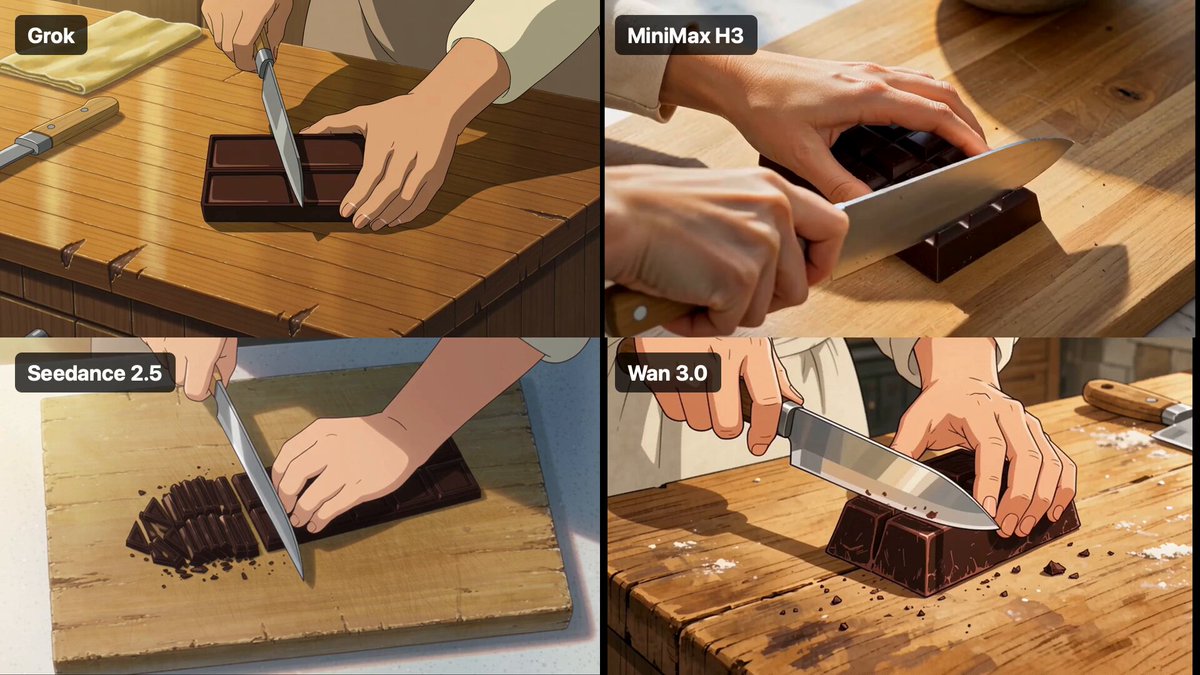
Not all AI video models handle consistency equally well. Some excel at temporal stability (maintaining identity across motion), while others prioritize artistic flexibility.
- For action-heavy sequences where character drift is most visible, choose models optimized for frame-to-frame coherence.
- For dialogue or close-up shots, models with strong detail preservation work better.
- When mixing art styles across scenes, start with a model that supports style transfer natively. Domer's model library includes special-purpose models for different consistency needs.
Keyframe Control: Your Director's Toolkit
Stable identity is the foundation. Keyframe control is what makes the output cinematic. By defining anchor points — a specific pose, expression, or camera position — you tell the AI exactly where the character needs to be at critical moments.
The AI then interpolates motion between these anchors. This gives you director-level command over the shot, rather than hoping the model guesses your intent correctly.
For complex sequences, use 3-5 keyframes per shot. Set the starting position, the midpoint action, and the ending pose. Let the AI handle the in-betweens.
The Practical Workflow
- Build your character profile. Upload diverse reference images through a quality AI image generator if your source material needs cleaning up.
- Test with short clips. Generate 5-second tests at low resolution to verify identity stability.
- Define keyframes. Map out the shot's critical moments before hitting render.
- Generate and review. Run the full sequence at production resolution only after validating the test pass.
- Stitch and polish. Use Domer's AI video generator for final assembly and any needed transitions.
The Bottom Line
Character consistency is not a nice-to-have. For serialized content, brand videos, or anything with narrative aspirations, it is the difference between professional work and obvious AI output. Multi-image fusion and keyframe control are the tools that close that gap. Master them, and your AI-generated content stops looking AI-generated.
